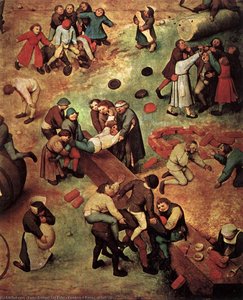
![The Procession To Calvary [detail] — Pieter Bruegel El Viejo](/media/artworks/images-full/b1/eb/b1eb3d7d830e619f4a1b330244e6068d.jpg)
 Ver en contexto
 Enviar
 Compartir
 Detalles

 Descargar
 Similares
 Radiografía
 Presentación de diapositivas
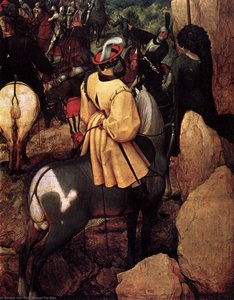
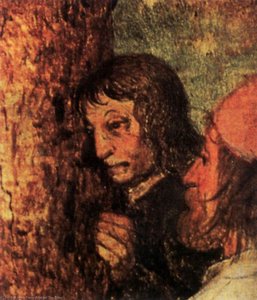
The Procession to Calvary [detail]


 Ver más
Reproducción al óleo hecha a mano
Óleo sobre lienzo pintado a mano en el tamaño y marco de su elección, realizado por encargo por nuestros artistas. ( Comprar impresión Comprar imagen)




P118B $10

P118H $10

P118W $10

P438Z $10

P508JH $12

P508YH $12

P805H $10

P805Z $10

P919BZ $10

P919G $10

P919XJ $10

P959ZH $10

P968JZ $12

W106C $8

W218G $10

W218JH $8

W218Y $10

W307PJ $10

W316G $10

W316PJ $8

W316Y $10

W398PJ $8

W4111J $10

W500HY $15

W500JH $15

W692G $12

W849H $8

W940BG $15

W953PJ $8




Elija entre nuestros tamaños predefinidos que respetan las proporciones originales de la obra.

Puede ingresar sus propias dimensiones para adaptarse a un marco o espacio específico. Si el tamaño seleccionado no coincide con las proporciones de la imagen original, recortaremos la obra o extenderemos la pintura con elementos adicionales pintados a mano. Se le enviará una maqueta digital para su aprobación antes de comenzar la producción.
Tenga en cuenta que la vista previa en pantalla no refleja el recorte o la extensión reales. Solo la maqueta mostrará con precisión la composición final.
Si bien existen tamaños personalizados, recomendamos seleccionar una dimensión de la lista predefinida para preservar las proporciones originales.
Tras realizar el pedido, el equipo de ArtsDot.com enviará un correo electrónico al cliente para solicitar instrucciones y proporcionarle una vista previa del boceto.
Envío a todo el mundo () en 3-4 semanas en lugar de las 5 semanas estándar. (27 agosto). Sin comprometer la calidad.

Envío exprés gratuito a todo el mundo

Lienzo de lino de alta calidad

Seguro de envío total

Garantía de reembolso de impuestos aduaneros

Garantía de fidelidad cromática exacta

Política de devolución de 60 días (solo por defectos)

Garantía de devolución del 100% del dinero

Descuento por cantidad
 La opción de vidrio solo está disponible en tamaños inferiores a 110 cm.

The Procession to Calvary [detail]
Técnica de reproducción
Dimensiones de la reproducción
-


Precio total final
$ 263
The Procession to Calvary: A Window into Bruegel’s Soul
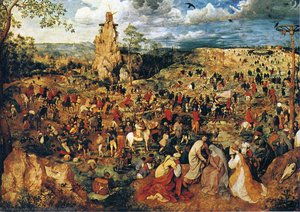
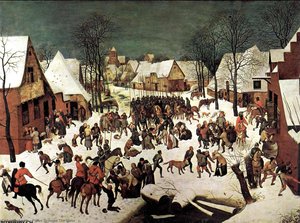
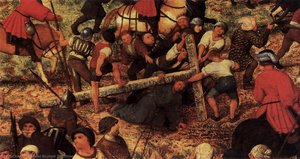
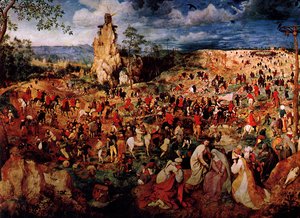
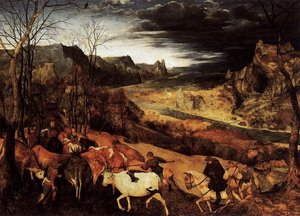
Pieter Bruegel the Elder's “The Procession to Calvary,” painted in 1564, is far more than a depiction of a biblical event; it’s a meticulously observed snapshot of 16th-century Flemish life interwoven with profound religious contemplation. This remarkable panel, now housed within the Kunsthistorisches Museum in Vienna, offers a rare glimpse into the artist's world – a world brimming with both stark realism and deeply layered symbolism. The scene unfolds before us: Christ, burdened by his cross, is carried through a landscape populated not just by devout followers but also by ordinary people engaged in their daily routines, highlighting the universality of suffering and faith.
Bruegel’s masterful use of perspective draws the viewer directly into the drama. The composition is deliberately unsettling; Christ, small and isolated amidst the throng, emphasizes his vulnerability and sacrifice. Notice how Bruegel employs a muted palette – earthy browns, grays, and ochres – to evoke a sense of solemnity and distance. This technique, characteristic of Northern Renaissance painting, contrasts sharply with the vibrant colors often found in Italian masterpieces of the same period, reflecting a distinct artistic sensibility rooted in the practical concerns and moral values of the Low Countries.
A Study in Human Nature
What truly elevates “The Procession to Calvary” beyond a simple religious illustration is Bruegel’s astute portrayal of human nature. The painting isn't simply about Christ's suffering; it’s about the reactions of those who witness it. Observe the indifference of the onlookers, their preoccupation with commerce and everyday affairs – a subtle critique of spiritual apathy. The inclusion of figures like the pickpockets and pedlars amongst the crowd underscores Bruegel’s unflinching realism, demonstrating his ability to capture both the grandeur and the grime of human existence.
The artist's choice to depict contemporary dress is particularly significant. This wasn’t a stylized representation of biblical times; it was a deliberate attempt to connect the event with the viewer’s own reality. Bruegel invites us to consider how faith intersects with daily life, and how easily piety can be overshadowed by worldly concerns. The scene echoes similar depictions found in earlier works by artists like the Brunswick Monogrammist and Pieter Aertsen, demonstrating Bruegel's engagement with established artistic traditions while forging his own unique path.
Symbolism and Landscape
The landscape itself is laden with symbolic meaning. The rugged terrain, reminiscent of depictions found in the work of Joachim Patinir, represents the arduous journey of faith – a challenging ascent towards spiritual enlightenment. Bruegel’s attention to detail extends beyond the figures; he meticulously renders every element of the scene, from the gallows and broken crosses to the flocks of ravens circling overhead, each contributing to the painting's overall narrative depth.
The inclusion of the Virgin Mary and her companions, positioned apart from the main procession, further emphasizes their role as witnesses to Christ’s suffering. Their presence adds a layer of maternal sorrow and underscores the profound emotional impact of the event. “The Procession to Calvary” remains a powerful testament to Bruegel's artistic genius – a timeless masterpiece that continues to resonate with viewers centuries after its creation.
Obras relacionadas
![La Procesión Al Calvario [detalle] — Pieter Bruegel El Viejo, Manierismo Del Norte](/media/artworks/images-thumb/32/c5/32c52a8c054c3755b769d95ed8a42796.jpg)
![La Procesión Al Calvario [detalle] — Pieter Bruegel El Viejo, Manierismo Nórdico](/media/artworks/images-thumb/49/75/4975ee454988c1cd26b08e7f49ee4ea8.jpg)
Biografía del artista
vida temprana y formación
Pieter Brueghel el Viejo, una figura clave en la pintura renacentista, nació y creció en Breda, Bélgica, entre 1525 y 1530. Su maestro, Pieter Coecke van Aelst, era un pintor de Amberes que guió el desarrollo artístico temprano de Bruegel. Después de formarse con Coecke, Bruegel se convirtió en maestro independiente en la gremial de pintores de Amberes en 1551.contribuciones artísticas y estilo
La obra de Bruegel es reconocida por sus innovadoras elecciones de temas, centrándose en paisajes y escenas campesinas. Sus pinturas, como Paisaje con la huida a Egipto (37 x 55 cm, galerías Courtauld de Londres), demostraron su dominio del óleo sobre tabla. El estilo de Bruegel, caracterizado por el uso del claroscuro, creó una sensación de profundidad y realismo, haciendo que sus pinturas se sintieran inmersivas.obras notables y museos
* Paisaje de los Alpes (musée du Louvre, París), una obra ejemplar que muestra las habilidades de Bruegel en la pintura de paisajes. * Triptico (renacimiento del norte, óleo), un notable ejemplo del uso de óleo sobre tabla por parte de Bruegel. * Los Musée Royale de Beaux-Arts en Bruselas cuenta con una impresionante colección de más de 20.000 obras de arte, incluyendo obras de Bruegel.legado e influencia
La influencia de Bruegel en la pintura dorada holandesa y los desarrollos artísticos posteriores es innegable. Su obra ha inspirado a artistas tanto en las artes literarias como en el cine, con referencias a sus pinturas que aparecen en películas como Solaris (1972) y Melancolía (2011). Explore más obras de Bruegel en ArtsDot.com: [https://ArtsDot.com/@/pieter-bruegel-the-elder](https://ArtsDot.com/@/pieter-bruegel-the-elder)- Descubra las obras maestras del Musée Royale de Beaux-Arts (Bruselas, Bélgica): /es/art/show/art-d3cf2d-es/
- Aprenda más sobre la pintura neerlandesa temprana en Wikipedia: [https://en.wikipedia.org/wiki/early_netherlandish_painting](https://en.wikipedia.org/wiki/early_netherlandish_painting)
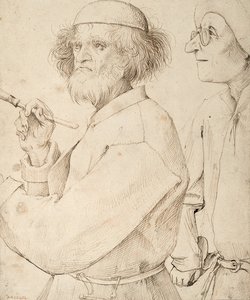
Pieter Bruegel el Viejo
1525 - 1569 , Bélgica
Datos clave
- Artistas Que Influyeron:
- Hieronymus Bosch
- Pieter Coecke van Aelst
- Estilo Artístico: Renacimiento Nórdico
- Fecha De Muerte: 1569
- Fecha De Nacimiento: c. 1525-1530
- Influencia Artística: Pintura dorada holandesa
- Lugar De Nacimiento: Breda, Bélgica
- Nacionalidad: Belga
- Nombre Completo: Pieter Bruegel el Viejo
- Obras Notables:
- Paisaje con la huida a Egipto
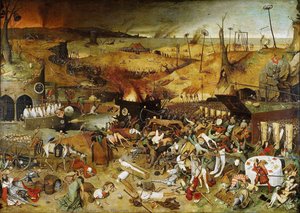
- El triunfo de la muerte
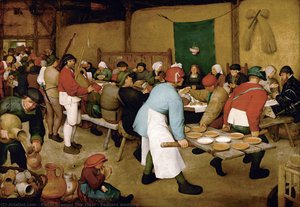
- Boda campesina
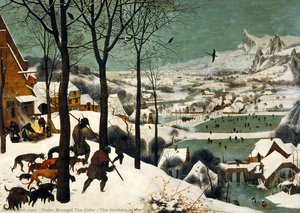
- Cazadores en la nieve
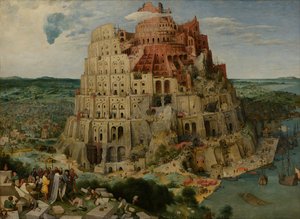
- La torre de Babel
Artículos relacionados
Las 10 Obras Maestras al Óleo sobre Panel que Transformaron la Historia del Arte |
Descubre las 10 obras maestras al óleo sobre panel que revolucionaron la historia del arte. Explora a Jan van Eyck, Botticelli y otros genios renacentistas. Reproducciones de arte exclusivas en para transformar tu hogar.

El Óleo sobre Lienzo: Historia, Técnica y la Persistencia de un Medio Artístico Atemporal
Descubre la historia y técnica del óleo sobre lienzo. Explora reproducciones fieles hechas a mano, personalización artística y consejos de expertos con ArtsDot. ¡Colecciona arte con confianza!

The Enduring Legacy of Oil on Canvas: Technique, History & Aesthetic Impact
Explore the rich history & techniques of oil painting – from Renaissance masters to Impressionism. Discover pigments, layering methods, and why this timeless medium endures. Expert insights for artists & art enthusiasts.
Pieter Bruegel the Elder: A Master of Genre, Landscape & Social Commentary
Explore the life & art of Pieter Bruegel the Elder, a pivotal figure of the Renaissance. Discover his groundbreaking genre scenes, symbolic landscapes, and lasting influence on art history. Learn more at ArtsDot.

The Enduring Power of Painting: A Historical & Contemporary Exploration of Form and Emotion
Explore the rich history & enduring techniques of oil painting with ArtsDot. Discover masterpieces, learn about art collecting, and find authentic handmade reproductions crafted by skilled artists.