

 Ver en contexto
 Enviar
 Compartir
 Detalles

 Descargar
 Similares
 Radiografía
 Presentación de diapositivas
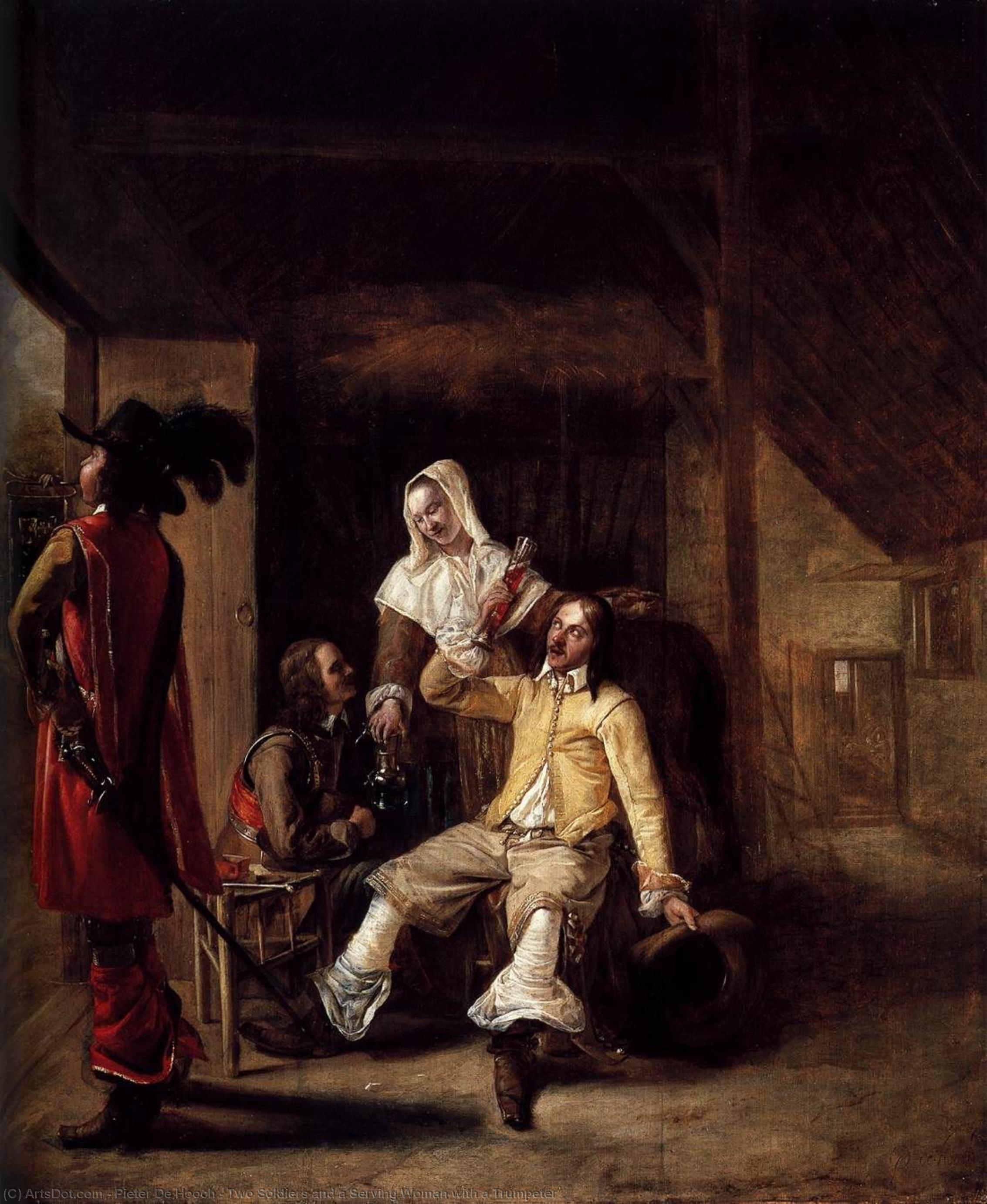
Two Soldiers and a Serving Woman with a Trumpeter
 Acrylic On Canvas
- WallArt
- Dutch Golden Age
 1654
1654 76.0 x 66.0 cm
 Kunsthaus Zürich
 Ver más
Adquiera una imagen digital de alta resolución y optimizada, muy superior a la vista previa en línea.
Cada archivo es preparado meticulosamente por nuestros especialistas internos mediante el uso de herramientas avanzadas y un experto retoque manual. Nos aseguramos de que cada imagen posea una claridad excepcional, una precisión cromática impecable y un detalle minucioso.
El archivo final se entrega por correo electrónico en un plazo de 72 horas, optimizado para su uso inmediato en entornos profesionales, editoriales y de impresión. Esta es la misma calidad en la que confían los estudios de diseño, las editoriales y las galerías de primer nivel.
Imagen Digital
Descarga un archivo de alta resolución para exhibición personal, impresión y proyectos creativos. ( Comprar impresión Comprar pintura hecha a mano)
Incluido en cada pedido de imágenes digitales
Entrega digital experta, garantizada.
Al elegir ArtsDot.com, no solo está adquiriendo una imagen; está recibiendo una obra de arte digital mejorada profesionalmente, elaborada con precisión y respaldada por una garantía de satisfacción. Esto es todo lo que incluye su pedido, automáticamente:

Entrega rápida por email
Recibirá su archivo de imagen digital en alta resolución por correo electrónico en un plazo de 72 horas tras realizar su pedido, listo para su uso inmediato.

Archivo digital optimizado por IA
Su obra de arte se optimiza profesionalmente mediante herramientas avanzadas de IA y edición manual, garantizando el máximo detalle, claridad y precisión cromática.

Reenvío gratuito de por vida
¿Has borrado o perdido tu archivo por error? No te preocupes: te lo volveremos a enviar en cualquier momento, sin coste adicional.

Sin gastos de importación, siempre
Disfrute de su obra de arte al instante sin aduanas, aranceles ni gastos de envío; las descargas digitales siempre están libres de impuestos.

Garantía de fidelidad de color
Garantizamos que su imagen digital refleje los colores originales con la mayor fidelidad posible, mediante el uso de herramientas profesionales y gestión del color.

Garantía de satisfacción de 60 días
Si no está satisfecho con su imagen digital, la revisaremos o le reembolsaremos el 100% en un plazo de 60 días, sin preguntas.

100% Garantía de devolución de dinero
¿No está satisfecho? Obtenga un reembolso completo dentro de los 60 días posteriores a la recepción de su archivo digital, sin necesidad de explicaciones.

Descuentos por pedidos grandes
Compra 3 imágenes, ahorra 10% - Compra 5, ahorra 15% - Compra 10+, ahorra 20%. Ideal para proyectos creativos, galerías y agencias.
A Moment of Quiet Camaraderie: Pieter de Hooch’s “Two Soldiers and a Serving Woman with a Trumpeter”
Pieter de Hooch's "Two Soldiers and a Serving Woman with a Trumpeter," painted circa 1650-1655, isn’t a grand historical tableau or a dramatic narrative. Instead, it offers a remarkably intimate glimpse into the burgeoning middle class of 17th-century Amsterdam – a world of subtle social interactions, quiet pleasures, and the delicate balance between formality and informality. This oil-on-panel painting, now residing in the Kunsthaus Zürich, is a masterclass in capturing fleeting moments of everyday life, rendered with an almost photographic realism that belies its emotional depth. De Hooch’s genius lies not in depicting action or spectacle, but in revealing the quiet poetry of ordinary scenes.The Scene Unfolds: Domesticity and Social Dynamics
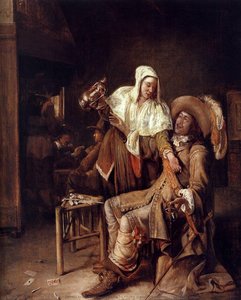
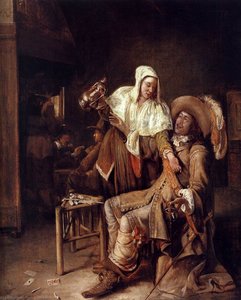
The composition is deceptively simple yet profoundly effective. Two uniformed soldiers, their postures suggesting a relaxed camaraderie, occupy the foreground. Their hands rest casually on their hips, conveying a sense of ease and shared experience. Between them sits a woman, her identity deliberately ambiguous – often interpreted as a serving girl or perhaps even a courtesan. Her posture is graceful, her gaze averted, hinting at a certain reserve while simultaneously inviting observation. A small table and chair suggest a brief respite from duty, a moment for conversation and refreshment. The inclusion of two trumpeters adds to the atmosphere, their instruments subtly suggesting celebration or perhaps simply the backdrop to this private encounter. De Hooch expertly uses light – diffused and natural – to illuminate the scene, creating an inviting warmth that draws the viewer into the intimate space.Technique and Style: The Art of Subtle Detail
De Hooch’s style is characterized by a remarkable attention to detail and a masterful use of light and shadow. He eschewed the dramatic chiaroscuro favored by some contemporaries, opting instead for a softer, more nuanced approach. His brushstrokes are delicate and precise, meticulously rendering the textures of fabric, the sheen of metal, and the subtle expressions on the figures’ faces. The artist's skill is particularly evident in his depiction of the interior – the worn wooden table, the simple chair, the muted colors of the room all contribute to a sense of realism that feels both immediate and timeless. Notably, De Hooch frequently employed a technique known as "open doorway," placing figures partially obscured by doorways or windows, creating a sense of depth and inviting the viewer's imagination to fill in the gaps. This technique is prominently featured here, subtly suggesting a larger space beyond the frame and contributing to the painting’s overall feeling of intimacy.Symbolism and Context: A Window into 17th-Century Amsterdam
“Two Soldiers and a Serving Woman with a Trumpeter” offers a valuable window into the social and cultural landscape of 17th-century Amsterdam, a period marked by unprecedented economic prosperity and burgeoning civic life. The presence of the soldiers reflects the city’s role as a major center for trade and military activity. Their relaxed demeanor suggests a degree of stability and security – a welcome contrast to the turbulent political climate of the time. The inclusion of the serving woman speaks to the evolving social dynamics of the era, where women were increasingly entering the workforce and challenging traditional gender roles. The trumpet, often associated with celebration and heraldry, hints at a sense of occasion or perhaps simply the convivial atmosphere of a tavern or public gathering.Emotional Resonance: A Quiet Moment of Connection
Despite its seemingly mundane subject matter, “Two Soldiers and a Serving Woman with a Trumpeter” possesses a remarkable emotional resonance. It’s not a painting that shouts for attention; rather, it invites quiet contemplation. The subtle interactions between the figures – their averted gazes, their relaxed postures – suggest a shared understanding and a moment of connection amidst the bustle of daily life. De Hooch masterfully captures the essence of human interaction—the unspoken language of gestures, expressions, and shared experiences—creating an image that is both deeply personal and universally relatable. It’s a painting that reminds us to appreciate the beauty in the ordinary moments of our lives, and the quiet connections we forge with others.Obras relacionadas
Biografía del artista
Vida temprana y formación
Pieter de Hooch, una figura destacada del Siglo de Oro holandés, nació el 20 de diciembre de 1629 en Róterdam, Países Bajos. Era el hijo mayor de cinco hijos de Hendrick Hendricksz de Hooch, albañil, y Annetge Pieters, partera. Se sabe poco sobre su vida temprana, pero se cree que trabajó en Róterdam, Delft y Ámsterdam. La formación artística de De Hooch tuvo lugar en Haarlem bajo el pintor paisajista Nicolaes Berchem, junto con Jacob Ochtervelt. Este período sentó las bases para su futuro éxito como pintor de escenas domésticas tranquilas con una puerta abierta.Estilo artístico y temas
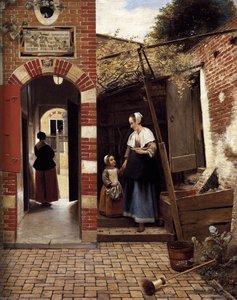
El trabajo de De Hooch se caracteriza por su atención al detalle, naturalismo y uso de la luz. Sus pinturas a menudo representaban la vida cotidiana, reflejando los valores y aspiraciones de la emergente clase media. Un ejemplo notable de este estilo es "El patio de una casa en Delft" (1658), que muestra su capacidad para capturar los detalles mundanos de la vida cotidiana. El trabajo de De Hooch también comparte temas y composiciones con Emanuel de Witte, pero su enfoque en las personas y sus relaciones lo distingue. Esto se evidencia en "Mujer amamantando" (1658) y "Mujer con un bebé en el regazo" (1658), que demuestran su interés en escenas domésticas.Obras notables y legado
Algunas de las obras más destacadas de De Hooch incluyen:- “El bebedor alegre” (c. 1650)
- “Jugadores de cartas en una habitación soleada” (1658)
- “Una mujer preparando pan y mantequilla para un niño” (1661)
Desarrollo artístico y influencias
Alrededor de 1652, De Hooch se documentó en Delft donde contrajo matrimonio con la hermana de su amigo el pintor Hendrick van der Burch y donde produjo sus obras más importantes y mejores. En 1653, el artista está documentado como pintor y empleado de Justus de la Grange, un comerciante de arte que vivía en Delft y Leiden. En 1655 y 1657 su nombre aparece en el gremio de pintores de San Lucas en Delft. Durante este período, De Hooch modificó su materia temática y se centró en escenas domésticas de interiores de clase media, incluyendo una serie de obras maestras como "La despensa" (Rijksmuseum, Ámsterdam), "Sirvienta y niño pequeño en un patio" (National Gallery, Londres) y "Hombre fumando y mujer bebiendo en un patio" (Mauritshuis, La Haya). Alrededor de 1660, De Hooch se mudó a Ámsterdam donde está documentado en 1661 y 1672. Durante este período, su estilo se volvió más descriptivo y situó sus escenas en lujosos entornos con una gran cantidad de elementos decorativos. Sin embargo, estas obras carecen de la sutileza de su fase de Delft. Al final de su carrera, influenciado por el nuevo gusto por el arte y la cultura franceses, De Hooch comenzó a ubicar a sus figuras en las salas de mármol del nuevo Ayuntamiento de Ámsterdam, lo que ofrecía más oportunidades para entornos grandiosos que sus anteriores narrativas domésticas burguesas. Entre las obras de su período de Ámsterdam se encuentran "El armario de ropa" (Rijksmuseum, Ámsterdam) y “La minué” (Statens Museum for Kunst, Copenhague). De Hooch murió en un hospicio en 1684. Fue uno de los pintores holandeses del género más finos y su obra siempre se ha asociado con la ciudad de Delft donde produjo sus mejores pinturas.Significado histórico
Pieter de Hooch es reconocido como uno de los pintores más importantes del Siglo de Oro holandés, destacando por su capacidad para capturar la atmósfera tranquila y hogareña de la vida doméstica. Su uso magistral de la luz y la perspectiva, junto con su atención al detalle en la representación de interiores y objetos cotidianos, lo convierten en un artista único e influyente. Su técnica del "doorkirkjie" o puerta transparente, que ampliaba el espacio pictórico y permitía vislumbrar el exterior, fue innovadora y sentó las bases para futuras generaciones de artistas.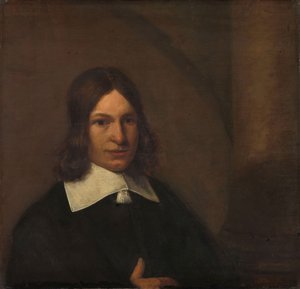
Pieter de Hooch
1629 - 1694 , Países Bajos
Breves datos
- Artistas Que Influyeron:
- Nicolaes Berchem
- Emanuel de Witte
- Estilo Artístico: Edad de Oro Neerlandesa
- Fecha De Nacimiento: 20 de diciembre de 1629
- Influencia En Artistas:
- Impresionismo
- Realismo
- Lugar De Nacimiento: Rotterdam, Países Bajos
- Nacionalidad: Neerlandés
- Nombre Completo: Pieter de Hooch
- Obras Notables:
- El bebedor alegre
- Jugadores de cartas
- Mujer preparando pan y mantequilla

