

 Ver en contexto
 Enviar
 Compartir
 Detalles

 Descargar
 Similares
 Radiografía
 Presentación de diapositivas
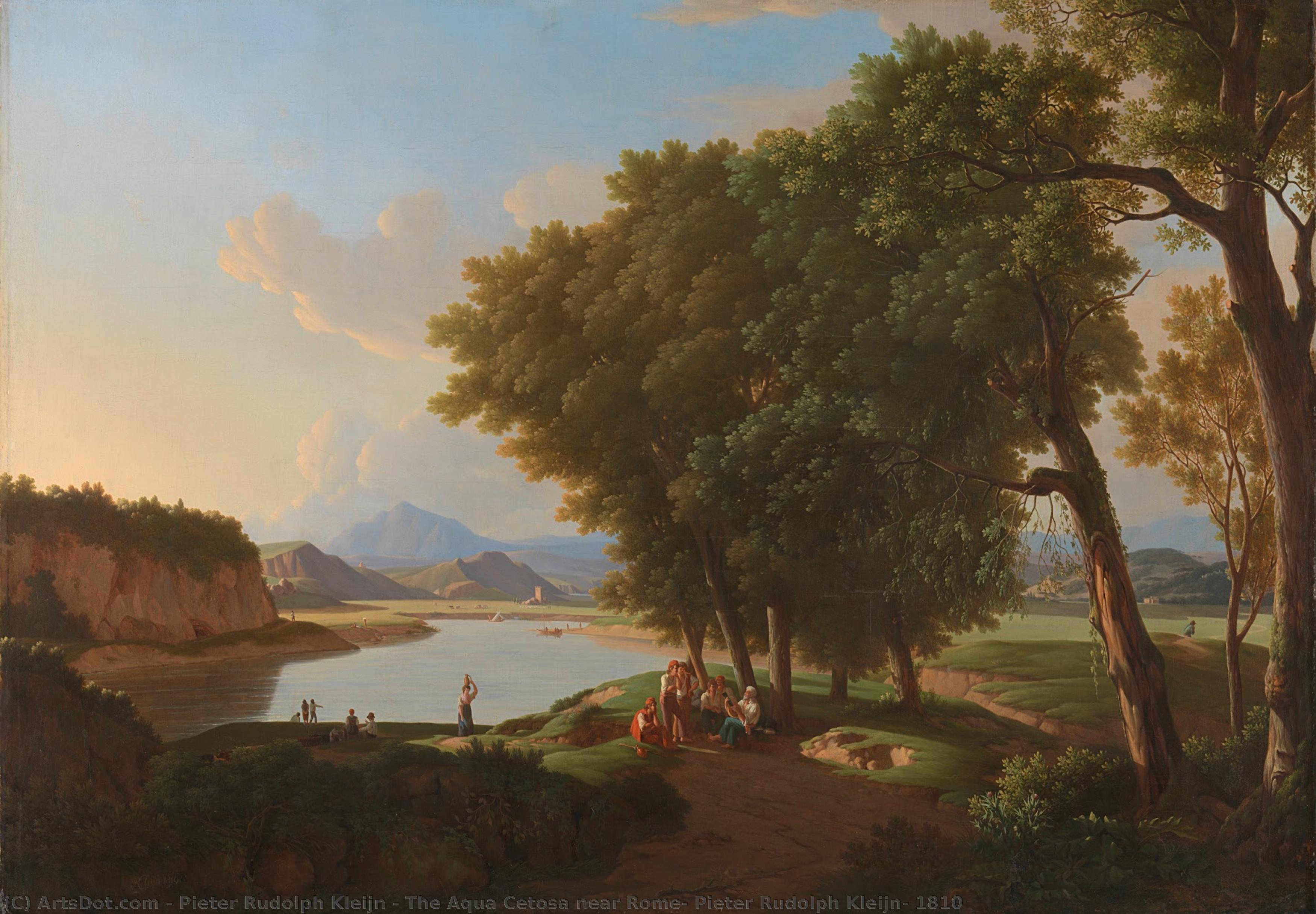
The Aqua Cetosa near Rome, Pieter Rudolph Kleijn, 1810
 1810
1810 93.0 x 130.0 cm
 Ver más
Adquiera una imagen digital de alta resolución y optimizada, muy superior a la vista previa en línea.
Cada archivo es preparado meticulosamente por nuestros especialistas internos mediante el uso de herramientas avanzadas y un experto retoque manual. Nos aseguramos de que cada imagen posea una claridad excepcional, una precisión cromática impecable y un detalle minucioso.
El archivo final se entrega por correo electrónico en un plazo de 72 horas, optimizado para su uso inmediato en entornos profesionales, editoriales y de impresión. Esta es la misma calidad en la que confían los estudios de diseño, las editoriales y las galerías de primer nivel.
Imagen Digital
Descarga un archivo de alta resolución para exhibición personal, impresión y proyectos creativos. ( Comprar impresión Comprar pintura hecha a mano)
Incluido en cada pedido de imágenes digitales
Entrega digital experta, garantizada.
Al elegir ArtsDot.com, no solo está adquiriendo una imagen; está recibiendo una obra de arte digital mejorada profesionalmente, elaborada con precisión y respaldada por una garantía de satisfacción. Esto es todo lo que incluye su pedido, automáticamente:

Entrega rápida por email
Recibirá su archivo de imagen digital en alta resolución por correo electrónico en un plazo de 72 horas tras realizar su pedido, listo para su uso inmediato.

Archivo digital optimizado por IA
Su obra de arte se optimiza profesionalmente mediante herramientas avanzadas de IA y edición manual, garantizando el máximo detalle, claridad y precisión cromática.

Reenvío gratuito de por vida
¿Has borrado o perdido tu archivo por error? No te preocupes: te lo volveremos a enviar en cualquier momento, sin coste adicional.

Sin gastos de importación, siempre
Disfrute de su obra de arte al instante sin aduanas, aranceles ni gastos de envío; las descargas digitales siempre están libres de impuestos.

Garantía de fidelidad de color
Garantizamos que su imagen digital refleje los colores originales con la mayor fidelidad posible, mediante el uso de herramientas profesionales y gestión del color.

Garantía de satisfacción de 100 días
Si no está satisfecho con su imagen digital, la revisaremos o le reembolsaremos el 100% en un plazo de 100 días, sin preguntas.

100% Garantía de devolución de dinero
¿No está satisfecho? Obtenga un reembolso completo dentro de los 100 días posteriores a la recepción de su archivo digital, sin necesidad de explicaciones.

Descuentos por pedidos grandes
Compra 3 imágenes, ahorra 10% - Compra 5, ahorra 15% - Compra 10+, ahorra 20%. Ideal para proyectos creativos, galerías y agencias.
Obras relacionadas









Biografía del artista
A Brief Life Etched in Landscape
Pieter Rudolph Kleijn, or Kleyn as he was sometimes known, remains a poignant figure in the annals of 19th-century Dutch painting—a talent blossoming briefly before being tragically cut short. Born in 1785 in Hooge Zwaluwe, nestled within the Northern Netherlands, Kleijn’s life unfolded against a backdrop of shifting political landscapes and burgeoning Romantic sensibilities. He was one of seven children born to Johannes Petrus Kleyn, a man of considerable standing as both mayor and lawyer, but also a poet, and Antoinette Ockerse, herself a woman of letters. This environment undoubtedly fostered an appreciation for beauty and expression that would shape the young artist’s path.
Kleijn's formal artistic training began in Dordrecht under the tutelage of Abraham and Jacob van Strij, brothers renowned for their landscape work. These early lessons provided him with a solid foundation in technique and observation, but it was his selection for the prestigious Prix de Rome in 1808 that truly propelled his career forward. Under the patronage of Lodewijk Napoleon, Kleijn embarked on an extended period of study in Paris, spending two and a half years immersed in the artistic heart of Europe under the guidance of Jacques-Louis David—a master of Neoclassical form. This experience was transformative, exposing him to a different aesthetic vocabulary than that of his Dutch predecessors.
Paris, Rome, and the Seeds of a Unique Style
Following Paris, Kleijn continued his artistic journey in Rome for another two years. While David’s influence is discernible in some of his earlier works—a precision of line and form—Kleijn began to develop a distinctly personal style during his Italian sojourn. He wasn't merely replicating the classical ideals he encountered; instead, he was absorbing them and filtering them through his own Dutch sensibility, creating scenes that were both grand in scope and intimate in feeling. His landscapes from this period often feature a luminous quality of light and a subtle emotional resonance that sets him apart.
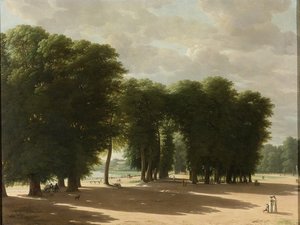
The works produced during these formative years reveal an artist captivated by the interplay of nature and human presence. He wasn’t interested in purely idyllic depictions; rather, he sought to capture the atmosphere of a place—the feeling of being *within* the landscape, observing its nuances and complexities. De ingang van het park van Saint-Cloud in Parijs (The Entrance of Park Saint-Cloud in Paris), painted in 1809, exemplifies this approach. The painting is not simply a record of a location but an evocation of a specific moment—a sunny day filled with leisurely activity and the quiet beauty of the Parisian countryside. It’s a work that hints at Kleijn's growing ability to imbue his scenes with narrative depth.
Allegiance, Loss, and a Tragic End
Kleijn returned to the Netherlands in 1815, coinciding with the restoration of the monarchy. Driven by a strong sense of patriotism, he enlisted as a second lieutenant in the Dutch army—a surprising turn for an artist who had spent years honing his craft in the cultural capitals of Europe. This decision proved fateful. He was wounded at the Battle of Quatre Bras, a brutal engagement fought shortly before the decisive Battle of Waterloo. Though awarded the Military William Order for his bravery, Kleijn never fully recovered from his injuries.
He died in 1816, just thirty-one years old, succumbing to his wounds in the arms of his mother. His untimely death robbed the Dutch art world of a promising talent. The poignancy of his story—an artist dedicated to beauty and expression who ultimately sacrificed himself for his country—has only added to the mystique surrounding his work.
A Lasting Legacy, Though Fleeting
While Kleijn’s oeuvre is relatively small due to his short career, his paintings offer a fascinating glimpse into the transition between Neoclassicism and Romanticism in Dutch art. He wasn't a revolutionary figure; he didn't seek to overturn established conventions. Instead, he synthesized influences—the precision of David, the atmospheric qualities of Italian landscapes, and the inherent Dutch love for natural observation—to create scenes that are uniquely his own.
His work resonates today not only for its aesthetic merit but also for the story it tells—a tale of ambition, dedication, and tragic loss. Pieter Rudolph Kleijn remains a reminder that artistic genius can flourish even in the face of adversity, and that sometimes, the most profound beauty is found in the fleeting moments of life itself.
pieter rudolph kleijn
1785 - 1816