

 Ver en contexto
 Enviar
 Compartir
 Detalles

 Descargar
 Similares
 Radiografía
 Presentación de diapositivas
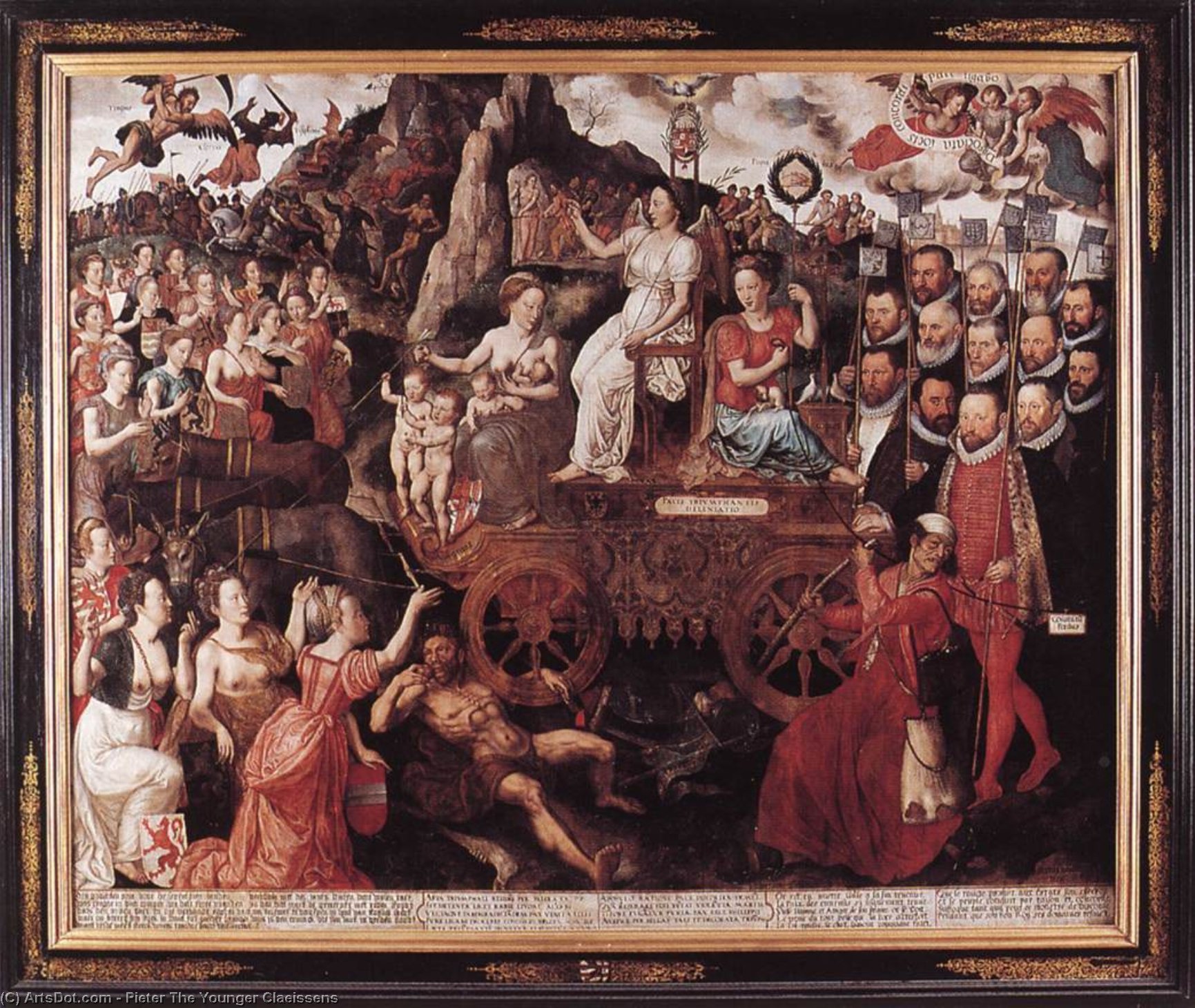
Allegory of the 1577 Peace in the Low Countries
 Oil On Panel
- Northern Renaissance
 1577
1577- Early Modern
 159.0 x 198.0 cm
 Groeningemuseum
 Ver más
Reproducción al óleo hecha a mano
Óleo sobre lienzo pintado a mano en el tamaño y marco de su elección, realizado por encargo por nuestros artistas. ( Comprar impresión Comprar imagen)




P118B $10

P118H $10

P118W $10

P438Z $10

P508JH $12

P508YH $12

P805H $10

P805Z $10

P919BZ $10

P919G $10

P919XJ $10

P959ZH $10

P968JZ $12

W106C $8

W218G $10

W218JH $8

W218Y $10

W307PJ $10

W316G $10

W316PJ $8

W316Y $10

W398PJ $8

W4111J $10

W500HY $15

W500JH $15

W692G $12

W849H $8

W940BG $15

W953PJ $8




Elija entre nuestros tamaños predefinidos que respetan las proporciones originales de la obra.

Puede ingresar sus propias dimensiones para adaptarse a un marco o espacio específico. Si el tamaño seleccionado no coincide con las proporciones de la imagen original, recortaremos la obra o extenderemos la pintura con elementos adicionales pintados a mano. Se le enviará una maqueta digital para su aprobación antes de comenzar la producción.
Tenga en cuenta que la vista previa en pantalla no refleja el recorte o la extensión reales. Solo la maqueta mostrará con precisión la composición final.
Si bien existen tamaños personalizados, recomendamos seleccionar una dimensión de la lista predefinida para preservar las proporciones originales.
Tras realizar el pedido, el equipo de ArtsDot.com enviará un correo electrónico al cliente para solicitar instrucciones y proporcionarle una vista previa del boceto.
Envío a todo el mundo () en 3-4 semanas en lugar de las 5 semanas estándar. (5 septiembre). Sin comprometer la calidad.

Envío exprés gratuito a todo el mundo

Lienzo de lino de alta calidad

Seguro de envío total

Garantía de reembolso de impuestos aduaneros

Garantía de fidelidad cromática exacta

Política de devolución de 60 días (solo por defectos)

Garantía de devolución del 100% del dinero

Descuento por cantidad
 La opción de vidrio solo está disponible en tamaños inferiores a 110 cm.

Allegory of the 1577 Peace in the Low Countries
Técnica de reproducción
Dimensiones de la reproducción
-


Precio total final
$ 263
A Vision of Harmony: The Allegory of the 1577 Peace
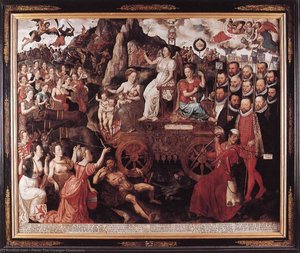
In the grand tapestry of Flemish art history, few works capture the delicate tension between political upheaval and the yearning for stability as poignantly as Pieter the Younger Claeissens’s Allegory of the 1577 Peace in the Low Countries. This monumental oil on panel, measuring an impressive 159 x 198 cm, serves as more than just a historical record; it is a profound psychological study of a society caught in the throes of transition. At the heart of this intricate composition sits a central female figure atop a cart, acting as the luminous anchor for a diverse assembly of souls. Claeissulence masterfully directs the viewer's eye through a crowded landscape of figures—some kneeling in reverence, others standing in contemplative silence—creating a sense of communal breath held in anticipation of a lasting truce.
The technique employed by Claeissens reflects the pinnacle of the Flemish tradition, characterized by an almost tactile approach to oil painting. Every fold of heavy fabric, every weathered expression on a laborer's face, and the subtle play of light across the central figure are rendered with a meticulousness inherited from his father’s tutelage. The artist utilizes the luminosity of the oil medium to breathe life into the skin tones and the textures of the surrounding environment, ensuring that the scene feels less like a static tableau and more like a living, breathing moment in time. For the discerning collector or interior designer, this piece offers a rich, multi-layered visual experience where the depth of the brushwork invites prolonged contemplation.
Symbolism and the Spirit of an Era
To gaze upon this allegory is to engage with the complex political landscape of the late 16th-century Low Countries. The year 1577 was a pivotal moment of fragile hope, and Claeissens weaves this historical weight into every symbolic gesture within the frame. The central figure on the cart serves as an embodiment of Peace itself, emerging amidst a sea of varied social classes to remind the viewer of the shared human cost of conflict. The interaction between the thirteen visible figures—ranging from those in positions of power to the humble onlookers in the foreground—creates a narrative of unity. Through these carefully choreographed postures, the artist suggests that peace is not merely a political treaty, but a collective spiritual and social endeavor.
For those looking to integrate such a masterpiece into a curated space, the painting offers an unparalleled emotional resonance. It brings a sense of gravitas and historical continuity to any room, acting as a conversation piece that speaks of resilience and the enduring human spirit. Whether placed in a formal gallery setting or as a focal point in a sophisticated study, the Allegory of the 1577 Peace provides an atmosphere of intellectual depth and classical elegance. It is a work that does not merely decorate a wall; it commands the space, inviting all who behold it to reflect on the delicate balance between chaos and order.
Obras relacionadas


Biografía del artista
A Legacy of Light and Devotion: The Life of Pieter the Younger Claeissens
In the heart of Bruges, a city where the echoes of the Middle Ages met the burgeoning intellectual light of the Renaissance, Pieter the Younger Claes Jansz. Claeissens emerged as a master of profound visual storytelling. Born around 1540, his very existence was woven into the rich tapestry of the Flemish artistic tradition. As the son of the esteemed painter Pieter Claes Jansz., Claeissens did not merely learn a trade; he inherited a lineage of meticulous precision and a deep-seated reverence for the oil medium. This early tutelage under his father provided him with the technical foundation necessary to master the subtle luminosity and tactile realism that would become the hallmarks of his mature style, allowing him to breathe life into skin, fabric, and the very atmosphere of his compositions.
The world Claeissens inhabited was one of intense transition, marked by the humanist revival and the complex political shifts of the Low Countries. His career flourished during the reign of Philip II, a period where art served as both a tool for religious devotion and a mirror for political identity. Claeissens rose to significant prominence within the Guild of St. Luke in Bruges, eventually serving as its dean on multiple occasions between 1587 and 1606. His professional ascent was further solidified by his appointment as the official painter to Bruges, a prestigious mantle he held from 1581 until 1621, succeeding his brother Antoon. This position allowed him to shape the visual identity of his home city, producing works that resonated with both the local citizenry and the ruling elite.
The Mastery of Allegory and Sacred Imagery
While Claeissens was a gifted portraitist capable of capturing the psychological depth of his subjects, it is in his religious and allegorical works that his true genius resides. He possessed a rare ability to marry the earthly with the divine, using the dramatic interplay of chiaroscuro to evoke a sense of spiritual awe. In his depictions of the Virgin and Child, such as those set within elegant Gothic frames, he moved beyond simple iconography. Through the careful placement of figures—like the presence of Joseph working in the background—he transformed static devotional panels into living narratives of the Holy Family, inviting the viewer into a moment of quiet, domestic sanctity.
Beyond the sacred, Claeissens was a master of the complex political allegory. His monumental work, Allegory of the 1577 Peace in the Low Countries, stands as a testament to his ability to translate the turbulent sociopolitical climate of his era into a cohesive visual language. In this sweeping composition, he utilizes a central female figure atop a cart to act as an anchor for a diverse assembly of souls, capturing the collective breath of a society yearning for stability amidst upheaval. Through these works, Claeisspecens demonstrated that painting could serve as much more than decoration; it could function as a profound psychological study of a nation in transition.
The enduring significance of Pieter the Younger Claeissens lies in his role as a bridge between eras. His work embodies the following essential elements of the Flemish tradition:
- Technical Precision: A commitment to the meticulous detail and luminous textures inherited from the great Flemish masters.
- Symbolic Depth: The use of humanist symbolism to convey complex theological and political truths.
- Narrative Emotion: An ability to utilize light and shadow to heighten the emotional impact of both sacred and secular scenes.
- Civic Importance: A career deeply embedded in the institutional and cultural life of Bruges, serving as a guardian of the city's artistic heritage.
As we look back upon his prolific career, Claeissens remains a pivotal figure of the Northern Renaissance. His ability to navigate the delicate balance between the meticulous realism of his Flemish roots and the grand, symbolic ambitions of the Renaissance era ensures that his works continue to captivate the modern eye, offering a window into a world where every brushstroke was an act of faith and every shadow held a story.
pieter the younger claeissens
1540 - 1623 , Belgium
Datos clave
- Artistic Movement Or Style: Renaissance Painting
- Artists Or Movements Influenced By This Artist: ['Northern Renaissance']
- Artists Who Influenced This Artist: ['Jan Bruegel the Elder']
- Date Of Birth: ca. 1540
- Date Of Death: 1623
- Full Name: Pieter Claeissens
- Nationality: Flemish
- Notable Artworks: ['Virgin and Child']
- Place Of Birth: Bruges, Belgium
Artículos relacionados
Las 10 Obras Maestras al Óleo sobre Panel que Transformaron la Historia del Arte |
Descubre las 10 obras maestras al óleo sobre panel que revolucionaron la historia del arte. Explora a Jan van Eyck, Botticelli y otros genios renacentistas. Reproducciones de arte exclusivas en para transformar tu hogar.
Oil on Panel: A Historical Survey of Technique, Support & Aesthetic Evolution
Explore the rich history of oil on panel painting! Discover Renaissance techniques, support structures & aesthetic evolution. Expert insights for art collectors and enthusiasts.

El Óleo sobre Lienzo: Historia, Técnica y la Persistencia de un Medio Artístico Atemporal
Descubre la historia y técnica del óleo sobre lienzo. Explora reproducciones fieles hechas a mano, personalización artística y consejos de expertos con ArtsDot. ¡Colecciona arte con confianza!
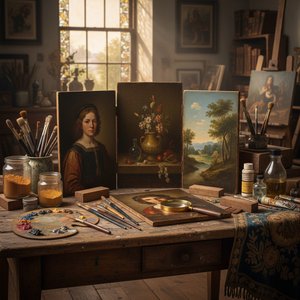
El Enduring Legado de la Tabla: Una Revisión Histórica de la Técnica, el Soporte y el Impacto Estético del Óleo sobre Madera
Descubre la fascinante historia de la pintura sobre tabla y óleo sobre madera. Explora técnicas ancestrales, artistas clave del Renacimiento y consejos para conservar estas obras maestras. ¡Un viaje por el legado artístico!

The Enduring Legacy of Oil on Canvas: Technique, History & Aesthetic Impact
Explore the rich history & techniques of oil painting – from Renaissance masters to Impressionism. Discover pigments, layering methods, and why this timeless medium endures. Expert insights for artists & art enthusiasts.

