 Ver en contexto
 Enviar
 Compartir
 Detalles

 Descargar
 Similares
 Radiografía
 Presentación de diapositivas
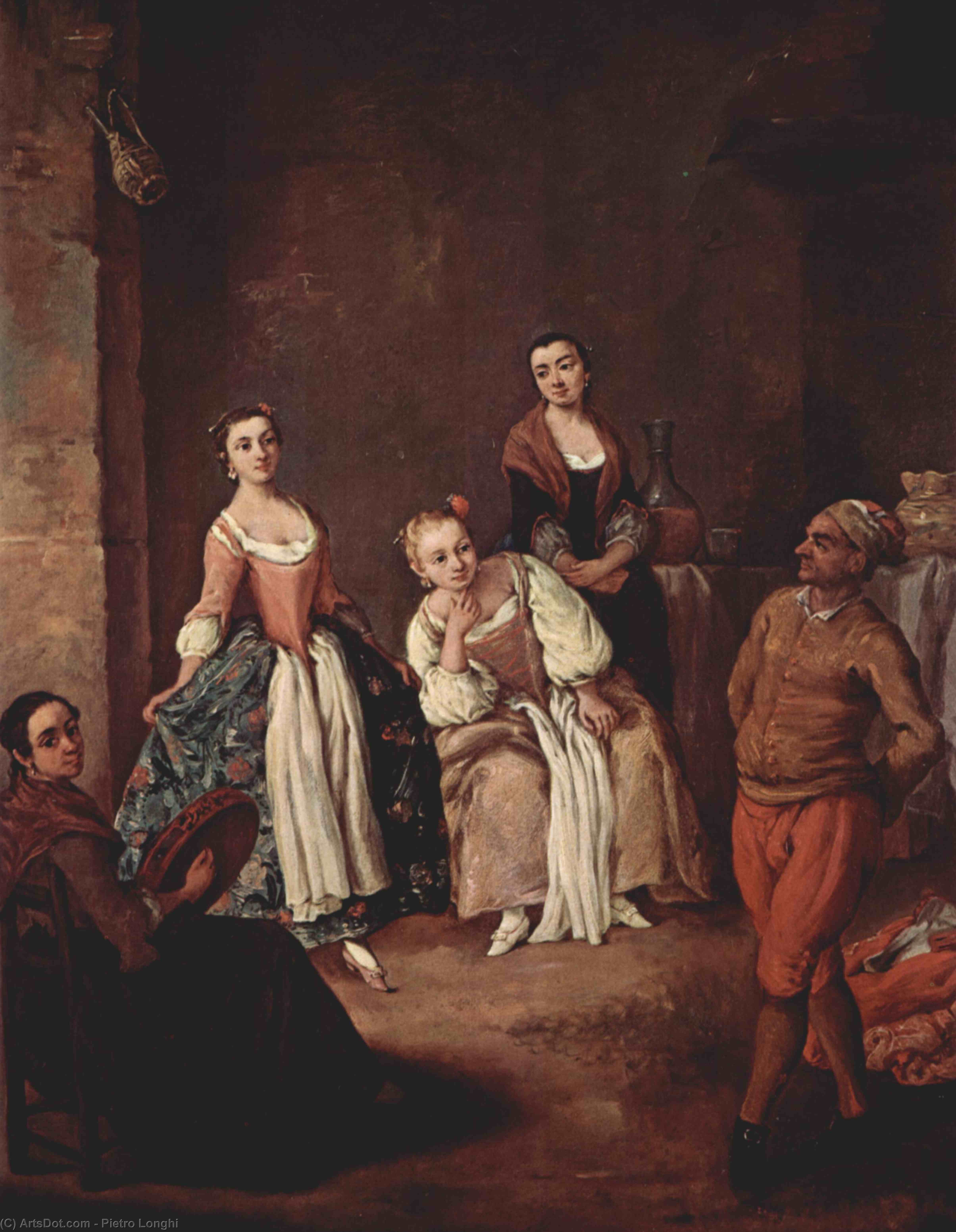
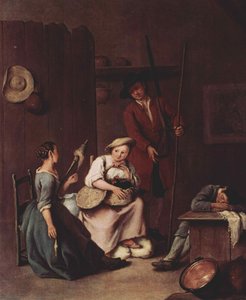
The furlana (Venetian dance)
 Oil
Oil- WallArt
- Rococo
 Early Modern
 51.0 x 62.0 cm
 Ver más
Reproducción al óleo hecha a mano
Óleo sobre lienzo pintado a mano en el tamaño y marco de su elección, realizado por encargo por nuestros artistas. ( Comprar impresión Comprar imagen)




P118B $10

P118H $10

P118W $10

P438Z $10

P508JH $12

P508YH $12

P805H $10

P805Z $10

P919BZ $10

P919G $10

P919XJ $10

P959ZH $10

P968JZ $12

W106C $8

W218G $10

W218JH $8

W218Y $10

W307PJ $10

W316G $10

W316PJ $8

W316Y $10

W398PJ $8

W4111J $10

W500HY $15

W500JH $15

W692G $12

W849H $8

W940BG $15

W953PJ $8




Elija entre nuestros tamaños predefinidos que respetan las proporciones originales de la obra.

Puede ingresar sus propias dimensiones para adaptarse a un marco o espacio específico. Si el tamaño seleccionado no coincide con las proporciones de la imagen original, recortaremos la obra o extenderemos la pintura con elementos adicionales pintados a mano. Se le enviará una maqueta digital para su aprobación antes de comenzar la producción.
Tenga en cuenta que la vista previa en pantalla no refleja el recorte o la extensión reales. Solo la maqueta mostrará con precisión la composición final.
Si bien existen tamaños personalizados, recomendamos seleccionar una dimensión de la lista predefinida para preservar las proporciones originales.
Tras realizar el pedido, el equipo de ArtsDot.com enviará un correo electrónico al cliente para solicitar instrucciones y proporcionarle una vista previa del boceto.
Envío a todo el mundo () en 3-4 semanas en lugar de las 5 semanas estándar. (24 agosto). Sin comprometer la calidad.

Envío exprés gratuito a todo el mundo

Lienzo de lino de alta calidad

Seguro de envío total

Garantía de reembolso de impuestos aduaneros

Garantía de fidelidad cromática exacta

Política de devolución de 60 días (solo por defectos)

Garantía de devolución del 100% del dinero

Descuento por cantidad
 La opción de vidrio solo está disponible en tamaños inferiores a 110 cm.

The furlana (Venetian dance)
Técnica de reproducción
Dimensiones de la reproducción
-


Precio total final
$ 263
Descripción de la obra
A Glimpse into Venetian Elegance
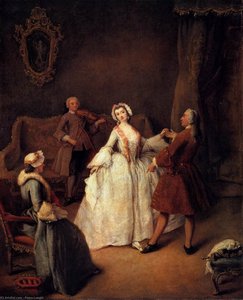
In the delicate brushstrokes of Pietro Longhi’s The furlana (Venetian dance), we are transported to the heart of an eighteenth-century salon, where the air is thick with the soft murmur of conversation and the rhythmic pulse of a traditional dance. This captivating genre scene serves as a window into the intimate social fabric of Venice during the Rococo era. Rather than focusing on the grand, sweeping dramas of mythology or war, Longhi directs our gaze toward the quiet, witty, and often satirical moments of daily life among the Venetian bourgeoisie. The composition centers on a small group of six individuals—three women and three men—whose poised gestures and expressive faces suggest a momentary pause in a lively social gathering. As we observe the seated figures and those caught in mid-motion, we feel as though we have stepped into a private room, witnessing a fleeting instance of grace and leisure that has been preserved through time.
The technical mastery of Longhi is evident in his ability to manipulate light and shadow to create a profound sense of atmosphere. The background remains shrouded in a soft, dim obscurity, which serves a vital purpose: it pushes the brightly lit figures into the foreground, demanding our undivided attention. This use of chiaroscuro-lite highlights the textures of fine silks, the subtle sheen of satin, and the intricate details of period attire. The artist employs a palette that balances the warmth of human skin tones with the cool, elegant hues of Rococo fashion, creating a visual harmony that is both sophisticated and inviting. Every curve of a gown and every tilt of a hat is rendered with a lightness of touch that mirrors the ephemeral nature of the dance itself.
The Art of Social Observation
Beyond its aesthetic beauty, The furlana functions as a historical document, rich with the symbolism of class and social interaction. The presence of specific objects—a delicate vase, a woven basket, and the suggestion of musical instruments—adds layers of narrative depth, hinting at the comforts and cultural pursuits of the upper classes. Longhi, often referred to as the "Venetian Hogarth," possessed a unique talent for capturing the subtle nuances of social hierarchy. Through the positioning of his subjects—some seated in contemplative repose while others stand in animated dialogue—he illustrates the complex choreography of 18th-century etiquette. There is a palpable sense of charm and wit embedded in the scene, inviting the viewer to decipher the unspoken glances and the playful tension between the dancers.
For the discerning collector or interior designer, this masterpiece offers more than mere decoration; it provides an emotional anchor for a room. The painting’s ability to evoke nostalgia and a sense of refined tranquility makes it an ideal centerpiece for spaces that celebrate classical elegance and historical depth. Whether placed in a sunlit gallery or a moody, library-style study, the work brings with it the luminous spirit of Venice. Owning a high-quality reproduction of this piece allows one to invite the timeless sophistication of the Rococo period into a modern setting, fostering an environment of cultured reflection and enduring beauty.
Obras relacionadas
Biografía del artista
Vida temprana y formación
Pietro Longhi, un renombrado pintor veneciano, nació en Venecia, en la parroquia de Santa María el 5 de noviembre de 1701. Fue el primer hijo de Alessandro Falca, un platero, y su esposa Antonia. Longhi adoptó su apellido cuando comenzó a pintar, siendo inicialmente instruido por el pintor veronés Antonio Balestra.Carrera artística
Los primeros trabajos de Longhi incluyeron retablos y temas religiosos, con su primera pieza documentada importante siendo un retablo para la iglesia de San Pellegrino en 1732. Posteriormente se especializó en obras de género a pequeña escala, lo que le valió el título de "el William Hogarth veneciano". Sus galantes escenas interiores reflejan el enfoque del siglo XVIII en lo privado y burgués.- Las pinturas de Longhi a menudo presentan figuras enmascaradas participando en diversas actividades, como la reunión del procurador y su esposa, mostrando su perspectiva satírica.
- Sus obras, como cazadores de patos en la laguna, demuestran su capacidad para capturar la vida cotidiana en Venecia.
- Los numerosos dibujos de Longhi, típicamente en carboncillo o lápiz realzados con tiza blanca sobre papel coloreado, a menudo se realizaban por sí mismos, más que como estudios preparatorios para pinturas.
Museos y movimiento artístico
Las obras de Longhi pueden encontrarse en varios museos, incluyendo la Pinacoteca Querini Stampalia en Venecia, que presenta sus escenas de caza (caccia). Su estilo es característico del movimiento artístico de la pintura veneciana, que enfatizaba el color sobre la línea y contrastaba con el manierismo prevalente en Italia. Obras notables:- El sastre (Gallerie dell'Accademia, Venecia, Italia)
- El bautismo (Fondazione Querini Stampalia, Venecia, Italia)
- Pintor en su estudio (Ca' Zenobio, Venecia, Italia)
Legado
Pietro Longhi falleció el 8 de mayo de 1785, dejando atrás un legado como uno de los pintores de género más celebrados de su tiempo. Su obra continúa siendo admirada por su mezcla única de sátira y vida cotidiana, ofreciendo una visión de la Venecia del siglo XVIII. Ver más obras de Pietro Longhi en ArtsDot.com.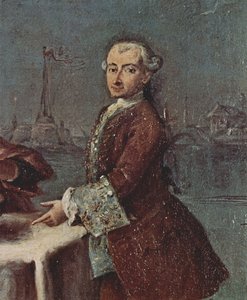
Pietro Longhi
1701 - 1785 , Italia
Datos clave
- Artistas Influyentes: ['Antonio Balestra']
- Estilo Artístico: Rococó, pintura de género
- Fecha De Nacimiento: 5 de noviembre de 1701
- Lugar De Nacimiento: Venecia, Italia
- Movimiento Influenciado: Pintura veneciana
- Nacionalidad: Italiana
- Nombre Completo: Pietro Longhi (Pietro Falca)
- Obras Notables:
- El sastre
- El bautismo
- Pintor en su estudio
Artículos relacionados
Pietro Longhi's Venetian Scenes: A Study of Rococo Society & Domestic Life
Explore the captivating world of Pietro Longhi's Venetian scenes! Discover insightful analysis of his Rococo masterpieces & social commentary on 18th-century life. Learn about this 'Venetian Hogarth' and his lasting artistic legacy.

La Estética Rococó: Opulencia, Rebelión y Placer en el Arte del Siglo XVIII
Descubre la fascinante estética rococó: su historia, características clave y los artistas más influyentes del siglo XVIII. Un análisis profundo para amantes del arte y coleccionistas.

Rococó: 10 Obras Maestras que Definieron una Época | Arte y Decoración en
Descubre las 10 obras maestras del Rococó que marcaron una época. Explora la elegancia de Fragonard, Boucher y Watteau en . Reproducciones de arte de calidad museo para decorar tu hogar con estilo.
Francesco Guardi: Venetian Light, Atmospheric Perspective & the Rococo to Neoclassical Transition
Explore the captivating world of Francesco Guardi, master of Venetian light and atmosphere. Discover his transition from Rococo to Neoclassicism, influence on Impressionism & investment potential with ArtsDot.
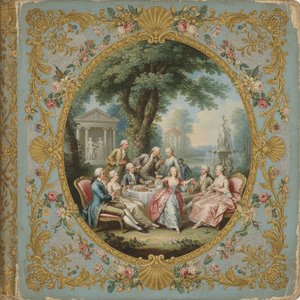
The Rococo Style: Aristocratic Leisure & the Pursuit of Delight in 18th-Century Art
Explore the opulent world of Rococo art! Discover Watteau, Boucher & Nattier's masterpieces. Expert insights for collectors seeking museum-quality reproductions and custom portraits at ArtsDot.