![Estancias Vaticanas – La Disputa (detalle) [08] — Rafael](/media/artworks/images-full/18/7f/187fcb2552a3d98c12518d9a79ede3e5.jpg)
 Ver en contexto
 Enviar
 Compartir
 Detalles

 Descargar
 Similares
 Radiografía
 Presentación de diapositivas
Estancias Vaticanas – La Disputa (detalle) [08]


 Ver más
Reproducción al óleo hecha a mano
Óleo sobre lienzo pintado a mano en el tamaño y marco de su elección, realizado por encargo por nuestros artistas. ( Comprar impresión Comprar imagen)




P118B $10

P118H $10

P118W $10

P438Z $10

P508JH $12

P508YH $12

P805H $10

P805Z $10

P919BZ $10

P919G $10

P919XJ $10

P959ZH $10

P968JZ $12

W106C $8

W218G $10

W218JH $8

W218Y $10

W307PJ $10

W316G $10

W316PJ $8

W316Y $10

W398PJ $8

W4111J $10

W500HY $15

W500JH $15

W692G $12

W849H $8

W940BG $15

W953PJ $8




Elija entre nuestros tamaños predefinidos que respetan las proporciones originales de la obra.

Puede ingresar sus propias dimensiones para adaptarse a un marco o espacio específico. Si el tamaño seleccionado no coincide con las proporciones de la imagen original, recortaremos la obra o extenderemos la pintura con elementos adicionales pintados a mano. Se le enviará una maqueta digital para su aprobación antes de comenzar la producción.
Tenga en cuenta que la vista previa en pantalla no refleja el recorte o la extensión reales. Solo la maqueta mostrará con precisión la composición final.
Si bien existen tamaños personalizados, recomendamos seleccionar una dimensión de la lista predefinida para preservar las proporciones originales.
Tras realizar el pedido, el equipo de ArtsDot.com enviará un correo electrónico al cliente para solicitar instrucciones y proporcionarle una vista previa del boceto.
Envío a todo el mundo () en 3-4 semanas en lugar de las 5 semanas estándar. (22 agosto). Sin comprometer la calidad.

Envío exprés gratuito a todo el mundo

Lienzo de lino de alta calidad

Seguro de envío total

Garantía de reembolso de impuestos aduaneros

Garantía de fidelidad cromática exacta

Política de devolución de 60 días (solo por defectos)

Garantía de devolución del 100% del dinero

Descuento por cantidad
 La opción de vidrio solo está disponible en tamaños inferiores a 110 cm.

Estancias Vaticanas – La Disputa (detalle) [08]
Técnica de reproducción
Dimensiones de la reproducción
-


Precio total final
$ 263
Descripción de la obra
Raphael’s ‘Disputation of the Holy Sacrament’: A Symphony of Faith and Light
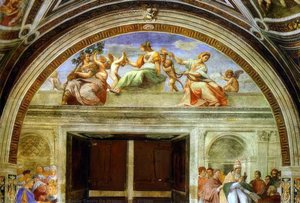
The painting Raphael (Raffaello Sanzio Da Urbino)’s ‘Disputation of the Holy Sacrament’ (La Disputa) stands as an unparalleled achievement in Renaissance art—a testament to Raphael's mastery of perspective, composition, and humanist ideals. Located within the Stanza della Segnatura, one of the Vatican’s most revered spaces originally conceived as a papal library, this fresco transcends mere visual representation; it embodies profound theological contemplation and spiritual illumination.- A Complex Narrative: The scene depicts a spirited debate concerning the Eucharist, featuring figures from both Old Testament and New Testament lore alongside saints and Church Fathers—a deliberate effort to synthesize biblical narratives into a unified intellectual framework.
- Architectural Harmony: Raphael skillfully employs architectural elements—particularly arches and columns—to create an illusion of depth and grandeur, guiding the viewer’s gaze across the canvas with remarkable precision. This masterful use of linear perspective establishes a central focal point, anchoring the composition and reinforcing its symbolic significance.
- Color Palette & Light: Raphael’s palette is dominated by rich hues—gold, crimson, azure—that convey solemnity and majesty. The artist employs chiaroscuro—the dramatic interplay between light and shadow—to sculpt figures and enhance the emotional impact of the scene, emphasizing divine presence and highlighting key moments of theological discourse.
Historical Context: Renaissance Theology and Papal Patronage
The ‘Disputation’ emerged during a pivotal period in European intellectual history—the High Renaissance—characterized by renewed interest in classical learning and humanist philosophy. Commissioned by Pope Julius II, Raphael undertook this ambitious project as part of a broader effort to revitalize the Vatican’s artistic heritage and reaffirm papal authority. The fresco reflects the prevailing theological concerns of the time, grappling with questions of divine grace, salvation, and the role of faith in human experience—themes that resonate powerfully across centuries.- Symbolism: Each figure within the painting carries symbolic weight, representing virtues such as humility, piety, and wisdom—qualities deemed essential for spiritual contemplation. The dove symbolizing the Holy Spirit descends from heaven, illuminating the scene and signifying divine inspiration.
- The Role of Perspective: Raphael’s pioneering use of linear perspective wasn't merely a technical innovation; it served to elevate the viewer’s experience, transporting them into the sacred realm depicted on canvas. This technique underscored the humanist conviction that art could illuminate truth and foster intellectual understanding.
Technique: Fresco Painting—A Legacy of Artistic Innovation
Raphael executed this monumental fresco using the traditional technique of tempera paint applied to wet plaster—a method known as fresco buon giorno. This painstaking process demanded exceptional skill and patience, requiring artists to prepare the wall surface meticulously and apply pigment in thin layers over several days or weeks. The resulting artwork possesses remarkable durability and luminosity—a testament to Raphael’s unwavering dedication to artistic excellence and a lasting contribution to the history of painting.Emotional Impact: Contemplation and Divine Beauty
Ultimately, ‘Disputation of the Holy Sacrament’ transcends its formal elements to evoke profound emotional responses in viewers—inspiring awe and reverence for divine majesty. Raphael's masterful depiction captures the essence of theological debate while simultaneously conveying a sense of serenity and spiritual illumination—a timeless reminder of the transformative power of art to elevate human consciousness and foster contemplation on matters of faith and beauty.Obras relacionadas
Biografía del artista
**vida temprana y formación**
Rafael (rafaello sanzio da urbino), un renombrado pintor y arquitecto italiano, nació entre el 28 de marzo y el 6 de abril de 1483, en la pequeña pero culturalmente significativa ciudad de Urbino. Su padre, Giovanni Santi, era pintor de corte para el duque, proporcionando a Rafael una exposición temprana al mundo artístico. Después de fallecer su padre a los once años, Rafael probablemente administró el taller familiar, consolidando aún más su base artística.**carrera artística e influencias**
El viaje artístico de Rafael puede categorizarse en tres fases distintas, cada una marcada por un estilo único:- primeros años en Umbría: caracterizado por la influencia de su padre y el ambiente cultural de Urbino.
- período florentino (1504-1508): absorbiendo las tradiciones artísticas de Florencia, que influyeron significativamente en su estilo.
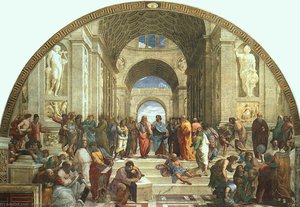
- período romano (1508-1520): trabajando para dos papas y sus asociados, produciendo algunas de sus obras más celebradas, incluyendo la escuela de Atenas en la stanza della segnatura del Vaticano.
**obras notables y legado**
Algunas de las obras notables de Rafael incluyen:- el juicio de Salomón (ver en ArtsDot)
- la madona de Esterházy (ver en ArtsDot)
- Stanze Vaticane - vista de la stanza della segnatura (ver en ArtsDot)
- San Sebastián (ver en ArtsDot)
- La dama velada (ver en ArtsDot)
**influencia y legado**
La influencia de Rafael en el arte es profunda, con su obra siendo un pilar del Renacimiento italiano. Su estilo sereno y armonioso ha sido un modelo para la pintura neoclásica, como señaló el historiador de arte Johann Joachim Winckelmann. A pesar de la influencia posterior del estilo de Miguel Ángel, Rafael sigue siendo uno de los artistas más reverenciados en la historia. ver el perfil de Rafael en ArtsDot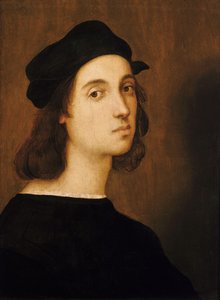
Rafael
1483 - 1520 , Italia
Datos clave
- Artistas Influyentes:
- Giovanni Santi
- Pietro Perugino
- Estilo Artístico: Alto Renacimiento
- Fecha De Muerte: 06/04/1520
- Fecha De Nacimiento: 28/03/1483
- Influencia En Artistas: Neoclasicismo
- Lugar De Nacimiento: Urbino, Italia
- Nacionalidad: Italiano
- Nombre Completo: Rafael (Raffaello Sanzio)
- Obras Notables:
- El Juicio de Salomón
- Madonna del Cardellino
- La Escuela de Atenas
- San Sebastián
- La Dama Velada
Artículos relacionados
Rafael: Las 25 Obras Maestras que Definen al Genio del Renacimiento | ArtsDot
Descubre las 25 obras maestras de Rafael Sanzio, el genio del Renacimiento. Explora su historia, técnica y significado en pinturas icónicas como 'La Escuela de Atenas'. Reproducciones de arte de alta calidad para decorar tu hogar con elegancia. ¡Explora la colección completa en ArtsDot.com!

Giotto di Bondone: Las 25 Obras Maestras que Definieron el Renacimiento | ArtsDot
Descubre las 25 obras maestras de Giotto di Bondone, el pionero del Renacimiento. Explora la historia, técnica y simbolismo de sus frescos italianos más icónicos. Encuentra reproducciones de arte exclusivas para decorar tu hogar en ArtsDot.com.
La Biennale de Venecia: 25 Obras Maestras para Inspirar tu Hogar | ArtsDot
Descubre las 25 obras maestras de la Bienal de Venecia. Explora la historia, artistas y técnicas detrás de iconos del arte renacentista, moderno y contemporáneo. Encuentra reproducciones de alta calidad e inspira tu hogar con ArtsDot.com.
Proto-Renacimiento: 10 Obras Maestras que Cambiaron la Historia del Arte | ArtsDot
Descubre las 10 obras maestras del Proto Renacimiento que revolucionaron el arte italiano. Explora la historia de Giotto, Duccio y Cimabue. Reproducciones de arte en ArtsDot.com para decorar tu hogar con belleza atemporal.
Pietro Perugino: Umbrian Master of Serenity & Precursor to Raphael's High Renaissance
Explore the life & art of Pietro Perugino, a pivotal Renaissance master and Raphael’s influential teacher. Discover his serene compositions, Sistine Chapel frescoes, and lasting legacy with ArtsDot.