 Ver en contexto
 Enviar
 Compartir
 Detalles

 Descargar
 Similares
 Radiografía
 Presentación de diapositivas
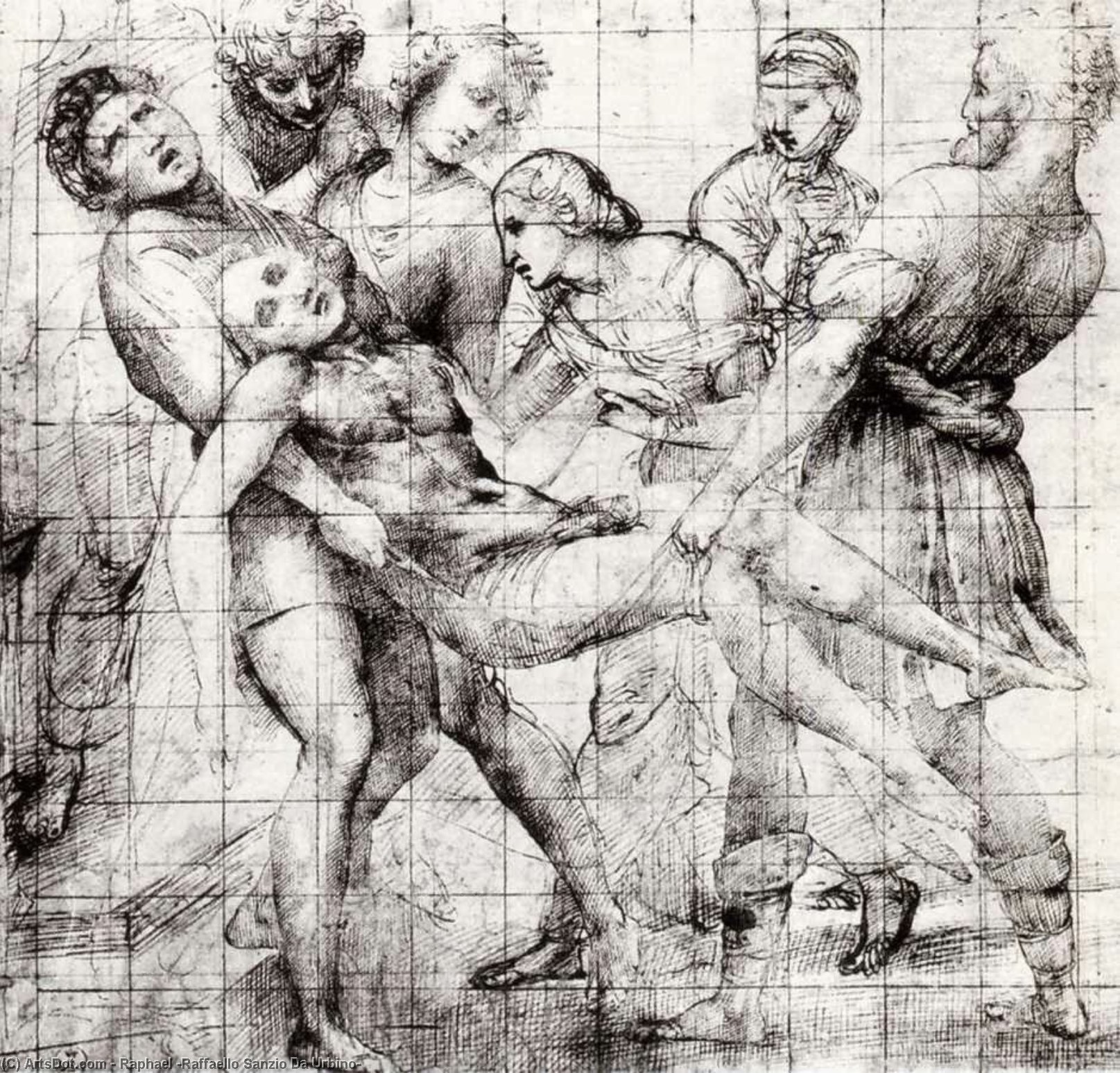
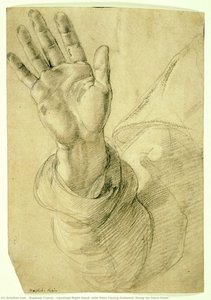
Estudio para la 'Entombación' en la Galería Borghese, Roma


 Ver más
Giclée / Impresión de arte
Impresiones giclée o en lienzo de calidad de museo con producción rápida y opciones de acabado flexibles. ( Comprar pintura hecha a mano Comprar imagen)




P118B $10

P118H $10

P118W $10

P438Z $10

P508JH $12

P508YH $12

P805H $10

P805Z $10

P919BZ $10

P919G $10

P919XJ $10

P959ZH $10

P968JZ $12

W106C $8

W218G $10

W218JH $8

W218Y $10

W307PJ $10

W316G $10

W316PJ $8

W316Y $10

W398PJ $8

W4111J $10

W500HY $15

W500JH $15

W692G $12

W849H $8

W940BG $15

W953PJ $8




Elija entre nuestros tamaños predefinidos que respetan las proporciones originales de la obra.

Puede introducir sus propias dimensiones para adaptarse a un marco o espacio específico. Si el tamaño seleccionado no coincide con las proporciones de la imagen original, recortaremos la obra de arte o extenderemos la imagen con un borde con efecto espejo o de color sólido. Se enviará una maqueta digital para su aprobación antes de que comience la producción.
Tenga en cuenta que la vista previa en pantalla no refleja el recorte o la extensión real. Solo la maqueta mostrará con precisión la composición final.
Aunque existen tamaños personalizados, recomendamos seleccionar una dimensión de la lista predefinida para preservar las proporciones originales.
Envío a todo el mundo () en 2 semanas en lugar de las 4/5 semanas estándar. (25 agosto)

Envío exprés gratuito a todo el mundo

Lienzo de lino de alta calidad

Seguro de envío total

Garantía de reembolso de impuestos aduaneros

Garantía de fidelidad cromática exacta

Política de devolución de 60 días (solo por defectos)

Garantía de devolución del 100% del dinero

Descuento por cantidad
 La opción de vidrio solo está disponible en tamaños inferiores a 110 cm.

Estudio para la 'Entombación' en la Galería Borghese, Roma
Giclée / Impresión de arte
Dimensiones de la reproducción
-


Precio total final
$ 62
Descripción de la pieza
A Glimpse into Grief: Raphael’s Study for ‘The Entombment’
Raphael’s “Study for the ‘Entombment’” offers a profoundly moving prelude to one of his most celebrated compositions, the altarpiece now housed in the Galleria Borghese in Rome. Executed around 1505, this drawing isn’t merely a preparatory sketch; it is a powerful work in its own right, brimming with emotional intensity and demonstrating Raphael’s masterful command of line and composition. The scene depicts the poignant moment following Christ’s descent from the cross, as his body is prepared for burial. A cluster of figures surrounds the lifeless form, their postures conveying a spectrum of grief – from raw despair to quiet contemplation. It’s a study not just of anatomy and drapery, but of human emotion in its most vulnerable state.
The Genesis of a Masterpiece: Context and Creation
To understand this drawing fully, we must consider the circumstances surrounding its creation. Commissioned by Atalanta Baglioni for her family chapel in Perugia, the final painting – known as “The Deposition” or “Pala Baglione” – was intended as a memorial to her son, Grifonetto, who had been tragically killed amidst the violent political feuds of the time. This personal context infuses the work with an added layer of sorrow and remembrance. Raphael approached this commission with meticulous care, undertaking extensive preparatory studies like this one. He wasn’t simply illustrating a biblical scene; he was responding to a mother's grief, translating it into a universal expression of loss. The drawing reveals his process – the careful arrangement of figures, the exploration of different poses, and the striving for a dynamic composition that would convey both weight and grace.
Anatomy of Sorrow: Technique and Style
The power of “Study for the ‘Entombment’” lies in its stark simplicity. Rendered in black chalk on paper, Raphael eschews elaborate detail in favor of expressive lines and dramatic chiaroscuro – the interplay of light and shadow. The figures are not idealized; they are rendered with a raw realism that emphasizes their physical and emotional weight. Notice how the artist uses shading to define musculature and drapery, creating a sense of volume and depth despite the two-dimensional medium. The composition is carefully balanced, drawing the viewer’s eye towards the central figure of Christ while simultaneously acknowledging the grief-stricken reactions of those surrounding him. This study showcases Raphael’s ability to imbue even preliminary sketches with a remarkable degree of artistic sophistication, foreshadowing the grandeur and emotional resonance of the finished painting.
Echoes of Renaissance Humanism
Raphael’s work is deeply rooted in the humanist ideals of the High Renaissance. He wasn’t merely replicating religious iconography; he was exploring the human condition – our capacity for love, loss, and faith. “Study for the ‘Entombment’” exemplifies this approach by focusing on the emotional responses of the figures to Christ’s death. The drawing invites us to empathize with their sorrow, to contemplate the fragility of life, and to reflect on the enduring power of human connection. It’s a testament to Raphael’s genius that he could transform a deeply personal commission into a timeless work of art that continues to resonate with audiences centuries later. Owning a reproduction of this study allows one to connect with the very genesis of a masterpiece, appreciating not only its aesthetic beauty but also the profound human story it embodies.
- Artist: Raphael
- Birth Year: 1483
- Death Year: 1520
- Birth City: Urbino
- Birth Country: Italy
Obras relacionadas
Biografía del artista
**vida temprana y formación**
Rafael (rafaello sanzio da urbino), un renombrado pintor y arquitecto italiano, nació entre el 28 de marzo y el 6 de abril de 1483, en la pequeña pero culturalmente significativa ciudad de Urbino. Su padre, Giovanni Santi, era pintor de corte para el duque, proporcionando a Rafael una exposición temprana al mundo artístico. Después de fallecer su padre a los once años, Rafael probablemente administró el taller familiar, consolidando aún más su base artística.**carrera artística e influencias**
El viaje artístico de Rafael puede categorizarse en tres fases distintas, cada una marcada por un estilo único:- primeros años en Umbría: caracterizado por la influencia de su padre y el ambiente cultural de Urbino.
- período florentino (1504-1508): absorbiendo las tradiciones artísticas de Florencia, que influyeron significativamente en su estilo.
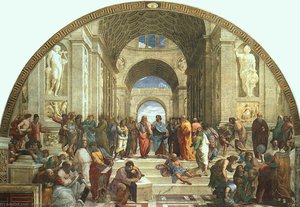
- período romano (1508-1520): trabajando para dos papas y sus asociados, produciendo algunas de sus obras más celebradas, incluyendo la escuela de Atenas en la stanza della segnatura del Vaticano.
**obras notables y legado**
Algunas de las obras notables de Rafael incluyen:- el juicio de Salomón (ver en ArtsDot)
- la madona de Esterházy (ver en ArtsDot)
- Stanze Vaticane - vista de la stanza della segnatura (ver en ArtsDot)
- San Sebastián (ver en ArtsDot)
- La dama velada (ver en ArtsDot)
**influencia y legado**
La influencia de Rafael en el arte es profunda, con su obra siendo un pilar del Renacimiento italiano. Su estilo sereno y armonioso ha sido un modelo para la pintura neoclásica, como señaló el historiador de arte Johann Joachim Winckelmann. A pesar de la influencia posterior del estilo de Miguel Ángel, Rafael sigue siendo uno de los artistas más reverenciados en la historia. ver el perfil de Rafael en ArtsDot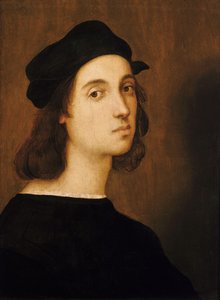
Rafael
1483 - 1520 , Italia
Datos clave
- Artistas Influyentes:
- Giovanni Santi
- Pietro Perugino
- Estilo Artístico: Alto Renacimiento
- Fecha De Muerte: 06/04/1520
- Fecha De Nacimiento: 28/03/1483
- Influencia En Artistas: Neoclasicismo
- Lugar De Nacimiento: Urbino, Italia
- Nacionalidad: Italiano
- Nombre Completo: Rafael (Raffaello Sanzio)
- Obras Notables:
- El Juicio de Salomón
- Madonna del Cardellino
- La Escuela de Atenas
- San Sebastián
- La Dama Velada
Artículos relacionados
Rafael: Las 25 Obras Maestras que Definen al Genio del Renacimiento | ArtsDot
Descubre las 25 obras maestras de Rafael Sanzio, el genio del Renacimiento. Explora su historia, técnica y significado en pinturas icónicas como 'La Escuela de Atenas'. Reproducciones de arte de alta calidad para decorar tu hogar con elegancia. ¡Explora la colección completa en ArtsDot.com!
Leonardo da Vinci: Las 25 Obras Maestras que Definieron un Genio | ArtsDot
Descubre las 25 obras maestras de Leonardo da Vinci, desde la Mona Lisa hasta La Última Cena. Explora su arte renacentista, técnicas innovadoras y el legado del genio italiano. Reproducciones de alta calidad para decorar tu hogar con belleza y historia en ArtsDot.com.
The Nuances of Graphite: Exploring Emotional Depth & Technical Mastery in Pencil Drawing
Explore the captivating world of graphite drawing! Discover its rich history, master essential techniques like chiaroscuro, and learn how artists evoke emotion through this timeless medium. Expert insights for art enthusiasts.
Los 25 Tesoros del Uffizi: Arte Renacentista para tu Hogar | ArtsDot
Descubre los 25 tesoros del Uffizi en Florencia: Botticelli, Leonardo da Vinci y más. Explora la historia, el arte renacentista y encuentra reproducciones de alta calidad para tu hogar. ¡Inspírate con ArtsDot.com!
Frederick Bridgman: Anatomical Mastery & the Evolution of Figure Drawing Instruction
Explore the anatomical mastery of George B. Bridgman & his revolutionary figure drawing techniques. Discover how his methods transformed art instruction and continue to inspire artists today. Learn more at ArtsDot.