 Ver en contexto
 Enviar
 Compartir
 Detalles

 Descargar
 Similares
 Radiografía
 Presentación de diapositivas
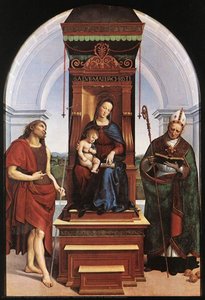
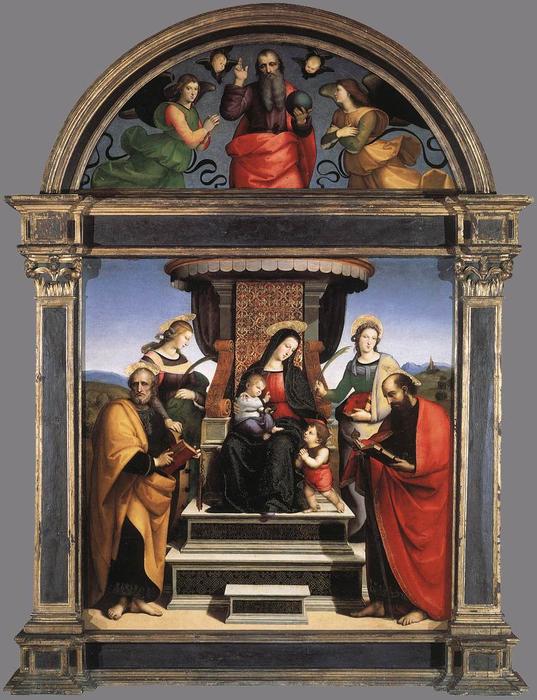
La Virgen María y el Niño Enthronados con Santos


 Ver más
Giclée / Impresión de arte
Impresiones giclée o en lienzo de calidad de museo con producción rápida y opciones de acabado flexibles. ( Comprar pintura hecha a mano Comprar imagen)




P118B $10

P118H $10

P118W $10

P438Z $10

P508JH $12

P508YH $12

P805H $10

P805Z $10

P919BZ $10

P919G $10

P919XJ $10

P959ZH $10

P968JZ $12

W106C $8

W218G $10

W218JH $8

W218Y $10

W307PJ $10

W316G $10

W316PJ $8

W316Y $10

W398PJ $8

W4111J $10

W500HY $15

W500JH $15

W692G $12

W849H $8

W940BG $15

W953PJ $8




Elija entre nuestros tamaños predefinidos que respetan las proporciones originales de la obra.

Puede introducir sus propias dimensiones para adaptarse a un marco o espacio específico. Si el tamaño seleccionado no coincide con las proporciones de la imagen original, recortaremos la obra de arte o extenderemos la imagen con un borde con efecto espejo o de color sólido. Se enviará una maqueta digital para su aprobación antes de que comience la producción.
Tenga en cuenta que la vista previa en pantalla no refleja el recorte o la extensión real. Solo la maqueta mostrará con precisión la composición final.
Aunque existen tamaños personalizados, recomendamos seleccionar una dimensión de la lista predefinida para preservar las proporciones originales.
Envío a todo el mundo () en 2 semanas en lugar de las 4/5 semanas estándar. (24 agosto)

Envío exprés gratuito a todo el mundo

Lienzo de lino de alta calidad

Seguro de envío total

Garantía de reembolso de impuestos aduaneros

Garantía de fidelidad cromática exacta

Política de devolución de 60 días (solo por defectos)

Garantía de devolución del 100% del dinero

Descuento por cantidad
 La opción de vidrio solo está disponible en tamaños inferiores a 110 cm.

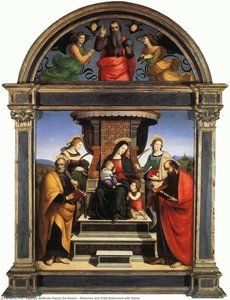
La Virgen María y el Niño Enthronados con Santos
Giclée / Impresión de arte
Dimensiones de la reproducción
-


Precio total final
$ 62
Descripción de la pieza
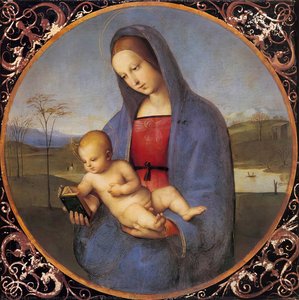
Madonna and Child Enthroned with Saints: A Renaissance Masterpiece
The Madonna and Child Enthroned with Saints stands as one of Raphael’s most celebrated achievements, a luminous testament to the artistic ideals of the High Renaissance. Created in 1505 for the Stanza della Segnatura within the Vatican Palace, this tempera on panel painting transcends mere representation; it embodies spiritual contemplation and harmonious beauty—qualities deeply rooted in humanist thought. Its current location at the National Gallery in London offers visitors a privileged glimpse into this extraordinary artwork.Composition and Style: Balance and Grace
Raphael’s genius lies in his masterful orchestration of visual elements. The central figure—the Virgin Mary—dominates the composition, seated majestically upon a throne adorned with intricate floral motifs – a deliberate reference to classical symbolism signifying divine majesty. Surrounding her are six saints, each rendered with meticulous detail and expressive gestures, contributing to the overall sense of balance and serenity. This careful arrangement reflects the Renaissance fascination with geometric proportions and idealized forms, mirroring principles derived from ancient Greek sculpture and architecture. The artist’s palette employs subtle hues—primarily blues, golds, and reds—creating a luminous atmosphere that enhances the spiritual significance of the scene.Technique: Tempera on Panel – A Delicate Medium
The painting utilizes tempera paint—a technique characterized by its slow drying time and remarkable durability—applied to a wooden panel. This method demanded exceptional patience and precision from Raphael’s workshop, resulting in an astonishing level of detail and tonal subtlety. The layering process involved applying thin glazes of pigment over preparatory underdrawings, allowing for gradual blending and achieving unparalleled luminosity. Observe closely the delicate rendering of drapery folds—a hallmark of Raphael's style—where light catches on the fabric creating shimmering highlights that convey a palpable sense of movement and texture.Historical Context: The Papal Patronage and Renaissance Ideals
The Stanza della Segnatura, commissioned by Pope Julius II during the ambitious papal reformation, served as a crucible for artistic innovation. Raphael was tasked with decorating four lunettes—circular panels adorning the walls—each depicting a theological virtue. This project exemplifies the humanist spirit of the era, prioritizing intellectual contemplation alongside aesthetic beauty. The painting’s depiction of Mary and Child embodies Christian iconography—a symbol of purity, compassion, and divine grace—reflecting the profound influence of scholastic philosophy on artistic expression during this period. Raphael's work stands as a cornerstone of Renaissance art history, securing his place among the greatest painters of all time.Symbolism: Floral Motifs and Divine Majesty
Beyond its formal composition and technical prowess, the Madonna and Child Enthroned with Saints is laden with symbolic meaning. The throne itself represents divine authority—a deliberate allusion to imperial iconography—underscoring Mary’s role as Queen of Heaven. The floral garlands encircling the throne symbolize fertility and eternal life—themes central to Christian belief. Raphael's meticulous attention to detail extends even to the saints’ robes, where specific colors and emblems convey spiritual virtues such as faith, hope, and charity. Studying these subtle visual cues provides deeper insight into Raphael’s artistic vision and his enduring legacy as a champion of humanist ideals.For more information on Raphael's style and other works, visit Raphael (Raffaello Sanzio Da Urbino) on ArtsDot.
Obras relacionadas
Biografía del artista
**vida temprana y formación**
Rafael (rafaello sanzio da urbino), un renombrado pintor y arquitecto italiano, nació entre el 28 de marzo y el 6 de abril de 1483, en la pequeña pero culturalmente significativa ciudad de Urbino. Su padre, Giovanni Santi, era pintor de corte para el duque, proporcionando a Rafael una exposición temprana al mundo artístico. Después de fallecer su padre a los once años, Rafael probablemente administró el taller familiar, consolidando aún más su base artística.**carrera artística e influencias**
El viaje artístico de Rafael puede categorizarse en tres fases distintas, cada una marcada por un estilo único:- primeros años en Umbría: caracterizado por la influencia de su padre y el ambiente cultural de Urbino.
- período florentino (1504-1508): absorbiendo las tradiciones artísticas de Florencia, que influyeron significativamente en su estilo.
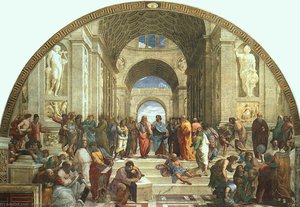
- período romano (1508-1520): trabajando para dos papas y sus asociados, produciendo algunas de sus obras más celebradas, incluyendo la escuela de Atenas en la stanza della segnatura del Vaticano.
**obras notables y legado**
Algunas de las obras notables de Rafael incluyen:- el juicio de Salomón (ver en ArtsDot)
- la madona de Esterházy (ver en ArtsDot)
- Stanze Vaticane - vista de la stanza della segnatura (ver en ArtsDot)
- San Sebastián (ver en ArtsDot)
- La dama velada (ver en ArtsDot)
**influencia y legado**
La influencia de Rafael en el arte es profunda, con su obra siendo un pilar del Renacimiento italiano. Su estilo sereno y armonioso ha sido un modelo para la pintura neoclásica, como señaló el historiador de arte Johann Joachim Winckelmann. A pesar de la influencia posterior del estilo de Miguel Ángel, Rafael sigue siendo uno de los artistas más reverenciados en la historia. ver el perfil de Rafael en ArtsDot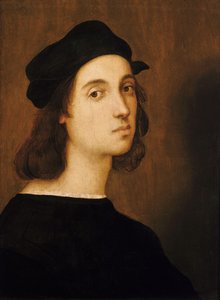
Rafael
1483 - 1520 , Italia
Datos clave
- Artistas Influyentes:
- Giovanni Santi
- Pietro Perugino
- Estilo Artístico: Alto Renacimiento
- Fecha De Muerte: 06/04/1520
- Fecha De Nacimiento: 28/03/1483
- Influencia En Artistas: Neoclasicismo
- Lugar De Nacimiento: Urbino, Italia
- Nacionalidad: Italiano
- Nombre Completo: Rafael (Raffaello Sanzio)
- Obras Notables:
- El Juicio de Salomón
- Madonna del Cardellino
- La Escuela de Atenas
- San Sebastián
- La Dama Velada
Artículos relacionados
Rafael: Las 25 Obras Maestras que Definen al Genio del Renacimiento | ArtsDot
Descubre las 25 obras maestras de Rafael Sanzio, el genio del Renacimiento. Explora su historia, técnica y significado en pinturas icónicas como 'La Escuela de Atenas'. Reproducciones de arte de alta calidad para decorar tu hogar con elegancia. ¡Explora la colección completa en ArtsDot.com!
Las 10 Obras Maestras del Renacimiento Superior: Arte, Historia y Decoración
Descubre las 10 obras maestras del Renacimiento Superior: Leonardo, Miguel Ángel, Rafael y Botticelli. Explora su historia, técnica y significado. Reproducciones de arte en alta calidad para decorar tu hogar con elegancia. ¡Encuentra tu obra favorita en !
Pietro Perugino: Umbrian Master of Serenity & Precursor to Raphael's High Renaissance
Explore the life & art of Pietro Perugino, a pivotal Renaissance master and Raphael’s influential teacher. Discover his serene compositions, Sistine Chapel frescoes, and lasting legacy with ArtsDot.
Los 25 Tesoros del Hermitage: Arte Clásico para tu Hogar | ArtsDot
Descubre los 25 tesoros del Museo Hermitage de San Petersburgo. Explora la historia y belleza de Rembrandt, Leonardo da Vinci y más. Reproducciones de arte en ArtsDot.com para decorar tu hogar con obras maestras.
Los 25 Tesoros de la Alte Pinakothek: Arte Renacentista y Barroco en Munich
Descubre los 25 tesoros de la Alte Pinakothek en Munich. Explora obras maestras de Dürer, Rembrandt y Rubens. Historia del arte renacentista y barroco para inspirar tu hogar. Reproducciones de alta calidad en ArtsDot.com.