 Ver en contexto
 Enviar
 Compartir
 Detalles

 Descargar
 Similares
 Radiografía
 Presentación de diapositivas
Moses Receiving the Tablets of the Law (detalle)


 Ver más
Reproducción al óleo hecha a mano
Óleo sobre lienzo pintado a mano en el tamaño y marco de su elección, realizado por encargo por nuestros artistas. ( Comprar impresión Comprar imagen)




P118B $10

P118H $10

P118W $10

P438Z $10

P508JH $12

P508YH $12

P805H $10

P805Z $10

P919BZ $10

P919G $10

P919XJ $10

P959ZH $10

P968JZ $12

W106C $8

W218G $10

W218JH $8

W218Y $10

W307PJ $10

W316G $10

W316PJ $8

W316Y $10

W398PJ $8

W4111J $10

W500HY $15

W500JH $15

W692G $12

W849H $8

W940BG $15

W953PJ $8




Elija entre nuestros tamaños predefinidos que respetan las proporciones originales de la obra.

Puede ingresar sus propias dimensiones para adaptarse a un marco o espacio específico. Si el tamaño seleccionado no coincide con las proporciones de la imagen original, recortaremos la obra o extenderemos la pintura con elementos adicionales pintados a mano. Se le enviará una maqueta digital para su aprobación antes de comenzar la producción.
Tenga en cuenta que la vista previa en pantalla no refleja el recorte o la extensión reales. Solo la maqueta mostrará con precisión la composición final.
Si bien existen tamaños personalizados, recomendamos seleccionar una dimensión de la lista predefinida para preservar las proporciones originales.
Tras realizar el pedido, el equipo de ArtsDot.com enviará un correo electrónico al cliente para solicitar instrucciones y proporcionarle una vista previa del boceto.
Envío a todo el mundo () en 3-4 semanas en lugar de las 5 semanas estándar. (31 agosto). Sin comprometer la calidad.

Envío exprés gratuito a todo el mundo

Lienzo de lino de alta calidad

Seguro de envío total

Garantía de reembolso de impuestos aduaneros

Garantía de fidelidad cromática exacta

Política de devolución de 60 días (solo por defectos)

Garantía de devolución del 100% del dinero

Descuento por cantidad
 La opción de vidrio solo está disponible en tamaños inferiores a 110 cm.

Moses Receiving the Tablets of the Law (detalle)
Técnica de reproducción
Dimensiones de la reproducción
-


Precio total final
$ 263
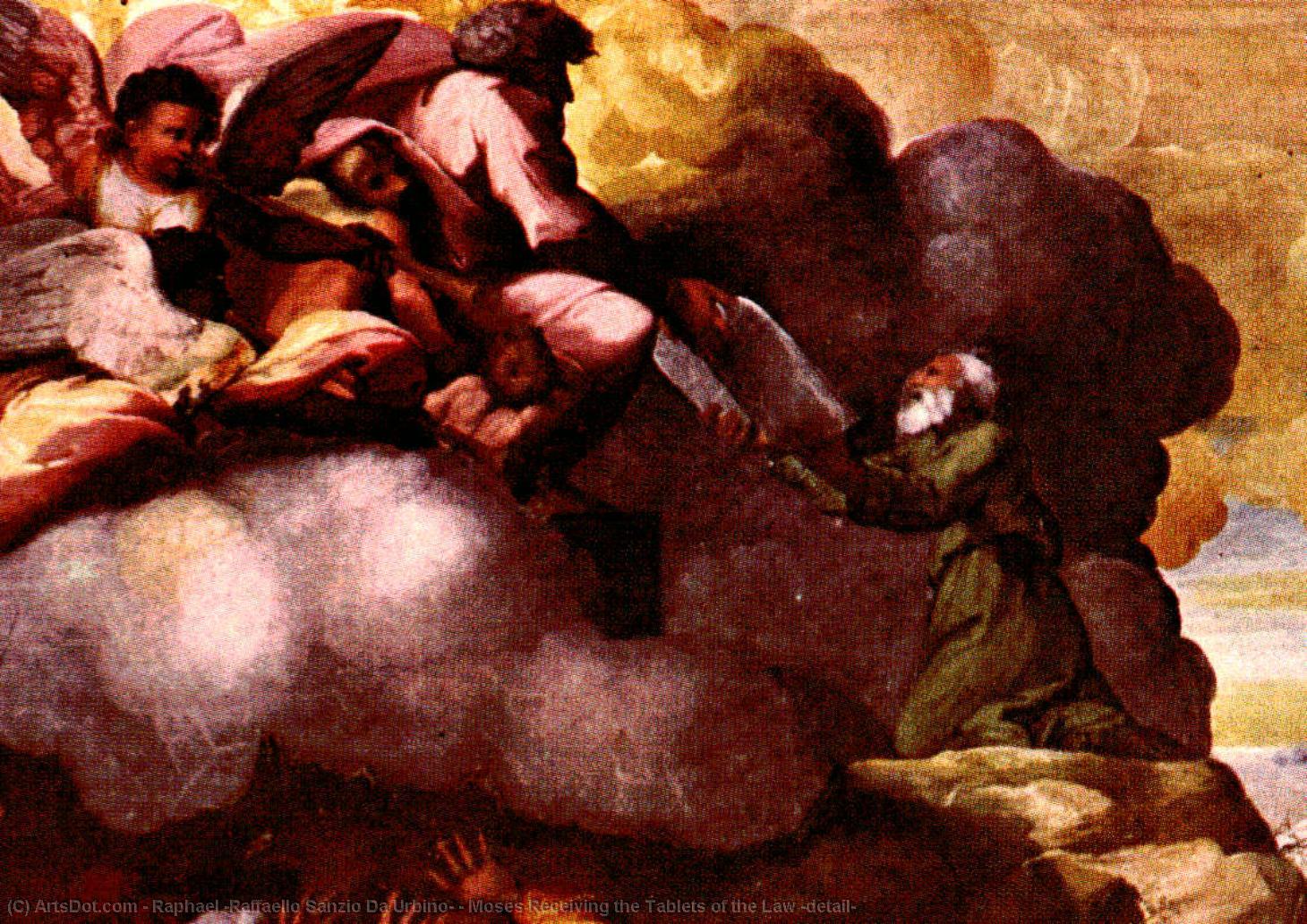
Moses Receiving the Tablets of the Law (detail)
“Moses Receiving the Tablets of the Law” by Raphael stands as an emblem of Renaissance artistic excellence, encapsulating not merely visual beauty but profound theological significance. Painted in 1518 during his Florentine period, this masterpiece exemplifies Raphael’s mastery of classical ideals blended seamlessly with humanist sensibilities—a testament to his unparalleled talent.
Artistic Style and Period
This painting firmly establishes itself within the High Renaissance movement, a stylistic epoch born from the Quattrocento Art Movement. The Quattrocento witnessed an invigorating revival of classical art forms and philosophies, profoundly influencing artists like Raphael who sought to emulate the grandeur and harmony of ancient Greece and Rome. Observe how Raphael skillfully incorporates architectural elements reminiscent of Roman temples—a deliberate choice reflecting the humanist preoccupation with human dignity and proportion.
Composition and Details
Raphael’s compositional genius is immediately apparent in the depiction of Moses receiving divine law from God, surrounded by a cadre of angels. The scene unfolds with meticulous precision—each figure imbued with palpable emotion and conveying reverence for the sacred event. Angels ascend and descend gracefully above and below Moses, creating a dynamic interplay of light and shadow that enhances the dramatic impact. Raphael’s masterful use of color contributes to this effect; hues of gold and azure dominate, symbolizing divine majesty and spiritual illumination.
Other Works by Raphael
Raphael was an extraordinarily prolific artist, leaving behind a legacy of iconic paintings that continue to inspire awe. Among his most celebrated creations are:
- Raphael (Raffaello Sanzio Da Urbino): Moses Receiving the Tablets of the Law (detail)
- Raphael (Raffaello Sanzio Da Urbino): Study for the Holy Family
- Raphael (Raffaello Sanzio Da Urbino): The Vision of Ezekiel
Conclusion
"Moses Receiving the Tablets of the Law" transcends mere artistic representation; it embodies Raphael’s profound understanding of religious iconography and humanist ideals. The painting's meticulous composition, luminous color palette, and expressive portrayal of human emotion solidify its position as a cornerstone of High Renaissance art—a timeless masterpiece that continues to captivate viewers centuries later.
For those seeking to immerse themselves in the artistic genius of Raphael and explore his remarkable oeuvre, visit Raphael Coxcie on ArtsDot.com.
Obras relacionadas
Biografía del artista
**vida temprana y formación**
Rafael (rafaello sanzio da urbino), un renombrado pintor y arquitecto italiano, nació entre el 28 de marzo y el 6 de abril de 1483, en la pequeña pero culturalmente significativa ciudad de Urbino. Su padre, Giovanni Santi, era pintor de corte para el duque, proporcionando a Rafael una exposición temprana al mundo artístico. Después de fallecer su padre a los once años, Rafael probablemente administró el taller familiar, consolidando aún más su base artística.**carrera artística e influencias**
El viaje artístico de Rafael puede categorizarse en tres fases distintas, cada una marcada por un estilo único:- primeros años en Umbría: caracterizado por la influencia de su padre y el ambiente cultural de Urbino.
- período florentino (1504-1508): absorbiendo las tradiciones artísticas de Florencia, que influyeron significativamente en su estilo.
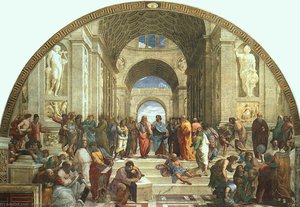
- período romano (1508-1520): trabajando para dos papas y sus asociados, produciendo algunas de sus obras más celebradas, incluyendo la escuela de Atenas en la stanza della segnatura del Vaticano.
**obras notables y legado**
Algunas de las obras notables de Rafael incluyen:- el juicio de Salomón (ver en ArtsDot)
- la madona de Esterházy (ver en ArtsDot)
- Stanze Vaticane - vista de la stanza della segnatura (ver en ArtsDot)
- San Sebastián (ver en ArtsDot)
- La dama velada (ver en ArtsDot)
**influencia y legado**
La influencia de Rafael en el arte es profunda, con su obra siendo un pilar del Renacimiento italiano. Su estilo sereno y armonioso ha sido un modelo para la pintura neoclásica, como señaló el historiador de arte Johann Joachim Winckelmann. A pesar de la influencia posterior del estilo de Miguel Ángel, Rafael sigue siendo uno de los artistas más reverenciados en la historia. ver el perfil de Rafael en ArtsDot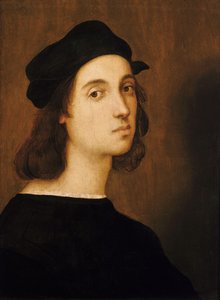
Rafael
1483 - 1520 , Italia
Datos clave
- Artistas Influyentes:
- Giovanni Santi
- Pietro Perugino
- Estilo Artístico: Alto Renacimiento
- Fecha De Muerte: 06/04/1520
- Fecha De Nacimiento: 28/03/1483
- Influencia En Artistas: Neoclasicismo
- Lugar De Nacimiento: Urbino, Italia
- Nacionalidad: Italiano
- Nombre Completo: Rafael (Raffaello Sanzio)
- Obras Notables:
- El Juicio de Salomón
- Madonna del Cardellino
- La Escuela de Atenas
- San Sebastián
- La Dama Velada
Artículos relacionados
Rafael: Las 25 Obras Maestras que Definen al Genio del Renacimiento | ArtsDot
Descubre las 25 obras maestras de Rafael Sanzio, el genio del Renacimiento. Explora su historia, técnica y significado en pinturas icónicas como 'La Escuela de Atenas'. Reproducciones de arte de alta calidad para decorar tu hogar con elegancia. ¡Explora la colección completa en ArtsDot.com!

Legado en las Paredes: Frescos Familiares que Trascienden el Tiempo
Descubre el arte del fresco muralístico para inmortalizar tu historia familiar. Expertos en frescos personalizados y técnicas ancestrales. Crea un legado visual único con .

The Enduring Legacy of Fresco Painting: Techniques, History & Contemporary Relevance
Explore the rich history & enduring artistry of fresco painting – from Giotto to Michelangelo! Discover techniques, conservation efforts, & modern applications. Learn how ArtsDot brings this timeless art form to your home.

The Enduring Legacy of Fresco: Technique, History & Artistic Expression Across Cultures
Explore the rich history & enduring legacy of fresco painting! Discover ancient techniques, Giotto's masterpieces, and modern applications. Expert insights for art lovers & professionals.
Frescos Legendarios: 10 Obras Maestras que Revolucionaron la Historia del Arte | ArtsDot
Descubre los 10 frescos más legendarios de la historia del arte, desde Miguel Ángel y Rafael hasta Giotto. Explora sus técnicas, historias y el impacto cultural que perdura. Reproducciones de alta calidad en ArtsDot.com.