

 Enviar
 Compartir
 Detalles

 Descargar
 Similares
 Presentación de diapositivas
 Stats
StatsBaptismal font


 Ver más
Adquiera una imagen digital de alta resolución y optimizada, muy superior a la vista previa en línea.
Cada archivo es preparado meticulosamente por nuestros especialistas internos mediante el uso de herramientas avanzadas y un experto retoque manual. Nos aseguramos de que cada imagen posea una claridad excepcional, una precisión cromática impecable y un detalle minucioso.
El archivo final se entrega por correo electrónico en un plazo de 72 horas, optimizado para su uso inmediato en entornos profesionales, editoriales y de impresión. Esta es la misma calidad en la que confían los estudios de diseño, las editoriales y las galerías de primer nivel.
Imagen Digital
Descarga un archivo de alta resolución para exhibición personal, impresión y proyectos creativos. ( Switch to Print Comprar pintura hecha a mano)
Incluido en cada pedido de imágenes digitales
Entrega digital experta, garantizada.
Al elegir ArtsDot.com, no solo está adquiriendo una imagen; está recibiendo una obra de arte digital mejorada profesionalmente, elaborada con precisión y respaldada por una garantía de satisfacción. Esto es todo lo que incluye su pedido, automáticamente:

Entrega rápida por email
Recibirá su archivo de imagen digital en alta resolución por correo electrónico en un plazo de 72 horas tras realizar su pedido, listo para su uso inmediato.

Archivo digital optimizado por IA
Su obra de arte se optimiza profesionalmente mediante herramientas avanzadas de IA y edición manual, garantizando el máximo detalle, claridad y precisión cromática.

Reenvío gratuito de por vida
¿Has borrado o perdido tu archivo por error? No te preocupes: te lo volveremos a enviar en cualquier momento, sin coste adicional.

Sin gastos de importación, siempre
Disfrute de su obra de arte al instante sin aduanas, aranceles ni gastos de envío; las descargas digitales siempre están libres de impuestos.

Garantía de fidelidad de color
Garantizamos que su imagen digital refleje los colores originales con la mayor fidelidad posible, mediante el uso de herramientas profesionales y gestión del color.

Garantía de satisfacción de 100 días
Si no está satisfecho con su imagen digital, la revisaremos o le reembolsaremos el 100% en un plazo de 100 días, sin preguntas.

100% Garantía de devolución de dinero
¿No está satisfecho? Obtenga un reembolso completo dentro de los 100 días posteriores a la recepción de su archivo digital, sin preguntas.

Descuentos por pedidos grandes
Compra 3 imágenes, ahorra 10% - Compra 5, ahorra 15% - Compra 10+, ahorra 20%. Ideal para proyectos creativos, galerías y agencias.
A Masterpiece in Bronze: The Eternal Legacy of Reiner de Huy
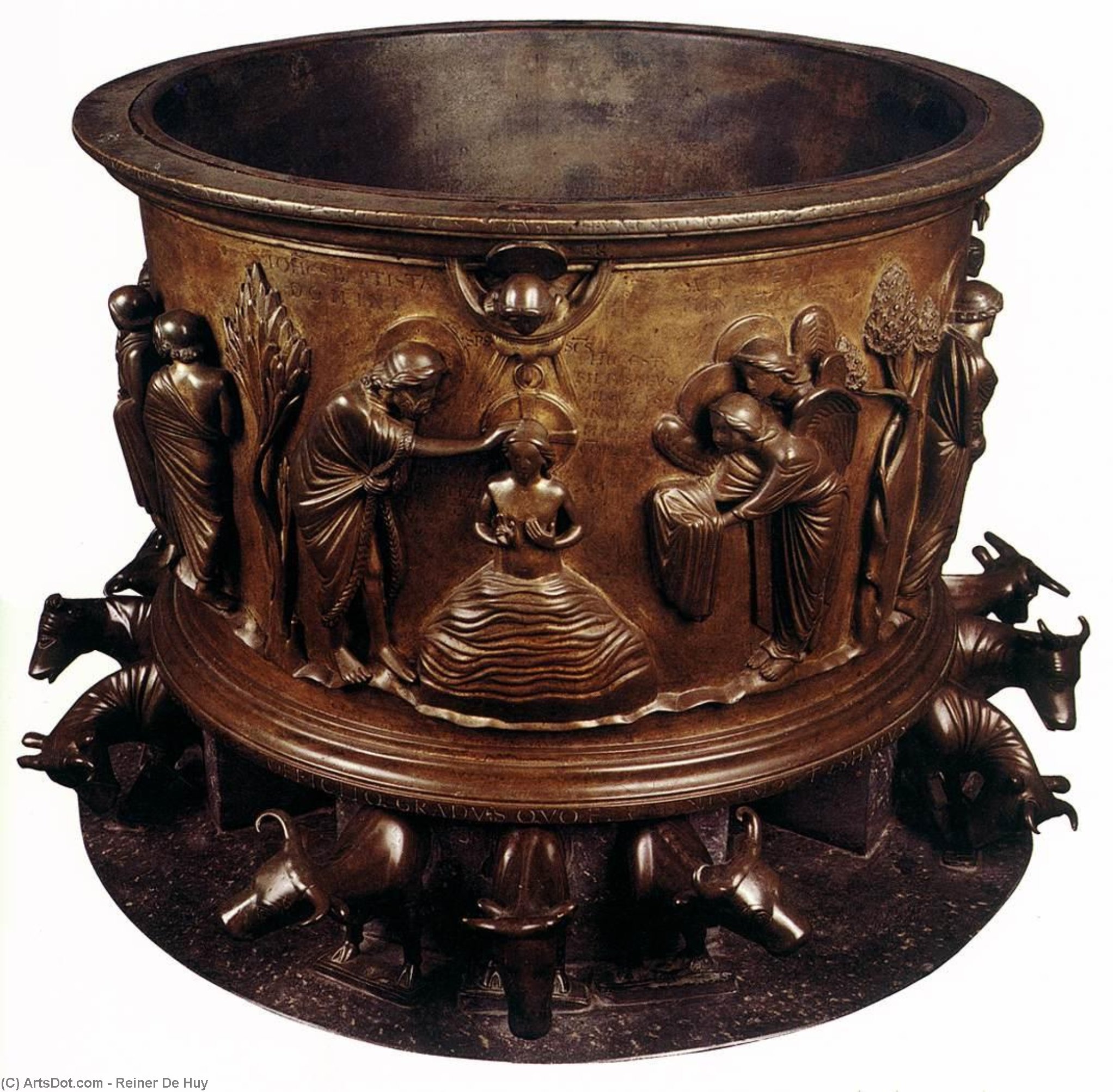
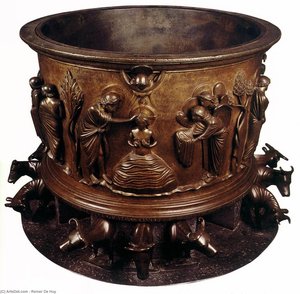
In the heart of the Mosan Valley, where the Meuse River flows through the historical landscapes of modern-day Belgium, lies a relic of profound spiritual and artistic significance. The Baptismal font, forged by the masterful hands of Reiner de Huy between 1107 and 1118, stands as a breathtaking testament to the Romanesque era's creative zenith. This is not merely a vessel for ritual; it is a complex narrative in bronze, a sculptural triumph that bridges the gap between the earthly and the divine. As one contemplates its surface, the weight of centuries becomes palpable, inviting the viewer into a world where metalwork transcends utility to become high art.
The craftsmanship exhibited in this piece is nothing short of extraordinary. Utilizing the medium of bronze, Reiner de Huy achieved a level of detail that was revolutionary for the early 12th century. The font features an intricate arrangement of figures in high relief, meticulously carved to capture the dynamism of biblical narratives. Each character possesses a distinct presence, their expressions and gestures frozen in a moment of sacred drama. This technique, characterized by a surprising degree of naturalism and anatomical awareness, reflects the influence of both Byzantine elegance and classical Roman traditions, creating a style that feels both ancient and remarkably alive.
Symbolism and the Art of the Mosan Style
To gaze upon the Baptismal font is to read a visual liturgy. The circumference of the basin serves as a stage for a series of religious scenes, where every fold of drapery and every muscular tension in the figures contributes to a larger theological message. Below these human dramas, the base of the font is adorned with carvings of animals and mythical creatures, representing the untamed forces of the world that are purified through the sacrament of baptism. This juxtaposition of the celestial and the terrestrial creates a powerful symbolic tension, reminding the faithful of the transformative power of faith.
The aesthetic allure of the piece is further enhanced by its rich, varied patina. The natural aging of the bronze has bestowed upon the font a deep, multi-tonal luster that catches the light in ways that modern reproductions strive to emulate. For the collector or the interior designer, this work offers more than just visual beauty; it provides a sense of historical continuity and prestige. The interplay of shadow and light across the raised reliefs creates a rhythmic texture that can serve as a profound focal point in any curated space, evoking an atmosphere of timelessness and quiet contemplation.
A Timeless Inspiration for Modern Spaces
While the original masterpiece resides within the hallowed halls of the Collegiate Church of St. Bartholomew in Liège, its spirit remains accessible to those who appreciate the intersection of history and fine art. The Baptismal font is a cornerstone of Mosan art, a style that celebrated the marriage of goldsmithing precision with sculptural grandeur. For enthusiasts of high-quality reproductions, owning a piece inspired by Reiner de Huy’s work means bringing a fragment of the Romanesque Renaissance into the contemporary home.
Whether one is drawn to the technical mastery of the bronze casting or the emotional depth of its biblical storytelling, this artwork continues to inspire awe. It serves as a reminder that true art does not fade with time but matures, gaining complexity and soul. Integrating the essence of such a monumental work into a collection allows for a sophisticated dialogue between the medieval past and the modern present, offering an unparalleled opportunity to celebrate one of Europe's most significant artistic legacies.
Obras relacionadas
Biografía del artista
The Enigmatic Master of Mosan Bronze: Reiner de Huy
Reiner de Huy, a name whispered through the annals of medieval art history, remains an elusive figure despite being credited with one of the most significant achievements of Romanesque sculpture – the magnificent baptismal font at St Bartholomew’s Church in Liège. Born sometime before 1125 and likely passing around 1150, Reiner's life is shrouded in mystery, known primarily through a single mention in a charter from the Bishopric of Liège identifying him as “Renerus aurifaber,” or Rainer the goldsmith. This scant detail, however, belies the profound impact his artistry had on the artistic landscape of 12th-century Europe.
A Flourishing Artistic Center: The Mosan Valley
To understand Reiner de Huy is to understand the vibrant cultural milieu of the Mosan Valley. Situated along the Meuse River, encompassing parts of modern Belgium and France, this region was a crucible of artistic innovation during the Romanesque period. The Prince-Bishopric of Liège fostered a thriving community of metalworkers, sculptors, and goldsmiths, with bronze casting holding particular prestige. This wasn’t merely a technical skill; it was an art form deeply intertwined with religious devotion and aristocratic patronage. The valley's strategic location facilitated trade and the exchange of ideas, drawing influences from Byzantine traditions, classical antiquity, and Ottonian artistry. Reiner emerged from this fertile ground, embodying the synthesis of these diverse elements.
The Baptismal Font: A Narrative in Bronze
Reiner’s enduring legacy rests upon the extraordinary baptismal font created between 1107 and 1118 for St Bartholomew's Church. This monumental work, cast in bronze, is not simply a vessel for ritual purification; it is a complex narrative unfolding in sculpted relief. The basin itself depicts five scenes central to the sacrament of baptism: John the Baptist preaching, the Baptism of Christ, and episodes involving the apostles Peter and John the Evangelist. These reliefs are remarkable for their dynamic composition, graceful figures, and a nascent sense of spatial depth – qualities that set them apart from earlier Romanesque sculpture. The original cover, adorned with depictions of the Twelve Apostles and prophets (sadly lost during the French Revolution), further enhanced the font’s symbolic richness.
Style and Influences
The style of the baptismal font reveals a sophisticated understanding of classical forms blended with Byzantine elegance. Figures possess a flowing, rhythmic quality reminiscent of antique sculpture, yet they are imbued with a distinctly medieval spirituality. The intricate detailing, particularly in the drapery and facial expressions, demonstrates Reiner’s mastery of metalworking techniques. While direct influences remain debated, scholars point to connections with Ottonian bronze casting and Byzantine reliquaries. The font's narrative approach also reflects a growing emphasis on storytelling within religious art, anticipating developments in Gothic sculpture. A small bronze crucifix figure housed in the Schnütgen Museum in Cologne is often attributed to Reiner’s hand, offering further insight into his artistic vocabulary. Other works found in Brussels and Dublin are believed to have originated from his workshop, showcasing the breadth of his creative enterprise.
Historical Significance and Legacy
Reiner de Huy stands as a pivotal figure in the transition from Ottonian to Romanesque art. His baptismal font not only exemplifies the artistic achievements of the Mosan school but also profoundly influenced subsequent generations of sculptors and metalworkers. The work’s classical elegance, dynamic composition, and narrative power set a new standard for religious imagery. Though little is known about his personal life, Reiner de Huy's enduring masterpiece continues to inspire awe and admiration, solidifying his place as one of the most important artists of the medieval period. His work serves as a testament to the artistic flourishing that occurred in the Meuse Valley during the 12th century—a region often hailed as the “Athens of the North” for its intellectual and creative vitality.
Reiner De Huy
1150