 Ver en contexto
 Enviar
 Compartir
 Detalles

 Descargar
 Similares
 Radiografía
 Presentación de diapositivas
Agatha bas


 Ver más
Reproducción al óleo hecha a mano
Óleo sobre lienzo pintado a mano en el tamaño y marco de su elección, realizado por encargo por nuestros artistas. ( Comprar impresión Comprar imagen)




P118B $10

P118H $10

P118W $10

P438Z $10

P508JH $12

P508YH $12

P805H $10

P805Z $10

P919BZ $10

P919G $10

P919XJ $10

P959ZH $10

P968JZ $12

W106C $8

W218G $10

W218JH $8

W218Y $10

W307PJ $10

W316G $10

W316PJ $8

W316Y $10

W398PJ $8

W4111J $10

W500HY $15

W500JH $15

W692G $12

W849H $8

W940BG $15

W953PJ $8




Elija entre nuestros tamaños predefinidos que respetan las proporciones originales de la obra.

Puede ingresar sus propias dimensiones para adaptarse a un marco o espacio específico. Si el tamaño seleccionado no coincide con las proporciones de la imagen original, recortaremos la obra o extenderemos la pintura con elementos adicionales pintados a mano. Se le enviará una maqueta digital para su aprobación antes de comenzar la producción.
Tenga en cuenta que la vista previa en pantalla no refleja el recorte o la extensión reales. Solo la maqueta mostrará con precisión la composición final.
Si bien existen tamaños personalizados, recomendamos seleccionar una dimensión de la lista predefinida para preservar las proporciones originales.
Tras realizar el pedido, el equipo de ArtsDot.com enviará un correo electrónico al cliente para solicitar instrucciones y proporcionarle una vista previa del boceto.
Envío a todo el mundo () en 3-4 semanas en lugar de las 5 semanas estándar. (25 agosto). Sin comprometer la calidad.

Envío exprés gratuito a todo el mundo

Lienzo de lino de alta calidad

Seguro de envío total

Garantía de reembolso de impuestos aduaneros

Garantía de fidelidad cromática exacta

Política de devolución de 60 días (solo por defectos)

Garantía de devolución del 100% del dinero

Descuento por cantidad
 La opción de vidrio solo está disponible en tamaños inferiores a 110 cm.

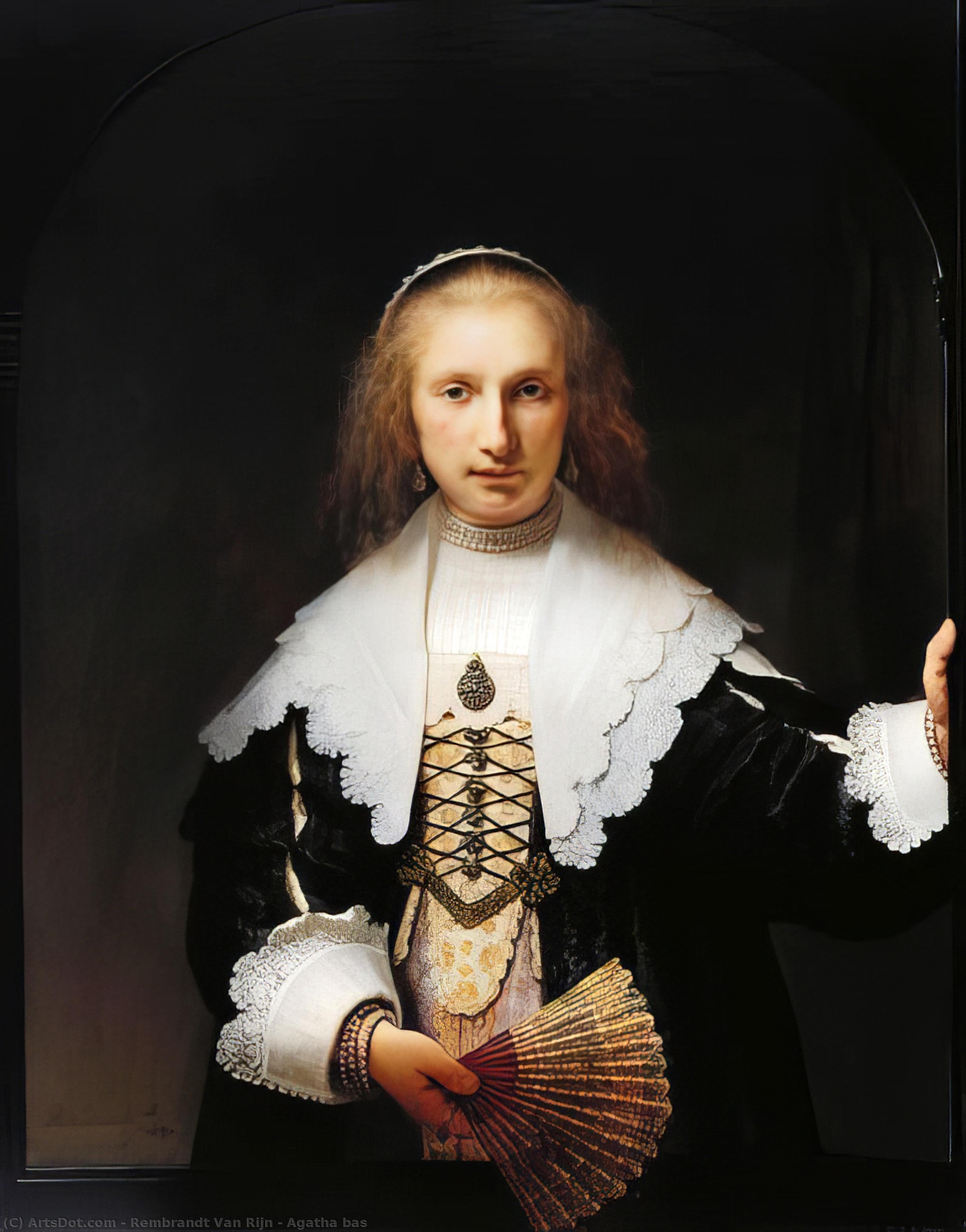
Agatha bas
Técnica de reproducción
Dimensiones de la reproducción
-


Precio total final
$ 263
Descripción de la obra
Rembrandt ’s Intimate Portrait of Agatha Bas
Rembrandt van Rijn’s “Portrait of Agatha Bas,” painted in 1641, isn’t merely a likeness; it’s a profound exploration of light, shadow, and the quiet dignity of a woman within her social sphere. This oil on canvas masterpiece, now housed within the esteemed Museum Het Rembrandthuis in Amsterdam, offers a rare glimpse into the life of Agatha Bas herself. More than just a portrait, it’s a testament to Rembrandt’s unparalleled ability to capture not only physical appearance but also an underlying sense of character and inner composure.
The painting immediately draws the eye to Agatha’s elegant attire: a rich black gown adorned with delicate white lace cuffs and collar. These details, rendered with meticulous precision by Rembrandt’s hand, speak volumes about her status and wealth within Dutch society. The pearls adorning her neck and wrists further emphasize this position, while the simple yet sophisticated style of her hair – pulled back into a neat bun – suggests an understated grace. However, it's not merely the outward appearance that commands attention; Rembrandt masterfully employs chiaroscuro—the dramatic interplay of light and shadow—to sculpt Agatha’s features and imbue the portrait with depth and emotion.
Notice how the light gently illuminates her face, highlighting the delicate curve of her cheekbones and the subtle expression in her eyes. The shadows that fall across her garments create a sense of volume and texture, inviting us to almost feel the luxurious fabric beneath our fingertips. This masterful use of light isn’t simply decorative; it serves to draw attention to key elements – particularly Agatha’s hands, poised with a fan—and subtly directs the viewer’s gaze throughout the composition. The inclusion of the fan itself is significant, a fashionable accessory of the era that adds a touch of elegance and perhaps even a hint of playful reserve to her demeanor.
Rembrandt: A Master of Light and Shadow
To truly appreciate “Portrait of Agatha Bas,” it’s essential to understand Rembrandt’s artistic philosophy. He was, above all else, an explorer of light—a phenomenon he believed held the key to revealing truth and emotion within his subjects. Unlike many of his contemporaries who favored bright, even lighting, Rembrandt often utilized dramatic contrasts between light and shadow, creating a sense of mystery and depth. This technique, honed through years of observation and experimentation, is evident throughout this portrait, transforming a simple depiction into a powerfully evocative work.
Rembrandt’s innovative approach extended beyond mere technical skill; it reflected a deeper understanding of human psychology. He wasn't interested in simply presenting a superficial likeness but rather in capturing the essence of his subjects—their inner lives and personalities. This is particularly evident in the subtle nuances of Agatha’s expression, which suggests both intelligence and quiet dignity.
His career spanned decades, marked by periods of immense success followed by financial hardship. He was a prolific artist working across multiple mediums – painting, printmaking, and drawing – constantly pushing the boundaries of artistic convention. The Museum Het Rembrandthuis, situated within the former home and studio where he lived and worked between 1639 and 1658, offers an unparalleled opportunity to immerse oneself in his world and witness the evolution of his remarkable talent.
The Context of a Dutch Golden Age Portrait
“Portrait of Agatha Bas” is firmly rooted within the context of the Dutch Golden Age—a period of unprecedented prosperity, artistic innovation, and social change. During this era, portraiture flourished as a popular genre, reflecting the growing importance of individual identity and status. Wealthy merchants, civic officials, and members of the gentry commissioned portraits to commemorate their achievements, solidify their positions within society, and leave a lasting legacy.
Rembrandt’s portraits were highly sought after, not only for their artistic merit but also for their ability to capture the spirit of the age. He skillfully blended realistic representation with expressive symbolism, creating works that are both visually stunning and intellectually stimulating. The inclusion of objects like fans—a symbol of status and refinement—and jewelry—representing wealth and prosperity—further reinforces this context.
The painting’s composition also reflects the conventions of Dutch portraiture at the time. Agatha is depicted in a three-quarter pose, a common arrangement that allowed for a more intimate connection with the viewer. The use of a dark background helps to isolate her figure and draw attention to her features, while the carefully arranged details—her dress, jewelry, and fan—create a sense of visual harmony.
Handmade Reproductions: Bringing Rembrandt Home
For art enthusiasts seeking to experience the beauty and artistry of “Portrait of Agatha Bas,” ArtsDot.com offers meticulously crafted handmade oil reproductions that capture every nuance and detail of the original masterpiece. These reproductions are created by skilled artists who employ traditional techniques—layering thin glazes of oil paint to achieve a depth and luminosity reminiscent of Rembrandt’s own work.
Unlike mass-produced prints, these handmade reproductions are unique works of art in their own right, imbued with the artist’s skill and passion. They offer an exceptional opportunity to bring a piece of Dutch Golden Age history into your home or office—a timeless addition that will undoubtedly spark conversation and admiration. Explore our collection today and discover the perfect Rembrandt reproduction to complement your personal style.
Photo Description: The painting is a portrait of a woman in a fancy dress with lace on her shoulders. She appears to be holding a fan or parasol in front of her face. The woman’s hair is pulled back into a bun and she has a pearl necklace around her neck. The background features a wall, which adds depth to the painting. Overall, it is an intricate portrait that captures the elegance of its subject. Size: Unknown Date: Unknown ARTIST INFORMATION: ================== Artist: Rembrandt van Rijn Birth Year: 1606 Death Year: 1669 Birth City: Leiden Birth Country: Netherlands Biography:A Life Illuminated: The World of Rembrandt van Rijn
Rembrandt Harmenszoon van Rijn, a name synonymous with the Dutch Golden Age and the mastery of light and shadow, was born on July 15, 1606 in Leiden, Netherlands, now the Netherlands. He was the ninth child born to Harmen Gerritszoon van Rijn and Neeltgen Willemsdochter van Zuijtbrouck, from a family of bakers, Harmen Gerritszoon was a miller and Neeltgen Willemsdochter was a baker’s daughter. His mother was Catholic, and his father belonged to the Dutch Reformed Church. Religion is a central theme in Rembrandt’s works and the religiously fraught period in which he lived makes his faith a matter of interest.
As a boy, he attended a Latin school. In 1620, he was enrolled at the University of Leiden, although he had a greater inclination towards painting and was soon apprenticed to Jacob van Swanenburg, with whom he spent three years. After a brief but important apprenticeship of six months with Pieter Lastman in Amsterdam beginning in 1624. It was Lastman’s dramatic use of light and shadow, his dynamic compositions filled with historical and mythological subjects, that profoundly influenced Rembrandt’s artistic vision.
In 1627, Rembrandt began to accept students, among them Gerrit Dou and Isaac de Jouderville. Joan Huydecoper is mentioned as the first buyer of a Rembrandt painting in 1628. As a result of this connection, Prince Frederik Hendrik continued to purchase paintings from Rembrandt.
At the end of 1631, Rembrandt moved to Amsterdam, a city rapidly expanding as the business and trade capital. He began to practice as a professional portraitist for the first time, with great success. He initially stayed with an art dealer, Hendrick van Uylenburgh, and in 1634, Rembrandt married Hendrick’s cousin, Saskia van Uylenburgh. Saskia came from a respected family: her father Rombertus was a lawyer and had been burgomaster of Leeuwarden.
In 1637, Rembrandt moved upriver to Vlooienburg, in a building on the previous site of the current Stopera. He also acquired a number of students, among them Ferdinand Bol and Govert Flinck.
Rembrandt’s legacy extends far beyond his
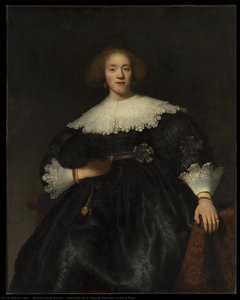
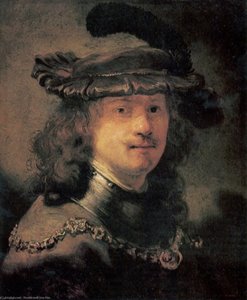
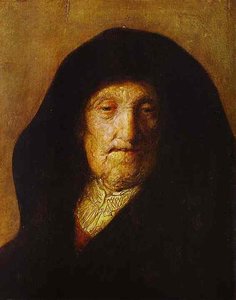
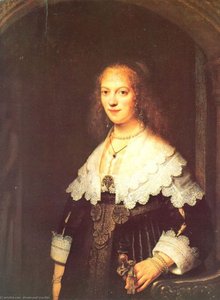
Obras relacionadas


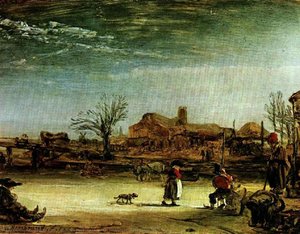
Biografía del artista
Rembrandt van Rijn: Vida y Legado
Primeros Años y Educación (1606-1625)
- Rembrandt Harmenszoon van Rijn nació el 15 de julio de 1606 en Leiden, Países Bajos – un centro bullicioso durante la Edad Dorada de la República Holandesa.
- Su padre, Harmen Gerritszoon van Rijn, era molinero y su madre, Neeltgen Willemsdochter van Zuytbrouck, provenía de una familia de panaderos. Esto le proporcionó acceso a la educación en la Escuela Latina de Leiden.
- Alrededor de 1620, comenzó un aprendizaje con Jacob van Swanenburg en Leiden.
- Un período crucial de seis meses (1624) se pasó estudiando bajo Pieter Lastman en Ámsterdam, cuyo uso dramático de la luz y la sombra influyó profundamente en el trabajo temprano de Rembrandt.
- Al regresar a Leiden, estableció su propio estudio alrededor de 1625, compartiéndolo con el artista fellow Jan Lievens.
Carrera Temprana y Traslado a Ámsterdam (1625-1642)
- Rembrandt rápidamente ganó reconocimiento en Leiden por sus pinturas históricas y retratos.
- En 1629, se benefició del mecenazgo de Constantijn Huygens, asegurando encargos del tribunal de La Haya – un punto de inflexión en su carrera.
- Se trasladó a Ámsterdam en 1631, convirtiéndose en un pintor de retratos exitoso que atraía clientes adinerados.
- En 1634, se casó con Saskia van Uylenburgh, hija de un jurista y alcalde prominente, obteniendo influencia social e inicial estabilidad financiera.
Desarrollo Artístico y Estilo
- El desarrollo artístico de Rembrandt se caracterizó por una experimentación constante. Se alejó de las formas idealizadas hacia representaciones realistas y emocionalmente expresivas.
- Periodo Temprano (c. 1625-1635): Marcado por el realismo detallado e influencia de Lastman.
- Periodo Maduro (c. 1635-1650s): Caracterizado por un uso magistral del *claroscuro* – luz y sombra dramáticas que crean profundidad psicológica. Sus pinceladas se volvieron más sueltas, transmitiendo textura y emoción.
- Periodo Tardío (c. 1650s-1669): Un retorno a una paleta más sobria centrándose en retratos íntimos y escenas bíblicas que reflejan luchas personales y reflexiones espirituales.
Obras Maestras y Logros
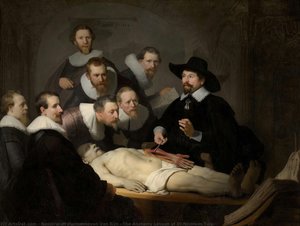
- La Lección de Anatomía del Dr. Nicolaes Tulp (1632): Retrato grupal innovador que muestra anatomía humana y personalidad.
- La Cena de Belzabal (1635): Escena bíblica dramática que demuestra dominio de la luz, la sombra y la composición.
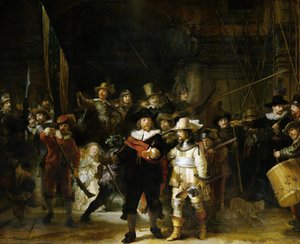
- La Guarda Nocturna (1642) – oficialmente Compañía Miliciana del Distrito II bajo el Comando del Capitán Frans Bannink Cocq: Un retrato grupal dinámico que redefine el género con una composición e iluminación innovadoras.
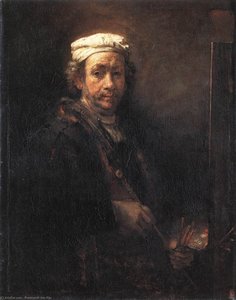
- Autorretratos: Aproximadamente 40 autorretratos que ofrecen un registro visual único de su proceso de envejecimiento y visión artística.
Influencias y Legado
- Maestros Italianos: Estudió obras de Tiziano, Caravaggio a través de grabados y reproducciones.
- Caravaggio: El uso dramático de la luz y la sombra impactó profundamente en su estilo.
- Artistas Holandeses y Flamencos: Influenciado por contemporáneos que trabajaban en la República Holandesa y Flandes.
- Rembrandt revolucionó el retrato, elevó el grabado a una forma de arte fina y exploró temas psicológicos profundos.
- A pesar de las tragedias personales y las dificultades financieras, su reputación perduró. Ahora se considera un pilar del arte holandés y un símbolo universal del genio artístico.
Significado Histórico
- La obra de Rembrandt refleja el espíritu de la Edad Dorada Holandesa – prosperidad económica, florecimiento intelectual e innovación artística.
- Capturó la esencia de esta época a través de retratos, escenas bíblicas que resonaban con los públicos y la exploración de emociones humanas universales.
- Su vida historia – marcada por el éxito y la adversidad – ha hecho de él una figura convincente en la historia del arte. Sigue siendo un símbolo perdurable de dedicación a la artesanía incluso frente a desafíos personales. El impacto de Rembrandt en las generaciones posteriores de artistas es inmensurable.
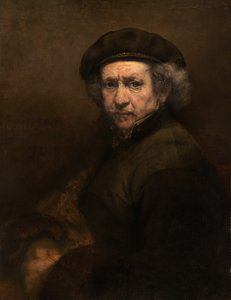
Rembrandt van Rijn
1606 - 1669 , Países Bajos
Datos clave
- Artistas Influenciados: Generaciones posteriores
- Artistas Que Influyeron:
- Pieter Lastman
- Caravaggio
- Maestros Italianos
- Fecha De Muerte: 1669
- Fecha De Nacimiento: 15 de julio de 1606
- Lugar De Nacimiento: Leiden, Países Bajos
- Movimiento Artístico: Barroco Holandés
- Nacionalidad: Holandés
- Nombre Completo: Rembrandt van Rijn
- Obras Notables:
- La Lección de Anatomía del Dr. Tulp
- Cena en Belzabal
- La Ronda de Noche
- Autorretratos
Artículos relacionados

Rembrandt van Rijn: Las 25 Obras Maestras que Definen un Genio | Arte, Historia y Decoración
Descubre las 25 obras maestras de Rembrandt van Rijn, el genio del barroco holandés. Explora su historia, técnica y simbolismo en retratos icónicos como 'La Ronda Nocturna'. Encuentra reproducciones de arte exclusivas para decorar tu hogar con ArtsDot.com.

Los 10 Maestros del Siglo de Oro Holandés: Arte, Historia y Decoración Exclusiva
Descubre los 10 imprescindibles del Siglo de Oro Holandés: Rembrandt, Vermeer y más. Explora la historia, técnica y belleza de estos lienzos clásicos. Encuentra reproducciones de arte exclusivas para decorar tu hogar en .

Los 10 Maestros del Barroco Holandés: Obras que Definen una Época | ArtsDot
Descubre los 10 imprescindibles del Barroco holandés: Rembrandt, Vermeer y más. Explora la historia, técnica y belleza de estas obras maestras. Reproducciones de arte en ArtsDot.com para decorar tu hogar con elegancia.
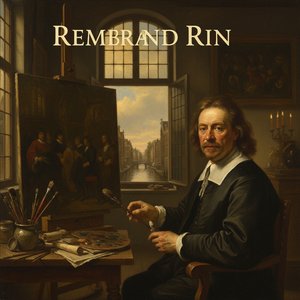
Rembrandt van Rijn: A Life Illuminated – Innovation, Emotion, and the Dutch Golden Age
Explore the life & art of Rembrandt van Rijn, a Dutch Golden Age master. Discover his innovative techniques, iconic paintings like 'The Night Watch', and enduring legacy. Expert insights for collectors & enthusiasts.

La Luz y la República: Innovación Artística en el Siglo de Oro Neerlandés
Descubra la innovación artística del Siglo de Oro Neerlandés. Explore las obras maestras de Rembrandt y Vermeer, técnicas revolucionarias y el legado perdurable de este florecimiento cultural. ¡Sumérjase en la luz y la belleza!