 Ver en contexto
 Enviar
 Compartir
 Detalles

 Descargar
 Similares
 Radiografía
 Presentación de diapositivas
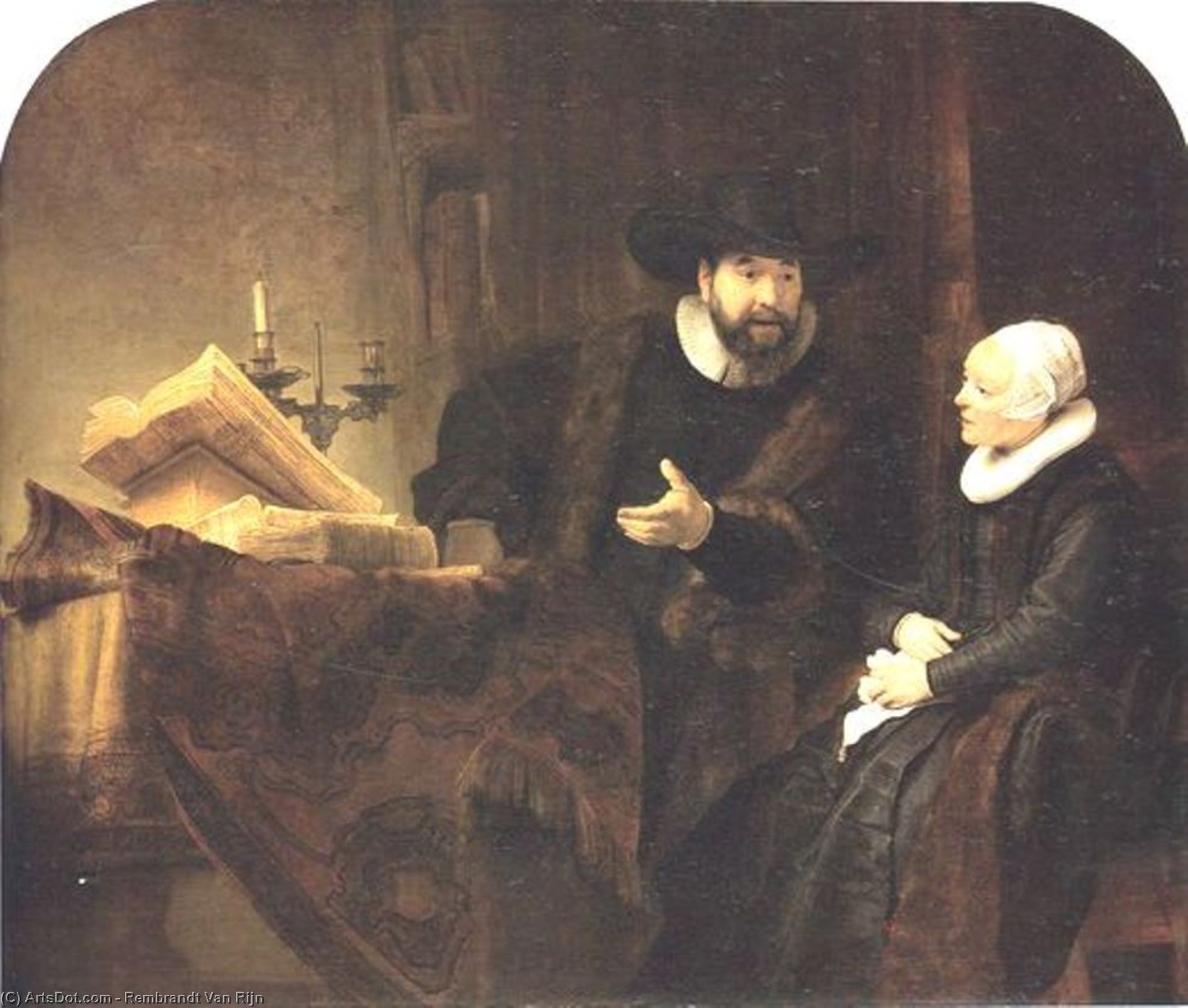
El Retrato Doble de Cornelis Claesz Anslo y su Esposa Aeltje Gerritsdr Schouten
 Acrílico sobre lienzo
- Arte de pared
- Baroque
 1641
1641- Renacimiento
 176.0 x 210.0 cm
 Ver más
Giclée / Impresión de arte
Impresiones giclée o en lienzo de calidad de museo con producción rápida y opciones de acabado flexibles. ( Comprar pintura hecha a mano Comprar imagen)




P118B $10

P118H $10

P118W $10

P438Z $10

P508JH $12

P508YH $12

P805H $10

P805Z $10

P919BZ $10

P919G $10

P919XJ $10

P959ZH $10

P968JZ $12

W106C $8

W218G $10

W218JH $8

W218Y $10

W307PJ $10

W316G $10

W316PJ $8

W316Y $10

W398PJ $8

W4111J $10

W500HY $15

W500JH $15

W692G $12

W849H $8

W940BG $15

W953PJ $8




Elija entre nuestros tamaños predefinidos que respetan las proporciones originales de la obra.

Puede introducir sus propias dimensiones para adaptarse a un marco o espacio específico. Si el tamaño seleccionado no coincide con las proporciones de la imagen original, recortaremos la obra de arte o extenderemos la imagen con un borde con efecto espejo o de color sólido. Se enviará una maqueta digital para su aprobación antes de que comience la producción.
Tenga en cuenta que la vista previa en pantalla no refleja el recorte o la extensión real. Solo la maqueta mostrará con precisión la composición final.
Aunque existen tamaños personalizados, recomendamos seleccionar una dimensión de la lista predefinida para preservar las proporciones originales.
Envío a todo el mundo () en 2 semanas en lugar de las 4/5 semanas estándar. (29 agosto)

Envío exprés gratuito a todo el mundo

Lienzo de lino de alta calidad

Seguro de envío total

Garantía de reembolso de impuestos aduaneros

Garantía de fidelidad cromática exacta

Política de devolución de 60 días (solo por defectos)

Garantía de devolución del 100% del dinero

Descuento por cantidad
 La opción de vidrio solo está disponible en tamaños inferiores a 110 cm.

El Retrato Doble de Cornelis Claesz Anslo y su Esposa Aeltje Gerritsdr Schouten
Giclée / Impresión de arte
Dimensiones de la reproducción
-


Precio total final
$ 62
A Window Into Dutch Golden Age Life: Rembrandt’s Double Portrait of Cornelisz Claesz Anslo and his Wife Aeltje Gerritsdr Schouten
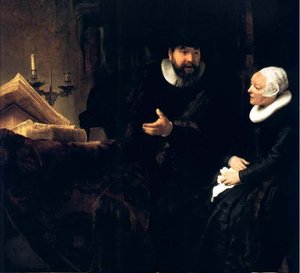
Rembrandt van Rijn's “Double Portrait of Cornelisz Claesz Anslo and his Wife Aeltje Gerritsdr Schouten,”, painted in 1641, isn’t merely a depiction of two individuals; it’s a meticulously crafted window into the intellectual and social life of Amsterdam during the height of the Dutch Golden Age. This remarkable work, now housed within the prestigious Schloss Sanssouci in Berlin, transcends simple portraiture to become a poignant study of domesticity, faith, and the burgeoning culture of learning that defined the era. Rembrandt’s genius lies not just in his technical mastery – the subtle play of light and shadow, the remarkably lifelike rendering of faces – but also in his ability to imbue his subjects with an undeniable sense of presence and character. The painting immediately draws the eye to the couple seated before a richly appointed dining table. Cornelisz Claesz Anslo, a prominent Amsterdam shipowner and Mennonite minister, occupies the left side of the composition, his posture conveying both authority and quiet contemplation. His beard, meticulously rendered with varying shades of brown and grey, speaks volumes about his age and status, while the carefully arranged hat hints at his role as a respected figure within his community. Across from him sits his wife, Aeltje Gerritsdr Schouten, radiating an understated elegance. Her attire – a flowing gown adorned with delicate lace – reflects her position within a prosperous household, subtly suggesting her influence and social standing. The inclusion of the handkerchief in her hand is a particularly telling detail, indicative of the refined manners and domestic graces valued during that period. The setting itself is laden with symbolic meaning. The dining table, dominated by scattered books and open volumes, immediately establishes a scholarly atmosphere. Rembrandt cleverly uses this backdrop to suggest a shared intellectual pursuit – perhaps a lively discussion on literature or theology. The presence of these texts underscores Anslo’s role as a minister and hints at the couple’s engagement with the ideas of their time. The arrangement isn’t haphazard; it feels deliberately staged, inviting the viewer to imagine them immersed in conversation, exchanging thoughts and opinions. It is a scene that speaks volumes about the importance placed on education and intellectual discourse within this affluent family. Rembrandt’s masterful use of *chiaroscuro* – the dramatic contrast between light and shadow – is central to the painting’s impact. He expertly manipulates light to draw attention to the subjects’ faces, particularly their hands, which are subtly gesturing, conveying a sense of engagement and animation. The man’s animated expression, with his slightly open mouth and attentive gaze, suggests an active participant in whatever conversation unfolds before him. The woman’s composed demeanor, reflected in her elegant dress and serene expression, complements her husband’s dynamic pose, creating a harmonious balance within the composition. This interplay of light and shadow not only enhances the realism of the figures but also imbues the scene with a profound emotional depth. Furthermore, Rembrandt’s use of *impasto* – applying paint thickly to create texture and visual interest – is particularly evident in the rendering of Anslo’s beard and hat. These areas are characterized by a raised, three-dimensional quality that adds considerable dynamism to the composition. Conversely, he employs smoother brushstrokes for the more delicate details, such as Aeltje’s lace collar and the folds of her gown, demonstrating his remarkable control over his medium. The artist’s ability to seamlessly blend these contrasting techniques—thick impasto alongside subtle glazes—is a hallmark of his genius and contributes significantly to the painting’s overall impact. Beyond its aesthetic qualities, “Double Portrait” offers a valuable glimpse into the social fabric of 17th-century Amsterdam. The Anslo family’s wealth – evident in their luxurious furnishings and attire – reflects the prosperity that characterized the Dutch Republic during this period. However, Rembrandt doesn't simply celebrate material success; he subtly incorporates elements of Mennonite faith, symbolized by the open book and the reference to the “correctio fraterna” (brotherly admonition) within the painting’s details. This suggests a family deeply rooted in religious values, committed to both intellectual pursuits and moral principles. The painting, therefore, serves as a testament to the complex interplay of wealth, faith, and learning that defined Dutch society during the Golden Age. ## Rembrandt's Techniques: A Symphony of Light and Shadow Delving deeper into Rembrandt’s artistic techniques reveals the extraordinary skill with which he captured the essence of his subjects. He employed a layered approach to paint application, building up thin glazes of color over a dark underpainting – a technique known as *sfumato* – that created an incredible sense of depth and luminosity. This method allowed him to achieve subtle gradations of tone, mimicking the way light interacts with surfaces and creating a remarkably realistic effect. The textures of the fabrics—the velvet of Anslo’s coat, the lace on Aeltje's gown—are rendered with astonishing detail, inviting the viewer to almost feel their softness. Furthermore, Rembrandt’s use of *impasto* – applying paint thickly to create texture and visual interest – is particularly evident in the rendering of Anslo’s beard and hat. These areas are characterized by a raised, three-dimensional quality that adds considerable dynamism to the composition. Conversely, he employs smoother brushstrokes for the more delicate details, such as Aeltje’s lace collar and the folds of her gown, demonstrating his remarkable control over his medium. The artist’s ability to seamlessly blend these contrasting techniques—thick impasto alongside subtle glazes—is a hallmark of his genius and contributes significantly to the painting’s overall impact. The composition itself is carefully considered, utilizing a pyramidal structure to create stability and balance. Anslo and Aeltje are positioned at the apex of this pyramid, drawing the viewer's eye towards their faces. The dining table acts as a grounding element, anchoring the figures within a domestic setting. Rembrandt’s masterful use of perspective—the subtle recession of space created by the arrangement of objects and furniture—further enhances the sense of realism and depth. It is this meticulous attention to detail, combined with his profound understanding of light and shadow, that elevates “Double Portrait” from a simple likeness to a powerful work of art. ## Historical Context and Legacy: A Piece Within a Larger Narrative The "Double Portrait of Cornelisz Claesz Anslo and his Wife Aeltje Gerritsdr Schouten" is not an isolated artwork; it’s part of a larger collection housed at Schloss Sanssouci in Berlin, Germany – a testament to the significant role Dutch art played in European cultural circles during the 17th century. This location underscores the painting’s importance within the broader context of collecting and preserving artistic heritage. The fact that Rembrandt himself created this portrait for a wealthy merchant family speaks volumes about his standing as one of the most sought-after artists of his time. Rembrandt’s oeuvre is vast and diverse, encompassing portraits, landscapes, biblical scenes, and self-portraits. He is considered one of the greatest visual artists in the history of Western art. His innovative techniques—particularly his mastery of *chiaroscuro*—continue to be studied and admired by art students today. The “Double Portrait” serves as a powerful reminder of Rembrandt’s profound impact on the history of Western art, solidifying his position as one of the greatest painters of all time.Obras relacionadas

Biografía del artista
Rembrandt van Rijn: Vida y Legado
Primeros Años y Educación (1606-1625)
- Rembrandt Harmenszoon van Rijn nació el 15 de julio de 1606 en Leiden, Países Bajos – un centro bullicioso durante la Edad Dorada de la República Holandesa.
- Su padre, Harmen Gerritszoon van Rijn, era molinero y su madre, Neeltgen Willemsdochter van Zuytbrouck, provenía de una familia de panaderos. Esto le proporcionó acceso a la educación en la Escuela Latina de Leiden.
- Alrededor de 1620, comenzó un aprendizaje con Jacob van Swanenburg en Leiden.
- Un período crucial de seis meses (1624) se pasó estudiando bajo Pieter Lastman en Ámsterdam, cuyo uso dramático de la luz y la sombra influyó profundamente en el trabajo temprano de Rembrandt.
- Al regresar a Leiden, estableció su propio estudio alrededor de 1625, compartiéndolo con el artista fellow Jan Lievens.
Carrera Temprana y Traslado a Ámsterdam (1625-1642)
- Rembrandt rápidamente ganó reconocimiento en Leiden por sus pinturas históricas y retratos.
- En 1629, se benefició del mecenazgo de Constantijn Huygens, asegurando encargos del tribunal de La Haya – un punto de inflexión en su carrera.
- Se trasladó a Ámsterdam en 1631, convirtiéndose en un pintor de retratos exitoso que atraía clientes adinerados.
- En 1634, se casó con Saskia van Uylenburgh, hija de un jurista y alcalde prominente, obteniendo influencia social e inicial estabilidad financiera.
Desarrollo Artístico y Estilo
- El desarrollo artístico de Rembrandt se caracterizó por una experimentación constante. Se alejó de las formas idealizadas hacia representaciones realistas y emocionalmente expresivas.
- Periodo Temprano (c. 1625-1635): Marcado por el realismo detallado e influencia de Lastman.
- Periodo Maduro (c. 1635-1650s): Caracterizado por un uso magistral del *claroscuro* – luz y sombra dramáticas que crean profundidad psicológica. Sus pinceladas se volvieron más sueltas, transmitiendo textura y emoción.
- Periodo Tardío (c. 1650s-1669): Un retorno a una paleta más sobria centrándose en retratos íntimos y escenas bíblicas que reflejan luchas personales y reflexiones espirituales.
Obras Maestras y Logros
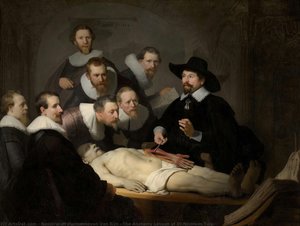
- La Lección de Anatomía del Dr. Nicolaes Tulp (1632): Retrato grupal innovador que muestra anatomía humana y personalidad.
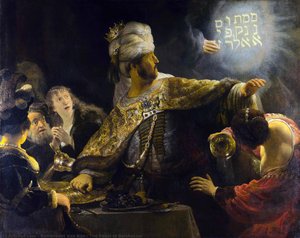
- La Cena de Belzabal (1635): Escena bíblica dramática que demuestra dominio de la luz, la sombra y la composición.
- La Guarda Nocturna (1642) – oficialmente Compañía Miliciana del Distrito II bajo el Comando del Capitán Frans Bannink Cocq: Un retrato grupal dinámico que redefine el género con una composición e iluminación innovadoras.
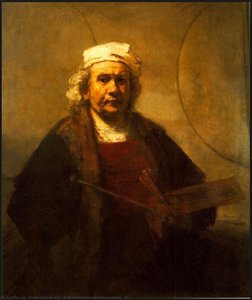
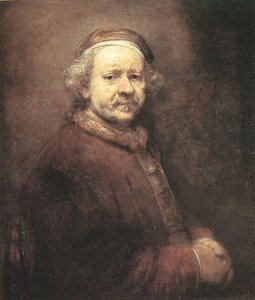
- Autorretratos: Aproximadamente 40 autorretratos que ofrecen un registro visual único de su proceso de envejecimiento y visión artística.
Influencias y Legado
- Maestros Italianos: Estudió obras de Tiziano, Caravaggio a través de grabados y reproducciones.
- Caravaggio: El uso dramático de la luz y la sombra impactó profundamente en su estilo.
- Artistas Holandeses y Flamencos: Influenciado por contemporáneos que trabajaban en la República Holandesa y Flandes.
- Rembrandt revolucionó el retrato, elevó el grabado a una forma de arte fina y exploró temas psicológicos profundos.
- A pesar de las tragedias personales y las dificultades financieras, su reputación perduró. Ahora se considera un pilar del arte holandés y un símbolo universal del genio artístico.
Significado Histórico
- La obra de Rembrandt refleja el espíritu de la Edad Dorada Holandesa – prosperidad económica, florecimiento intelectual e innovación artística.
- Capturó la esencia de esta época a través de retratos, escenas bíblicas que resonaban con los públicos y la exploración de emociones humanas universales.
- Su vida historia – marcada por el éxito y la adversidad – ha hecho de él una figura convincente en la historia del arte. Sigue siendo un símbolo perdurable de dedicación a la artesanía incluso frente a desafíos personales. El impacto de Rembrandt en las generaciones posteriores de artistas es inmensurable.
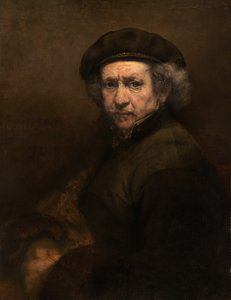
Rembrandt van Rijn
1606 - 1669 , Países Bajos
Datos clave
- Artistas Influenciados: Generaciones posteriores
- Artistas Que Influyeron:
- Pieter Lastman
- Caravaggio
- Maestros Italianos
- Fecha De Muerte: 1669
- Fecha De Nacimiento: 15 de julio de 1606
- Lugar De Nacimiento: Leiden, Países Bajos
- Movimiento Artístico: Barroco Holandés
- Nacionalidad: Holandés
- Nombre Completo: Rembrandt van Rijn
- Obras Notables:
- La Lección de Anatomía del Dr. Tulp
- Cena en Belzabal
- La Ronda de Noche
- Autorretratos
Artículos relacionados

Rembrandt van Rijn: Las 25 Obras Maestras que Definen un Genio | Arte, Historia y Decoración
Descubre las 25 obras maestras de Rembrandt van Rijn, el genio del barroco holandés. Explora su historia, técnica y simbolismo en retratos icónicos como 'La Ronda Nocturna'. Encuentra reproducciones de arte exclusivas para decorar tu hogar con ArtsDot.com.

Los 10 Maestros del Barroco Holandés: Obras que Definen una Época | ArtsDot
Descubre los 10 imprescindibles del Barroco holandés: Rembrandt, Vermeer y más. Explora la historia, técnica y belleza de estas obras maestras. Reproducciones de arte en ArtsDot.com para decorar tu hogar con elegancia.
Rembrandt van Rijn: A Life Illuminated – Exploring the Master of Light, Shadow, and Human Emotion
Explore the life & art of Rembrandt van Rijn, master of light and shadow. Discover his iconic paintings, revolutionary techniques, and enduring legacy with ArtsDot – trusted experts in fine art reproductions since 2004.
Rembrandt van Rijn: A Life Illuminated – Innovation, Emotion, and the Dutch Golden Age
Explore the life & art of Rembrandt van Rijn, a Dutch Golden Age master. Discover his innovative techniques, iconic paintings like 'The Night Watch', and enduring legacy. Expert insights for collectors & enthusiasts.
Mastering Light and Shadow: A Guide to Rembrandt's Chiaroscuro Technique
Discover the secrets of Rembrandt's chiaroscuro technique. Explore how the Dutch Golden Age master used light and shadow to create profound emotional depth and timeless drama in his legendary portraits and biblical narratives.
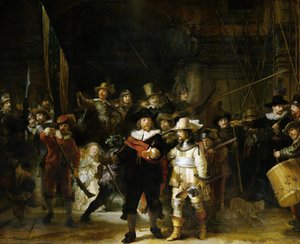
![La Lección de Anatomía del Dr. Nicolaes Tulp [1632]](/media/artworks/images-thumb/e5/fc/e5fcb33447eac6b24ab049b22effa1a3.jpg)