 Ver en contexto
 Enviar
 Compartir
 Detalles

 Descargar
 Similares
 Radiografía
 Presentación de diapositivas
Jews in the Synagogue


 Ver más
Giclée / Impresión de arte
Impresiones giclée o en lienzo de calidad de museo con producción rápida y opciones de acabado flexibles. ( Comprar pintura hecha a mano Comprar imagen)




P118B $10

P118H $10

P118W $10

P438Z $10

P508JH $12

P508YH $12

P805H $10

P805Z $10

P919BZ $10

P919G $10

P919XJ $10

P959ZH $10

P968JZ $12

W106C $8

W218G $10

W218JH $8

W218Y $10

W307PJ $10

W316G $10

W316PJ $8

W316Y $10

W398PJ $8

W4111J $10

W500HY $15

W500JH $15

W692G $12

W849H $8

W940BG $15

W953PJ $8




Elija entre nuestros tamaños predefinidos que respetan las proporciones originales de la obra.

Puede introducir sus propias dimensiones para adaptarse a un marco o espacio específico. Si el tamaño seleccionado no coincide con las proporciones de la imagen original, recortaremos la obra de arte o extenderemos la imagen con un borde con efecto espejo o de color sólido. Se enviará una maqueta digital para su aprobación antes de que comience la producción.
Tenga en cuenta que la vista previa en pantalla no refleja el recorte o la extensión real. Solo la maqueta mostrará con precisión la composición final.
Aunque existen tamaños personalizados, recomendamos seleccionar una dimensión de la lista predefinida para preservar las proporciones originales.
Envío a todo el mundo () en 2 semanas en lugar de las 4/5 semanas estándar. (25 agosto)

Envío exprés gratuito a todo el mundo

Lienzo de lino de alta calidad

Seguro de envío total

Garantía de reembolso de impuestos aduaneros

Garantía de fidelidad cromática exacta

Política de devolución de 60 días (solo por defectos)

Garantía de devolución del 100% del dinero

Descuento por cantidad
 La opción de vidrio solo está disponible en tamaños inferiores a 110 cm.

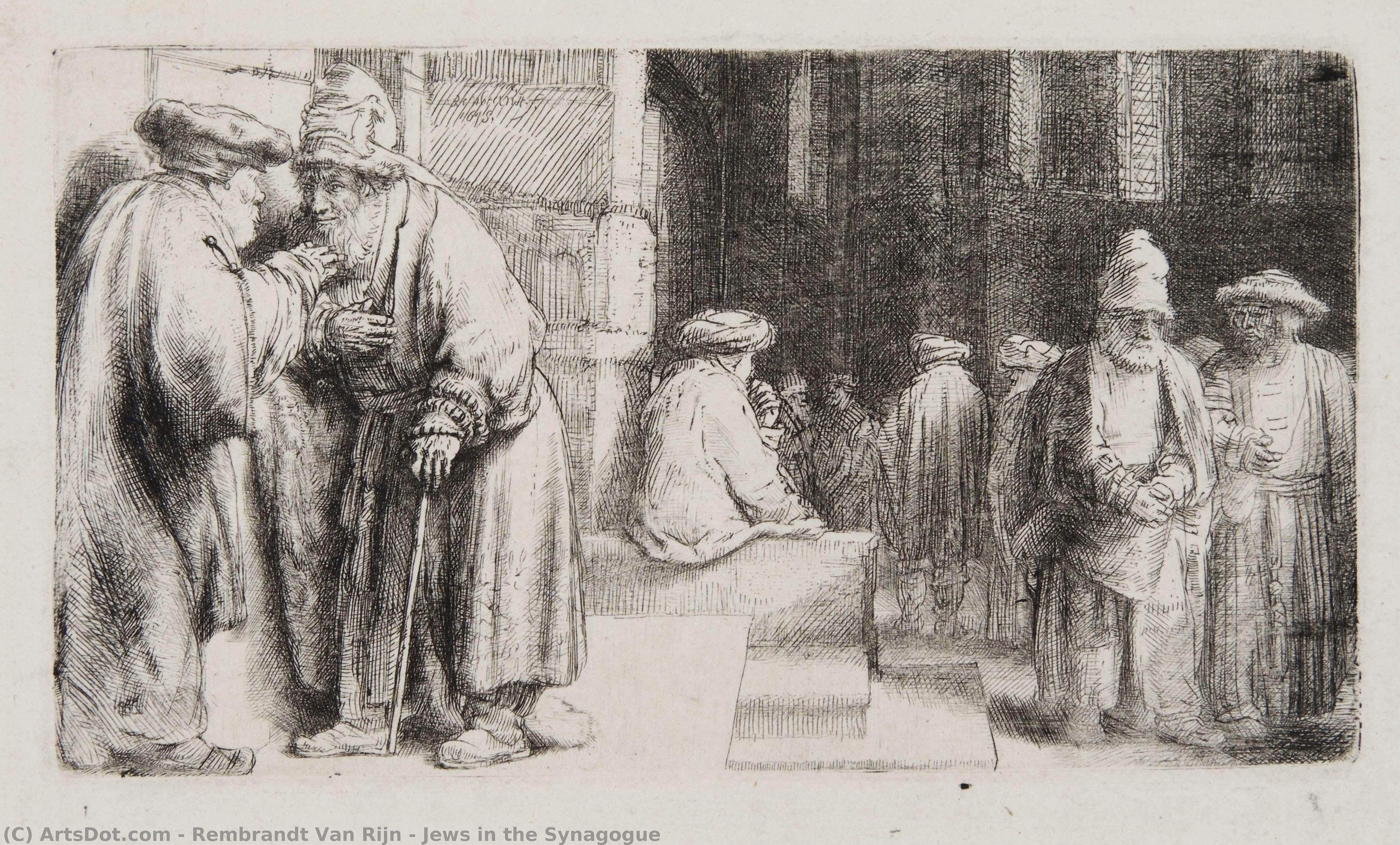
Jews in the Synagogue
Giclée / Impresión de arte
Dimensiones de la reproducción
-


Precio total final
$ 62
Descripción de la pieza
A Window Into Faith: The Soul of Rembrandt’s Masterpiece
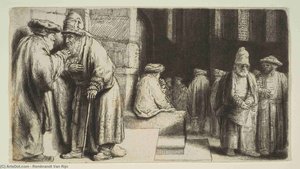
To gaze upon Rembrandt van Rijn’s "Jews in the Synagogue," completed in 1648, is to step through a portal into the heart of the Dutch Golden Age. This profound work transcends mere religious documentation; it is an intimate encounter with spirituality itself. The scene portrays a congregation gathered within a synagogue, bathed in a diffused light emanating from a window—a deliberate compositional choice that underscores Rembrandt’s signature ability to illuminate the human condition. As the eye wanders through the composition, one finds not just figures, but souls caught in a moment of profound, quiet devotion. The artist captures the expressions of solemn contemplation and the weight of tradition on the faces of men and women alike, rendering each individual with a palpable physicality that conveys an immediacy rarely achieved in art of its time.
The emotional resonance of this piece lies in its ability to bridge the gap between the seventeenth century and the modern viewer. More than just a depiction of religious observance, the painting delves into the complexities of faith, community, and the quiet dignity of everyday life. There is a sense of shared humanity within the frame; the figures are seated or standing with a respectful stillness that invites the viewer to join their silent prayer. For the collector or the lover of fine art, this work offers more than visual beauty—it provides a meditative space, a sanctuary of thought that remains as relevant today as it was during the height of the Dutch Republic.
The Alchemy of Light and Shadow
Rembrandt’s mastery of chiaroscuro—the dramatic interplay between light and dark—is arguably the painting's most striking characteristic. He employs a subtle, masterful gradation of tones to sculpt the forms of his subjects, creating an illusionistic depth that draws the viewer into the very center of the congregation. The window light casts a warm, golden glow upon several faces, highlighting their features and conveying a feeling of divine serenity. Conversely, darker, velvety areas envelop others, emphasizing themes of vulnerability, introspection, and the mysteries of the unseen.
This manipulation of light serves a psychological purpose far beyond mere decoration. It creates a visual rhythm that guides the viewer's gaze, moving from the brightly lit faces of active prayer to the shadowed corners where history and tradition reside. This technique breathes life into the canvas, making the atmosphere feel thick with the scent of old parchment and the hushed whispers of a community in communion. For those seeking to incorporate such a masterpiece into an interior space, the painting acts as a focal point of profound depth, offering a sophisticated interplay of light that can transform the mood of any room.
A Legacy of Human Connection
Historically, "Jews in the Synagogue" stands as a testament to the burgeoning religious tolerance and cultural diversity of Amsterdam during the mid-17th century. By choosing this subject, Rembrandt captures a specific historical moment—the vibrant Jewish community of the Dutch Golden Age—with a level of empathy and respect that was remarkably progressive for his era. The painting does not merely observe; it honors. Through meticulous detail in anatomy and costume, Rembrandt ensures that each person possesses a unique identity, contributing to a larger tapestry of communal strength.
For the discerning interior designer or art enthusiast, a high-quality reproduction of this work brings with it an aura of intellectual and emotional sophistication. It is a piece that invites conversation, prompting reflections on heritage, belief, and the enduring power of human connection. Whether placed in a quiet study, a grand library, or a contemporary living space, Rembrandt’s vision continues to illuminate the shadows of the past, offering a timeless window into the eternal beauty of faith.
Obras relacionadas
Biografía del artista
Rembrandt van Rijn: Vida y Legado
Primeros Años y Educación (1606-1625)
- Rembrandt Harmenszoon van Rijn nació el 15 de julio de 1606 en Leiden, Países Bajos – un centro bullicioso durante la Edad Dorada de la República Holandesa.
- Su padre, Harmen Gerritszoon van Rijn, era molinero y su madre, Neeltgen Willemsdochter van Zuytbrouck, provenía de una familia de panaderos. Esto le proporcionó acceso a la educación en la Escuela Latina de Leiden.
- Alrededor de 1620, comenzó un aprendizaje con Jacob van Swanenburg en Leiden.
- Un período crucial de seis meses (1624) se pasó estudiando bajo Pieter Lastman en Ámsterdam, cuyo uso dramático de la luz y la sombra influyó profundamente en el trabajo temprano de Rembrandt.
- Al regresar a Leiden, estableció su propio estudio alrededor de 1625, compartiéndolo con el artista fellow Jan Lievens.
Carrera Temprana y Traslado a Ámsterdam (1625-1642)
- Rembrandt rápidamente ganó reconocimiento en Leiden por sus pinturas históricas y retratos.
- En 1629, se benefició del mecenazgo de Constantijn Huygens, asegurando encargos del tribunal de La Haya – un punto de inflexión en su carrera.
- Se trasladó a Ámsterdam en 1631, convirtiéndose en un pintor de retratos exitoso que atraía clientes adinerados.
- En 1634, se casó con Saskia van Uylenburgh, hija de un jurista y alcalde prominente, obteniendo influencia social e inicial estabilidad financiera.
Desarrollo Artístico y Estilo
- El desarrollo artístico de Rembrandt se caracterizó por una experimentación constante. Se alejó de las formas idealizadas hacia representaciones realistas y emocionalmente expresivas.
- Periodo Temprano (c. 1625-1635): Marcado por el realismo detallado e influencia de Lastman.
- Periodo Maduro (c. 1635-1650s): Caracterizado por un uso magistral del *claroscuro* – luz y sombra dramáticas que crean profundidad psicológica. Sus pinceladas se volvieron más sueltas, transmitiendo textura y emoción.
- Periodo Tardío (c. 1650s-1669): Un retorno a una paleta más sobria centrándose en retratos íntimos y escenas bíblicas que reflejan luchas personales y reflexiones espirituales.
Obras Maestras y Logros
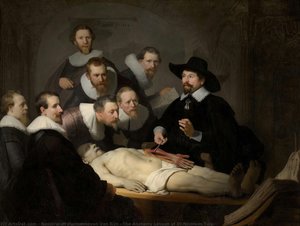
- La Lección de Anatomía del Dr. Nicolaes Tulp (1632): Retrato grupal innovador que muestra anatomía humana y personalidad.
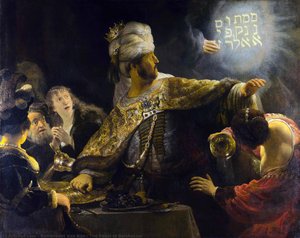
- La Cena de Belzabal (1635): Escena bíblica dramática que demuestra dominio de la luz, la sombra y la composición.
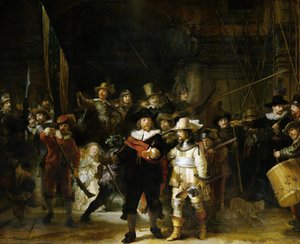
- La Guarda Nocturna (1642) – oficialmente Compañía Miliciana del Distrito II bajo el Comando del Capitán Frans Bannink Cocq: Un retrato grupal dinámico que redefine el género con una composición e iluminación innovadoras.
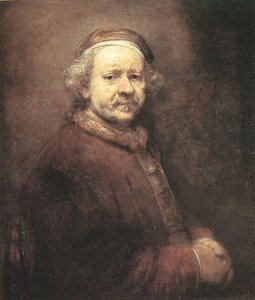
- Autorretratos: Aproximadamente 40 autorretratos que ofrecen un registro visual único de su proceso de envejecimiento y visión artística.
Influencias y Legado
- Maestros Italianos: Estudió obras de Tiziano, Caravaggio a través de grabados y reproducciones.
- Caravaggio: El uso dramático de la luz y la sombra impactó profundamente en su estilo.
- Artistas Holandeses y Flamencos: Influenciado por contemporáneos que trabajaban en la República Holandesa y Flandes.
- Rembrandt revolucionó el retrato, elevó el grabado a una forma de arte fina y exploró temas psicológicos profundos.
- A pesar de las tragedias personales y las dificultades financieras, su reputación perduró. Ahora se considera un pilar del arte holandés y un símbolo universal del genio artístico.
Significado Histórico
- La obra de Rembrandt refleja el espíritu de la Edad Dorada Holandesa – prosperidad económica, florecimiento intelectual e innovación artística.
- Capturó la esencia de esta época a través de retratos, escenas bíblicas que resonaban con los públicos y la exploración de emociones humanas universales.
- Su vida historia – marcada por el éxito y la adversidad – ha hecho de él una figura convincente en la historia del arte. Sigue siendo un símbolo perdurable de dedicación a la artesanía incluso frente a desafíos personales. El impacto de Rembrandt en las generaciones posteriores de artistas es inmensurable.
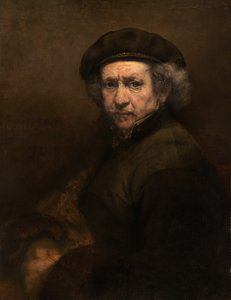
Rembrandt van Rijn
1606 - 1669 , Países Bajos
Datos clave
- Artistas Influenciados: Generaciones posteriores
- Artistas Que Influyeron:
- Pieter Lastman
- Caravaggio
- Maestros Italianos
- Fecha De Muerte: 1669
- Fecha De Nacimiento: 15 de julio de 1606
- Lugar De Nacimiento: Leiden, Países Bajos
- Movimiento Artístico: Barroco Holandés
- Nacionalidad: Holandés
- Nombre Completo: Rembrandt van Rijn
- Obras Notables:
- La Lección de Anatomía del Dr. Tulp
- Cena en Belzabal
- La Ronda de Noche
- Autorretratos
Artículos relacionados

Rembrandt van Rijn: Las 25 Obras Maestras que Definen un Genio | Arte, Historia y Decoración
Descubre las 25 obras maestras de Rembrandt van Rijn, el genio del barroco holandés. Explora su historia, técnica y simbolismo en retratos icónicos como 'La Ronda Nocturna'. Encuentra reproducciones de arte exclusivas para decorar tu hogar con ArtsDot.com.

Los 10 Maestros del Siglo de Oro Holandés: Arte, Historia y Decoración Exclusiva
Descubre los 10 imprescindibles del Siglo de Oro Holandés: Rembrandt, Vermeer y más. Explora la historia, técnica y belleza de estos lienzos clásicos. Encuentra reproducciones de arte exclusivas para decorar tu hogar en .

Los 10 Maestros del Barroco Holandés: Obras que Definen una Época | ArtsDot
Descubre los 10 imprescindibles del Barroco holandés: Rembrandt, Vermeer y más. Explora la historia, técnica y belleza de estas obras maestras. Reproducciones de arte en ArtsDot.com para decorar tu hogar con elegancia.
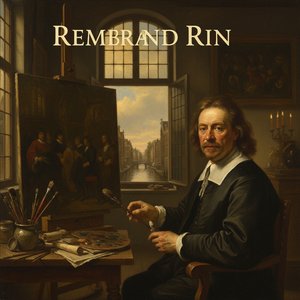
Rembrandt van Rijn: A Life Illuminated – Innovation, Emotion, and the Dutch Golden Age
Explore the life & art of Rembrandt van Rijn, a Dutch Golden Age master. Discover his innovative techniques, iconic paintings like 'The Night Watch', and enduring legacy. Expert insights for collectors & enthusiasts.

La Luz y la República: Innovación Artística en el Siglo de Oro Neerlandés
Descubra la innovación artística del Siglo de Oro Neerlandés. Explore las obras maestras de Rembrandt y Vermeer, técnicas revolucionarias y el legado perdurable de este florecimiento cultural. ¡Sumérjase en la luz y la belleza!
![La Lección de Anatomía del Dr. Nicolaes Tulp [1632]](/media/artworks/images-thumb/e5/fc/e5fcb33447eac6b24ab049b22effa1a3.jpg)