 Ver en contexto
 Enviar
 Compartir
 Detalles

 Descargar
 Similares
 Radiografía
 Presentación de diapositivas
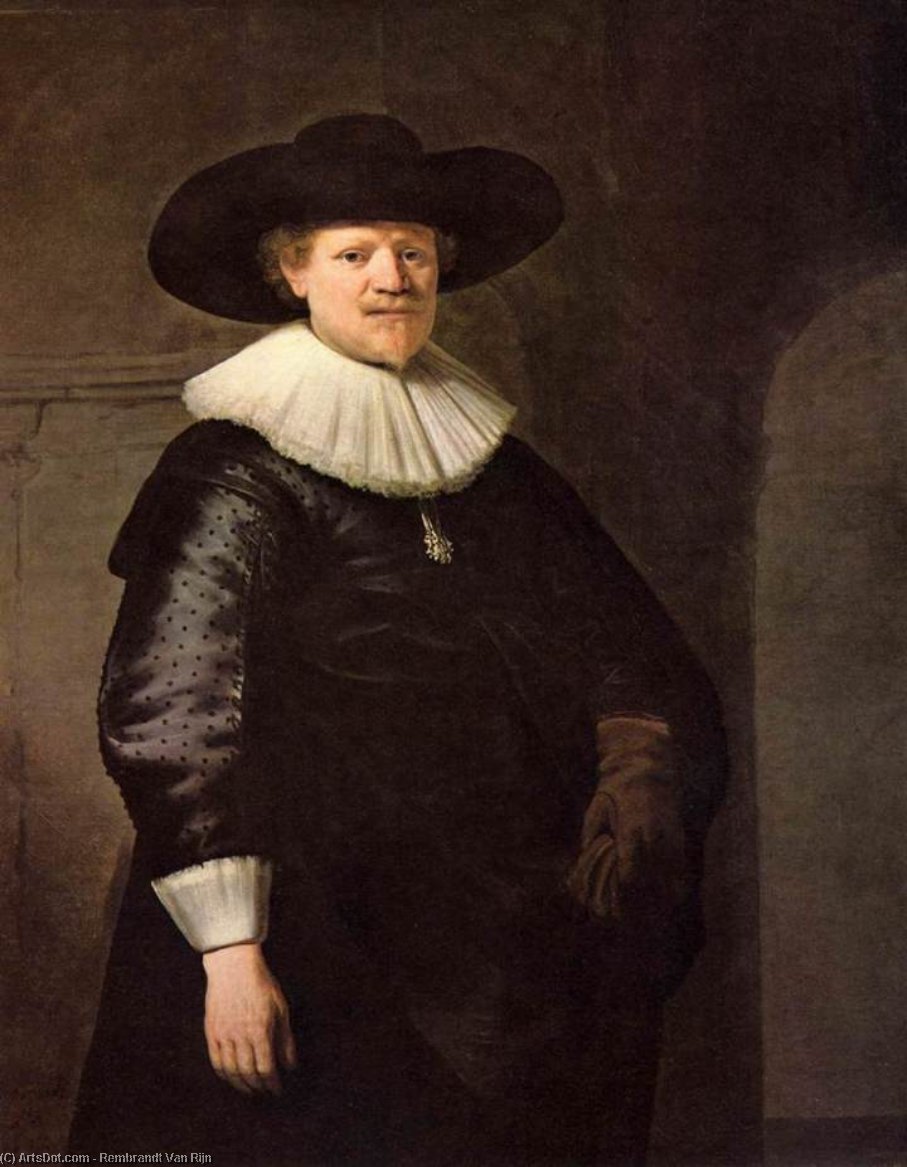
Retrato del Escritor Jan Hermansz. Krul


 Ver más
Reproducción al óleo hecha a mano
Óleo sobre lienzo pintado a mano en el tamaño y marco de su elección, realizado por encargo por nuestros artistas. ( Comprar impresión Comprar imagen)




P118B $10

P118H $10

P118W $10

P438Z $10

P508JH $12

P508YH $12

P805H $10

P805Z $10

P919BZ $10

P919G $10

P919XJ $10

P959ZH $10

P968JZ $12

W106C $8

W218G $10

W218JH $8

W218Y $10

W307PJ $10

W316G $10

W316PJ $8

W316Y $10

W398PJ $8

W4111J $10

W500HY $15

W500JH $15

W692G $12

W849H $8

W940BG $15

W953PJ $8




Elija entre nuestros tamaños predefinidos que respetan las proporciones originales de la obra.

Puede ingresar sus propias dimensiones para adaptarse a un marco o espacio específico. Si el tamaño seleccionado no coincide con las proporciones de la imagen original, recortaremos la obra o extenderemos la pintura con elementos adicionales pintados a mano. Se le enviará una maqueta digital para su aprobación antes de comenzar la producción.
Tenga en cuenta que la vista previa en pantalla no refleja el recorte o la extensión reales. Solo la maqueta mostrará con precisión la composición final.
Si bien existen tamaños personalizados, recomendamos seleccionar una dimensión de la lista predefinida para preservar las proporciones originales.
Tras realizar el pedido, el equipo de ArtsDot.com enviará un correo electrónico al cliente para solicitar instrucciones y proporcionarle una vista previa del boceto.
Envío a todo el mundo () en 3-4 semanas en lugar de las 5 semanas estándar. (1 septiembre). Sin comprometer la calidad.

Envío exprés gratuito a todo el mundo

Lienzo de lino de alta calidad

Seguro de envío total

Garantía de reembolso de impuestos aduaneros

Garantía de fidelidad cromática exacta

Política de devolución de 60 días (solo por defectos)

Garantía de devolución del 100% del dinero

Descuento por cantidad
 La opción de vidrio solo está disponible en tamaños inferiores a 110 cm.

Retrato del Escritor Jan Hermansz. Krul
Técnica de reproducción
Dimensiones de la reproducción
-


Precio total final
$ 263
A Window Into Brilliance: Rembrandt’s Portrait of Jan Hermansz. Krul
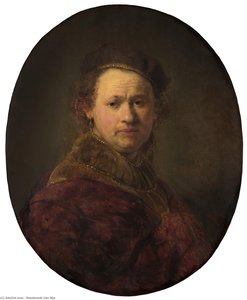
The Portrait of the Writer Jan Hermansz. Krul stands as a cornerstone of Dutch Golden Age artistry—a testament to Rembrandt van Rijn’s unparalleled ability to distill human emotion and intellect onto canvas. Completed around 1632-1633, this oil painting transcends mere representation; it delves into the psychological landscape of its subject, Jan Hermansz. Krul, a prominent Dutch poet and intellectual, capturing him in a moment of contemplative repose. Currently residing within the hallowed halls of Museum Het Rembrandthuis—a pilgrimage for any devotee of Rembrandt’s oeuvre—the painting continues to captivate viewers with its masterful execution and profound artistic resonance.Composition and Light: The Language of Chiaro-scuro
Rembrandt's genius lies not merely in depicting a figure but in orchestrating light and shadow – a technique known as chiaroscuro – to elevate the portrait beyond a simple likeness. Observe how Rembrandt skillfully employs this dramatic device, bathing Krul’s face in soft illumination while simultaneously plunging the background into darkness. This juxtaposition isn't accidental; it serves to emphasize Krul’s gaze—directed outwards—creating an immediate connection with the viewer and conveying a sense of introspection. The inclusion of an open book on Krul’s lap symbolizes his scholarly pursuits, reinforcing the portrait’s intellectual character. Furthermore, the subtle folds of Krul’s clothing contribute to the overall textural richness of the painting, grounding the figure in reality while simultaneously enhancing its visual impact.Rembrandt's Style and Legacy: A Master Among Masters
Rembrandt Van Rijn is universally acknowledged as one of the most influential painters in Western history—a titan whose innovations reshaped artistic conventions and continue to inspire artists today. His prolific output spanned over three decades, encompassing landscapes, biblical scenes, self-portraits, and countless portraits of nobility and notables. Unlike many of his contemporaries who favored idealized representations, Rembrandt embraced realism, striving for an honest portrayal of human anatomy and emotion—a daring approach that challenged artistic norms of the time. The enduring fascination with Rembrandt’s work stems from its ability to convey profound psychological depth—to capture not just what a subject looks like but how they feel.At Wahoo Art, we are honored to offer meticulously crafted reproductions of this iconic masterpiece—allowing art enthusiasts worldwide to experience the sublime beauty and technical brilliance of Rembrandt’s vision within their own homes or spaces. These reproductions utilize archival-quality pigments and printing methods, faithfully preserving the original artwork's colors and textures for generations to come.
- For a deeper understanding of Rembrandt’s life and artistic journey, explore our dedicated resource: Wahoo Art
- Discover other celebrated works by Rembrandt Van Rijn at Museum Het Rembrandthhuis
- Delve into the broader context of Dutch Golden Age art and its enduring influence on global culture: Wahoo Art
The Portrait of the Writer Jan Hermansz. Krul remains a beacon of artistic excellence—a timeless depiction of intellect and contemplation that secures Rembrandt’s place as an undisputed giant among painters. By presenting these reproductions at Wahoo Art, we aspire to share the profound beauty and legacy of Rembrandt’s unparalleled artistry with audiences across the globe. Photo Description: The painting portrays Jan Hermansz. Krul seated in a chair against a dark doorway backdrop. He wears a black hat adorned with white lace and gazes intently at the viewer. His attire consists of a formal suit featuring a ruffled collar, conveying an air of sophistication. In his hand, he holds an open book—a symbol of scholarly pursuits—further emphasizing the portrait’s intellectual character. Rembrandt's masterful use of chiaroscuro illuminates Krul’s face and upper torso, creating dramatic contrasts that heighten emotional impact and capturing the subtleties of human expression. The overall atmosphere exudes quiet contemplation and artistic grandeur. Size: Unknown Date: Unknown Artist Information: Rembrandt Harmenszoon van Rijn (1606-1669) – Leiden, Netherlands Biography:
A Life Illuminated: The World of Rembrandt van Rijn
Rembrandt Harmenszoon van Rijn, a name synonymous with the Dutch Golden Age and the mastery of light and shadow, was born in Leiden, Netherlands, on July 15, 1606. His father, Harmen Gerritszoon van Rijn, a miller, and his mother, Neeltgen Willemsdochter van Zuytbrouck, from a family of bakers, instilled in him an appreciation for learning at Leiden’s Latin School, providing him with a foundation in classical learning that would later subtly inform his artistic narratives. Around 1620, he embarked on apprenticeships – first with Jacob van Swanenburg in Leiden around 1620, and then, crucially, a six-month period of study under Pieter Lastman in Amsterdam beginning in 1624. It was Lastman’s dramatic use of light and shadow, his dynamic compositions filled with historical and symbolism—a daring approach that challenged artistic norms of the time. The enduring fascination with Rembrandt’s work stems from its ability to convey profound psychological depth—to capture not just what a subject looks like but how they feel.
Obras relacionadas

Biografía del artista
Rembrandt van Rijn: Vida y Legado
Primeros Años y Educación (1606-1625)
- Rembrandt Harmenszoon van Rijn nació el 15 de julio de 1606 en Leiden, Países Bajos – un centro bullicioso durante la Edad Dorada de la República Holandesa.
- Su padre, Harmen Gerritszoon van Rijn, era molinero y su madre, Neeltgen Willemsdochter van Zuytbrouck, provenía de una familia de panaderos. Esto le proporcionó acceso a la educación en la Escuela Latina de Leiden.
- Alrededor de 1620, comenzó un aprendizaje con Jacob van Swanenburg en Leiden.
- Un período crucial de seis meses (1624) se pasó estudiando bajo Pieter Lastman en Ámsterdam, cuyo uso dramático de la luz y la sombra influyó profundamente en el trabajo temprano de Rembrandt.
- Al regresar a Leiden, estableció su propio estudio alrededor de 1625, compartiéndolo con el artista fellow Jan Lievens.
Carrera Temprana y Traslado a Ámsterdam (1625-1642)
- Rembrandt rápidamente ganó reconocimiento en Leiden por sus pinturas históricas y retratos.
- En 1629, se benefició del mecenazgo de Constantijn Huygens, asegurando encargos del tribunal de La Haya – un punto de inflexión en su carrera.
- Se trasladó a Ámsterdam en 1631, convirtiéndose en un pintor de retratos exitoso que atraía clientes adinerados.
- En 1634, se casó con Saskia van Uylenburgh, hija de un jurista y alcalde prominente, obteniendo influencia social e inicial estabilidad financiera.
Desarrollo Artístico y Estilo
- El desarrollo artístico de Rembrandt se caracterizó por una experimentación constante. Se alejó de las formas idealizadas hacia representaciones realistas y emocionalmente expresivas.
- Periodo Temprano (c. 1625-1635): Marcado por el realismo detallado e influencia de Lastman.
- Periodo Maduro (c. 1635-1650s): Caracterizado por un uso magistral del *claroscuro* – luz y sombra dramáticas que crean profundidad psicológica. Sus pinceladas se volvieron más sueltas, transmitiendo textura y emoción.
- Periodo Tardío (c. 1650s-1669): Un retorno a una paleta más sobria centrándose en retratos íntimos y escenas bíblicas que reflejan luchas personales y reflexiones espirituales.
Obras Maestras y Logros
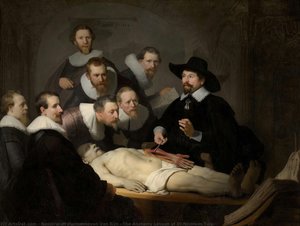
- La Lección de Anatomía del Dr. Nicolaes Tulp (1632): Retrato grupal innovador que muestra anatomía humana y personalidad.
- La Cena de Belzabal (1635): Escena bíblica dramática que demuestra dominio de la luz, la sombra y la composición.
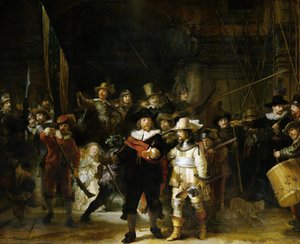
- La Guarda Nocturna (1642) – oficialmente Compañía Miliciana del Distrito II bajo el Comando del Capitán Frans Bannink Cocq: Un retrato grupal dinámico que redefine el género con una composición e iluminación innovadoras.
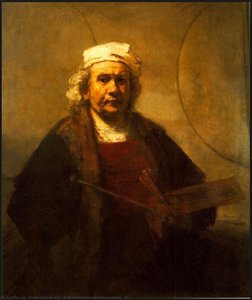
- Autorretratos: Aproximadamente 40 autorretratos que ofrecen un registro visual único de su proceso de envejecimiento y visión artística.
Influencias y Legado
- Maestros Italianos: Estudió obras de Tiziano, Caravaggio a través de grabados y reproducciones.
- Caravaggio: El uso dramático de la luz y la sombra impactó profundamente en su estilo.
- Artistas Holandeses y Flamencos: Influenciado por contemporáneos que trabajaban en la República Holandesa y Flandes.
- Rembrandt revolucionó el retrato, elevó el grabado a una forma de arte fina y exploró temas psicológicos profundos.
- A pesar de las tragedias personales y las dificultades financieras, su reputación perduró. Ahora se considera un pilar del arte holandés y un símbolo universal del genio artístico.
Significado Histórico
- La obra de Rembrandt refleja el espíritu de la Edad Dorada Holandesa – prosperidad económica, florecimiento intelectual e innovación artística.
- Capturó la esencia de esta época a través de retratos, escenas bíblicas que resonaban con los públicos y la exploración de emociones humanas universales.
- Su vida historia – marcada por el éxito y la adversidad – ha hecho de él una figura convincente en la historia del arte. Sigue siendo un símbolo perdurable de dedicación a la artesanía incluso frente a desafíos personales. El impacto de Rembrandt en las generaciones posteriores de artistas es inmensurable.
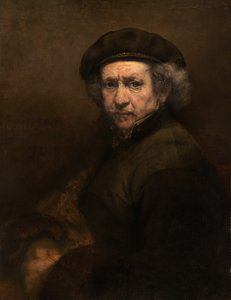
Rembrandt van Rijn
1606 - 1669 , Países Bajos
Datos clave
- Artistas Influenciados: Generaciones posteriores
- Artistas Que Influyeron:
- Pieter Lastman
- Caravaggio
- Maestros Italianos
- Fecha De Muerte: 1669
- Fecha De Nacimiento: 15 de julio de 1606
- Lugar De Nacimiento: Leiden, Países Bajos
- Movimiento Artístico: Barroco Holandés
- Nacionalidad: Holandés
- Nombre Completo: Rembrandt van Rijn
- Obras Notables:
- La Lección de Anatomía del Dr. Tulp
- Cena en Belzabal
- La Ronda de Noche
- Autorretratos
Artículos relacionados

Rembrandt van Rijn: Las 25 Obras Maestras que Definen un Genio | Arte, Historia y Decoración
Descubre las 25 obras maestras de Rembrandt van Rijn, el genio del barroco holandés. Explora su historia, técnica y simbolismo en retratos icónicos como 'La Ronda Nocturna'. Encuentra reproducciones de arte exclusivas para decorar tu hogar con ArtsDot.com.

Los 10 Maestros del Barroco Holandés: Obras que Definen una Época | ArtsDot
Descubre los 10 imprescindibles del Barroco holandés: Rembrandt, Vermeer y más. Explora la historia, técnica y belleza de estas obras maestras. Reproducciones de arte en ArtsDot.com para decorar tu hogar con elegancia.
Rembrandt van Rijn: A Life Illuminated – Exploring the Master of Light, Shadow, and Human Emotion
Explore the life & art of Rembrandt van Rijn, master of light and shadow. Discover his iconic paintings, revolutionary techniques, and enduring legacy with ArtsDot – trusted experts in fine art reproductions since 2004.
Las 10 Grabados Legendarios que Revolucionaron el Arte | ArtsDot
Descubre los 10 grabados legendarios que transformaron la historia del arte. Explora las obras maestras de Rembrandt, Goya y Dürer. Encuentra reproducciones de alta calidad e inspírate para decorar tu hogar con arte clásico en ArtsDot.com.
Rembrandt van Rijn: A Life Illuminated – Innovation, Emotion, and the Dutch Golden Age
Explore the life & art of Rembrandt van Rijn, a Dutch Golden Age master. Discover his innovative techniques, iconic paintings like 'The Night Watch', and enduring legacy. Expert insights for collectors & enthusiasts.