Vista previa
 Compartir
 Compartir
 Ver detalles

 Descargar
 Ver artículos similares
 Radiografía
 Presentación de diapositivas
 Estadísticas
The familiar objects private


 Leer más
Reproducción al óleo hecha a mano
Óleo sobre lienzo pintado a mano en el tamaño y marco de su elección, realizado por encargo por nuestros artistas. ( Cambiar a formato impreso Ver versión en imagen digital)




P118B $10

P118H $10

P118W $10

P438Z $10

P508JH $12

P508YH $12

P805H $10

P805Z $10

P919BZ $10

P919G $10

P919XJ $10

P959ZH $10

P968JZ $12

W106C $8

W218G $10

W218JH $8

W218Y $10

W307PJ $10

W316G $10

W316PJ $8

W316Y $10

W398PJ $8

W4111J $10

W500HY $15

W500JH $15

W692G $12

W849H $8

W940BG $15

W953PJ $8
Elija entre nuestros tamaños predefinidos que respetan las proporciones originales de la obra.

Puede ingresar sus propias dimensiones para adaptarse a un marco o espacio específico. Si el tamaño seleccionado no coincide con las proporciones de la imagen original, recortaremos la obra o extenderemos la pintura con elementos adicionales pintados a mano. Se le enviará una maqueta digital para su aprobación antes de comenzar la producción.
Tenga en cuenta que la vista previa en pantalla no refleja el recorte o la extensión reales. Solo la maqueta mostrará con precisión la composición final.
Si bien existen tamaños personalizados, recomendamos seleccionar una dimensión de la lista predefinida para preservar las proporciones originales.
Tras realizar el pedido, el equipo de ArtsDot.com enviará un correo electrónico al cliente para solicitar instrucciones y proporcionarle una vista previa del boceto.
Envío a todo el mundo () en 3-4 semanas en lugar de las 5 semanas estándar. (17 septiembre). Sin comprometer la calidad.

Envío exprés gratuito a todo el mundo

Lienzo de lino de alta calidad

Seguro de envío completo

Garantía de reembolso de impuestos aduaneros

Garantía de fidelidad cromática exacta

Política de devolución de 100 días (solo por defectos)

Garantía de devolución del 100% del dinero

Oferta por volumen
 La opción de vidrio solo está disponible en tamaños inferiores a 110 cm.

The familiar objects private
Técnica de reproducción
Tamaño de la reproducción
-


Precio total
$ 363
A Silent Confrontation with Reality
The Familiar Objects Private, painted in 1928 by the Belgian master René Magritte, stands as a profound invitation to contemplate the very nature of perception and the elusive boundaries between what we see and what truly exists. At first glance, the composition appears deceptively simple: a horizontal arrangement of five men standing in a row against a dark, undefined backdrop. Yet, as the viewer lingers, an unsettling juxtaposition emerges. Each man’s face is obscured by an everyday, commonplace item—a banana, a bowl, a vase, a wine glass, and an apple. This hallmark of Magritte's Surrealist approach immediately disrupts the viewer's sense of normalcy, transforming a formal portrait into a dreamlike inquiry into identity and the hidden layers of the subconscious mind. The genesis of such haunting imagery often lies in the shadows of personal history. Magritte’s early life was marked by the tragic suicide of his mother, an event that instilled within him an enduring preoccupation with veiled truths and the unsettling realization that appearances can deceive. In this painting, the way the objects mask the human countenance mirrors the artist's lifelong fascination with what remains unseen. By placing ordinary items in such illogical contexts, Magritte challenges the viewer to look beyond the surface of reality, suggesting that the most familiar elements of our lives may actually be masks for a deeper, more mysterious existence.Mastery of Technique and Muted Elegance
The technical execution of this piece is characterized by a meticulous, almost clinical precision. Eschewing the expressive, heavy brushstrokes found in much of the era's more emotive art, Magritte employed oil on canvas to achieve a smooth, polished surface that emphasizes the solidity of form. This deliberate avoidance of impasto allows the objects—the curve of the apple or the translucency of the wine glass—to appear startlingly real, which only heightens the surrealist impact of their placement. The lighting is diffused and even, casting no harsh shadows, which contributes to a sense of stillness and a dreamlike, suspended atmosphere. The color palette is masterfully restrained, dominated by somber shades of grey, brown, and black that lend the work an austere, almost funerary dignity. However, Magritte punctuates this monochromatic world with subtle, strategic pops of color: the bright yellow of the banana, the cool blue of the bowl, and the vibrant red of the apple. These small chromatic accents act as focal points, drawing the eye across the horizontal plane of the figures and preventing the composition from receding into total darkness. For the collector or interior designer, this balanced palette offers a sophisticated way to introduce intellectual depth and a touch of avant-garde intrigue into a curated space.An Enduring Legacy for the Modern Collector
Beyond its visual strikingness, The Familiar Objects Private functions as a philosophical dialogue. It explores themes of alienation and the absurdity of everyday life, making it a timeless piece that resonates with the complexities of the modern human condition. The way the figures are dressed in formal suits and ties adds a layer of societal critique, suggesting a uniformity of identity that is being disrupted by the surreal elements. This tension between the structured, civilized world and the chaotic, irrational mind is what gives the painting its enduring emotional impact. For those seeking to adorn a home or gallery with a high-quality reproduction, this artwork offers more than mere decoration; it provides a conversation piece that invites contemplation. Whether placed in a minimalist contemporary setting or a classic study, Magritte’s work brings an air of intellectual mystery and sophisticated surrealism. It is a piece for the discerning eye—one that appreciates the beauty of precision, the power of symbolism, and the profound magic found in the most familiar of objects.Obras relacionadas
Biografía del artista
vida temprana y comienzos artísticos
René François Ghislain Magritte, un reconocido artista surrealista belga, nació el 21 de noviembre de 1898 en Lessines, provincia de Hainaut, Bélgica. Su vida temprana permanece algo misteriosa, con poco conocimiento sobre su infancia. Sin embargo, está documentado que comenzó clases de dibujo en 1910.evolución artística e influencias
El estilo artístico de Magritte evolucionó significativamente a lo largo de los años, influenciado por diversos movimientos como el impresionismo, el futurismo y el cubismo. Sus primeras pinturas, datadas alrededor de 1915, eran de estilo impresionista. De 1916 a 1918, estudió en la Academia Real de Bellas Artes de Bruselas, bajo Constant Montald.período surrealista y obras notables
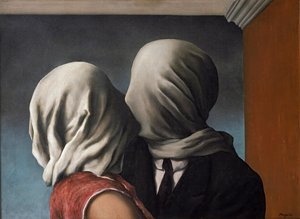
En 1926, Magritte produjo su primer cuadro surrealista, El jinete perdido (Le jockey perdu), marcando el comienzo de su asociación con el movimiento surrealista. Su obra se caracteriza por imágenes provocadoras, a menudo representando objetos ordinarios en contextos inusuales, desafiando las percepciones de la realidad de los observadores.- Les amants (1927-1928), una serie de pinturas que presentan a personas con tela cubriendo sus rostros, se cree que fue inspirada por la historia de la muerte de su madre.
- Los amantes, otra pieza icónica, presenta a una pareja besándose con sus rostros cubiertos por telas blancas, invitando al espectador a reflexionar sobre el amor y la identidad. (disponible para su compra como una reproducción de pintura al óleo hecha a mano o impresión en lienzo en ArtsDot.com)
vida tardía y legado
La obra de Magritte fue exhibida en los Estados Unidos en 1936 y nuevamente en dos exposiciones retrospectivas, una en el Museo de Arte Moderno en 1965 y la otra en el Metropolitan Museum of Art en 1992. Se mantuvo comprometido con la izquierda política pero abogó por la autonomía artística. Museos notables que exhiben la obra de Magritte:- Musée royal des beaux-arts de Belgique, Bruselas, Bélgica (descubra las obras maestras del musée royal des beaux-arts de belgique en ArtsDot.com)
- Musée Magritte, parte del musée royal des beaux-arts de Belgique, que exhibe la colección mundial más grande de obras de Magritte.
Conclusión
El legado de René Magritte como maestro surrealista perdura, con sus imágenes provocadoras que continúan inspirando e intrigando. Su obra, caracterizada por su mezcla única del ordinario y lo inesperado, sigue siendo un pilar fundamental del arte surrealista. Más información sobre René Magritte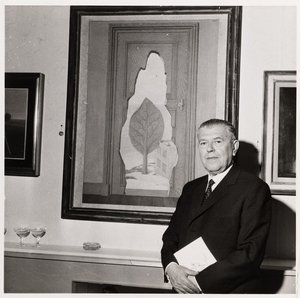
René Magritte
1898 - 1967 , bélgica
Datos clave
- Artistas Que Influyeron:
- Impresionismo
- Futurismo
- Cubismo
- Estilo Artístico: Surrealismo
- Fecha De Muerte: 15 de agosto de 1967
- Fecha De Nacimiento: 21 de noviembre de 1898
- Influenciado A Artistas:
- Pop Art
- Minimalismo
- Arte conceptual
- Lugar De Nacimiento: Lessines, Bélgica
- Nacionalidad: Belga
- Nombre Completo: René François Ghislain Magritte
- Obras Notables:
- Le Jockey Perdu
- Les Amants
- La traición de las imágenes
- Tiempo transcurrido
- La condición humana
Artículos relacionados
Los 10 Maestros del Surrealismo: Obras que Desafían la Realidad | ArtsDot
Descubre los 10 cuadros surrealistas más influyentes de artistas como Dalí y Magritte. Explora la historia, el simbolismo y las técnicas del movimiento surrealista. Encuentra reproducciones de arte de museo en ArtsDot.com.
The Enigmatic Realm of Paul Delvaux: Surrealism, Memory & the Poetics of Disquiet
Explore the haunting dreamscapes of Paul Delvaux, a master of Surrealism. Discover his iconic motifs, classical influences & enduring legacy with ArtsDot.com.
Beyond Reality: A Beginner's Guide to the Magic of Surrealism for the Modern Collector
Embark on a visual journey into Surrealism. Discover the magic of dreamlike landscapes, iconic masters like Dalí, and expert tips for collecting surrealist masterpieces to transform your home with intrigue and wonder.
Surrealismo: 10 Obras Maestras que Transformaron el Arte y la Decoración
Descubre las 10 obras maestras del Surrealismo con Dalí, Magritte y Miró. Explora la historia, el simbolismo y la técnica de estos íconos del arte moderno. Encuentra reproducciones de alta calidad para tu hogar en .
Dreamscapes & Disrupted Realities: Exploring Surrealism's Enduring Influence
Explore the fascinating world of Surrealism! Discover its origins, key artists like Dalí & Magritte, and enduring influence on art & culture. Expert insights & high-quality reproductions at ArtsDot.