 Ver en contexto
 Enviar
 Compartir
 Detalles

 Descargar
 Similares
 Radiografía
 Presentación de diapositivas
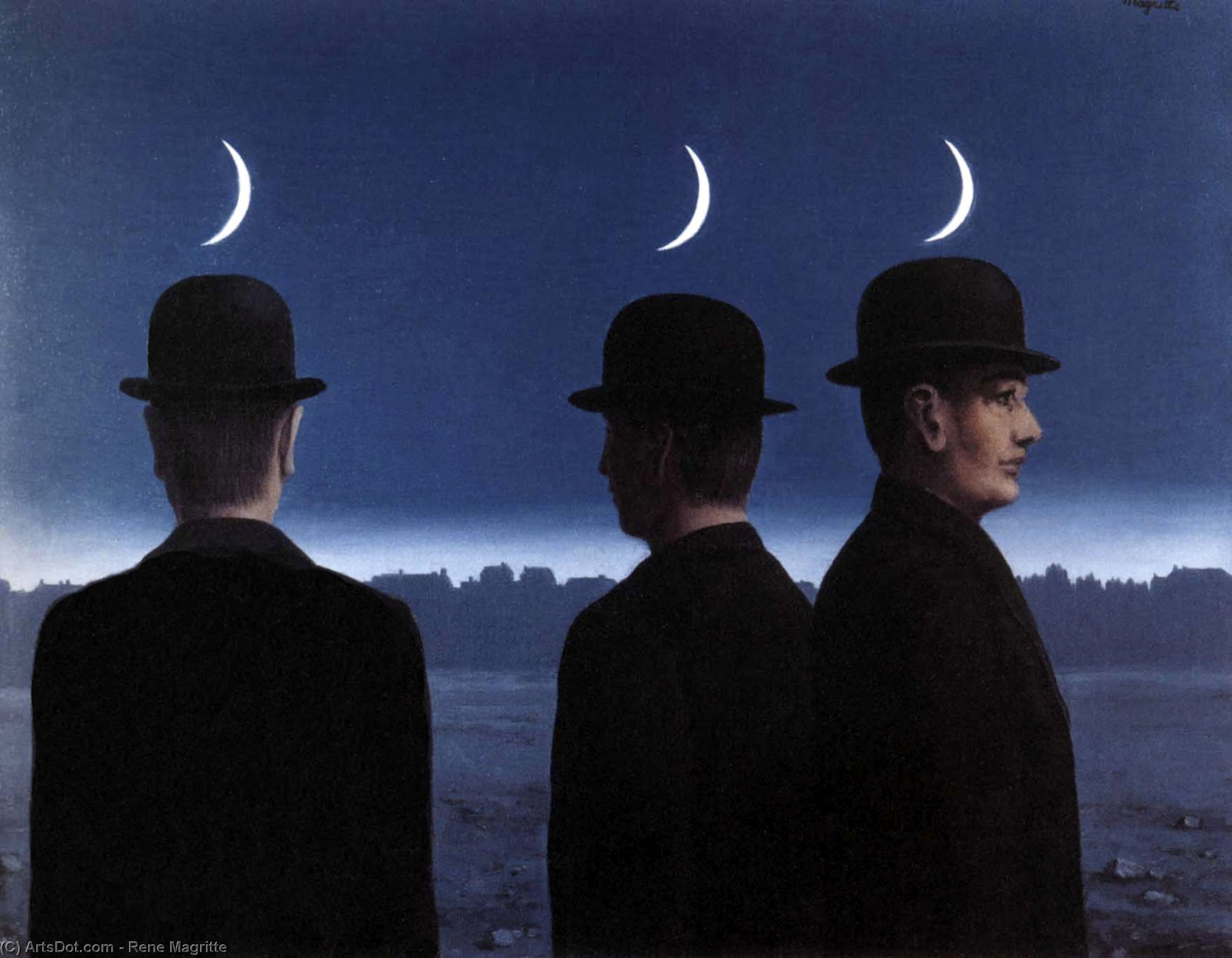
The masterpiece or the mysteries of the horizon
 Oil On Canvas
- WallArt
- Surrealist Painting
 1955
1955- Modern
 50.0 x 65.0 cm
 Ver más
Giclée / Impresión de arte
Impresiones giclée o en lienzo de calidad de museo con producción rápida y opciones de acabado flexibles. ( Comprar pintura hecha a mano Comprar imagen)




P118B $10

P118H $10

P118W $10

P438Z $10

P508JH $12

P508YH $12

P805H $10

P805Z $10

P919BZ $10

P919G $10

P919XJ $10

P959ZH $10

P968JZ $12

W106C $8

W218G $10

W218JH $8

W218Y $10

W307PJ $10

W316G $10

W316PJ $8

W316Y $10

W398PJ $8

W4111J $10

W500HY $15

W500JH $15

W692G $12

W849H $8

W940BG $15

W953PJ $8




Elija entre nuestros tamaños predefinidos que respetan las proporciones originales de la obra.

Puede introducir sus propias dimensiones para adaptarse a un marco o espacio específico. Si el tamaño seleccionado no coincide con las proporciones de la imagen original, recortaremos la obra de arte o extenderemos la imagen con un borde con efecto espejo o de color sólido. Se enviará una maqueta digital para su aprobación antes de que comience la producción.
Tenga en cuenta que la vista previa en pantalla no refleja el recorte o la extensión real. Solo la maqueta mostrará con precisión la composición final.
Aunque existen tamaños personalizados, recomendamos seleccionar una dimensión de la lista predefinida para preservar las proporciones originales.
Envío a todo el mundo () en 2 semanas en lugar de las 4/5 semanas estándar. (31 agosto)

Envío exprés gratuito a todo el mundo

Lienzo de lino de alta calidad

Seguro de envío total

Garantía de reembolso de impuestos aduaneros

Garantía de fidelidad cromática exacta

Política de devolución de 60 días (solo por defectos)

Garantía de devolución del 100% del dinero

Descuento por cantidad
 La opción de vidrio solo está disponible en tamaños inferiores a 110 cm.

The masterpiece or the mysteries of the horizon
Giclée / Impresión de arte
Dimensiones de la reproducción
-


Precio total final
$ 62
The Enigmatic Horizon: Magritte’s Exploration of Perception
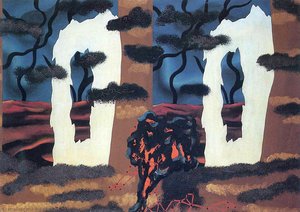
In the quiet, unsettling stillness of René Magritte's 1955 masterpiece, The Masterpiece or the Mysteries of the Horizon, the boundaries between reality and dream begin to dissolve. This quintessential Surrealist work presents a deceptively simple composition that invites the viewer into a profound interrogation of consciousness. At first glance, we encounter three men standing in an outdoor setting at twilight, dressed with impeccable, almost clinical precision. Two figures wear the iconic bowler hats synonymous with Magritte’s recurring motifs, while a third, positioned centrally, wears a more formal top hat. They stand before a luminous, moonlit sky, yet there is a palpable sense of isolation; though they occupy the same frame, each man seems to exist within his own separate, silent reality, gazing into different reaches of the infinite.
The technique employed by Magritte is one of masterful restraint. Eschewing the vibrant, chaotic palettes often associated with more expressive movements, he utilizes a controlled, almost monochrome approach to emphasize tonal variation and texture. The oil on canvas is rendered with a smooth, matte finish that lends an austere beauty to the scene. Every detail—from the heavy texture of the fabric in their suits to the subtle gradients of the night sky—is captured with meticulous precision. This clarity serves a psychological purpose: by rendering the impossible with such hyper-realistic accuracy, Magritte forces the viewer to accept the illogical juxtapositions as tangible truths, creating an unsettling effect that lingers long after one has looked away.
Symbolism and the Weight of the Unseen
Beyond its striking visual presence, the painting is a labyrinth of symbolism rooted in the post-war Surrealist ethos. Emerging from the anxieties of the mid-20th century, Magritte’s work sought to liberate the imagination from the constraints of rational thought, drawing deep inspiration from Freudian theories of the subconscious and repressed desires. The moon, a potent symbol of illumination and contemplation, is present yet strangely obscured by the horizon line, mirroring the painting's central theme: the tension between what is visible and what remains hidden. This deliberate ambiguity suggests that true perception requires looking past the surface of the material world.
The figures themselves, with their faces obscured or turned away, act as vessels for the viewer's own projections. They represent the universal human condition—the search for meaning in a landscape that is simultaneously familiar and alien. For collectors and interior designers alike, this piece offers more than mere decoration; it provides a focal point of intellectual depth. The painting’s ability to evoke mystery and a sense of "the unknown" makes it an extraordinary addition to any curated space, particularly those designed to provoke thought and conversation. It is a work that does not merely hang on a wall but breathes within a room, casting its own enigmatic shadow over the surrounding environment.
Obras relacionadas
Biografía del artista
vida temprana y comienzos artísticos
René François Ghislain Magritte, un reconocido artista surrealista belga, nació el 21 de noviembre de 1898 en Lessines, provincia de Hainaut, Bélgica. Su vida temprana permanece algo misteriosa, con poco conocimiento sobre su infancia. Sin embargo, está documentado que comenzó clases de dibujo en 1910.evolución artística e influencias
El estilo artístico de Magritte evolucionó significativamente a lo largo de los años, influenciado por diversos movimientos como el impresionismo, el futurismo y el cubismo. Sus primeras pinturas, datadas alrededor de 1915, eran de estilo impresionista. De 1916 a 1918, estudió en la Academia Real de Bellas Artes de Bruselas, bajo Constant Montald.período surrealista y obras notables
En 1926, Magritte produjo su primer cuadro surrealista, El jinete perdido (Le jockey perdu), marcando el comienzo de su asociación con el movimiento surrealista. Su obra se caracteriza por imágenes provocadoras, a menudo representando objetos ordinarios en contextos inusuales, desafiando las percepciones de la realidad de los observadores.- Les amants (1927-1928), una serie de pinturas que presentan a personas con tela cubriendo sus rostros, se cree que fue inspirada por la historia de la muerte de su madre.
- Los amantes, otra pieza icónica, presenta a una pareja besándose con sus rostros cubiertos por telas blancas, invitando al espectador a reflexionar sobre el amor y la identidad. (disponible para su compra como una reproducción de pintura al óleo hecha a mano o impresión en lienzo en ArtsDot.com)
vida tardía y legado
La obra de Magritte fue exhibida en los Estados Unidos en 1936 y nuevamente en dos exposiciones retrospectivas, una en el Museo de Arte Moderno en 1965 y la otra en el Metropolitan Museum of Art en 1992. Se mantuvo comprometido con la izquierda política pero abogó por la autonomía artística. Museos notables que exhiben la obra de Magritte:- Musée royal des beaux-arts de Belgique, Bruselas, Bélgica (descubra las obras maestras del musée royal des beaux-arts de belgique en ArtsDot.com)
- Musée Magritte, parte del musée royal des beaux-arts de Belgique, que exhibe la colección mundial más grande de obras de Magritte.
Conclusión
El legado de René Magritte como maestro surrealista perdura, con sus imágenes provocadoras que continúan inspirando e intrigando. Su obra, caracterizada por su mezcla única del ordinario y lo inesperado, sigue siendo un pilar fundamental del arte surrealista. Más información sobre René Magritte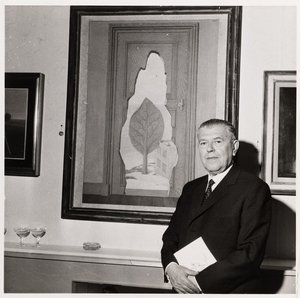
René Magritte
1898 - 1967 , bélgica
Datos clave
- Artistas Que Influyeron:
- Impresionismo
- Futurismo
- Cubismo
- Estilo Artístico: Surrealismo
- Fecha De Muerte: 15 de agosto de 1967
- Fecha De Nacimiento: 21 de noviembre de 1898
- Influenciado A Artistas:
- Pop Art
- Minimalismo
- Arte conceptual
- Lugar De Nacimiento: Lessines, Bélgica
- Nacionalidad: Belga
- Nombre Completo: René François Ghislain Magritte
- Obras Notables:
- Le Jockey Perdu
- Les Amants
- La traición de las imágenes
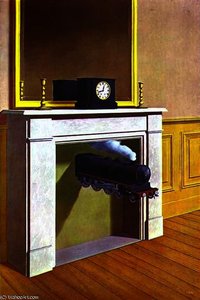
- Tiempo transcurrido
- La condición humana
Artículos relacionados
Surrealismo: 10 Obras Maestras que Transformaron el Arte y la Decoración
Descubre las 10 obras maestras del Surrealismo con Dalí, Magritte y Miró. Explora la historia, el simbolismo y la técnica de estos íconos del arte moderno. Encuentra reproducciones de alta calidad para tu hogar en .
Expresionismo Figurado: Intensidad Emocional y Realidad Subjetiva en el Arte del Siglo XX
Explora la intensidad emocional del Expresionismo Figurado alemán. Descubre sus orígenes, artistas clave como Munch y Kirchner, y su legado en el arte moderno. Análisis experto y profundo.
Dreamscapes & Disrupted Realities: Exploring Surrealism's Enduring Influence
Explore the fascinating world of Surrealism! Discover its origins, key artists like Dalí & Magritte, and enduring influence on art & culture. Expert insights & high-quality reproductions at ArtsDot.
The Raw Emotion of Expressionism: A Deep Dive into its History, Characteristics & Enduring Influence
Explore the raw emotion of Expressionism with ArtsDot. Discover its history, key artists like Kirchner & Munch, and lasting influence on modern art. Expert insights for collectors & enthusiasts.
Unveiling Inner Worlds: Exploring Psychological Depth in 20th & 21st Century Art
Explore the profound psychological themes within 20th & 21st-century art. Discover Expressionism, Surrealism & more – and learn how to collect impactful pieces with confidence. Expert insights for discerning collectors.