 Ver en contexto
 Enviar
 Compartir
 Detalles

 Descargar
 Similares
 Radiografía
 Presentación de diapositivas
 Estadísticas
The Nightingale


 Ver más
Reproducción al óleo hecha a mano
Óleo sobre lienzo pintado a mano en el tamaño y marco de su elección, realizado por encargo por nuestros artistas. ( Cambiar a Impresión Cambiar a imagen digital)




P118B $10

P118H $10

P118W $10

P438Z $10

P508JH $12

P508YH $12

P805H $10

P805Z $10

P919BZ $10

P919G $10

P919XJ $10

P959ZH $10

P968JZ $12

W106C $8

W218G $10

W218JH $8

W218Y $10

W307PJ $10

W316G $10

W316PJ $8

W316Y $10

W398PJ $8

W4111J $10

W500HY $15

W500JH $15

W692G $12

W849H $8

W940BG $15

W953PJ $8




Elija entre nuestros tamaños predefinidos que respetan las proporciones originales de la obra.

Puede ingresar sus propias dimensiones para adaptarse a un marco o espacio específico. Si el tamaño seleccionado no coincide con las proporciones de la imagen original, recortaremos la obra o extenderemos la pintura con elementos adicionales pintados a mano. Se le enviará una maqueta digital para su aprobación antes de comenzar la producción.
Tenga en cuenta que la vista previa en pantalla no refleja el recorte o la extensión reales. Solo la maqueta mostrará con precisión la composición final.
Si bien existen tamaños personalizados, recomendamos seleccionar una dimensión de la lista predefinida para preservar las proporciones originales.
Tras realizar el pedido, el equipo de ArtsDot.com enviará un correo electrónico al cliente para solicitar instrucciones y proporcionarle una vista previa del boceto.
Envío a todo el mundo () en 3-4 semanas en lugar de las 5 semanas estándar. (9 septiembre). Sin comprometer la calidad.

Envío exprés gratuito a todo el mundo

Lienzo de lino de alta calidad

Seguro de envío total

Garantía de reembolso de impuestos aduaneros

Garantía de fidelidad cromática exacta

Política de devolución de 100 días (solo por defectos)

Garantía de devolución del 100% del dinero

Descuento por cantidad
 La opción de vidrio solo está disponible en tamaños inferiores a 110 cm.

The Nightingale
Técnica de reproducción
Dimensiones de la reproducción
-


Precio total final
$ 263
The Enigmatic Journey of "The Nightingale": A Magritte Masterpiece
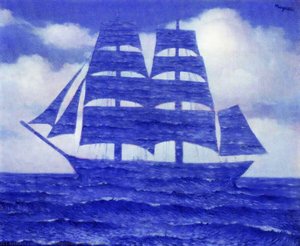
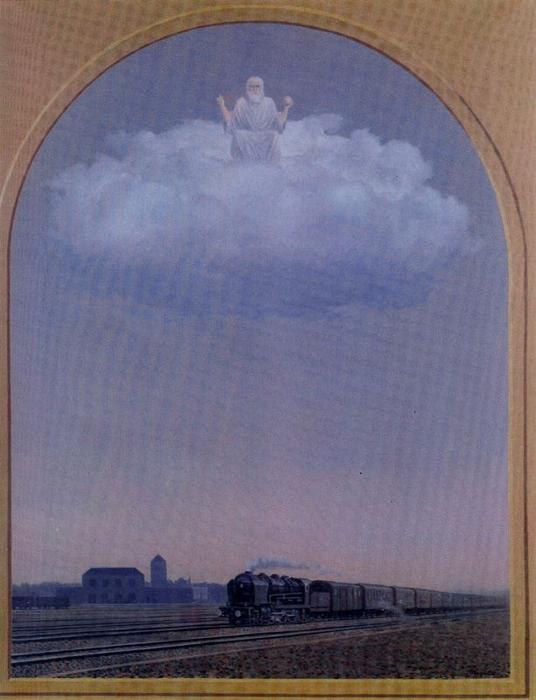
René Magritte’s “The Nightingale,” painted in an era defined by both the anxieties and burgeoning possibilities of the 20th century, is more than just a depiction of a train traversing a cloudy sky. It's a meticulously constructed puzzle for the viewer, a meditation on perception, faith, and the unsettling beauty of the unseen. Created during his most prolific period – from 1963 to 1965 – this surrealist work exemplifies Magritte’s signature style: a deliberate disruption of reality designed to provoke thought and challenge conventional interpretations. The painting's serene yet subtly disturbing atmosphere invites prolonged contemplation, drawing the observer into its enigmatic embrace.
- Subject Matter: The scene presents a seemingly straightforward tableau – a train journey beneath a vast, overcast sky. However, this simplicity is immediately undermined by the presence of two angels, positioned deliberately on either side of the locomotive, and a solitary figure standing near the train’s left flank.
- Style & Technique: Magritte's meticulous brushwork, combined with his precise attention to detail, creates an almost photographic realism that paradoxically enhances the surreal quality of the scene. The muted color palette – dominated by blues, grays, and browns – contributes to the painting’s melancholic mood and reinforces its sense of detachment from the everyday.
Symbolism and the Weight of History
The symbolism within “The Nightingale” is layered and open to interpretation, a hallmark of Magritte's approach. The train itself can be seen as representing progress, movement, and perhaps even the relentless march of time – themes frequently explored in his work. The angels, traditionally symbols of divine grace and protection, are rendered with an unsettling neutrality, their presence ambiguous and devoid of overt religious fervor. This deliberate ambiguity reflects Magritte’s skepticism towards traditional belief systems and his interest in exploring the subconscious mind.
- The Figure: The lone figure near the train is particularly intriguing. Its obscured face mirrors the motif of veiled figures that haunted Magritte's early work, a direct consequence of his mother's tragic death. This figure represents perhaps lost innocence, or the individual’s struggle to reconcile faith with doubt.
- The Sky: The cloudy sky isn’t merely a backdrop; it suggests a sense of uncertainty and concealment, mirroring the hidden realities that Magritte sought to expose through his art.
Magritte's Context and Legacy
“The Nightingale” is firmly rooted in the artistic currents of the mid-20th century, particularly the Surrealist movement. However, unlike some of his contemporaries who embraced overtly fantastical imagery, Magritte’s surrealism was characterized by its intellectual rigor and its focus on undermining rational thought. He belonged to a generation grappling with the aftermath of World War I, a period marked by disillusionment and a questioning of established values. His work reflects this broader cultural shift, prompting viewers to question their assumptions about reality and representation.
Magritte’s influence extends far beyond the realm of art history. His innovative approach to composition, his exploration of psychological themes, and his deliberate manipulation of perception have resonated with artists, designers, and thinkers across various disciplines. A hand-painted reproduction of “The Nightingale” offers a unique opportunity to experience this iconic work firsthand, bringing its enigmatic beauty into your home or studio.
Perfect for Interior Design & Art Collection
This meticulously crafted reproduction captures the essence of Magritte’s masterpiece with exceptional detail and fidelity. Whether adorning a contemporary living room or forming a cornerstone of an art collection, “The Nightingale” will undoubtedly spark conversation and inspire contemplation. Its timeless appeal ensures its place as a valued addition to any discerning space.
Obras relacionadas

Biografía del artista
vida temprana y comienzos artísticos
René François Ghislain Magritte, un reconocido artista surrealista belga, nació el 21 de noviembre de 1898 en Lessines, provincia de Hainaut, Bélgica. Su vida temprana permanece algo misteriosa, con poco conocimiento sobre su infancia. Sin embargo, está documentado que comenzó clases de dibujo en 1910.evolución artística e influencias
El estilo artístico de Magritte evolucionó significativamente a lo largo de los años, influenciado por diversos movimientos como el impresionismo, el futurismo y el cubismo. Sus primeras pinturas, datadas alrededor de 1915, eran de estilo impresionista. De 1916 a 1918, estudió en la Academia Real de Bellas Artes de Bruselas, bajo Constant Montald.período surrealista y obras notables
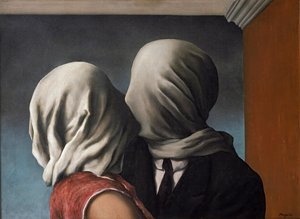
En 1926, Magritte produjo su primer cuadro surrealista, El jinete perdido (Le jockey perdu), marcando el comienzo de su asociación con el movimiento surrealista. Su obra se caracteriza por imágenes provocadoras, a menudo representando objetos ordinarios en contextos inusuales, desafiando las percepciones de la realidad de los observadores.- Les amants (1927-1928), una serie de pinturas que presentan a personas con tela cubriendo sus rostros, se cree que fue inspirada por la historia de la muerte de su madre.
- Los amantes, otra pieza icónica, presenta a una pareja besándose con sus rostros cubiertos por telas blancas, invitando al espectador a reflexionar sobre el amor y la identidad. (disponible para su compra como una reproducción de pintura al óleo hecha a mano o impresión en lienzo en ArtsDot.com)
vida tardía y legado
La obra de Magritte fue exhibida en los Estados Unidos en 1936 y nuevamente en dos exposiciones retrospectivas, una en el Museo de Arte Moderno en 1965 y la otra en el Metropolitan Museum of Art en 1992. Se mantuvo comprometido con la izquierda política pero abogó por la autonomía artística. Museos notables que exhiben la obra de Magritte:- Musée royal des beaux-arts de Belgique, Bruselas, Bélgica (descubra las obras maestras del musée royal des beaux-arts de belgique en ArtsDot.com)
- Musée Magritte, parte del musée royal des beaux-arts de Belgique, que exhibe la colección mundial más grande de obras de Magritte.
Conclusión
El legado de René Magritte como maestro surrealista perdura, con sus imágenes provocadoras que continúan inspirando e intrigando. Su obra, caracterizada por su mezcla única del ordinario y lo inesperado, sigue siendo un pilar fundamental del arte surrealista. Más información sobre René Magritte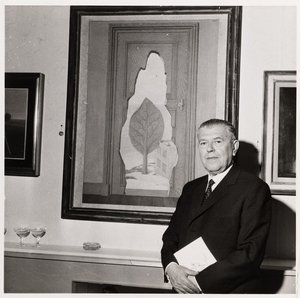
René Magritte
1898 - 1967 , bélgica
Datos clave
- Artistas Que Influyeron:
- Impresionismo
- Futurismo
- Cubismo
- Estilo Artístico: Surrealismo
- Fecha De Muerte: 15 de agosto de 1967
- Fecha De Nacimiento: 21 de noviembre de 1898
- Influenciado A Artistas:
- Pop Art
- Minimalismo
- Arte conceptual
- Lugar De Nacimiento: Lessines, Bélgica
- Nacionalidad: Belga
- Nombre Completo: René François Ghislain Magritte
- Obras Notables:
- Le Jockey Perdu
- Les Amants
- La traición de las imágenes
- Tiempo transcurrido
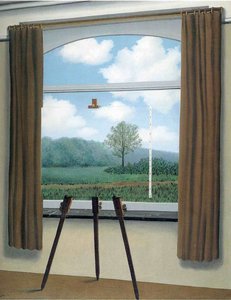
- La condición humana
Artículos relacionados

Giclée Prints: Archival Quality & Aesthetic Nuances for the Discerning Collector
Explore the world of giclée prints with ArtsDot. Learn about archival quality, aesthetic nuances & investment potential. Expert guidance for discerning art collectors seeking museum-quality reproductions and lasting value.
Los 10 Maestros del Surrealismo: Obras que Desafían la Realidad | ArtsDot
Descubre los 10 cuadros surrealistas más influyentes de artistas como Dalí y Magritte. Explora la historia, el simbolismo y las técnicas del movimiento surrealista. Encuentra reproducciones de arte de museo en ArtsDot.com.
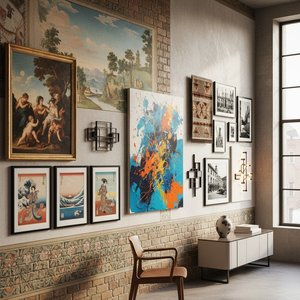
Transforming Spaces: A Comprehensive Exploration of Wall Decor Through Art History & Contemporary Practice
Explore the art of transforming spaces with our comprehensive guide to wall decor. From historical movements to contemporary trends, discover how to curate impactful interiors and commission bespoke artwork for a truly personalized aesthetic.
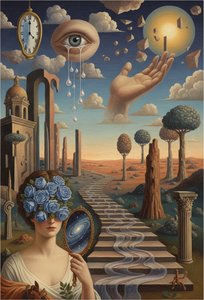
Los 10 Maestros del Surrealismo: Obras que Revolucionaron el Arte y la Decoración
Descubre los 10 lienzos surrealistas más influyentes de artistas como Dalí y Magritte. Explora la historia, el simbolismo y las técnicas del movimiento surrealista. Encuentra reproducciones de arte de museo en ArtsDot.com.

Echoes of Time: Exploring the Enduring Appeal & Historical Context of Vintage Art Prints
Explore the captivating world of vintage art prints! Discover their history, collecting tips & enduring appeal. Expert insights on chromolithography and building a legacy collection with ArtsDot.