Vista previa
 Compartir
 Compartir
 Ver detalles

 Descargar
 Ver artículos similares
 Radiografía
 Presentación de diapositivas
 Estadísticas
This is Not an Apple


 Leer más
Giclée / Impresión de arte
Impresiones giclée o en lienzo de calidad de museo con producción rápida y opciones de acabado flexibles. ( Encargar reproducción pintada a mano Ver versión en imagen digital)




P118B $10

P118H $10

P118W $10

P438Z $10

P508JH $12

P508YH $12

P805H $10

P805Z $10

P919BZ $10

P919G $10

P919XJ $10

P959ZH $10

P968JZ $12

W106C $8

W218G $10

W218JH $8

W218Y $10

W307PJ $10

W316G $10

W316PJ $8

W316Y $10

W398PJ $8

W4111J $10

W500HY $15

W500JH $15

W692G $12

W849H $8

W940BG $15

W953PJ $8




Elija entre nuestros tamaños predefinidos que respetan las proporciones originales de la obra.

Puede introducir sus propias dimensiones para adaptarse a un marco o espacio específico. Si el tamaño seleccionado no coincide con las proporciones de la imagen original, recortaremos la obra de arte o extenderemos la imagen con un borde con efecto espejo o de color sólido. Se enviará una maqueta digital para su aprobación antes de que comience la producción.
Tenga en cuenta que la vista previa en pantalla no refleja el recorte o la extensión real. Solo la maqueta mostrará con precisión la composición final.
Aunque existen tamaños personalizados, recomendamos seleccionar una dimensión de la lista predefinida para preservar las proporciones originales.
Envío a todo el mundo () en 2 semanas en lugar de las 4/5 semanas estándar. (16 septiembre)

Envío exprés gratuito a todo el mundo

Lienzo de lino de alta calidad

Seguro de envío completo

Garantía de reembolso de impuestos aduaneros

Garantía de fidelidad cromática exacta

Política de devolución de 100 días (solo por defectos)

Garantía de devolución del 100% del dinero

Oferta por volumen
 La opción de vidrio solo está disponible en tamaños inferiores a 110 cm.

This is Not an Apple
Giclée / Impresión de arte
Tamaño de la reproducción
-


Precio total
$ 62
A Quiet Paradox: The Enigma of René Magritte’s Vision
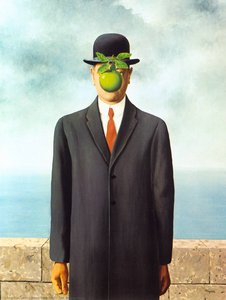
In the vast landscape of Surrealism, few images possess the deceptive simplicity and profound intellectual weight of René Magritte’s 1964 masterpiece, "This Is Not an Apple." At first glance, the viewer is presented with a scene that feels almost mundane—a single, vibrant apple resting upon a surface, accompanied by a cryptic inscription. Yet, to look at this painting is to enter a psychological labyrinth where the boundaries between object and language begin to dissolve. Magritte, the Belgian master of the uncanny, does not merely paint fruit; he paints the tension between what we see and what we know. The composition serves as a deliberate provocation, designed to unsettle the viewer’s most basic assumptions about reality and the reliability of our own senses.
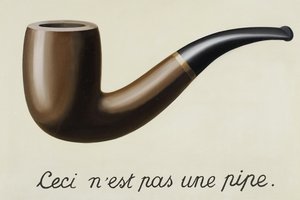
The painting operates through a brilliant linguistic trap. By pairing the realistic depiction of an apple with the French phrase “Ceci n'est pas une pomme” (“This is not an apple”), Magritte forces a confrontation between the physical world and the symbols we use to describe it. He reminds us that the painted image is merely oil on canvas, a representation that can never truly be the object itself. This philosophical inquiry into the nature of representation has made his work a cornerstone of modern thought, influencing everything from conceptual art to contemporary pop culture. For the collector or the lover of fine art, this piece offers more than visual beauty; it offers a continuous intellectual dialogue that evolves every time one gazes upon it.
Mastery of Technique and the Illusion of Reality
Magritte’s technical approach in "This Is Not an Apple" is characterized by a meticulous, almost academic precision. Eschewing the frantic brushwork of the Impressionists, he employed a smooth, controlled oil technique that lends the apple a startlingly tactile quality. One can almost sense the crispness of its skin and the subtle weight of its form. This hyper-realistic rendering is essential to his strategy; by making the subject appear undeniably "real," he makes the subsequent subversion of that reality all the more jarring. The lighting is soft yet purposeful, casting gentle shadows that ground the object in a tangible space, even as the starkness of the background pushes it toward the realm of the dream.
The composition is a study in calculated balance. The placement of the apple and the accompanying text creates a visual rhythm that guides the eye across the canvas, inviting a slow, meditative observation. This level of detail makes the work an exceptional choice for high-quality reproductions intended for sophisticated interiors. Whether placed in a minimalist modern gallery or a classic study, the painting’s clean lines and striking color palette—the deep reds and vibrant greens against a neutral backdrop—provide a focal point that is both aesthetically pleasing and intellectually stimulating. It is a piece that commands attention through its quietude rather than through noise.
A Timeless Legacy for the Discerning Collector
Beyond its technical merits, "This Is Not an Apple" carries an emotional resonance that speaks to the universal human experience of mystery and loss. Magritte’s life, marked by early childhood tragedies, often infused his work with a sense of the hidden and the veiled. In this painting, that sense of mystery is channeled into a cerebral curiosity. It does not demand an emotional outburst; instead, it invites a quiet, contemplative state of mind. For interior designers seeking to add depth to a space, this artwork provides a "conversation piece" in the truest sense—a work that stimulates thought and adds a layer of sophisticated intrigue to any room.
Owning a reproduction of such a seminal Surrealist work allows one to bring a piece of art history into the domestic sphere. It is an investment in a legacy of creativity that challenges the status quo. As we navigate an era increasingly dominated by digital illusions, Magritte’s exploration of truth and falsehood feels more relevant than ever. To display this painting is to celebrate the enduring power of the human imagination and to honor the beautiful, unsettling paradoxes that define our existence.
Obras relacionadas
Biografía del artista
vida temprana y comienzos artísticos
René François Ghislain Magritte, un reconocido artista surrealista belga, nació el 21 de noviembre de 1898 en Lessines, provincia de Hainaut, Bélgica. Su vida temprana permanece algo misteriosa, con poco conocimiento sobre su infancia. Sin embargo, está documentado que comenzó clases de dibujo en 1910.evolución artística e influencias
El estilo artístico de Magritte evolucionó significativamente a lo largo de los años, influenciado por diversos movimientos como el impresionismo, el futurismo y el cubismo. Sus primeras pinturas, datadas alrededor de 1915, eran de estilo impresionista. De 1916 a 1918, estudió en la Academia Real de Bellas Artes de Bruselas, bajo Constant Montald.período surrealista y obras notables
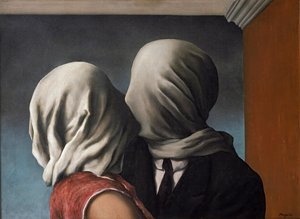
En 1926, Magritte produjo su primer cuadro surrealista, El jinete perdido (Le jockey perdu), marcando el comienzo de su asociación con el movimiento surrealista. Su obra se caracteriza por imágenes provocadoras, a menudo representando objetos ordinarios en contextos inusuales, desafiando las percepciones de la realidad de los observadores.- Les amants (1927-1928), una serie de pinturas que presentan a personas con tela cubriendo sus rostros, se cree que fue inspirada por la historia de la muerte de su madre.
- Los amantes, otra pieza icónica, presenta a una pareja besándose con sus rostros cubiertos por telas blancas, invitando al espectador a reflexionar sobre el amor y la identidad. (disponible para su compra como una reproducción de pintura al óleo hecha a mano o impresión en lienzo en ArtsDot.com)
vida tardía y legado
La obra de Magritte fue exhibida en los Estados Unidos en 1936 y nuevamente en dos exposiciones retrospectivas, una en el Museo de Arte Moderno en 1965 y la otra en el Metropolitan Museum of Art en 1992. Se mantuvo comprometido con la izquierda política pero abogó por la autonomía artística. Museos notables que exhiben la obra de Magritte:- Musée royal des beaux-arts de Belgique, Bruselas, Bélgica (descubra las obras maestras del musée royal des beaux-arts de belgique en ArtsDot.com)
- Musée Magritte, parte del musée royal des beaux-arts de Belgique, que exhibe la colección mundial más grande de obras de Magritte.
Conclusión
El legado de René Magritte como maestro surrealista perdura, con sus imágenes provocadoras que continúan inspirando e intrigando. Su obra, caracterizada por su mezcla única del ordinario y lo inesperado, sigue siendo un pilar fundamental del arte surrealista. Más información sobre René Magritte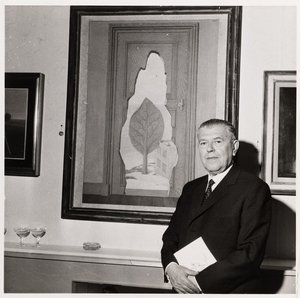
René Magritte
1898 - 1967 , bélgica
Datos clave
- Artistas Que Influyeron:
- Impresionismo
- Futurismo
- Cubismo
- Estilo Artístico: Surrealismo
- Fecha De Muerte: 15 de agosto de 1967
- Fecha De Nacimiento: 21 de noviembre de 1898
- Influenciado A Artistas:
- Pop Art
- Minimalismo
- Arte conceptual
- Lugar De Nacimiento: Lessines, Bélgica
- Nacionalidad: Belga
- Nombre Completo: René François Ghislain Magritte
- Obras Notables:
- Le Jockey Perdu
- Les Amants
- La traición de las imágenes
- Tiempo transcurrido
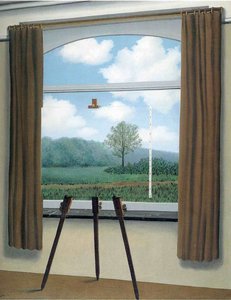
- La condición humana
Artículos relacionados
Surrealismo: 10 Obras Maestras que Transformaron el Arte y la Decoración
Descubre las 10 obras maestras del Surrealismo con Dalí, Magritte y Miró. Explora la historia, el simbolismo y la técnica de estos íconos del arte moderno. Encuentra reproducciones de alta calidad para tu hogar en .

Abstracción Geométrica: 10 Obras Maestras que Transformaron el Arte Moderno | ArtsDot
Descubre las 10 obras maestras de la abstracción geométrica que revolucionaron el arte moderno. Explora a Mondrian, Malevich y Kandinsky en ArtsDot.com. Reproducciones de alta calidad para tu hogar.
Expresionismo Abstracto: 10 Obras Maestras que Transformaron el Arte |
Descubre las 10 obras maestras del Expresionismo Abstracto: Pollock, Rothko y más. Explora la historia, técnica y significado de estos lienzos icónicos. Reproducciones de arte exclusivas en .
Más Allá de la Representación: Explorando la Gestualidad, la Emoción y los Fundamentos Filosóficos de la Pintura Abstracta Contemporánea
Explora la profunda filosofía y gestualidad de la pintura abstracta contemporánea. Análisis experto de Rothko, Richter y más. Guía esencial para coleccionistas.
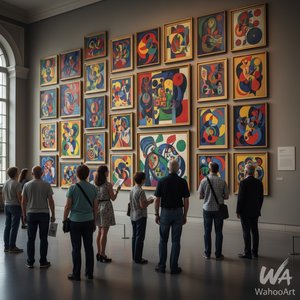
Kandinsky: Las 25 Obras Maestras del Pionero de la Abstracción | ArtsDot
Descubre las 25 obras maestras de Wassily Kandinsky, pionero del arte abstracto. Explora su expresionismo, composiciones únicas y la historia detrás de cada cuadro. Reproducciones de alta calidad para decorar tu hogar con arte moderno en ArtsDot.com.