

 Ver en contexto
 Enviar
 Compartir
 Detalles

 Descargar
 Similares
 Radiografía
 Presentación de diapositivas
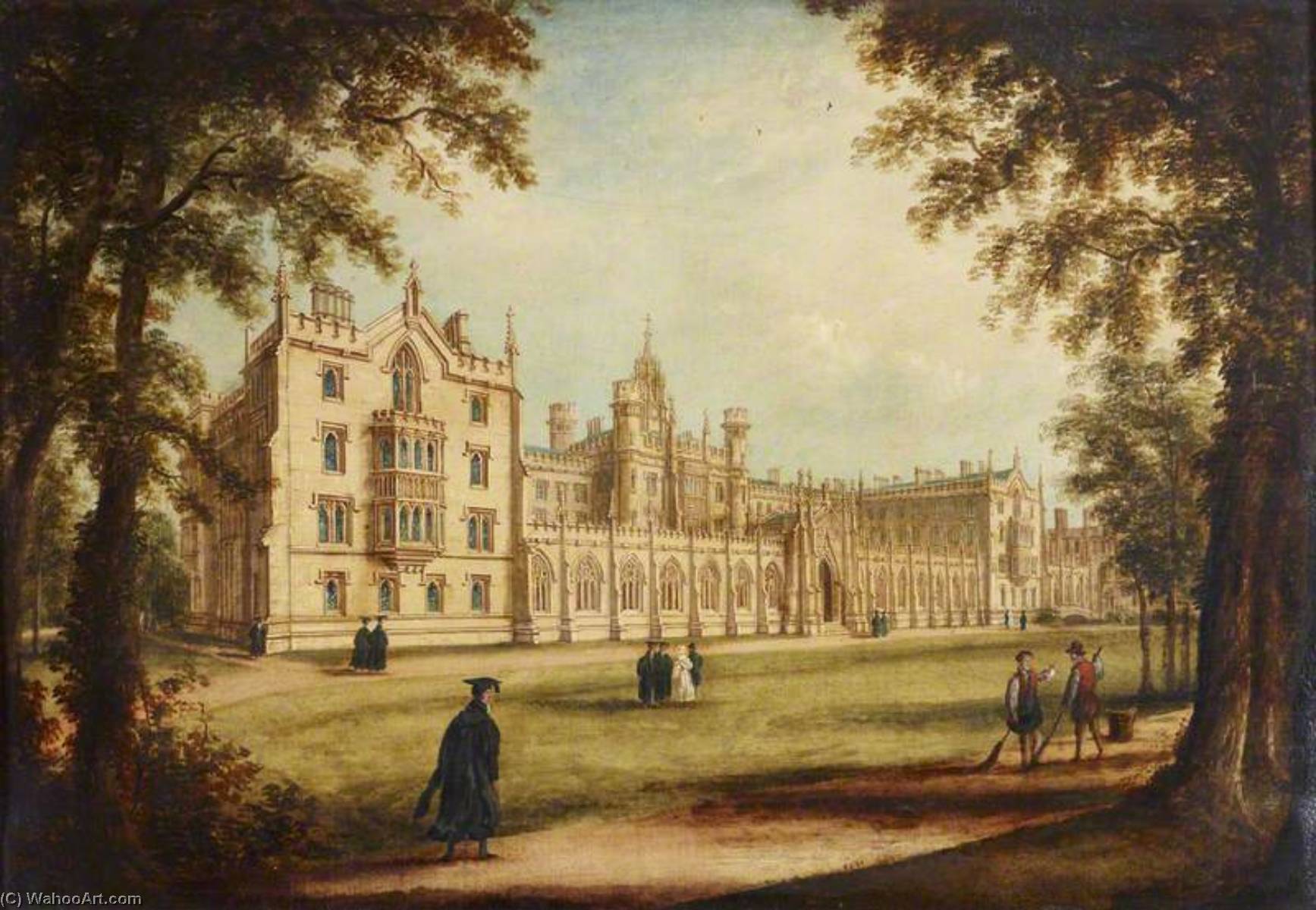
New Court, St John's College, Cambridge
 45.0 x 65.0 cm
 National Trust
 Ver más
Giclée / Impresión de arte
Impresiones giclée o en lienzo de calidad de museo con producción rápida y opciones de acabado flexibles. ( Comprar pintura hecha a mano Comprar imagen)




































Elija entre nuestros tamaños predefinidos que respetan las proporciones originales de la obra.

Puede introducir sus propias dimensiones para adaptarse a un marco o espacio específico. Si el tamaño seleccionado no coincide con las proporciones de la imagen original, recortaremos la obra de arte o extenderemos la imagen con un borde con efecto espejo o de color sólido. Se enviará una maqueta digital para su aprobación antes de que comience la producción.
Tenga en cuenta que la vista previa en pantalla no refleja el recorte o la extensión real. Solo la maqueta mostrará con precisión la composición final.
Aunque existen tamaños personalizados, recomendamos seleccionar una dimensión de la lista predefinida para preservar las proporciones originales.
Envío a todo el mundo () en 2 semanas en lugar de las 4/5 semanas estándar. (6 septiembre)

Envío exprés gratuito a todo el mundo

Lienzo de lino de alta calidad

Seguro de envío total

Garantía de reembolso de impuestos aduaneros

Garantía de fidelidad cromática exacta

Política de devolución de 100 días (solo por defectos)

Garantía de devolución del 100% del dinero

Descuento por cantidad
 La opción de vidrio solo está disponible en tamaños inferiores a 110 cm.

New Court, St John's College, Cambridge
Giclée / Impresión de arte
Dimensiones de la reproducción
-


Precio total final
$ 62
Obras relacionadas










Biografía del artista
The Visionary Chronicler of Cambridge: The Life and Art of Richard Bankes Harraden
In the quiet, sun-dappled corridors of nineteenth-century England, few artists captured the serene dignity of academic life as intimately as Richard Bankes Harraden. Born in 1778 to a prosperous Norfolk family, Harraden was a man whose life and art were inextricably woven into the fabric of Cambridge University. His journey was one of intellectual refinement and aesthetic devotion, shaped by an education at Eton College and later at Trinity College, Cambridge—an institution that would not only serve as his academic home but also as his most enduring muse. As he rose to become the Warden of Trinity Hall, Harraden balanced the heavy responsibilities of scholarly leadership with a delicate, observant eye for the natural world, creating a body of work that serves as a luminous window into a bygone era.
Harroden’s artistic development was marked by a departure from the grand, often turbulent historical narratives favored by many of his contemporaries. Instead, he found profound meaning in the stillness of the English landscape and the architectural majesty of his collegiate surroundings. His training, nurtured by dedicated tutors, instilled in him a mastery of both watercolor and oil, allowing him to navigate the subtle transitions of light and atmosphere with remarkable precision. There is a palpable sense of solace in his work; during an age defined by the rapid, often jarring shifts of the Industrial Revolution, Harraden’s canvases offered a sanctuary of permanence and peace, celebrating the enduring beauty of the British countryside and the venerable stone facades of Cambridge.
A Master of Light, Detail, and Atmosphere
To gaze upon a Harraden landscape is to experience a meticulous study of reality infused with poetic emotion. He possessed an unparalleled ability to render the intricate textures of the world—the rugged bark of ancient trees, the delicate veins of seasonal foliage, and the weathered surfaces of historic masonry. His paintings, such as the celebrated Trinity Hall from the Fellows' Garden, demonstrate a sophisticated command of composition, where architectural elements like clock towers provide a sense of structural grandeur against the soft, organic movement of nature.
However, Harraden’s true genius lay in his treatment of light. He did not merely document shapes; he captured the very essence of time passing through the play of shadow and luminosity. His use of warm tones could evoke the comforting glow of a summer afternoon, while his more nuanced shadows breathed life into the architectural recesses of the colleges. This technical prowess allowed him to achieve a sense of depth that invited the viewer to step directly into the scene, making his depictions of Cambridge feel less like static images and much more like living, breathing environments.
His repertoire extended beyond the local vistas of Cambridge, occasionally touching upon classical themes that reflected his deep scholarly roots. In works such as View of Athens and the Acropolis, one can see how his passion for precision met a fascination with historical grandeur, blending the topographical accuracy of a chronicler with the romantic spirit of a landscape painter.
Legacy and Historical Significance
The legacy of Richard Bankes Harraden is found in the preservation of a specific, tranquil English identity. Through his meticulous observations, he provided future generations with a visual record of the Cambridge landscapes as they existed before the modern era transformed them. His work remains a vital touchstone for historians and art lovers alike, offering a glimpse into the intersection of academic life and artistic expression.
While his fame was rooted in the specialized circles of British watercolor and landscape painting, his contribution to the visual history of the United Kingdom is profound. He stands as a testament to the power of the observant eye—a painter who found the extraordinary within the ordinary, and who transformed the familiar stones and gardens of his home into timeless works of art. His life, spanning from the late eighteenth century to 1862, remains etched in the very landscapes he so lovingly immortalized.
richard bankes harraden
1778 - 1862
Datos clave
- Artistic Movement Or Style: Romantic Landscape Painting
- Artists Who Influenced This Artist:
- John Constable
- William Turner
- Date Of Birth: 1778
- Date Of Death: 1862
- Full Name: Richard Bankes Harraden
- Nationality: British
- Notable Artworks:
- The Chapel Hill, Trinity College Cambridge
- The Quadrangle, Trinity Hall Cambridge
- Place Of Birth: Cambridge, England