 Ver en contexto
 Enviar
 Compartir
 Detalles

 Descargar
 Similares
 Radiografía
 Presentación de diapositivas
Man in Green Coat with Umbrella


 Ver más
Giclée / Impresión de arte
Impresiones giclée o en lienzo de calidad de museo con producción rápida y opciones de acabado flexibles. ( Comprar pintura hecha a mano Comprar imagen)




P118B $10

P118H $10

P118W $10

P438Z $10

P508JH $12

P508YH $12

P805H $10

P805Z $10

P919BZ $10

P919G $10

P919XJ $10

P959ZH $10

P968JZ $12

W106C $8

W218G $10

W218JH $8

W218Y $10

W307PJ $10

W316G $10

W316PJ $8

W316Y $10

W398PJ $8

W4111J $10

W500HY $15

W500JH $15

W692G $12

W849H $8

W940BG $15

W953PJ $8




Elija entre nuestros tamaños predefinidos que respetan las proporciones originales de la obra.

Puede introducir sus propias dimensiones para adaptarse a un marco o espacio específico. Si el tamaño seleccionado no coincide con las proporciones de la imagen original, recortaremos la obra de arte o extenderemos la imagen con un borde con efecto espejo o de color sólido. Se enviará una maqueta digital para su aprobación antes de que comience la producción.
Tenga en cuenta que la vista previa en pantalla no refleja el recorte o la extensión real. Solo la maqueta mostrará con precisión la composición final.
Aunque existen tamaños personalizados, recomendamos seleccionar una dimensión de la lista predefinida para preservar las proporciones originales.
Envío a todo el mundo () en 2 semanas en lugar de las 4/5 semanas estándar. (28 agosto)

Envío exprés gratuito a todo el mundo

Lienzo de lino de alta calidad

Seguro de envío total

Garantía de reembolso de impuestos aduaneros

Garantía de fidelidad cromática exacta

Política de devolución de 60 días (solo por defectos)

Garantía de devolución del 100% del dinero

Descuento por cantidad
 La opción de vidrio solo está disponible en tamaños inferiores a 110 cm.

Man in Green Coat with Umbrella
Giclée / Impresión de arte
Dimensiones de la reproducción
-


Precio total final
$ 62
The Enigmatic Figure: Richard Caton Woodville’s “Man in Green Coat with Umbrella”
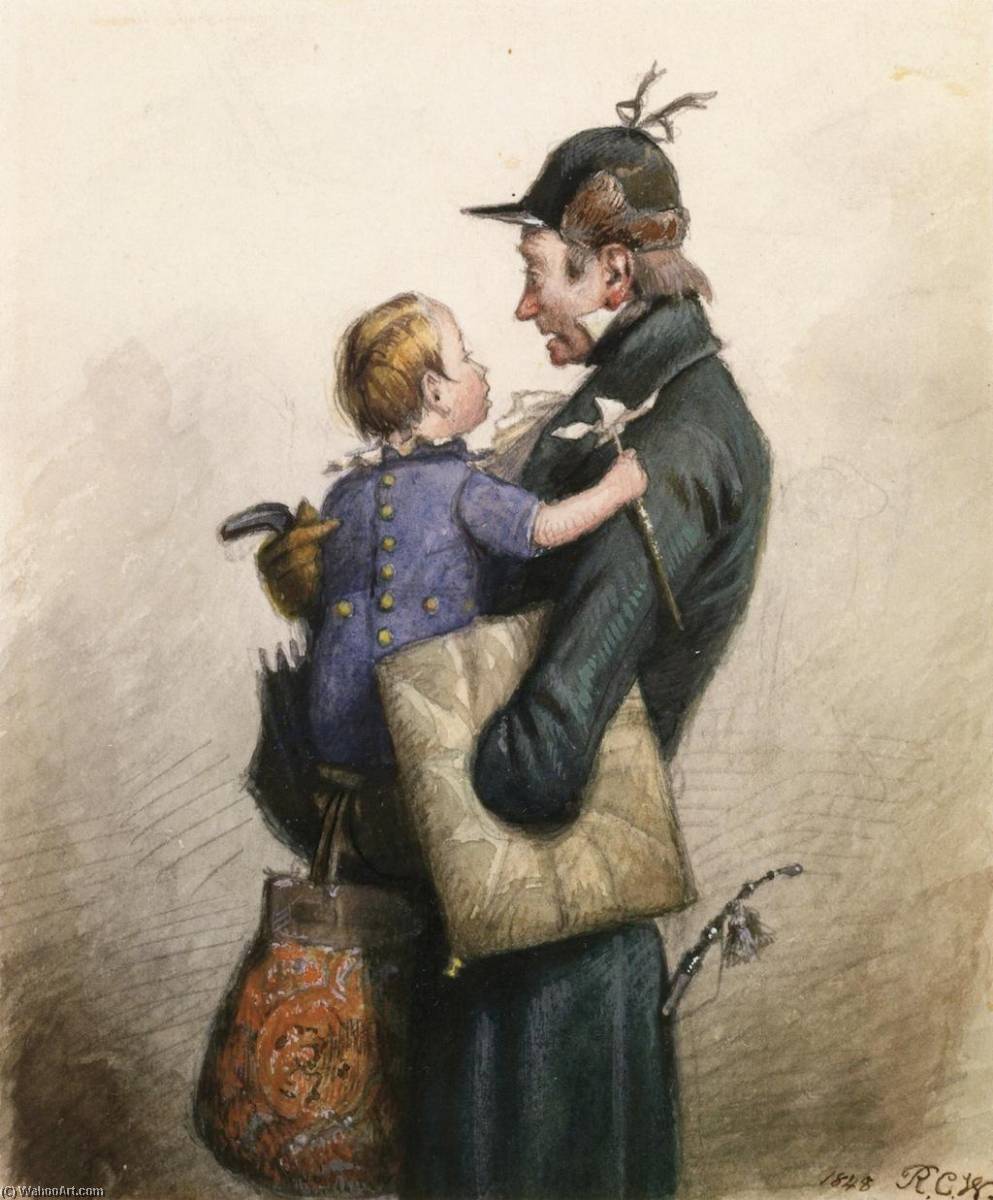
Richard Caton Woodville Jr.’s watercolor, "Man in Green Coat with Umbrella," painted in 1848, isn't merely a depiction of a gentleman navigating a rainy street; it’s a carefully constructed tableau brimming with Victorian sensibilities and subtle emotional resonance. The painting immediately draws the eye to the central figure, a man enveloped in a striking green coat – a color chosen not for its vibrancy alone, but for its association with both hope and melancholy within the era's artistic vocabulary. He carries an umbrella, not as a practical shield against the rain, but as a prop that subtly frames his posture and directs our gaze towards the distant cityscape.
Woodville’s mastery lies in his ability to imbue everyday scenes with profound psychological depth. The composition is deceptively simple: a narrow street lined with indistinct buildings, a muted sky hinting at an approaching storm, and the solitary figure dominating the foreground. Yet, within this apparent stillness, there's a palpable sense of isolation and introspection. The man’s face remains largely obscured, adding to his enigmatic quality – he could be any man, lost in thought, contemplating the uncertainties of life or perhaps simply observing the world around him with quiet detachment.
A Window into Victorian Life: Context and Technique
To fully appreciate “Man in Green Coat with Umbrella,” it’s crucial to understand the artistic climate of 1848. The painting emerged during a period of significant social, political, and economic change in Britain – the aftermath of the Napoleonic Wars, the rise of industrialization, and growing anxieties about class divisions. Woodville, deeply influenced by the Düsseldorf School of Painting, meticulously rendered his subjects with an almost photographic realism, prioritizing detail and capturing fleeting moments of everyday life. His technique is characterized by delicate washes of color, precise linework, and a masterful use of light and shadow to create depth and atmosphere.
The watercolor medium itself lends a particular quality to the work – its inherent luminosity and transparency evoke a sense of immediacy and intimacy. Woodville’s brushstrokes are visible, adding texture and dynamism to the scene while simultaneously contributing to the painting's overall mood of quiet contemplation. The muted palette—primarily blues, greens, and browns—reflects the somber atmosphere of a rainy day, further emphasizing the man’s solitary state.
Symbolism and Emotional Resonance
Beyond its realistic depiction of Victorian street life, “Man in Green Coat with Umbrella” is rich in symbolic meaning. The green coat itself can be interpreted as representing both hope and disillusionment – a color often associated with renewal but also with the fading of youth and vitality. The umbrella, a ubiquitous symbol of protection from the elements, here takes on a more metaphorical significance, suggesting a desire to shield oneself from the harsh realities of life. The distant cityscape, barely discernible through the rain-streaked sky, represents the broader world beyond the individual’s immediate concerns.
The painting's emotional impact is profoundly understated yet undeniably powerful. It doesn’t offer easy answers or dramatic narratives; instead, it invites viewers to contemplate the complexities of human experience – loneliness, introspection, and the quiet beauty found in ordinary moments. The man’s posture—slightly hunched, his gaze directed towards the horizon—conveys a sense of melancholy and perhaps even resignation, suggesting that he is grappling with questions that remain unanswered.
A Timeless Masterpiece: Reproduction and Legacy
Reproductions of “Man in Green Coat with Umbrella” capture much of the original’s subtle charm and evocative atmosphere. When selecting a high-quality print, consider options that faithfully reproduce Woodville's delicate watercolor technique and nuanced color palette. This painting serves as a poignant reminder of the Victorian era’s preoccupation with social observation and psychological depth, offering a timeless glimpse into the human condition.
Obras relacionadas
Biografía del artista
Richard Caton Woodville Jr.: Una Vida en la Batalla e Ilustración
- Nacido: Baltimore, Estados Unidos de América (1856)
- Fallecido: 1927
Primeros Años y Formación Artística
Richard Caton Woodville Jr. nació en Baltimore en 1856, hijo del artista Richard Caton Woodville Sr., conocido por sus pinturas de género. Recibió una formación artística temprana, demostrando talento desde una edad joven. Siguiendo los pasos de su padre, continuó con su educación formal en la prestigiosa Escuela de Pintura de Düsseldorf bajo la tutela de los renombrados artistas militares Wilhelm Camphausen y Eduard von Gebhardt. Este riguroso entrenamiento le inculcó una sólida base en el dibujo y una apreciación por el realismo detallado. Amplió aún más sus horizontes artísticos con breves estudios en Rusia y París, aprendiendo de Jean-Léon Gérôme, una figura destacada del arte académico.
Carrera como Ilustrador y Pintor de Batallas
La carrera de Woodville Jr. floreció principalmente a través de su asociación con el Illustrated London News. Rápidamente se estableció como un hábil reportero e ilustrador, documentando eventos significativos de finales del siglo XIX y principios del XX. Su capacidad para capturar el drama y la intensidad de las escenas de batalla le valió un amplio reconocimiento. Se hizo conocido por sus detalladas representaciones de conflictos militares, incluyendo:
- Guerra Ruso-Turca (1877–1878): La experiencia directa de Woodville informando sobre esta guerra moldeó significativamente su enfoque artístico.
- Guerra Anglo-Egipcia (1882): Sus bocetos y documentación fotográfica de este conflicto fueron invaluables para el artista Alphonse-Marie-Adolphe de Neuville.
- Segunda Guerra Anglo-Afgana: Pinturas como Candahar y Maiwand: Saving the Guns mostraron su habilidad para representar la acción militar.
- Guerra Zulú
- Primera Guerra Bóer
Sus obras también fueron publicadas en importantes revistas como Cornhill Magazine, Strand Magazine y The Tatler.
Obras Principales y Estilo Artístico
El estilo artístico de Woodville se caracterizó por el meticuloso detalle, las representaciones realistas de figuras y equipos, y un toque dramático. Destacó en capturar la intensidad y el caos de la batalla al tiempo que mantenía una sensación de precisión histórica. Algunas de sus obras más notables incluyen:
- Before Leuthen, 3 December 1757: Esta obra temprana estableció su reputación y demostró su capacidad para representar eventos históricos con un realismo convincente.
- The Charge of the Light Brigade: Una poderosa representación de un momento crucial en la Guerra de Crimea.
- The Charge of the 21st Lancers at Omdurman: Mostrando el valor y la habilidad de la caballería británica.
- Pinturas que representan batallas de la Segunda Guerra Bóer, incluyendo "The Defeat of Lord Methuen's Force by de la Rey at Tweebosch."
- Escenas de la Primera Guerra Mundial como 2nd Batt. Manchester Regiment Taking Six Guns at Dawn Near St. Quentin y Halloween, 1914: Stand of the London Scottish on Messines Ridge.
Vida Posterior y Legado
A pesar de su amplia popularidad y aclamación crítica durante su vida, Woodville enfrentó tragedias personales y dificultades financieras en sus años posteriores. Se casó con Annie Elizabeth Hill en 1877, con quien tuvo gemelos, el actor Anthony Caton Woodville y el pintor William Passenham Caton Woodville. Su matrimonio terminó en divorcio en 1892.
Trágicamente, Woodville fue encontrado muerto en su estudio en St John's Wood en agosto de 1927, un evento que se determinó como suicidio debido a una mente perturbada. Murió efectivamente indigente, y su tumba inicialmente no tenía lápida. Más tarde, en 2013, su bisnieto colocó una lápida en su tumba.
El legado de Richard Caton Woodville Jr. perdura como uno de los principales pintores de batallas de su época. Sus obras se exhiben en instituciones prestigiosas como el Museo Nacional del Ejército, la Tate, la Walker Art Gallery y la Royal Academy, continuando cautivando al público con su realismo dramático y significado histórico.
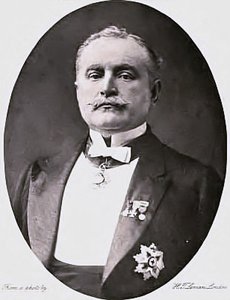
Richard Caton Woodville
1856 - 1927 , Estados Unidos de América
Datos clave
- Artistas Que Influyeron:
- Wilhelm Camphausen
- Eduard von Gebhardt
- Jean-Léon Gérôme
- Fecha De Fallecimiento: 17 de agosto de 1927
- Fecha De Nacimiento: 7 de enero de 1856
- Lugar De Nacimiento: Baltimore, Estados Unidos
- Movimiento Artístico: Pintura de batalla, Ilustración
- Nacionalidad: Inglés
- Nombre Completo: Richard Caton Woodville Jr.
- Obras Notables:
- Before Leuthen, 3 Dec 1757
- Candahar: Saving the Guns
- Maiwand: Saving the Guns
- La carga de la Brigada Ligera
- Carga del 21º Lanceros
Artículos relacionados

Acuarelas Legendarias: 10 Obras Maestras que Transformaron el Arte | ArtsDot
Descubre 10 acuarelas legendarias de Turner, Monet y Sargent que revolucionaron el arte. Explora la historia, técnica y belleza de estas obras maestras impresionistas y románticas. Reproducciones de museo en ArtsDot.com.
Richard Caton Woodville: Chronicles of Victorian Life & Narrative Realism
Explore the captivating world of Richard Caton Woodville, a pivotal American artist who masterfully captured Victorian life through detailed narrative realism. Discover his legacy and influence on 19th-century painting.

Ephemeral Visions: Exploring the Artistic Legacy & Contemporary Practice of Watercolor Painting
Explore the captivating world of watercolor painting! Discover its rich history, essential techniques, influential artists & collecting tips. A comprehensive guide for art enthusiasts from ArtsDot.

Visiones Efímeras: Historia y Resonancia Emocional de la Pintura Acuarela
Descubre la fascinante historia de la acuarela, desde sus orígenes hasta su expresión contemporánea. Explora técnicas, artistas clave como Paul Klee y encuentra reproducciones de alta calidad en ArtsDot.

Ephemeral Visions: Exploring the Artistic Legacy & Nuances of Watercolor Painting
Explore the captivating world of watercolor painting! Discover its rich history, essential techniques, influential artists & collecting tips from art experts. A comprehensive guide for enthusiasts.