

 Ver en contexto
 Enviar
 Compartir
 Detalles

 Descargar
 Similares
 Radiografía
 Presentación de diapositivas
 Stats
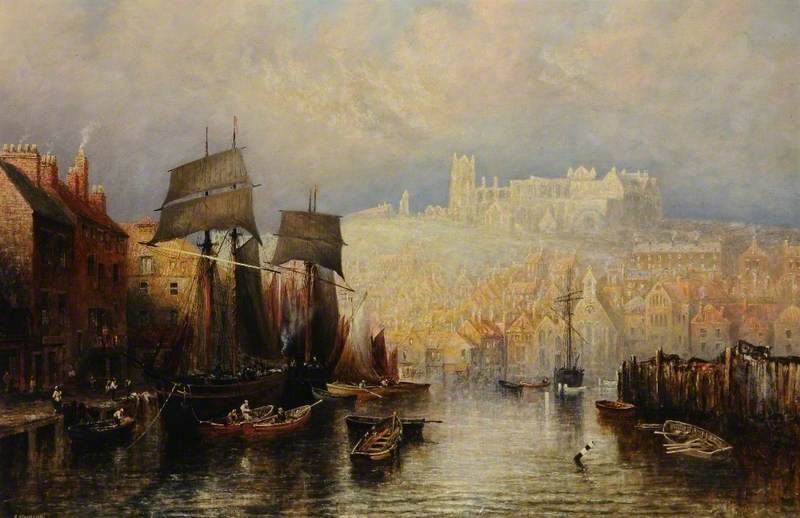
StatsWhitby, Old Town, North Yorkshire
 61.0 x 92.0 cm
 Galería de Arte Ferens
 Ver más
Giclée / Impresión de arte
Impresiones giclée o en lienzo de calidad de museo con producción rápida y opciones de acabado flexibles. ( Comprar pintura hecha a mano Switch to Digital Image)




































Elija entre nuestros tamaños predefinidos que respetan las proporciones originales de la obra.

Puede introducir sus propias dimensiones para adaptarse a un marco o espacio específico. Si el tamaño seleccionado no coincide con las proporciones de la imagen original, recortaremos la obra de arte o extenderemos la imagen con un borde con efecto espejo o de color sólido. Se enviará una maqueta digital para su aprobación antes de que comience la producción.
Tenga en cuenta que la vista previa en pantalla no refleja el recorte o la extensión real. Solo la maqueta mostrará con precisión la composición final.
Aunque existen tamaños personalizados, recomendamos seleccionar una dimensión de la lista predefinida para preservar las proporciones originales.
Envío a todo el mundo () en 2 semanas en lugar de las 4/5 semanas estándar. (7 septiembre)

Envío exprés gratuito a todo el mundo

Lienzo de lino de alta calidad

Seguro de envío total

Garantía de reembolso de impuestos aduaneros

Garantía de fidelidad cromática exacta

Política de devolución de 100 días (solo por defectos)

Garantía de devolución del 100% del dinero

Descuento por cantidad
 La opción de vidrio solo está disponible en tamaños inferiores a 110 cm.

Whitby, Old Town, North Yorkshire
Giclée / Impresión de arte
Dimensiones de la reproducción
-


Precio total final
$ 62
Obras relacionadas








Biografía del artista
The Master of the Yorkshire Coast: The Life and Legacy of Richard Weatherill
In the salt-sprayed annals of British maritime art, few names evoke the rugged charm and atmospheric depth of North Yorkshire quite like Richard Weatherill. Born in 1844 in the coastal town of Scarborough, Weatherill was destined to become a pivotal figure in the watercolor and oil traditions of his region. While his early life held the potential for a life at sea—a passion he pursued through several sailing voyages to refine his technical accuracy—it was ultimately the canvas that captured his spirit. The son of the artist George Weatherill, Richard was immersed in an environment where art and maritime history were inextricably linked. Though he briefly apprenticed as a druggist in Whitby, the pull of the brush proved irresistible, leading him to abandon commerce for a life dedicated to documenting the shifting light and turbulent waters of the North Sea.
The artistic DNA of Weatherill was deeply influenced by his lineage and his formal training. He studied under the celebrated landscape artist John Atkinson Grimshaw, a master of tonal harmony whose influence is clearly visible in Weatherill’s ability to capture the "sublime" qualities of nature. From Grimshaw, he inherited a profound respect for meticulous observation and the subtle gradations of light that define the Romantic tradition. While his father taught him the foundational techniques of the family style, Richard carved out a distinct identity by favoring oils for his marine subjects. This choice allowed him to achieve a certain weight and texture, particularly when depicting the heavy rigging of ships or the churning foam of Whitby Harbour. His work often serves as a luminous window into the 19th century, blending scientific precision with an emotional resonance that seeks to evoke awe in the viewer.
Technique, Light, and the Spirit of Whitby
Weatherill’s technical prowess lay in his ability to translate the ephemeral qualities of the atmosphere into permanent pigment. His approach was characterized by a deliberate layering of washes and glazes, a method that created luminous surfaces capable of mimicking the shifting moods of the Yorkshire coast. Whether he was working in watercolor or oil, his palette remained deeply connected to his environment, utilizing muted blues, earthy greens, and deep browns, yet always infused with an inner radiance that suggested the sun breaking through a coastal mist. He possessed a keen eye for geological formations and atmospheric conditions, treating the interplay of light and shadow not merely as a visual effect, but as a narrative tool to convey the grandeur and sometimes the peril of the sea.
His subject matter was often deeply rooted in the local identity of Whitby and its surrounding landscapes. His most significant achievements include:
- The Whitby Abbey Commissions: A celebrated series of works documenting the architectural majesty of the Abbey set against dramatic, tempestuous seascapates.
- Maritime Documentation: Detailed paintings such as "Brig 'George' of Whitby" and "Ship Being Towed into Harbour," which serve as historical records of the era's shipping industry.
- Landscape Mastery: Evocative depictions of the Yorkshire interior, including works like "Thornton Dale"* and "The Scarborough Piers," showcasing his skill in atmospheric perspective.
Beyond his visual artistry, Weatherill was a dedicated historian of his homeland. In 1908, he published "The Ancient Port of Whitby and its Shipping," a monumental account of the town's maritime heritage. This work, enriched with his own illustrations, showcased his commitment to preserving the legacy of the local shipyards and the whaling industry. Through this blend of artistic expression and historical scholarship, Richard Weatherill ensured that the soul of Whitby—its ships, its people, and its breathtaking landscapes—would endure long after the tides had changed.
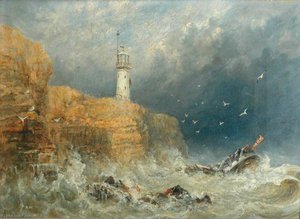
richard weatherill
1844 - 1923
Datos clave
- Artistic Movement Or Style: Romantic Landscape
- Artists Or Movements Influenced By This Artist: ['Hudson Lowe']
- Artists Who Influenced This Artist: ['J.M.W Turner']
- Date Of Birth: 1844
- Date Of Death: 1923
- Full Name: Richard Weatherill
- Nationality: British
- Notable Artworks: ['Whitby Abbey']
- Place Of Birth: Whitby, England