

 Ver en contexto
 Enviar
 Compartir
 Detalles

 Descargar
 Similares
 Radiografía
 Presentación de diapositivas
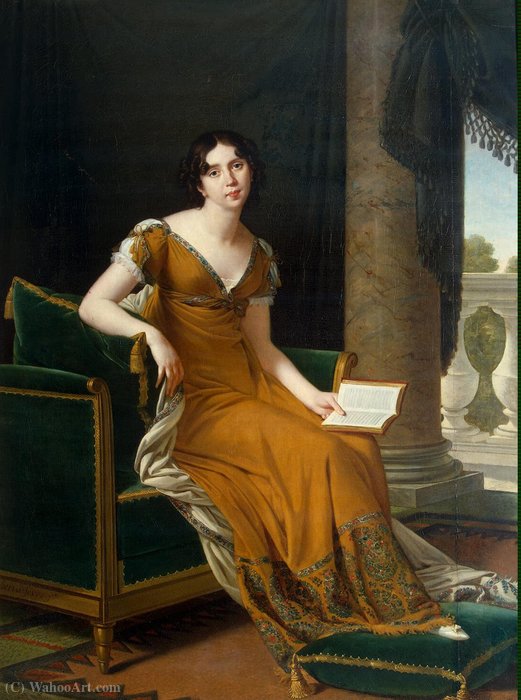
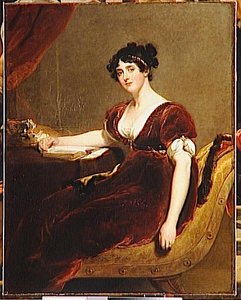
Baronne Elisabeth Alexandrovna Stroganoff, épouse Demidoff
 Ver más
Adquiera una imagen digital de alta resolución y optimizada, muy superior a la vista previa en línea.
Cada archivo es preparado meticulosamente por nuestros especialistas internos mediante el uso de herramientas avanzadas y un experto retoque manual. Nos aseguramos de que cada imagen posea una claridad excepcional, una precisión cromática impecable y un detalle minucioso.
El archivo final se entrega por correo electrónico en un plazo de 72 horas, optimizado para su uso inmediato en entornos profesionales, editoriales y de impresión. Esta es la misma calidad en la que confían los estudios de diseño, las editoriales y las galerías de primer nivel.
Imagen Digital
Descarga un archivo de alta resolución para exhibición personal, impresión y proyectos creativos. ( Comprar impresión Comprar pintura hecha a mano)
Incluido en cada pedido de imágenes digitales
Entrega digital experta, garantizada.
Al elegir ArtsDot.com, no solo está adquiriendo una imagen; está recibiendo una obra de arte digital mejorada profesionalmente, elaborada con precisión y respaldada por una garantía de satisfacción. Esto es todo lo que incluye su pedido, automáticamente:

Entrega rápida por email
Recibirá su archivo de imagen digital en alta resolución por correo electrónico en un plazo de 72 horas tras realizar su pedido, listo para su uso inmediato.

Archivo digital optimizado por IA
Su obra de arte se optimiza profesionalmente mediante herramientas avanzadas de IA y edición manual, garantizando el máximo detalle, claridad y precisión cromática.

Reenvío gratuito de por vida
¿Has borrado o perdido tu archivo por error? No te preocupes: te lo volveremos a enviar en cualquier momento, sin coste adicional.

Sin gastos de importación, siempre
Disfrute de su obra de arte al instante sin aduanas, aranceles ni gastos de envío; las descargas digitales siempre están libres de impuestos.

Garantía de fidelidad de color
Garantizamos que su imagen digital refleje los colores originales con la mayor fidelidad posible, mediante el uso de herramientas profesionales y gestión del color.

Garantía de satisfacción de 60 días
Si no está satisfecho con su imagen digital, la revisaremos o le reembolsaremos el 100% en un plazo de 60 días, sin preguntas.

100% Garantía de devolución de dinero
¿No está satisfecho? Obtenga un reembolso completo dentro de los 60 días posteriores a la recepción de su archivo digital, sin necesidad de explicaciones.

Descuentos por pedidos grandes
Compra 3 imágenes, ahorra 10% - Compra 5, ahorra 15% - Compra 10+, ahorra 20%. Ideal para proyectos creativos, galerías y agencias.
Obras relacionadas




Biografía del artista
Robert Lefèvre: The Shadowy Master of the Imperial Court
Robert Lefèvre, a name often whispered in the annals of 18th-century French art, remains an enigmatic figure despite his undeniable impact on portraiture and historical painting. Born in Bayeux in 1755, Lefèvre’s career unfolded against the backdrop of dramatic political shifts – from the waning years of the Ancien Régime to the turbulent reign of Napoleon Bonaparte. He wasn't a flamboyant personality, preferring the quiet intensity of his studio to the limelight, yet his work profoundly shaped the visual language of the French court and left an enduring legacy on Neoclassical art.
Lefèvre’s early artistic development was unconventional. Rather than pursuing a formal apprenticeship, he embarked on a solitary journey to Paris at the tender age of eighteen, abandoning a planned legal career to immerse himself in the works of the Old Masters. This self-directed education proved pivotal, instilling in him a deep appreciation for classical forms and a meticulous approach to technique. He found mentorship with Jean-Baptiste Regnault, a respected painter to the King, but it was within Regnault’s studio that he encountered Charles Paul Landon, a fellow student who would become a lifelong collaborator. This partnership fostered a shared artistic vision and contributed significantly to Lefèvre's distinctive style – characterized by its crisp detail, subtle modeling, and an almost photographic realism.
The Rise of a Court Painter
Lefèvre’s reputation began to solidify with his exhibition at the 1791 Salon, where his painting *Dame en velours noir* (Lady in Velvet) immediately captivated audiences. The work's striking composition and masterful handling of light and shadow established him as a rising star within the Parisian art world. He quickly gained commissions from prominent figures, including members of the aristocracy and officials within the burgeoning revolutionary government. Lefèvre’s ability to capture both the outward appearance and inner character of his subjects made him exceptionally sought after.
The Napoleonic era marked the zenith of Lefèvre's career. He was entrusted with painting portraits of some of the most important figures in France – Napoleon Bonaparte himself, Empress Joséphine, Marie Louise, and numerous members of the royal family. The portrait of Napoleon in coronation attire, now housed in Aachen City Hall, stands as a testament to his skill and understanding of power. These works weren’t merely likenesses; they were carefully constructed narratives designed to project an image of authority and grandeur. Lefèvre's meticulous attention to detail – from the folds of Napoleon’s uniform to the subtle expression on his face – conveyed both strength and intelligence.
A Style Defined by Neoclassicism
Lefèvre’s artistic style is often categorized as Neoclassical, though it transcends simple labels. He was deeply influenced by Jacques-Louis David, particularly in his use of clear lines, balanced compositions, and a restrained palette. However, Lefèvre possessed a unique sensibility that set him apart. His paintings are imbued with a sense of quiet dignity and psychological depth, qualities often lacking in the more overtly dramatic works of David. He was also influenced by antiquity, evident in his careful study of classical sculpture and architecture.
His technique involved painstaking preparation – extensive sketching, detailed studies of anatomy, and meticulous layering of paint. Lefèvre’s approach to portraiture was remarkably modern for its time, prioritizing the accurate representation of individual features and expressions. He employed a technique known as “pointillé,” using small, precise brushstrokes to build up form and texture, creating an illusion of remarkable realism.
Legacy and Lasting Influence
Despite his considerable talent and success, Lefèvre’s career was tragically cut short. Following the Bourbon Restoration, he lost his official positions and struggled financially. In 1830, disillusioned and impoverished, he took his own life. His death marked the end of an era in French portraiture.
However, Lefèvre's influence endured. His meticulous technique and psychological insight profoundly impacted subsequent generations of artists. He is remembered as a master of Neoclassical portraiture, whose works continue to be admired for their beauty, realism, and subtle power. The portraits he created during the Napoleonic era remain iconic representations of an age of grandeur and ambition, offering a valuable glimpse into the lives and personalities of some of history’s most influential figures. His legacy is not one of flamboyant spectacle, but rather of quiet mastery—a testament to the enduring power of observation, skill, and artistic vision.
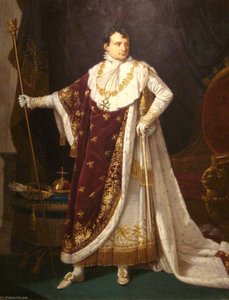
robert jacques françois lefèvre
1755 - 1830
Breves datos
- Artistic Movement Or Style: Neoclassical, Portraiture
- Artists Who Influenced This Artist: ['Jacques-Louis David],\n "Artists or movements influenced by this artist": ["Neoclassical art"]\n}']
- Date Of Birth: September 24, 1755
- Date Of Death: October 3, 1830
- Full Name: Robert Jacques François Faust Lefèvre
- Nationality: French
- Notable Artworks:
- Dame en velours noir
- Joséphine Bonaparte
- Napoleon I (coronation)
- Place Of Birth: Bayeux, France

