 Ver en contexto
 Enviar
 Compartir
 Detalles

 Descargar
 Similares
 Radiografía
 Presentación de diapositivas
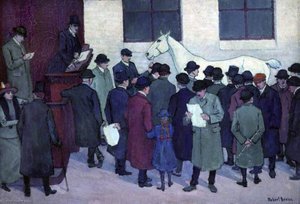
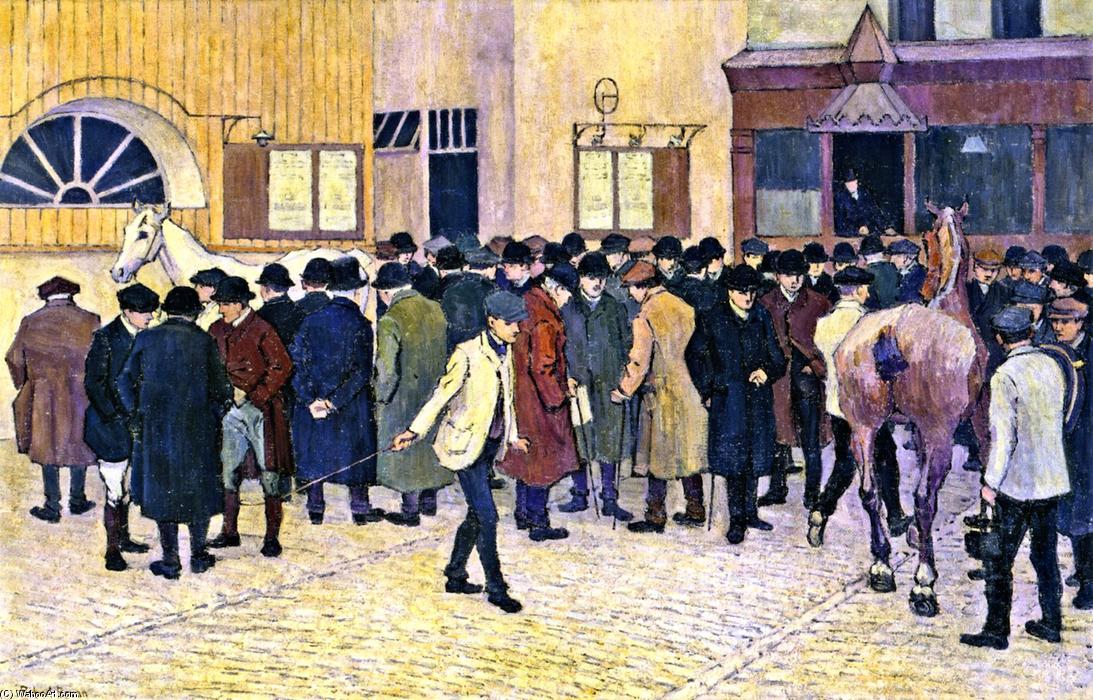
Horse Sale at the Barbican
 Oil On Canvas
- WallArt
- Camden Town Group
 1912
1912 79.0 x 122.0 cm
 Tate Gallery
 Ver más
Giclée / Impresión de arte
Impresiones giclée o en lienzo de calidad de museo con producción rápida y opciones de acabado flexibles. ( Comprar pintura hecha a mano Comprar imagen)




P118B $10

P118H $10

P118W $10

P438Z $10

P508JH $12

P508YH $12

P805H $10

P805Z $10

P919BZ $10

P919G $10

P919XJ $10

P959ZH $10

P968JZ $12

W106C $8

W218G $10

W218JH $8

W218Y $10

W307PJ $10

W316G $10

W316PJ $8

W316Y $10

W398PJ $8

W4111J $10

W500HY $15

W500JH $15

W692G $12

W849H $8

W940BG $15

W953PJ $8




Elija entre nuestros tamaños predefinidos que respetan las proporciones originales de la obra.

Puede introducir sus propias dimensiones para adaptarse a un marco o espacio específico. Si el tamaño seleccionado no coincide con las proporciones de la imagen original, recortaremos la obra de arte o extenderemos la imagen con un borde con efecto espejo o de color sólido. Se enviará una maqueta digital para su aprobación antes de que comience la producción.
Tenga en cuenta que la vista previa en pantalla no refleja el recorte o la extensión real. Solo la maqueta mostrará con precisión la composición final.
Aunque existen tamaños personalizados, recomendamos seleccionar una dimensión de la lista predefinida para preservar las proporciones originales.
Envío a todo el mundo () en 2 semanas en lugar de las 4/5 semanas estándar. (24 agosto)

Envío exprés gratuito a todo el mundo

Lienzo de lino de alta calidad

Seguro de envío total

Garantía de reembolso de impuestos aduaneros

Garantía de fidelidad cromática exacta

Política de devolución de 60 días (solo por defectos)

Garantía de devolución del 100% del dinero

Descuento por cantidad
 La opción de vidrio solo está disponible en tamaños inferiores a 110 cm.

Horse Sale at the Barbican
Giclée / Impresión de arte
Dimensiones de la reproducción
-


Precio total final
$ 62
Descripción de la pieza
The Scene Unfolds: Robert Bevan’s “Horse Sale at the Barbican”
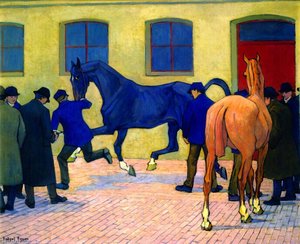
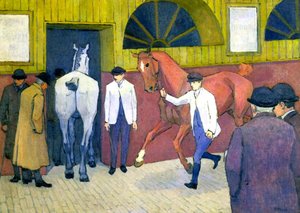
Robert Bevan's "Horse Sale at the Barbican," painted in 1912, isn’t merely a depiction of a bustling marketplace; it’s a meticulously observed snapshot of Victorian London life, imbued with a quiet dignity and an understated sense of community. The painting transports us to the heart of the Barbican, a busy thoroughfare teeming with activity centered around the Royal City Horse and Carriage Repository – a vital hub for the trade of horses and carriages in the burgeoning metropolis. Bevan masterfully captures this everyday scene, eschewing grand narratives or dramatic gestures in favor of a focused tableau that invites contemplation.
The composition is remarkably balanced, drawing our eye to the central figure of a tawny horse, poised and alert amidst a throng of elegantly dressed men in bowler hats. These figures aren’t presented as heroes or villains; they are simply participants in this ritualistic exchange – examining, negotiating, and ultimately deciding on their equine acquisitions. Notice the careful arrangement of the crowd: some lean closer to scrutinize the animals, others engage in animated conversation, while a few stand slightly removed, observing the scene with detached interest. The inclusion of details like the clock on the left and the suitcase near the center-right subtly anchors the image within a specific time and place, adding layers of context to the immediate action.
A Masterclass in Black and White – Bevan’s Restrained Palette
Bevan's choice of monochrome—a deliberate decision rather than an accident—is crucial to the painting’s impact. He abandons vibrant color, opting instead for a carefully modulated range of grays and blacks that heighten the sense of form and texture. This technique, reminiscent of Japanese woodblock prints (Ukiyo-e), emphasizes the shapes of the figures, the contours of the horse's body, and the rough surfaces of the buildings in the background. The lack of color forces the viewer to focus on the interplay of light and shadow, creating a dramatic chiaroscuro effect that adds depth and volume to the scene.
The painting’s tonal range is remarkably subtle, demonstrating Bevan's skill in manipulating value to create a sense of realism. He expertly renders the textures of clothing – the sheen of polished boots, the folds of coats – and the rough grain of the horse’s hide. This attention to detail elevates the scene beyond a simple record of a market day; it becomes a study in observation and craftsmanship.
Contextualizing Bevan: Camden Town and British Modernism
“Horse Sale at the Barbican” is a key work within Robert Bevan’s oeuvre, and particularly emblematic of his association with the Camden Town Group. This influential circle of artists sought to break away from the academic traditions of the Royal Academy, embracing brighter colors, looser brushwork, and a more direct engagement with contemporary life. Bevan's paintings often depicted scenes of London’s working class and urban landscapes – subjects that were largely ignored by mainstream art institutions at the time.
Bevan’s work reflects a broader shift in British art during the early 20th century, as artists began to experiment with new approaches to representation. His use of monochrome, inspired by Japanese prints, foreshadowed later developments in European modernism, particularly within the Fauvist movement. The painting stands as a testament to Bevan’s pioneering spirit and his willingness to challenge artistic conventions.
A Legacy of Observation: Reproductions for Today
Reproducing “Horse Sale at the Barbican” today offers more than just a beautiful image; it provides a window into a bygone era. ArtsDot's hand-painted reproductions capture not only the visual details of Bevan’s original painting but also the atmosphere and spirit of Victorian London. The meticulous attention to texture, light, and composition ensures that these reproductions are both faithful to the artist’s vision and visually compelling in their own right. Whether adorning a study or gracing a gallery wall, this artwork invites viewers to pause, reflect, and connect with a moment in time.
Obras relacionadas
Biografía del artista
Primeros Años y Formación Artística
- Nacimiento: Hove, Reino Unido (1865)
- Fallecimiento: 1925
- Antecedentes Familiares: Robert Polhill Bevan nació en una familia cuáquera con conexiones bancarias. Sus padres fueron Richard Alexander Bevan y Laura Maria Polhill.
- Educación Temprana: Estudió en la Escuela de Arte Westminster bajo la tutela de Fred Brown. Posteriormente, asistió a la Academia Julian en París donde conoció a artistas influyentes como Paul Sérusier, Pierre Bonnard, Édouard Vuillard y Maurice Denis.
- Influencia de Bretaña: Los viajes tempranos a Bretaña (1890 y 1891) impactaron significativamente su desarrollo artístico, especialmente a través de la exposición al estilo Pont-Aven.
Desarrollo Artístico e Influencias
- Estilo Temprano: El trabajo temprano de Bevan mostró influencias del sintetismo, evidente en sus dibujos y grabados de su tiempo en Bretaña.
- Fauvismo: Alrededor de 1904, Bevan experimentó con el color puro, demostrando un enfoque proto-fauvista que estaba por delante de muchos artistas británicos de la época. Su pintura "Patio" se considera un ejemplo temprano de este estilo.
- Divisionismo/Puntillismo: Más tarde, adoptó una técnica divisionista o puntillista, como se ve en obras como "Arando en las Colinas" y "El Arado de Maíz".
- Influencias Clave: Influencias significativas incluyeron a Paul Gauguin (evidente en su uso del color) y maestros anteriores como Velázquez y Goya. También reconoció la guía de Renoir al dibujar caballos.
Afiliaciones y Círculos Artísticos
- Grupo Camden Town: Bevan fue un miembro fundador del Grupo Camden Town, un colectivo de artistas que buscaban representar la vida urbana moderna.
- London Group: También perteneció al London Group, otra organización artística progresista.
- Grupo Cumberland Market: Demostrando aún más su compromiso con los movimientos artísticos contemporáneos, Bevan formó parte del Grupo Cumberland Market.
- Asociación con Walter Sickert: En 1908, se unió al grupo de Fitzroy Street de Walter Sickert, donde recibió ánimo para centrarse en temas cotidianos.
- Asociación de Artistas Aliados: Participó en la primera exposición de la Asociación de Artistas Aliados en 1908, que proporcionó una plataforma para artistas progresistas y lo introdujo a Wassily Kandinsky.
Obras Principales y Temas
- Paisajes: Bevan es conocido principalmente por sus paisajes de Sussex y Bretaña, a menudo representando escenas rurales con colores vibrantes y pinceladas expresivas. Ejemplos incluyen "En las Colinas cerca de Lewes", "El Castaño" y "Paisaje en las Colinas Negras, Devon".
- Retratos: Creó retratos, incluyendo una notable representación de su esposa, Stanislawa Bevan (née de Karłowska).
- Escenas Urbanas: Su trabajo también incluyó representaciones de la vida urbana, como pinturas que documentan el declive del comercio de carruajes tirados por caballos ("El Caballo de Carreta").
- Pinturas Notables: Otras obras significativas incluyen "Queen's Grove, St John's Wood", "La Granja" y “Rosemary la vallée”.
Legado y Significado Histórico
- Pionero del Arte Británico Moderno: Robert Polhill Bevan es reconocido como un pionero del arte británico moderno, particularmente por su temprana adopción de principios fauvistas.
- Influencia en el Uso del Color: Fue uno de los primeros artistas británicos en utilizar el color puro de manera significativa, influyendo en generaciones posteriores de pintores.
- Contribución al Grupo Camden Town: Su participación en el Grupo Camden Town ayudó a dar forma al desarrollo del arte moderno en Gran Bretaña.
- Exposición Retrospectiva: Una exposición retrospectiva en Colnaghi's en 1961 destacó sus contribuciones y solidificó su lugar en la historia del arte.
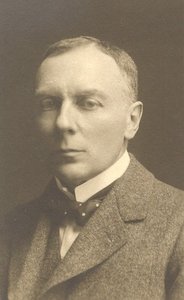
Robert Polhill Bevan
1865 - 1925 , Reino Unido
Datos clave
- Artistas Que Influyeron:
- Paul Gauguin
- Renoir
- Velázquez
- Goya
- Fecha De Fallecimiento: 1925
- Fecha De Nacimiento: 1865
- Lugar De Nacimiento: Hove, Reino Unido
- Movimiento Artístico:
- Camden Town Group
- Fauvismo
- Puntillismo
- Nacionalidad: Británico
- Nombre Completo: Robert Polhill Bevan
- Obras Notables:
- Rosemary la vallée
- Paisaje en las Blackdown Hills
- Stanislawa Bevan, née de Karlowska
- En los Downs cerca de Lewes
- El Castaño
- Queen's Grove, St John's Wood
- La Casa Rural
- El Caballo de Carga
Artículos relacionados

Las 10 Pinturas Más Famosas Dominadas por el Negro | Arte y Decoración
Descubre las 10 pinturas más impactantes dominadas por el negro. Explora obras maestras de Rembrandt, Goya y Rothko, su historia y significado. Encuentra reproducciones de arte exclusivas para transformar tu hogar en .
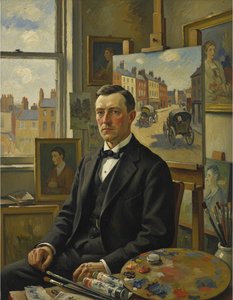
Robert Bevan: Pioneering British Post-Impressionism & the Camden Town Group's Intimate Vision
Explore the life & work of Robert Bevan, a pioneer of British Post-Impressionism and founding member of the Camden Town Group. Discover his vibrant landscapes and lasting impact on early 20th-century art.
The Noble Steed on Canvas: A Historical & Artistic Exploration of Horse Painting Across Cultures
Explore the rich history of horse painting! Discover masterpieces from Stubbs to Munnings & learn about symbolism, techniques & artists. Find museum-quality reproductions at ArtsDot.
The Equine Muse: A Historical & Artistic Exploration of Horses in Painting
Explore the captivating history of horses in painting! Discover Renaissance masterpieces, Baroque grandeur & expert insights for collecting equestrian art. Learn about symbolism, techniques & lasting value with ArtsDot.
Las 10 Obras Maestras Dominadas por el Negro Marsella: Arte y Decoración
Descubre las 10 pinturas más famosas dominadas por el negro marsella. Explora la historia, técnica y simbolismo de obras maestras del expresionismo alemán, gótico y arte moderno. Reproducciones de museos en .