 Ver en contexto
 Enviar
 Compartir
 Detalles

 Descargar
 Similares
 Radiografía
 Presentación de diapositivas
Still Life with Three Handles
 Acrylic
- WallArt
- Cubism
 1912
1912 40.0 x 61.0 cm
 Museo de Arte Moderno de la Ciudad de París
 Ver más
Reproducción al óleo hecha a mano
Óleo sobre lienzo pintado a mano en el tamaño y marco de su elección, realizado por encargo por nuestros artistas. ( Comprar impresión Comprar imagen)




P118B $10

P118H $10

P118W $10

P438Z $10

P508JH $12

P508YH $12

P805H $10

P805Z $10

P919BZ $10

P919G $10

P919XJ $10

P959ZH $10

P968JZ $12

W106C $8

W218G $10

W218JH $8

W218Y $10

W307PJ $10

W316G $10

W316PJ $8

W316Y $10

W398PJ $8

W4111J $10

W500HY $15

W500JH $15

W692G $12

W849H $8

W940BG $15

W953PJ $8




Elija entre nuestros tamaños predefinidos que respetan las proporciones originales de la obra.

Puede ingresar sus propias dimensiones para adaptarse a un marco o espacio específico. Si el tamaño seleccionado no coincide con las proporciones de la imagen original, recortaremos la obra o extenderemos la pintura con elementos adicionales pintados a mano. Se le enviará una maqueta digital para su aprobación antes de comenzar la producción.
Tenga en cuenta que la vista previa en pantalla no refleja el recorte o la extensión reales. Solo la maqueta mostrará con precisión la composición final.
Si bien existen tamaños personalizados, recomendamos seleccionar una dimensión de la lista predefinida para preservar las proporciones originales.
Tras realizar el pedido, el equipo de ArtsDot.com enviará un correo electrónico al cliente para solicitar instrucciones y proporcionarle una vista previa del boceto.
Envío a todo el mundo () en 3-4 semanas en lugar de las 5 semanas estándar. (24 agosto). Sin comprometer la calidad.

Envío exprés gratuito a todo el mundo

Lienzo de lino de alta calidad

Seguro de envío total

Garantía de reembolso de impuestos aduaneros

Garantía de fidelidad cromática exacta

Política de devolución de 60 días (solo por defectos)

Garantía de devolución del 100% del dinero

Descuento por cantidad
 La opción de vidrio solo está disponible en tamaños inferiores a 110 cm.

Still Life with Three Handles
Técnica de reproducción
Dimensiones de la reproducción
-


Precio total final
$ 263
Descripción de la obra
A Fragment of Crystal Cubism: Exploring Roger de La Fresnaye’s Still Life with Three Handles
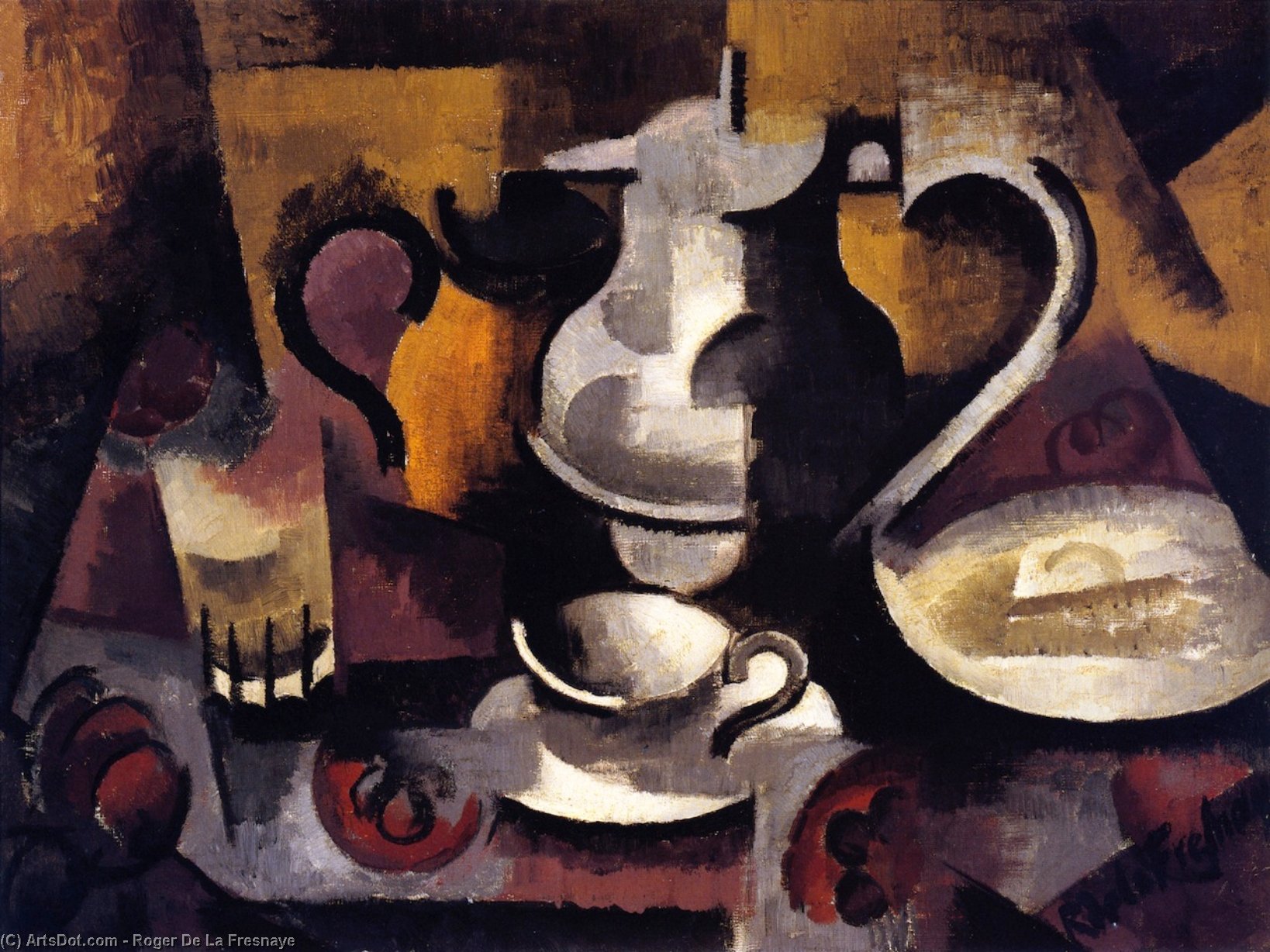
Still Life with Three Handles by Roger de La Fresnaye stands as a remarkable testament to the transformative spirit of early 20th-century art, specifically the burgeoning movement known as Crystal Cubism. Executed in 1912 and currently residing within the Musée d'art Moderne de la Ville de Paris, this oil on canvas painting transcends mere representation; it embodies a profound engagement with geometric abstraction and a subtle nod to Art Deco aesthetics—a confluence that speaks volumes about its artistic significance.- The Artistic Landscape: De La Fresnaye’s journey began amidst the influences of Symbolism, where artists sought to convey emotion and spiritual ideas through evocative imagery. However, he swiftly embraced Cubism's revolutionary challenge to traditional perspective, aligning himself with luminaries like Jean Metzinger and Albert Gleizes who spearheaded the theoretical groundwork for this groundbreaking style.
- Compositional Innovation: The painting’s visual impact stems from its meticulously crafted arrangement of objects—a teapot, two cups, three bottles, and a bowl—presented as intersecting planes that defy conventional spatial illusion. This deliberate fragmentation reflects Crystal Cubism's core principle: prioritizing flatness and surface activity over realistic depiction.
Decoding Geometric Harmony: Style and Technique
De La Fresnaye’s masterful technique exemplifies the essence of Crystal Cubism. He skillfully employs geometric forms—primarily cubes, spheres, and cylinders—to dissect objects into their constituent parts, simultaneously reconstructing them in a flattened, overlapping manner. This approach isn't merely stylistic; it represents a conceptual shift toward perceiving reality as fragmented and multifaceted – mirroring the anxieties and aspirations of an era grappling with rapid technological advancements and societal upheaval. The muted palette contributes to the painting’s understated elegance, enhancing its contemplative mood.Echoes of Art Deco: Influences Beyond Geometry
Beyond the geometric core of Cubism, Still Life with Three Handles subtly incorporates elements characteristic of Art Deco—a style celebrated for its streamlined lines and opulent ornamentation. The painting's refined composition mirrors Art Deco’s fascination with symmetry and decorative embellishment, suggesting a harmonious blend between intellectual rigor and aesthetic beauty. This stylistic connection underscores the broader cultural context in which De La Fresnaye operated – an era defined by optimism and confidence in progress.Symbolic Resonance: Beyond Surface Appearance
While seemingly simple in its visual vocabulary, Still Life with Three Handles possesses a deeper symbolic resonance. The objects themselves—the teapot, cups, bottles—can be interpreted as emblems of domesticity and ritualistic behavior, hinting at themes of everyday life elevated to artistic contemplation. Furthermore, the deliberate flatness of the canvas encourages viewers to engage actively with the artwork, prompting reflection on perception and representation – core concerns within the intellectual climate of the time.- Emotional Impact: The painting’s quiet stillness invites introspection, fostering a sense of serenity amidst the dynamism of its geometric structure. It speaks to an artist's desire to capture not just what is seen but also how it feels—a testament to De La Fresnaye’s ability to distill complex ideas into a powerfully evocative visual experience.
Obras relacionadas
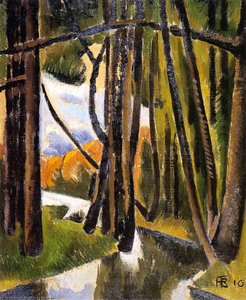
Biografía del artista
Roger de La Fresnaye (1885-1925): Bridging Tradition and Innovation
Roger de la Fresnaye, born into the aristocratic lineage of the La Fresnayes in Le Mans on July 11, 1885, was a painter whose brief but incandescent career illuminated the burgeoning landscape of early 20th-century art. His story is one of inherited privilege tempered by artistic ambition, classical training disrupted by avant-garde fervor, and ultimately, a life tragically cut short by illness. The Château de la Fresnaye in Falaise, ancestral home to his family with its long history of military service, provided an early backdrop for a life that would eventually blend tradition with radical innovation. Though steeped in the values of his upbringing, young Roger found himself drawn not to the battlefield but to the canvas, embarking on a journey that would see him navigate the complex currents of Symbolism, Cubism, and beyond. His initial education was classically grounded, yet it quickly evolved as he sought artistic instruction at the Academie Julien and later the École des Beaux-Arts in Paris – institutions where the seeds of his future stylistic explorations were sown.Early Influences: The Nabis Aesthetic
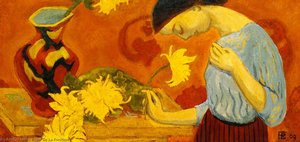
The formative years of de la Fresnaye’s artistic development were profoundly shaped by the *Nabis*, a group of Post-Impressionist painters who prioritized subjective experience and symbolic meaning over strict representation. Studying under Maurice Denis and Paul Sérusier at the Academie Ranson, he absorbed their emphasis on flattened forms, decorative patterns, and evocative color palettes – qualities evident in works like Woman with Chrysanthemums. This period reveals a dreamlike quality, a stylistic echo of the Nabis’ pursuit of spiritual resonance through art. Their influence extended beyond mere technique; it instilled within him a fundamental belief that art should transcend mere imitation of nature and strive to convey deeper truths about human emotion and consciousness. The Nabis’s exploration of myth and folklore—particularly their fascination with biblical narratives—provided de la Fresnaye with a rich source of inspiration, informing his compositional choices and contributing to the lyrical character of his early paintings.The Embrace of Cubism: A Revolutionary Shift
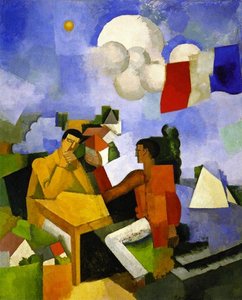
Around 1912, de la Fresnaye encountered the transformative force of Cubism, spearheaded by Pablo Picasso and Georges Braque. This marked a pivotal shift in his artistic trajectory—a move away from the decorative conventions of Symbolism toward a radically geometric aesthetic. Initially hesitant to fully embrace the movement’s disruptive principles, he nonetheless recognized its intellectual rigor and its capacity to challenge conventional notions of perspective and spatial illusion. He wasn’t merely imitating; he was responding, interpreting, and ultimately forging his own unique voice within the burgeoning avant-garde landscape. His engagement with Cubism wasn't driven by a desire for novelty alone but by an earnest conviction that art could grapple with the complexities of modern life—a conviction reflected in canvases like *The Conquest of the Air*, where fragmented planes intersect to create dynamic compositions imbued with both visual excitement and symbolic resonance. The influence of Robert Delaunay’s Orphism – characterized by bold color combinations and a rejection of traditional shading – further enriched his artistic vocabulary, pushing him toward explorations of chromatic abstraction that would define his distinctive style.War Service and Artistic Transformation
The outbreak of World War I profoundly impacted de la Fresnaye’s life and work. He enlisted in the French army, serving with distinction during the conflict—a commitment fueled by patriotic fervor and a deep sense of moral responsibility. However, his military service was tragically curtailed by tuberculosis, forcing his discharge in 1918. The debilitating illness took its physical toll, diminishing his energy and altering the course of his artistic production. Despite facing considerable hardship, de la Fresnaye persevered with his painting—a testament to his unwavering dedication to art as a means of confronting existential anxieties. As he convalesced, he abandoned the energetic dynamism of Cubist forms in favor of a more contemplative style—one marked by linear precision and an introspective gaze. This stylistic shift wasn’t merely a reaction to illness; it represented a deliberate reconsideration of artistic priorities—a quest for beauty within constraint that resonated with the artist’s own evolving worldview.Legacy: A Singular Voice Amidst Modernism
Roger de la Fresnaye died in 1925 at the young age of forty, leaving behind a relatively small but remarkably significant body of work. Though his career was tragically abbreviated, his contribution to the development of modern art remains undeniable. He successfully bridged the gap between the decorative sensibilities of Symbolism and the radical experimentation of Cubism—creating a unique visual language that continues to captivate audiences today. His paintings can be found in prestigious museums such as the Musée d'Art Moderne de Troyes and the Centre Pompidou (Paris), testaments to his enduring artistic merit. The record-breaking sale of *La Conquête de l’Air* at Christie’s in 2017 – fetching over €2.3 million – serves as a powerful affirmation of his place within the canon of modern masters. De la Fresnaye's legacy lies not only in his individual artistic achievements but also in his ability to synthesize diverse influences into a cohesive and compelling vision—a singular voice amidst the turbulent currents of modernist art that continues to inspire artists and scholars alike.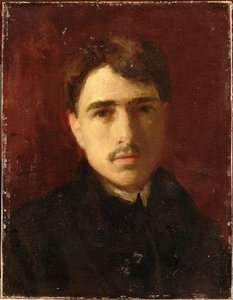
Roger de La Fresnaye
1885 - 1925 , Francia
Datos clave
- Artistic Movement Or Style: Cubism, Symbolism
- Artists Or Movements Influenced By This Artist: ["Section d'Or"]
- Artists Who Influenced This Artist:
- Maurice Denis
- Paul Sérusier
- Georges Braque
- Pablo Picasso
- Date Of Birth: July 11, 1885
- Date Of Death: November 27, 1925
- Full Name: Roger de La Fresnaye
- Nationality: French
- Notable Artworks:
- The Conquest of the Air
- La Madelon
- Le Cuirassier
- Place Of Birth: Le Mans, France
Artículos relacionados
Roger de la Fresnaye: Cubism, Tradition & the Search for Order in Early 20th-Century French Painting
Explore the captivating world of Roger de la Fresnaye, a pivotal French Cubist painter. Discover his unique blend of tradition & modernity, influences, and lasting legacy with ArtsDot.

Goya: Las 25 Obras Maestras del Genio Español | Reproducciones de Arte en ArtsDot
Descubre las 25 obras maestras de Goya, el genio español. Explora retratos icónicos, 'Los Caprichos' y 'Las Pinturas Negras'. Reproducciones de arte en lienzo de alta calidad para decorar tu hogar con estilo. ¡Encuentra tu obra favorita en ArtsDot.com!
Águeda Ruiz de la Prada: A Study of Eclecticism & Emotional Resonance in Contemporary Spanish Painting
Discover the vibrant world of Ágatha Ruiz de la Prada, a leading figure in contemporary Spanish art. Explore her eclectic style, emotional depth & legacy – a must-read for discerning collectors.

Acerca de nosotros
Descubre nuestra historia! Llevamos el arte de clase mundial a tu vida gracias a una selección experta, creaciones personalizadas y vistas previas gratuitas. Aprobado por particulares y empresas desde el año 2000.
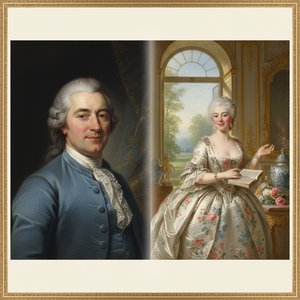
Maurice Quentin de La Tour: Light, Shadow & the Rococo Portrait
Explore the captivating world of Maurice Quentin de La Tour, a master of Rococo portraiture. Discover his innovative pastel techniques, intimate depictions of French aristocracy, and lasting artistic legacy. Learn more at ArtsDot.