

 Enviar
 Compartir
 Detalles

 Descargar
 Similares
 Presentación de diapositivas
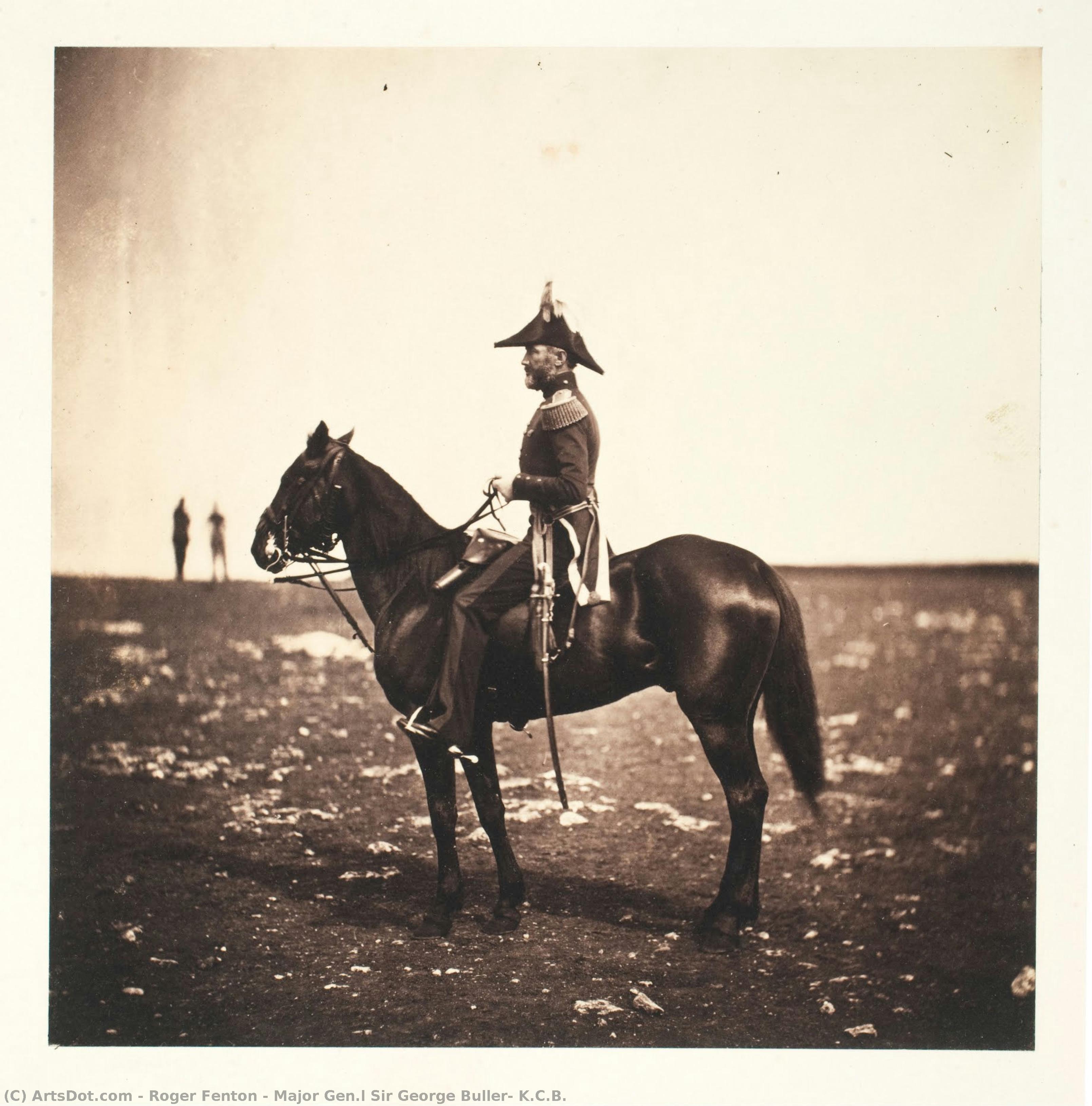
Major Gen.l Sir George Buller, K.C.B.
 Giclée Print
- Digital
- Romantic Realism
 1856
1856 16.0 x 16.0 cm
 George Eastman Museum
 Ver más
Giclée / Impresión de arte
Impresiones giclée o en lienzo de calidad de museo con producción rápida y opciones de acabado flexibles. ( Comprar pintura hecha a mano Comprar imagen)




































Elija entre nuestros tamaños predefinidos que respetan las proporciones originales de la obra.

Puede introducir sus propias dimensiones para adaptarse a un marco o espacio específico. Si el tamaño seleccionado no coincide con las proporciones de la imagen original, recortaremos la obra de arte o extenderemos la imagen con un borde con efecto espejo o de color sólido. Se enviará una maqueta digital para su aprobación antes de que comience la producción.
Tenga en cuenta que la vista previa en pantalla no refleja el recorte o la extensión real. Solo la maqueta mostrará con precisión la composición final.
Aunque existen tamaños personalizados, recomendamos seleccionar una dimensión de la lista predefinida para preservar las proporciones originales.
Envío a todo el mundo () en 2 semanas en lugar de las 4/5 semanas estándar. (26 agosto)

Envío exprés gratuito a todo el mundo

Lienzo de lino de alta calidad

Seguro de envío total

Garantía de reembolso de impuestos aduaneros

Garantía de fidelidad cromática exacta

Política de devolución de 60 días (solo por defectos)

Garantía de devolución del 100% del dinero

Descuento por cantidad
 La opción de vidrio solo está disponible en tamaños inferiores a 110 cm.

Major Gen.l Sir George Buller, K.C.B.
Giclée / Impresión de arte
Dimensiones de la reproducción
-


Precio total final
$ 62
Descripción de la pieza
A Pioneer's Gaze: Roger Fenton’s ‘Major General Sir George Buller’
This meticulously crafted hand-painted reproduction captures a pivotal moment in the history of photography and Victorian art – Roger Fenton’s iconic image of Major General Sir George Buller. Executed with painstaking detail, this artwork transports us to the Crimean War, offering a rare glimpse into the realities of military life during the mid-19th century. Fenton's work wasn't merely documentation; it was a deliberate attempt to elevate photography to the level of fine art, challenging conventional notions of artistic representation and paving the way for modern war photography.
- Subject Matter: The scene depicts Major General Sir George Buller, a prominent figure in the British Army, astride a powerful horse. The composition emphasizes both the military authority of the general and the inherent power of the animal – a common motif reflecting Victorian ideals of strength and control.
- Historical Context: Created in 1856, this photograph was part of Fenton’s groundbreaking ‘Photographs of the Crimean War,’ published during a period of immense social and political upheaval. The war itself was a brutal conflict, shaping British public opinion and influencing future military strategies. Fenton's images offered a stark contrast to romanticized depictions of warfare, presenting a gritty and often unsettling view of the realities faced by soldiers.
- Technique: The reproduction faithfully recreates Fenton’s original salt print technique, utilizing the subtle tonal variations and delicate textures characteristic of early photographic processes. The monochrome palette enhances the dramatic effect, emphasizing the starkness of the landscape and the solemnity of the scene.
The Artist's Vision: Roger Fenton and the Rise of War Photography
Roger Fenton (1819-1869) was a truly remarkable figure. His journey began with a classical education at Oxford, followed by legal studies, demonstrating a breadth of intellectual curiosity that would later inform his artistic pursuits. Fenton’s time in Paris, studying under Paul Delaroche, proved crucial; he absorbed the principles of Romantic painting – particularly the dramatic use of light and shadow – which he then applied to his photographic work. He was not simply a technician; he possessed an artist's eye, carefully composing each shot to maximize its impact.
Fenton’s ambition extended beyond mere documentation. He sought to create images that would resonate with viewers on an emotional level, capturing the psychological toll of war and the courage of those who fought it. His work was initially met with mixed reactions – some praised his technical skill, while others dismissed photography as a mere mechanical process incapable of genuine artistic expression. However, Fenton persisted, ultimately establishing himself as one of the pioneers of modern war photography.
Symbolism and Emotional Impact
The image is rich in symbolic meaning. The horse itself represents power, nobility, and military prowess – qualities highly valued during the Victorian era. The rider’s posture, gazing into the distance, suggests contemplation, strategic observation, and perhaps a sense of isolation amidst the chaos of war. The stark landscape, rendered with meticulous detail, reinforces the themes of hardship and resilience.
- Composition: Fenton's masterful use of composition – particularly the diagonal lines created by the horse and rider – draws the viewer’s eye into the scene, creating a sense of dynamic movement.
- Mood: The overall mood is one of solemnity and quiet determination. Despite the inherent tension of the subject matter, there's a certain dignity in the portrayal of Major General Buller, reflecting Fenton’s desire to elevate photography beyond simple record-keeping.
A Timeless Masterpiece – Perfect for Your Space
This hand-painted reproduction offers an exceptional opportunity to own a piece of photographic history. Its 16 x 16 cm size makes it ideal for displaying in a variety of settings, from a study or office to a hallway or bedroom. The meticulous attention to detail and the faithful recreation of Fenton’s original technique ensure that this artwork will be admired for generations to come. More than just an image, it's a window into a pivotal moment in history – a testament to the vision and skill of one of photography’s earliest pioneers.
Obras relacionadas
Biografía del artista
Roger Fenton: Pioneer of War Photography
Roger Fenton (1819–1869) stands as a monumental figure in the annals of photography and Victorian art, recognized unequivocally as one of the earliest practitioners to document conflict on a grand scale. Born into a prosperous Lancashire merchant family—his grandfather a cotton manufacturer and banker, his father a financier—Fenton’s formative years instilled within him an appreciation for both commerce and intellectual pursuits. Following graduation from Oxford with honors in English, mathematics, Greek, and Latin, he embarked upon a path combining artistic inclination with legal studies, ultimately securing a solicitor’s qualification in 1847. This multifaceted background would prove instrumental in shaping his distinctive approach to visual storytelling.Early Life and Artistic Influences
Fenton's fascination with painting began during his Oxford years and deepened considerably during his subsequent sojourn in Paris, where he briefly studied under the tutelage of Michel Martin Drolling at the École nationale supérieure des beaux-arts—though records indicate no formal enrollment. This Parisian exposure undoubtedly nurtured his artistic sensibilities and provided him with invaluable insight into the techniques employed by leading painters of the era, notably Gustave Courbet and Jean-François Millet. These influences would permeate his photographic compositions, characterized by a meticulous attention to detail and an expressive use of light and shadow—qualities that mirrored the Romantic aesthetic prevalent in Victorian Britain. He admired the dramatic landscapes of Eugène Delacroix and the monumental portraits of Sir Joshua Reynolds.The Crimean War: A Photographic Revelation
Fenton’s breakthrough arrived with his commission from Thomas Agnew & Sons to chronicle the Crimean War (1853–1856), a conflict pitting Great Britain, France, Sardinia, and Russia against each other. Recognizing the transformative potential of photography as a medium for conveying both factual information and emotional resonance—a conviction bolstered by witnessing early examples at the Great Exhibition in 1851—Fenton swiftly established himself as a prominent British photographer. He meticulously documented the siege of Sevastopol, capturing scenes of battle, encampments, and portraits of officers and soldiers alike. His images were disseminated widely through newspapers and exhibitions, captivating public opinion and fundamentally altering perceptions of warfare. The resulting panoramas, notably “Valley of the Shadow of Death,” became iconic representations of the conflict—a testament to Fenton’s artistic vision and technical prowess. He utilized a wet collodion process on glass negatives, achieving remarkable sharpness and tonal range.Architectural Studies and Photographic Technique
Beyond his wartime endeavors, Fenton pursued a distinguished career as an architect, undertaking ambitious projects across England, including the refurbishment of Windsor Castle and the construction of Balmoral Estate. His architectural photographs showcased his mastery of perspective projection and tonal gradation—skills honed through years of observation and experimentation. He was particularly celebrated for his detailed depictions of churches and cathedrals, capturing their grandeur and spiritual significance with unparalleled accuracy. Fenton’s photographic technique involved utilizing a complex apparatus to ensure consistent exposure and focus—a dedication to precision that reflected in the exceptional quality of his prints. His collaborators included Charles Blacker Vignoles who oversaw the construction of the Knieper Bridge at Kiev.Legacy and Recognition
Roger Fenton’s contribution to the history of photography is undeniable. He founded the Photographic Society (later the Royal Photographic Society) in 1853, fostering a community of artists and innovators dedicated to advancing the art form. His work was lauded by critics and fellow photographers alike—a recognition underscored by his inclusion in the inaugural exhibition of the Société nationale de photographie artistique at Paris in 1854. Fenton’s legacy extends beyond his artistic achievements; he served as the first official photographer of the British Museum, documenting its collections with meticulous detail and furthering the museum's mission to disseminate knowledge through visual representation. His enduring influence can be seen in subsequent generations of photographers who embraced his pioneering spirit and pursued excellence in their craft—solidifying Fenton’s place as a cornerstone of Victorian art history. He was honored by numerous institutions for his contributions to both art and science, cementing his reputation as one of the most influential figures of his time.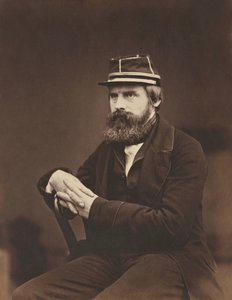
Roger Fenton
1819 - 1869 , Inglaterra
Datos clave
- Artistic Movement Or Style: Fotografía Victoriana
- Artists Or Movements Influenced By This Artist: ['Romanticismo']
- Artists Who Influenced This Artist:
- Michel Martin Drolling
- Gustave Courbet
- Date Of Birth: 1819
- Date Of Death: 1869
- Full Name: Roger Fenton
- Nationality: Británico
- Notable Artworks: ['Valle de la Sombra de Muerte']
- Place Of Birth: Lancashire, Inglaterra
Artículos relacionados

Monochrome Visions: Exploring the Aesthetic & Historical Significance of Black & White Photography
Explore the rich history & artistic power of black and white photography. From early techniques to iconic masters like Ansel Adams, discover why monochrome continues to captivate art lovers today. Expert insights for collectors.
Beyond the Lens: Photography's Enduring Influence on Modern & Contemporary Art
Explore photography's pivotal role in shaping modern & contemporary art. Discover key movements, influential artists like Stieglitz, and expert collecting advice from ArtsDot.
Witnessing History Through Lens & Light: Documentary Photography's Enduring Legacy
Explore the powerful history of documentary photography – from its origins to contemporary masters like Gordon Parks & W. Eugene Smith. Discover how this art form shapes our understanding of society and witness pivotal moments in time.

Las 10 Pinturas Más Famosas Dominadas por el Negro | Arte y Decoración
Descubre las 10 pinturas más impactantes dominadas por el negro. Explora obras maestras de Rembrandt, Goya y Rothko, su historia y significado. Encuentra reproducciones de arte exclusivas para transformar tu hogar en .
Pictorialismo: La Búsqueda del Alma de la Fotografía Artística – Estética, Técnicas y Legado
Descubre el Pictorialismo, un movimiento clave en la historia de la fotografía artística. Explora sus técnicas, figuras emblemáticas y su legado perdurable. Guía experta para coleccionistas y amantes del arte.

