


 Ver en contexto
 Enviar
 Compartir
 Detalles

 Descargar
 Similares
 Radiografía
 Presentación de diapositivas
Na planie zdjęciowym filmu TV
 Contemporary Realism
 1988
1988 15.0 x 24.0 cm
 Fundación de Arte Contemporáneo In Situ
 Ver más
Adquiera una imagen digital de alta resolución y optimizada, muy superior a la vista previa en línea.
Cada archivo es preparado meticulosamente por nuestros especialistas internos mediante el uso de herramientas avanzadas y un experto retoque manual. Nos aseguramos de que cada imagen posea una claridad excepcional, una precisión cromática impecable y un detalle minucioso.
El archivo final se entrega por correo electrónico en un plazo de 72 horas, optimizado para su uso inmediato en entornos profesionales, editoriales y de impresión. Esta es la misma calidad en la que confían los estudios de diseño, las editoriales y las galerías de primer nivel.
Imagen Digital
Descarga un archivo de alta resolución para exhibición personal, impresión y proyectos creativos. ( Comprar impresión Comprar pintura hecha a mano)
Incluido en cada pedido de imágenes digitales
Entrega digital experta, garantizada.
Al elegir ArtsDot.com, no solo está adquiriendo una imagen; está recibiendo una obra de arte digital mejorada profesionalmente, elaborada con precisión y respaldada por una garantía de satisfacción. Esto es todo lo que incluye su pedido, automáticamente:

Entrega rápida por email
Recibirá su archivo de imagen digital en alta resolución por correo electrónico en un plazo de 72 horas tras realizar su pedido, listo para su uso inmediato.

Archivo digital optimizado por IA
Su obra de arte se optimiza profesionalmente mediante herramientas avanzadas de IA y edición manual, garantizando el máximo detalle, claridad y precisión cromática.

Reenvío gratuito de por vida
¿Has borrado o perdido tu archivo por error? No te preocupes: te lo volveremos a enviar en cualquier momento, sin coste adicional.

Sin gastos de importación, siempre
Disfrute de su obra de arte al instante sin aduanas, aranceles ni gastos de envío; las descargas digitales siempre están libres de impuestos.

Garantía de fidelidad de color
Garantizamos que su imagen digital refleje los colores originales con la mayor fidelidad posible, mediante el uso de herramientas profesionales y gestión del color.

Garantía de satisfacción de 60 días
Si no está satisfecho con su imagen digital, la revisaremos o le reembolsaremos el 100% en un plazo de 60 días, sin preguntas.

100% Garantía de devolución de dinero
¿No está satisfecho? Obtenga un reembolso completo dentro de los 60 días posteriores a la recepción de su archivo digital, sin necesidad de explicaciones.

Descuentos por pedidos grandes
Compra 3 imágenes, ahorra 10% - Compra 5, ahorra 15% - Compra 10+, ahorra 20%. Ideal para proyectos creativos, galerías y agencias.
Obras relacionadas
Biografía del artista
Romuald Pieńkowski: Capturing the Ephemeral Dance of Film
Romuald Pieńkowski, a name perhaps less familiar to the general public than some of his contemporaries, stands as a quietly profound observer of modern life. Born in Drohiczyn, Poland, in 1927, he dedicated his artistic career to documenting the fleeting moments and vibrant energy of film sets and television studios – spaces often unseen by the casual viewer yet brimming with creative intensity. Pieńkowski’s work isn't about grand narratives or heroic figures; instead, it offers intimate glimpses into the process of creation, revealing the human drama unfolding behind the camera lens.
His early life was shaped by a strong family tradition in art and photography. While details remain somewhat sparse, it is known that he initially pursued studies in architecture before gravitating towards visual arts. This background undoubtedly informed his meticulous approach to composition and his keen eye for detail – qualities that would become hallmarks of his distinctive style. Pieńkowski’s career truly took off during the 1960s and 70s, a period of significant artistic experimentation and social change in Poland. He quickly established himself as a reliable and insightful photographer on numerous film productions, including landmark works like Jerzy Hoffman's ‘The Deluge’ (1974) and ‘Colonel Wołodyjowski’ (1969).
A World Within a Frame: The Subject Matter of Pieńkowski’s Work
Pieńkowski’s photographs are not simply snapshots; they're carefully constructed narratives. He wasn’t interested in the finished product, but rather in the raw energy and collaborative spirit of the filmmaking process. His subjects were the crew – the directors, cinematographers, actors, assistants, and technicians – immersed in their work, caught in moments of intense concentration, playful banter, or quiet anticipation. He frequently photographed scenes during setup, rehearsals, and even on set during filming, capturing the atmosphere of a production as it unfolded. The resulting images are rich with texture, light, and shadow, reflecting both the technical aspects of filmmaking and the human element at its core.
A recurring motif in Pieńkowski’s work is the use of black and white photography. This choice lends an immediacy and timelessness to his images, stripping away distractions and focusing attention on form, light, and emotion. The stark contrast emphasizes the physicality of the subjects – their hands, faces, and clothing – creating a powerful visual impact. His photographs often evoke a sense of nostalgia, transporting the viewer back to a specific time and place—typically mid-20th century Poland—while simultaneously capturing the universal experience of creative endeavor.
The Influence of ‘The Deluge’ and Beyond
Pieńkowski's contribution to Jerzy Hoffman’s adaptation of Henryk Sienkiewicz’s epic novel, 'The Deluge,' is particularly noteworthy. The film itself was a challenging undertaking, beset by production difficulties and critical scrutiny. Pieńkowski’s photographs, however, offer a compelling counterpoint to the finished product, revealing the behind-the-scenes struggles and triumphs of the filmmaking team. His images document the intense debates, creative compromises, and sheer determination required to bring such an ambitious project to life.
Beyond ‘The Deluge,’ Pieńkowski continued to work on numerous film productions throughout his career, documenting a wide range of genres and styles. His photographs provide invaluable insights into the history of Polish cinema, offering a visual record of the people and processes that shaped its evolution. His ability to capture the essence of a moment—the quiet intensity of an actor’s gaze, the focused concentration of a director at work—makes his images enduringly captivating.
A Legacy of Observation
Romuald Pieńkowski passed away in 1995, leaving behind a remarkable body of work that offers a unique perspective on the world of film. His photographs are not merely technical records; they’re intimate portraits of human creativity and collaboration. They remind us that even in the most complex and demanding environments, there is always beauty to be found—in the fleeting moments of connection, the shared passion for art, and the enduring spirit of those who bring stories to life on screen.
His work continues to be exhibited and studied, solidifying his place as a significant figure in Polish photography and a keen observer of the human drama unfolding behind the camera lens. Pieńkowski’s legacy lies not only in the images he captured but also in the way he invited us to see—and appreciate—the unseen world of filmmaking.
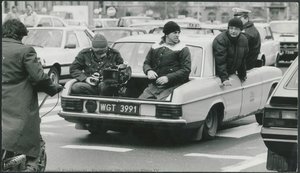
romuald pieńkowski
Poland
Breves datos
- Artistic Movement Or Style: Contemporary visual art
- Full Name: Romuald Pieńkowski
- Nationality: Polish
- Notable Artworks: ['Na planie zdjęciowym filmu TV']
- Place Of Birth: Drohiczyn, Poland

