 Ver en contexto
 Enviar
 Compartir
 Detalles

 Descargar
 Similares
 Radiografía
 Presentación de diapositivas
 Estadísticas
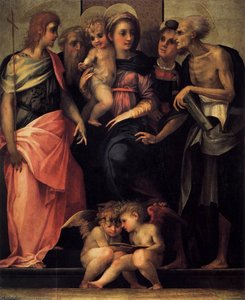
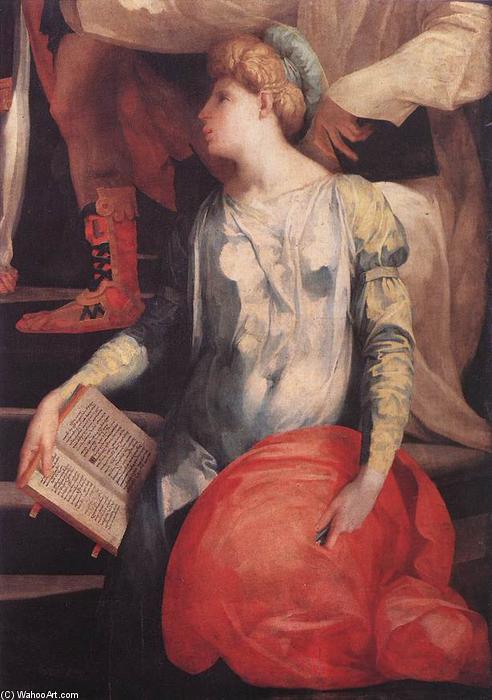
Marriage of the Virgin (detail)


 Ver más
Reproducción al óleo hecha a mano
Óleo sobre lienzo pintado a mano en el tamaño y marco de su elección, realizado por encargo por nuestros artistas. ( Cambiar a Impresión Cambiar a imagen digital)




P118B $10

P118H $10

P118W $10

P438Z $10

P508JH $12

P508YH $12

P805H $10

P805Z $10

P919BZ $10

P919G $10

P919XJ $10

P959ZH $10

P968JZ $12

W106C $8

W218G $10

W218JH $8

W218Y $10

W307PJ $10

W316G $10

W316PJ $8

W316Y $10

W398PJ $8

W4111J $10

W500HY $15

W500JH $15

W692G $12

W849H $8

W940BG $15

W953PJ $8




Elija entre nuestros tamaños predefinidos que respetan las proporciones originales de la obra.

Puede ingresar sus propias dimensiones para adaptarse a un marco o espacio específico. Si el tamaño seleccionado no coincide con las proporciones de la imagen original, recortaremos la obra o extenderemos la pintura con elementos adicionales pintados a mano. Se le enviará una maqueta digital para su aprobación antes de comenzar la producción.
Tenga en cuenta que la vista previa en pantalla no refleja el recorte o la extensión reales. Solo la maqueta mostrará con precisión la composición final.
Si bien existen tamaños personalizados, recomendamos seleccionar una dimensión de la lista predefinida para preservar las proporciones originales.
Tras realizar el pedido, el equipo de ArtsDot.com enviará un correo electrónico al cliente para solicitar instrucciones y proporcionarle una vista previa del boceto.
Envío a todo el mundo () en 3-4 semanas en lugar de las 5 semanas estándar. (13 septiembre). Sin comprometer la calidad.

Envío exprés gratuito a todo el mundo

Lienzo de lino de alta calidad

Seguro de envío total

Garantía de reembolso de impuestos aduaneros

Garantía de fidelidad cromática exacta

Política de devolución de 100 días (solo por defectos)

Garantía de devolución del 100% del dinero

Descuento por cantidad
 La opción de vidrio solo está disponible en tamaños inferiores a 110 cm.

Marriage of the Virgin (detail)
Técnica de reproducción
Dimensiones de la reproducción
-


Precio total final
$ 263
The Marriage of the Virgin: A Dance of Shadow and Light in Florentine Mannerism
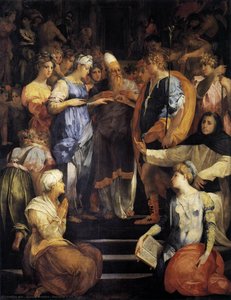
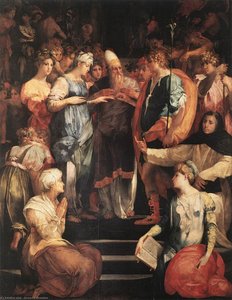
Rosso Fiorentino’s “Marriage of the Virgin,” painted circa 1523, isn't merely a depiction of a biblical scene; it’s a profound exploration of human emotion and spiritual transformation, rendered with the unsettling beauty characteristic of Florentine Mannerism. This intimate panel, once part of the magnificent cycle adorning the chapel of San Lorenzo in Florence, captures a pivotal moment – not the grand ceremony itself, but the quiet contemplation that precedes it. The painting’s power lies not in idealized perfection, but in its deliberate ambiguity and masterful manipulation of light and shadow, creating an atmosphere thick with psychological depth.
The scene unfolds within a richly detailed interior, reminiscent of a Florentine palazzo rather than a sacred space. Columns, arches, and a receding perspective draw the eye into the room, while the muted palette – dominated by ochres, browns, and deep reds – contributes to a sense of subdued drama. The central figure, a young woman seated on a crimson cushion, is not overtly pious but possesses an air of thoughtful melancholy. Her gaze is directed downwards, lost in her own thoughts as she holds an open book—a subtle symbol of knowledge and contemplation, yet also hinting at the weight of expectation and perhaps even sorrow. Her attire, a simple blue garment adorned with delicate white flowers, speaks to both humility and grace.
The Language of Mannerism: Distortion and Emotion
Rosso Fiorentino’s style is deeply rooted in the principles of Mannerism, a movement that emerged in Florence during the High Renaissance. Unlike the classical harmony and balance favored by Leonardo da Vinci and Raphael, Mannerist artists prioritized emotional intensity, stylized forms, and an exploration of psychological states. In “Marriage of the Virgin,” this manifests in several ways. The figures are elongated and distorted, their proportions subtly skewed to heighten their expressiveness. The drapery is rendered with a theatrical flair, swirling and cascading around the figures as if caught in a perpetual dance. This deliberate distortion isn’t intended to deceive; rather, it serves to amplify the emotional impact of the scene.
The use of *chiaroscuro*, the dramatic contrast between light and shadow, is particularly striking. Rosso Fiorentino masterfully employs this technique to sculpt the figures, creating a sense of volume and depth while simultaneously obscuring details and suggesting hidden emotions. The strong directional lighting focuses attention on the central figure, drawing the viewer into her inner world. Notice how the shadows cling to her face, hinting at a quiet sadness or perhaps a premonition of future challenges.
Symbolism and Context: A Window into Renaissance Thought
The painting’s symbolism is layered and complex, inviting multiple interpretations. The open book represents not just learning but also faith—a call to contemplation and spiritual understanding. The presence of the male figure in the background, dressed in yellow and red, suggests a paternal role, perhaps representing Joseph or another guardian figure. However, his detached expression and averted gaze hint at a certain distance, reflecting the complexities of familial relationships within Renaissance society.
“Marriage of the Virgin” was created during a period of significant political and religious upheaval in Florence. The Medici family’s power was waning, and the city was grappling with the challenges posed by the Reformation. Rosso Fiorentino's work reflects this atmosphere of uncertainty and anxiety, capturing a sense of vulnerability and introspection that resonates deeply with viewers today. It is believed to have been commissioned as part of a larger cycle depicting scenes from the life of Mary, intended to adorn the chapel of San Lorenzo – a space central to Florentine religious life.
A Legacy of Emotional Resonance
Despite its relatively small size, “Marriage of the Virgin” possesses an extraordinary emotional resonance. Rosso Fiorentino’s masterful use of light, shadow, and distorted forms creates a world that is both beautiful and unsettling, inviting viewers to contemplate the complexities of human experience. The painting's enduring appeal lies in its ability to capture not just a biblical narrative but also the universal themes of love, loss, faith, and doubt—themes that continue to resonate with audiences centuries later. Reproductions of this captivating work offer a powerful connection to the artistic genius of the Renaissance, allowing us to experience firsthand the profound emotional depth of Rosso Fiorentino’s vision.
Obras relacionadas

Biografía del artista
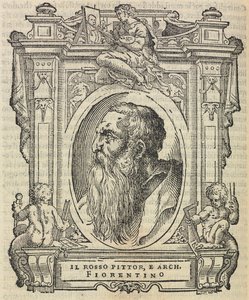
Rosso Fiorentino: Una Biografía
- Nombre: Rosso Fiorentino (Giovanni Battista di Jacopo)
- Nacido: 8 de marzo de 1495, Florencia, Italia
- Fallecido: 14 de noviembre de 1540, Fontainebleau, Francia
Primeros Años y Formación
- Rosso Fiorentino, cuyo nombre se traduce como "Rojo Florentino" debido a su distintivo cabello rojizo, comenzó su viaje artístico en Florencia.
- Recibió su formación inicial dentro del estimado taller de Andrea del Sarto, una figura destacada en la pintura del Renacimiento florentino.
- Este período lo colocó junto a otro artista prominente de la época, Pontormo, fomentando un entorno compartido de exploración y desarrollo artístico.
- La influencia de la escuela florentina de pintura durante estos años formativos moldeó significativamente su estilo futuro.
Estilo Artístico e Influencias
- El trabajo de Rosso Fiorentino se caracteriza por su intensidad dramática, el uso audaz del color y la expresión emocional impactante.
- Con frecuencia incorporaba autorretratos en sus composiciones, a menudo representándose a sí mismo como una figura clave dentro de la narrativa.
- El artista estuvo fuertemente influenciado por las obras de Miguel Ángel y Rafael, evidente particularmente en su dominio del claroscuro – la técnica de usar fuertes contrastes entre luz y oscuridad para crear profundidad y volumen.
- Su estilo se considera parte del movimiento manierista, que surgió en el siglo XVI como una reacción contra la Énfasis del Alto Renacimiento en el equilibrio y la armonía. El manierismo favorecía las formas alargadas, las perspectivas distorsionadas y la emocionalidad intensificada.
Obras Notables y Logros
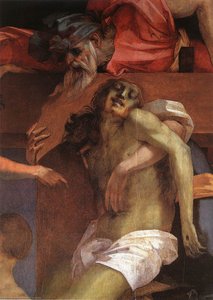
- La Deposición: Considerada una de las obras maestras de Rosso Fiorentino, esta pintura ejemplifica su estilo único a través de su iluminación dramática y su representación cargada de emoción de la escena.
- Elefante, Château de Fontainebleau: Este trabajo muestra su capacidad para capturar la esencia de sus sujetos con un detalle y realismo notables. También destaca su posterior carrera trabajando en Francia.
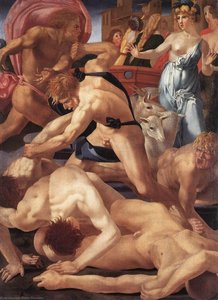
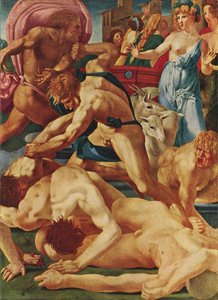
- Moisés y las Hijas de Jetro: Demuestra una composición compleja y profundidad emocional característica de su estilo maduro.
- Sus contribuciones a la decoración del Château de Fontainebleau fueron significativas, aunque trágicamente interrumpidas por su muerte prematura.
Legado y Significado Histórico
- La influencia de Rosso Fiorentino se extendió más allá de su vida, impactando a generaciones posteriores de artistas.
- Francesco Primaticcio, que lo sucedió como el artista líder en el Château de Fontainebleau, fue notablemente influenciado por el estilo de Rosso.
- Su trabajo jugó un papel crucial en el desarrollo y la popularización del manierismo, contribuyendo a su énfasis en la expresión dramática y la innovación artística.
- Las pinturas de Rosso Fiorentino se pueden encontrar en varios museos y colecciones de todo el mundo, incluyendo la Galleria Nazionale d'Arte Moderna e Contemporanea en Roma.
Rosso Fiorentino
1495 - 1540 , Italia
Datos clave
- Artistas Influenciados: ['Francesco Primaticcio']
- Artistas Influyentes:
- Miguel Ángel
- Rafael
- Andrea del Sarto
- Fecha De Fallecimiento: 14 de noviembre de 1540
- Fecha De Nacimiento: 8 de marzo de 1495
- Lugar De Nacimiento: Florencia, Italia
- Movimiento Artístico: Manierismo
- Nacionalidad: Italiana
- Nombre Completo: Rosso Fiorentino (Giovanni Battista)
- Obras Notables:
- La Deposición
- Elefante, Fontainebleau
- Moisés y las hijas de Jetro
- Piedad
- Ignudo
Artículos relacionados
El Crepúsculo del Clasicismo Renacentista: Un Estudio del Estilo y la Afectación en el Manierismo
Descubre el Manierismo: un análisis profundo de este fascinante estilo artístico del Renacimiento tardío. Explora sus características, artistas clave y legado con ArtsDot.
Renaissance Mannerism: Style, Subtlety & the Transition from Harmony to Artifice
Explore the captivating world of Renaissance Mannerism! Discover its key characteristics, pioneering artists like Pontormo & Bronzino, and its pivotal role in art history. Expert insights & museum-quality reproductions at ArtsDot.
The Dramatic Dialogue: Baroque Mannerism & the Synthesis of Emotion, Form, and Artistic Rebellion
Explore the dramatic world of Baroque Mannerism! Discover its history, iconic artists like Rubens & El Greco, and lasting influence on art. Expert insights for collectors & enthusiasts at ArtsDot.
Domenico Beccafumi: A Sienese Master Between Mannerism & Baroque Anticipation
Explore the captivating world of Domenico Beccafumi, a pivotal figure bridging Mannerism & Baroque art. Discover his unique style, religious masterpieces, and lasting legacy with ArtsDot.
Mannerismo: 10 Obras Maestras que Definieron un Estilo Revolucionario | ArtsDot.com
Descubre las 10 obras maestras del Mannerismo: Pontormo, El Greco y más. Explora la elegancia renacentista, figuras alargadas y paletas vibrantes de este movimiento artístico único. Reproducciones de arte exclusivas en ArtsDot.com.