 Ver en contexto
 Enviar
 Compartir
 Detalles

 Descargar
 Similares
 Radiografía
 Presentación de diapositivas
Girl at piano


 Ver más
Reproducción al óleo hecha a mano
Óleo sobre lienzo pintado a mano en el tamaño y marco de su elección, realizado por encargo por nuestros artistas. ( Comprar impresión Comprar imagen)




P118B $10

P118H $10

P118W $10

P438Z $10

P508JH $12

P508YH $12

P805H $10

P805Z $10

P919BZ $10

P919G $10

P919XJ $10

P959ZH $10

P968JZ $12

W106C $8

W218G $10

W218JH $8

W218Y $10

W307PJ $10

W316G $10

W316PJ $8

W316Y $10

W398PJ $8

W4111J $10

W500HY $15

W500JH $15

W692G $12

W849H $8

W940BG $15

W953PJ $8




Elija entre nuestros tamaños predefinidos que respetan las proporciones originales de la obra.

Puede ingresar sus propias dimensiones para adaptarse a un marco o espacio específico. Si el tamaño seleccionado no coincide con las proporciones de la imagen original, recortaremos la obra o extenderemos la pintura con elementos adicionales pintados a mano. Se le enviará una maqueta digital para su aprobación antes de comenzar la producción.
Tenga en cuenta que la vista previa en pantalla no refleja el recorte o la extensión reales. Solo la maqueta mostrará con precisión la composición final.
Si bien existen tamaños personalizados, recomendamos seleccionar una dimensión de la lista predefinida para preservar las proporciones originales.
Tras realizar el pedido, el equipo de ArtsDot.com enviará un correo electrónico al cliente para solicitar instrucciones y proporcionarle una vista previa del boceto.
Envío a todo el mundo () en 3-4 semanas en lugar de las 5 semanas estándar. (30 agosto). Sin comprometer la calidad.

Envío exprés gratuito a todo el mundo

Lienzo de lino de alta calidad

Seguro de envío total

Garantía de reembolso de impuestos aduaneros

Garantía de fidelidad cromática exacta

Política de devolución de 60 días (solo por defectos)

Garantía de devolución del 100% del dinero

Descuento por cantidad
 La opción de vidrio solo está disponible en tamaños inferiores a 110 cm.

Girl at piano
Técnica de reproducción
Dimensiones de la reproducción
-


Precio total final
$ 263
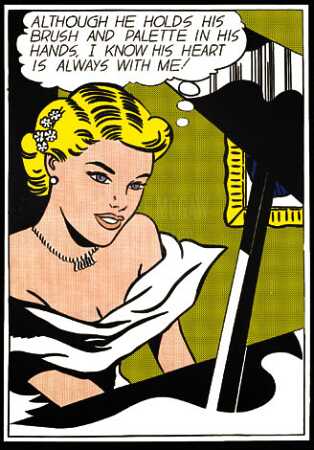
A Moment of Contemplation: Roy Lichtenstein's "Girl at Piano"
Roy Lichtenstein’s “Girl at Piano,” created in 1963, is more than just a comic book illustration; it’s a carefully constructed meditation on emotion and the burgeoning influence of Pop Art. The image depicts a woman seated before a piano, her hands delicately poised above the keys as if lost in profound thought. This seemingly simple composition immediately draws the viewer into a world of introspection, a core theme within Lichtenstein's oeuvre. The stark black background dramatically isolates the figure, intensifying the sense of solitude and encouraging focused attention on her expressive posture.
- Subject Matter: The central subject – a woman at a piano – is deliberately chosen to evoke feelings of nostalgia, artistic expression, and perhaps even melancholy. It’s a familiar image, readily associated with domesticity and the pursuit of beauty, yet Lichtenstein transforms it through his signature style.
- Style & Technique: This piece exemplifies Lichtenstein's groundbreaking approach to Pop Art. He employs a technique he termed “Ben-Day dots,” meticulously recreating the look of commercial printing – specifically comic book illustrations – using thousands of small colored dots. This creates a vibrant, almost tactile surface that adds depth and visual interest while simultaneously distancing the image from traditional representational painting.
The Genesis of a Pop Visionary: Lichtenstein's Context
Born in Manhattan in 1923, Roy Lichtenstein’s artistic journey was shaped by a unique confluence of influences. His upbringing within an affluent Jewish family exposed him to the cultural richness of New York City and fostered a deep appreciation for art and music – particularly jazz. This early exposure, combined with his formal training at the Art Students League and Ohio State University, provided him with a solid foundation in drawing and painting before he embraced the radical experimentation that would define his career. The post-war era, marked by consumerism and mass media, was fertile ground for Lichtenstein’s ideas; he sought to elevate these everyday images – comic books, advertising – to the level of fine art, challenging the established hierarchies of the art world.
- Pop Art Movement: “Girl at Piano” is a quintessential example of Pop Art's engagement with popular culture. Lichtenstein deliberately borrowed techniques and imagery from commercial illustration, rejecting the perceived elitism of Abstract Expressionism.
- Ben-Day Dots: The use of Ben-Day dots was revolutionary, mimicking the printing process and creating a distinctive visual effect that became synonymous with Lichtenstein’s work.
Symbolism and Emotional Impact
While seemingly straightforward, “Girl at Piano” is rich in symbolic potential. The woman's posture – hands resting on her face – suggests contemplation, perhaps even sadness or regret. The piano itself represents artistic expression and the ability to translate emotions into tangible form. The presence of two secondary figures adds a layer of narrative complexity, hinting at an unspoken story and inviting the viewer to complete the scene in their own imagination. The overall effect is one of quiet intensity, capturing a fleeting moment of vulnerability and introspection. Lichtenstein masterfully uses color and technique to evoke a powerful emotional response, transforming a simple image into a profound statement about human experience.
- Color Palette: The limited color palette – primarily blues, blacks, and whites – contributes to the piece’s somber mood and emphasizes the graphic quality of the Ben-Day dots.
- Composition: The carefully balanced composition draws the eye directly to the central figure, reinforcing her importance as the focal point of the artwork.
Obras relacionadas

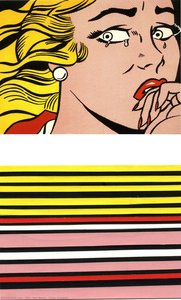
Biografía del artista
vida temprana y educación
Roy Fox Lichtenstein, un destacado artista pop estadounidense, nació el 27 de octubre de 1923 en la ciudad de Nueva York. Creció en una familia judía de clase media alta, con su padre como corredor de bienes raíces y su madre como ama de casa. El interés de Lichtenstein por el arte y el diseño comenzó como un pasatiempo durante sus años escolares.Carrera artística
Después de completar su educación secundaria en la Dwight School en 1940, Lichtenstein asistió a la Art Students League of New York bajo la tutela de Reginald Marsh. Luego continuó con una licenciatura en artes visuales de la Universidad de Ohio, que fue interrumpida por un servicio militar de tres años durante la Segunda Guerra Mundial.- Look Mickey (1961, Galería Nacional de Arte, Washington D.C.), una de las primeras obras pop art de Lichtenstein, marcó el comienzo de su influyente carrera.
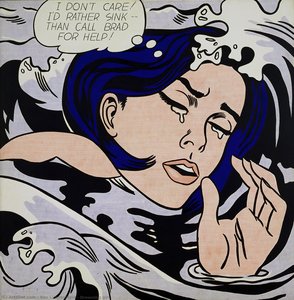
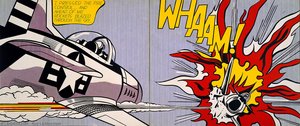
- Su trabajo estuvo fuertemente influenciado por los estilos de publicidad y cómics populares, con obras notables como Wham!, Drowning Girl y Oh, Jeff... I love you too... but...
- La obra más cara de Lichtenstein, Masterpiece, se vendió por 165 millones de dólares en enero de 2017.
Enseñanza e influencias
Lichtenstein enseñó en varias instituciones, incluyendo la Universidad Estatal de Nueva York en Oswego y la Universidad Rutgers. Su trabajo fue influenciado por Allan Kaprow, un colega profesor en Rutgers, lo que reavivó su interés en las imágenes proto-pop. Exposiciones notables:- The Museum Chambre de Commerce (Tolosa, Francia), que presentaba varias obras de arte, incluyendo aquellas del movimiento pop art.
- El trabajo de Lichtenstein fue exhibido en la Leo Castelli Gallery en la ciudad de Nueva York, con su primera exposición individual en 1962 siendo comprada por completo por coleccionistas influyentes antes de que abriera.
Legado e impacto
Roy Lichtenstein falleció el 29 de septiembre de 1997, dejando atrás un legado como figura destacada del movimiento pop art. Su obra continúa siendo celebrada por su innovadora mezcla de arte alto y bajo, haciendo que sea accesible a una audiencia más amplia.- Explore más obras de Lichtenstein en ArtsDot.com
- Descubra el mundo del pop art y sus influyentes artistas en Pop Art y más allá: navegando los estilos contemporáneos con ArtsDot.com

Roy Lichtenstein
1923 - 1997 , Estados Unidos de América
Datos clave
- Artistas Que Influyeron:
- Reginald Marsh
- Allan Kaprow
- Fecha De Muerte: 29 de septiembre de 1997
- Fecha De Nacimiento: 27 de octubre de 1923
- Lugar De Nacimiento: Manhattan, EE. UU.
- Movimiento Artístico: Pop Art
- Nacionalidad: Estadounidense
- Nombre Completo: Roy Lichtenstein
- Obras Notables:
- Look Mickey
- Whaam!
- Drowning Girl
- Masterpiece
Artículos relacionados
Roy Lichtenstein: Las 25 Obras Maestras del Pop Art que Transformaron el Arte y la Decoración
Descubre las 25 obras maestras de Roy Lichtenstein, ícono del Pop Art. Explora su innovadora técnica, colores vibrantes y el impacto cultural de sus cuadros más famosos. Reproducciones de arte exclusivas en ArtsDot.com.
Los 10 Maestros del Pop Art: Obras Icónicas para Decorar con Estilo
Descubre los 10 iconos del Pop Art: Warhol, Lichtenstein y más. Explora la historia, técnica y significado de estas obras maestras que revolucionaron el arte moderno. Encuentra reproducciones exclusivas en .

Tactile Maximalism: The Expert Guide to Styling Bold Pop Art for Dopamine Decor Interiors
Master the art of Dopamine Decor with our expert guide to Tactile Maximalism. Learn how to professionally style bold Pop Art through texture, color theory, and curated layers to create a joyful, high-end interior that inspires.
The Psychology of the Palette: Decoding Roy Lichtenstein’s Bold Color Theory
Explore the vibrant psychology behind Roy Lichtenstein’s color theory. Discover how Ben-Day dots and primary colors revolutionized Pop Art, transforming mass media into timeless masterpieces for modern collectors and interior design enthusiasts.

Giclée Prints: Archival Quality & Aesthetic Nuances for the Discerning Collector
Explore the world of giclée prints with ArtsDot. Learn about archival quality, aesthetic nuances & investment potential. Expert guidance for discerning art collectors seeking museum-quality reproductions and lasting value.