

 Ver en contexto
 Enviar
 Compartir
 Detalles

 Descargar
 Similares
 Radiografía
 Presentación de diapositivas
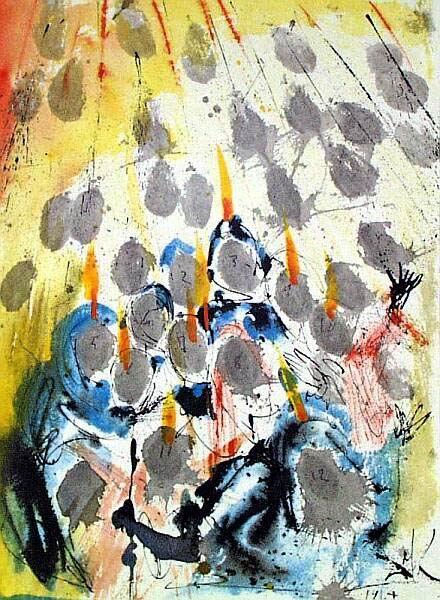
Apparuerunt Illis Dispertitae Linguae (Acts 1:14)


 Ver más
Adquiera una imagen digital de alta resolución y optimizada, muy superior a la vista previa en línea.
Cada archivo es preparado meticulosamente por nuestros especialistas internos mediante el uso de herramientas avanzadas y un experto retoque manual. Nos aseguramos de que cada imagen posea una claridad excepcional, una precisión cromática impecable y un detalle minucioso.
El archivo final se entrega por correo electrónico en un plazo de 72 horas, optimizado para su uso inmediato en entornos profesionales, editoriales y de impresión. Esta es la misma calidad en la que confían los estudios de diseño, las editoriales y las galerías de primer nivel.
Imagen Digital
Descarga un archivo de alta resolución para exhibición personal, impresión y proyectos creativos. ( Comprar impresión Comprar pintura hecha a mano)
Incluido en cada pedido de imágenes digitales
Entrega digital experta, garantizada.
Al elegir ArtsDot.com, no solo está adquiriendo una imagen; está recibiendo una obra de arte digital mejorada profesionalmente, elaborada con precisión y respaldada por una garantía de satisfacción. Esto es todo lo que incluye su pedido, automáticamente:

Entrega rápida por email
Recibirá su archivo de imagen digital en alta resolución por correo electrónico en un plazo de 72 horas tras realizar su pedido, listo para su uso inmediato.

Archivo digital optimizado por IA
Su obra de arte se optimiza profesionalmente mediante herramientas avanzadas de IA y edición manual, garantizando el máximo detalle, claridad y precisión cromática.

Reenvío gratuito de por vida
¿Has borrado o perdido tu archivo por error? No te preocupes: te lo volveremos a enviar en cualquier momento, sin coste adicional.

Sin gastos de importación, siempre
Disfrute de su obra de arte al instante sin aduanas, aranceles ni gastos de envío; las descargas digitales siempre están libres de impuestos.

Garantía de fidelidad de color
Garantizamos que su imagen digital refleje los colores originales con la mayor fidelidad posible, mediante el uso de herramientas profesionales y gestión del color.

Garantía de satisfacción de 60 días
Si no está satisfecho con su imagen digital, la revisaremos o le reembolsaremos el 100% en un plazo de 60 días, sin preguntas.

100% Garantía de devolución de dinero
¿No está satisfecho? Obtenga un reembolso completo dentro de los 60 días posteriores a la recepción de su archivo digital, sin necesidad de explicaciones.

Descuentos por pedidos grandes
Compra 3 imágenes, ahorra 10% - Compra 5, ahorra 15% - Compra 10+, ahorra 20%. Ideal para proyectos creativos, galerías y agencias.
A Vision of Tongues: Decoding Dalí’s ‘Apparuerunt Illis Dispertitae Linguae (Acts 1:14)’
Salvador Dalí, a name synonymous with the surreal and the startling, gifted the art world with a body of work that continues to challenge perceptions and ignite imaginations. Among his most intriguing creations is “Apparuerunt Illis Dispertitae Linguae (Acts 1:14)”, painted in 1967—a piece deeply rooted in biblical narrative yet rendered through the uniquely distorted lens of Dalí’s artistic vision. The painting draws its title from the New Testament, specifically Acts 1:14, describing the moment after Christ's ascension when the apostles, gathered with Mary, are filled with the Holy Spirit and begin to speak in tongues. However, Dalí doesn’t offer a literal depiction of this event; instead, he presents a hauntingly beautiful abstraction that invites contemplation on faith, communication, and the very nature of divine experience. The canvas is dominated by a luminous yellow backdrop, reminiscent of both celestial light and the arid landscapes of Dalí’s native Catalonia. Before this radiant field stand figures suspended in an ambiguous space—not quite floating, not quite grounded—their forms elongated and subtly distorted. They are bathed in an ethereal glow, creating an impression of weightlessness and spiritual elevation.The Language of Dreams: Surrealism and Religious Symbolism
To understand “Apparuerunt Illis Dispertitae Linguae,” one must first acknowledge Dalí’s unwavering commitment to Surrealism. This artistic movement, born in the aftermath of World War I, sought to unlock the power of the unconscious mind, believing it held a deeper truth than rational thought. Dalí embraced this philosophy wholeheartedly, employing dreamlike imagery and illogical juxtapositions to create works that bypassed conscious understanding and spoke directly to the subconscious. In this painting, the floating figures embody this surreal quality—they are recognizably human yet exist in a realm unbound by gravity or conventional perspective. The absence of clear spatial relationships contributes to the unsettling yet captivating atmosphere. However, Dalí wasn’t merely interested in shock value; he often infused his Surrealist explorations with religious symbolism. Here, the biblical source material provides a framework for exploring themes of divine revelation and the transformative power of faith. The “tongues” referenced in the title aren’t necessarily literal speech but rather represent an outpouring of spiritual energy—a breaking down of barriers to communication between humanity and the divine. The candles scattered throughout the composition, flickering like beacons in the ethereal light, further reinforce this sense of sacredness and illumination.Technique and Texture: Dalí’s Masterful Brushwork
Dalí’s technical prowess is on full display in “Apparuerunt Illis Dispertitae Linguae.” While often associated with meticulous detail, here he employs a looser, more fluid brushstroke that contributes to the painting’s dreamlike quality. The figures are rendered with subtle gradations of light and shadow, creating a sense of volume and depth despite their distorted forms. The yellow background isn’t a flat expanse of color but rather a carefully modulated field of tones, suggesting an infinite space beyond human comprehension. Dalí’s mastery of oil paint allows him to create textures that are both smooth and subtly rough, adding another layer of complexity to the work. This isn’t simply a painting; it’s an exercise in atmospheric perspective and emotional resonance achieved through masterful control of materials.A Lasting Legacy: The Enduring Appeal of Dalí’
“Apparuerunt Illis Dispertitae Linguae (Acts 1:14)” stands as a testament to Salvador Dalí’s enduring genius—his ability to seamlessly blend religious iconography, psychological insight, and technical brilliance. The painting’s power lies not in its literal representation of the biblical story but in its evocation of the *feeling* of spiritual awakening. It invites viewers to contemplate their own beliefs, their own experiences of faith, and the mysteries that lie beyond the realm of rational understanding. For collectors and interior designers alike, a reproduction of this work offers more than just aesthetic appeal; it provides a conversation starter, a focal point for contemplation, and a window into the fascinating world of Surrealism. It’s a piece that transcends time and trends, continuing to resonate with audiences decades after its creation—a true masterpiece of 20th-century art.- Artist: Salvador Dalí
- Birth Year: 1904
- Death Year: 1989
- Birth City: Figueres
- Birth Country: Spain
Explore the profound influence of Surrealism on Dalí's artistic vision. Discover how his exploration of dreams and subconscious imagery aligns with key tenets of this groundbreaking movement.
Delve into the biblical narrative underpinning “Apparuerunt Illis Dispertitae Linguae,” examining its symbolism as a representation of divine revelation and spiritual transformation.
Analyze Dalí’s masterful technique—specifically his use of oil paint and loose brushstrokes—to understand how he achieved the painting's ethereal atmosphere and textural richness.
Obras relacionadas
Biografía del artista
Salvador Dalí: Una Vida en el Surrealismo
Salvador Domingo Felipe Jacinto Dalí i Domènech, Marqués de Dalí de Púbol, conocido globalmente como Salvador Dalí, fue un pintor surrealista español nacido el 11 de mayo de 1904 en Figueres, España. Falleció el 23 de enero de 1989, dejando un legado que continúa cautivando y desafiando a audiencias de todo el mundo.
Vida Temprana y Educación
La vida temprana de Dalí estuvo marcada por una compleja relación con su padre, lo que influyó profundamente en sus temas artísticos y su personalidad. Demostró talento artístico desde joven, recibiendo formación formal en la Academia de Bellas Artes de San Fernando en Madrid. Un momento crucial ocurrió a los 16 años cuando descubrió la pintura moderna, provocando un intenso interés que condujo a su primera exposición pública en 1919.
Desarrollo Artístico e Influencias
El viaje artístico de Dalí fue una evolución dinámica moldeada por varias influencias clave:
- Cubismo: Proporcionó una base para la desconstrucción de formas y perspectivas.
- Dadaísmo: Le introdujo a los principios del arte anti-arte y el desafío a la estética convencional.
- Pablo Picasso: Una figura reverenciada a quien Dalí conoció en París, impactando profundamente su dirección artística.
Su visita de 1926 a París resultó crucial, sumergiéndolo en el floreciente movimiento Surrealista y conectándolo con artistas destacados de la época. Rápidamente se convirtió en una figura central dentro del grupo.
El Auge del Surrealismo y el Estilo Único de Dalí
La contribución de Dalí al Surrealismo no fue solo participación, sino una redefinición radical de sus posibilidades. Desarrolló su método “paranoico-crítico”, que involucraba estados paranoicos autoinducidos para desbloquear imágenes subconscientes y traducirlas en arte. Este enfoque le permitió crear paisajes bizarros e oníricos poblados por relojes derritiéndose, figuras distorsionadas y objetos simbólicos – señuelos de su estilo instantáneamente reconocible.
La Persistencia de la Memoria (1931) es probablemente la obra más famosa de Dalí, encapsulando la exploración surrealista del tiempo, la memoria y el deterioro a través de su icónica imagen.
Obras Maestras y Temas Artísticos
La prolífica carrera de Dalí produjo un vasto cuerpo de trabajo que abarca pintura, escultura, cine (colaboraciones con Alfred Hitchcock y Walt Disney) y diseño. Algunas obras notables incluyen:
- Tumba de Julia – Una exploración profunda de la pérdida y la memoria.
- Mannequin (Maniquí de Barcelona) - Reflejando su fascinación por la artificialidad y la identidad.
- Paisaje con Hormigas – Una representación perturbadora del deterioro y la mortalidad.
- Estudio para 'La Anunciación' – Explorando temas de sexualidad y percepción.
- El Ángelo de Gala - Demostrando una técnica meticulosa y un lenguaje simbólico.
Temas recurrentes en el arte de Dalí incluyen: tiempo, memoria, deterioro, sexualidad, religión, ciencia y la mente subconsciente. Sus obras a menudo presentan hormigas, huevos, andamios, cajones y objetos fundidos – todos imbuidos de significado personal y simbólico.
Años Posteriores y Legado
Dalí continuó creando y exhibiendo su obra durante toda su vida, aunque sus años posteriores estuvieron marcados por una creciente eccentricidad y negocios comerciales. Se casó con Gala Éluard en 1934, una relación que influyó profundamente en su arte y proporcionó un apoyo inquebrantable. Gala sirvió como su musa y gerente de negocios.
Dalí falleció en 1989 a la edad de 84 años. Su legado es inmenso. Sigue siendo uno de los artistas más reconocibles e influyentes del siglo XX, influenciando la moda, el cine, la publicidad y la cultura popular. El Museo Salvador Dalí en St. Petersburg, Florida, alberga una extensa colección, testimonio de su atractivo perdurable.
Significado Histórico
Salvador Dalí trascendió los límites del arte, convirtiéndose en un icono cultural. Su exploración del subconsciente, combinada con su dominio técnico y su personalidad extravagante, aseguró su lugar como un verdadero visionario y maestro del Surrealismo. Continúa inspirando a artistas y cautivando a audiencias de todo el mundo.

Salvador Dalí
1904 - 1989 , España
Breves datos
- Estilo Artístico: Surrealismo
- Fecha De Muerte: 1989
- Fecha De Nacimiento: 1904-05-11
- Influencias Artísticas:
- Cubismo
- Dadaísmo
- Pablo Picasso
- Lugar De Nacimiento: Figueres, España
- Nacionalidad: Española
- Nombre Completo: Salvador Domingo Felipe Jacinto Dalí i Domènech
- Obras Notables:
- La persistencia de la memoria
- Juliet's Tomb
- Mannequin (Barcelona Mannequin)
- Paisaje con hormigas
- El Ángelus de Gala

