

 Ver en contexto
 Enviar
 Compartir
 Detalles

 Descargar
 Similares
 Radiografía
 Presentación de diapositivas
 Estadísticas
Eclipses y Osmosis Vegetal


 Ver más
Adquiera una imagen digital de alta resolución y optimizada, muy superior a la vista previa en línea.
Cada archivo es preparado meticulosamente por nuestros especialistas internos mediante el uso de herramientas avanzadas y un experto retoque manual. Nos aseguramos de que cada imagen posea una claridad excepcional, una precisión cromática impecable y un detalle minucioso.
El archivo final se entrega por correo electrónico en un plazo de 72 horas, optimizado para su uso inmediato en entornos profesionales, editoriales y de impresión. Esta es la misma calidad en la que confían los estudios de diseño, las editoriales y las galerías de primer nivel.
Imagen Digital
Descarga un archivo de alta resolución para exhibición personal, impresión y proyectos creativos. ( Cambiar a Impresión Comprar pintura hecha a mano)
Incluido en cada pedido de imágenes digitales
Entrega digital experta, garantizada.
Al elegir ArtsDot.com, no solo está adquiriendo una imagen; está recibiendo una obra de arte digital mejorada profesionalmente, elaborada con precisión y respaldada por una garantía de satisfacción. Esto es todo lo que incluye su pedido, automáticamente:

Entrega rápida por email
Recibirá su archivo de imagen digital en alta resolución por correo electrónico en un plazo de 72 horas tras realizar su pedido, listo para su uso inmediato.

Archivo digital optimizado por IA
Su obra de arte se optimiza profesionalmente mediante herramientas avanzadas de IA y edición manual, garantizando el máximo detalle, claridad y precisión cromática.

Reenvío gratuito de por vida
¿Has borrado o perdido tu archivo por error? No te preocupes: te lo volveremos a enviar en cualquier momento, sin coste adicional.

Sin gastos de importación, siempre
Disfrute de su obra de arte al instante sin aduanas, aranceles ni gastos de envío; las descargas digitales siempre están libres de impuestos.

Garantía de fidelidad de color
Garantizamos que su imagen digital refleje los colores originales con la mayor fidelidad posible, mediante el uso de herramientas profesionales y gestión del color.

Garantía de satisfacción de 100 días
Si no está satisfecho con su imagen digital, la revisaremos o le reembolsaremos el 100% en un plazo de 100 días, sin preguntas.

100% Garantía de devolución de dinero
¿No está satisfecho? Obtenga un reembolso completo dentro de los 100 días posteriores a la recepción de su archivo digital, sin preguntas.

Descuentos por pedidos grandes
Compra 3 imágenes, ahorra 10% - Compra 5, ahorra 15% - Compra 10+, ahorra 20%. Ideal para proyectos creativos, galerías y agencias.
Salvador Dalí’s “Eclipse and Vegetable Osmosis”: A Descent into Surrealist Dreamscape
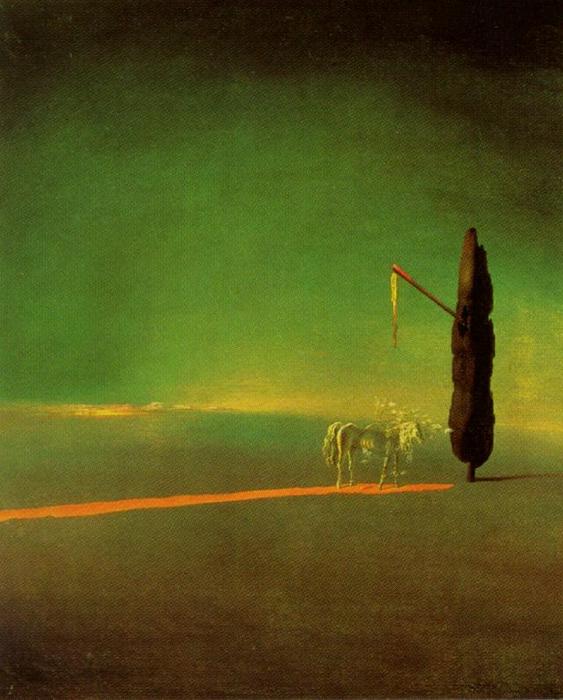
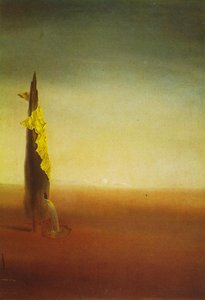
Salvador Dalí's "Eclipse and Vegetable Osmosis," painted in 1934, isn’t merely a landscape; it’s an immersion. This pivotal work from the heart of Dalí’s surrealist period offers a glimpse into the artist’s meticulously constructed inner world—a realm where logic dissolves and the subconscious reigns supreme. More than just a visual representation, it's a carefully orchestrated exploration of perception, time, and the unsettling beauty of decay and rebirth. The painting immediately commands attention with its arresting composition: a stark red path bisects an otherwise desolate scene, leading towards a solitary tree adorned with an umbrella, a symbol of both protection and the unknown. The backdrop—a hazy expanse suggesting either a beach or desert—further amplifies the sense of disorientation and invites the viewer to become an active participant in deciphering its enigmatic narrative.
Contextualizing the Vision: Surrealism and Dalí’s Experimentation
“Eclipse and Vegetable Osmosis” emerged during a period of intense experimentation for Dalí, a time when he was actively pushing the boundaries of artistic expression. Influenced by Cubism's fragmentation of form and Futurism’s embrace of dynamism, Dalí sought to capture not just what *looked* like reality but also the subjective experience of it—the fleeting thoughts, anxieties, and desires that shape our perception. The painting reflects his deep engagement with psychoanalysis, particularly Freud’s theories on dreams and the unconscious mind. The deliberate juxtaposition of seemingly unrelated elements – a horse, an umbrella, a decaying tree – creates a tension that mirrors the unsettling nature of dream imagery. It's a deliberate attempt to bypass rational thought and tap into a deeper, more primal level of understanding.
Symbolism Unveiled: Horses, Umbrellas, and the Path of Transformation
The symbolism within “Eclipse and Vegetable Osmosis” is layered and deliberately ambiguous. The horse, a recurring motif in Dalí’s work, represents strength, power, and even death—a potent symbol of both vitality and vulnerability. Its placement on the red path suggests a journey, perhaps one fraught with challenges and uncertainties. The umbrella, often interpreted as a shield against the anxieties of the unknown, offers a fragile defense against the encroaching darkness of the eclipse. The tree itself is particularly significant; its decaying state hints at mortality and the cyclical nature of life and death, while simultaneously suggesting growth and transformation—a visual metaphor for the passage of time and the enduring spirit of nature. The two figures in the background are thought to represent the observer’s role in interpreting reality, inviting us to actively engage with the painting’s mysteries.
Technique and Artistic Influence: A Masterful Blend
Dalí’s meticulous technique is evident in every detail of “Eclipse and Vegetable Osmosis.” He employed a highly polished, almost photographic realism—a hallmark of his style—to render the surreal elements with startling clarity. The use of vibrant colors, particularly the intense red of the path, draws the eye and intensifies the painting’s emotional impact. Beyond his technical skill, Dalí was deeply influenced by Renaissance masters like Raphael and Leonardo da Vinci, evident in the careful composition and attention to detail. This masterful blend of surrealist concepts with classical artistic principles is what elevates “Eclipse and Vegetable Osmosis” beyond mere fantasy—it's a profound meditation on the nature of reality itself.
A Timeless Masterpiece: Reproduction and its Significance
ArtsDot offers meticulously crafted, hand-painted reproductions of "Eclipse and Vegetable Osmosis," ensuring that the essence of Dalí’s vision is faithfully preserved. These aren’t simply prints; they are works of art created by skilled artists who understand the nuances of Dalí’s style and technique. Owning a reproduction allows you to bring this captivating surrealist landscape into your home or office, sparking conversation and inviting contemplation. As with all of Dalí’s work, “Eclipse and Vegetable Osmosis” continues to challenge our perceptions and remind us that reality is often far stranger—and more beautiful—than we might initially believe. Consider it a portal to the depths of the subconscious, a testament to the power of art to transcend the boundaries of logic and imagination.
Obras relacionadas
Biografía del artista
Salvador Dalí: Una Vida en el Surrealismo
Salvador Domingo Felipe Jacinto Dalí i Domènech, Marqués de Dalí de Púbol, conocido globalmente como Salvador Dalí, fue un pintor surrealista español nacido el 11 de mayo de 1904 en Figueres, España. Falleció el 23 de enero de 1989, dejando un legado que continúa cautivando y desafiando a audiencias de todo el mundo.
Vida Temprana y Educación
La vida temprana de Dalí estuvo marcada por una compleja relación con su padre, lo que influyó profundamente en sus temas artísticos y su personalidad. Demostró talento artístico desde joven, recibiendo formación formal en la Academia de Bellas Artes de San Fernando en Madrid. Un momento crucial ocurrió a los 16 años cuando descubrió la pintura moderna, provocando un intenso interés que condujo a su primera exposición pública en 1919.
Desarrollo Artístico e Influencias
El viaje artístico de Dalí fue una evolución dinámica moldeada por varias influencias clave:
- Cubismo: Proporcionó una base para la desconstrucción de formas y perspectivas.
- Dadaísmo: Le introdujo a los principios del arte anti-arte y el desafío a la estética convencional.
- Pablo Picasso: Una figura reverenciada a quien Dalí conoció en París, impactando profundamente su dirección artística.
Su visita de 1926 a París resultó crucial, sumergiéndolo en el floreciente movimiento Surrealista y conectándolo con artistas destacados de la época. Rápidamente se convirtió en una figura central dentro del grupo.
El Auge del Surrealismo y el Estilo Único de Dalí
La contribución de Dalí al Surrealismo no fue solo participación, sino una redefinición radical de sus posibilidades. Desarrolló su método “paranoico-crítico”, que involucraba estados paranoicos autoinducidos para desbloquear imágenes subconscientes y traducirlas en arte. Este enfoque le permitió crear paisajes bizarros e oníricos poblados por relojes derritiéndose, figuras distorsionadas y objetos simbólicos – señuelos de su estilo instantáneamente reconocible.
La Persistencia de la Memoria (1931) es probablemente la obra más famosa de Dalí, encapsulando la exploración surrealista del tiempo, la memoria y el deterioro a través de su icónica imagen.
Obras Maestras y Temas Artísticos
La prolífica carrera de Dalí produjo un vasto cuerpo de trabajo que abarca pintura, escultura, cine (colaboraciones con Alfred Hitchcock y Walt Disney) y diseño. Algunas obras notables incluyen:
- Tumba de Julia – Una exploración profunda de la pérdida y la memoria.
- Mannequin (Maniquí de Barcelona) - Reflejando su fascinación por la artificialidad y la identidad.
- Paisaje con Hormigas – Una representación perturbadora del deterioro y la mortalidad.
- Estudio para 'La Anunciación' – Explorando temas de sexualidad y percepción.
- El Ángelo de Gala - Demostrando una técnica meticulosa y un lenguaje simbólico.
Temas recurrentes en el arte de Dalí incluyen: tiempo, memoria, deterioro, sexualidad, religión, ciencia y la mente subconsciente. Sus obras a menudo presentan hormigas, huevos, andamios, cajones y objetos fundidos – todos imbuidos de significado personal y simbólico.
Años Posteriores y Legado
Dalí continuó creando y exhibiendo su obra durante toda su vida, aunque sus años posteriores estuvieron marcados por una creciente eccentricidad y negocios comerciales. Se casó con Gala Éluard en 1934, una relación que influyó profundamente en su arte y proporcionó un apoyo inquebrantable. Gala sirvió como su musa y gerente de negocios.
Dalí falleció en 1989 a la edad de 84 años. Su legado es inmenso. Sigue siendo uno de los artistas más reconocibles e influyentes del siglo XX, influenciando la moda, el cine, la publicidad y la cultura popular. El Museo Salvador Dalí en St. Petersburg, Florida, alberga una extensa colección, testimonio de su atractivo perdurable.
Significado Histórico
Salvador Dalí trascendió los límites del arte, convirtiéndose en un icono cultural. Su exploración del subconsciente, combinada con su dominio técnico y su personalidad extravagante, aseguró su lugar como un verdadero visionario y maestro del Surrealismo. Continúa inspirando a artistas y cautivando a audiencias de todo el mundo.
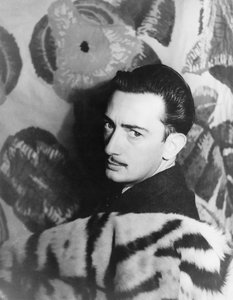
Salvador Dalí
1904 - 1989 , España
Breves datos
- Estilo Artístico: Surrealismo
- Fecha De Muerte: 1989
- Fecha De Nacimiento: 1904-05-11
- Influencias Artísticas:
- Cubismo
- Dadaísmo
- Pablo Picasso
- Lugar De Nacimiento: Figueres, España
- Nacionalidad: Española
- Nombre Completo: Salvador Domingo Felipe Jacinto Dalí i Domènech
- Obras Notables:
- La persistencia de la memoria
- Juliet's Tomb
- Mannequin (Barcelona Mannequin)
- Paisaje con hormigas
- El Ángelus de Gala