

 Ver en contexto
 Enviar
 Compartir
 Detalles

 Descargar
 Similares
 Radiografía
 Presentación de diapositivas
 Estadísticas
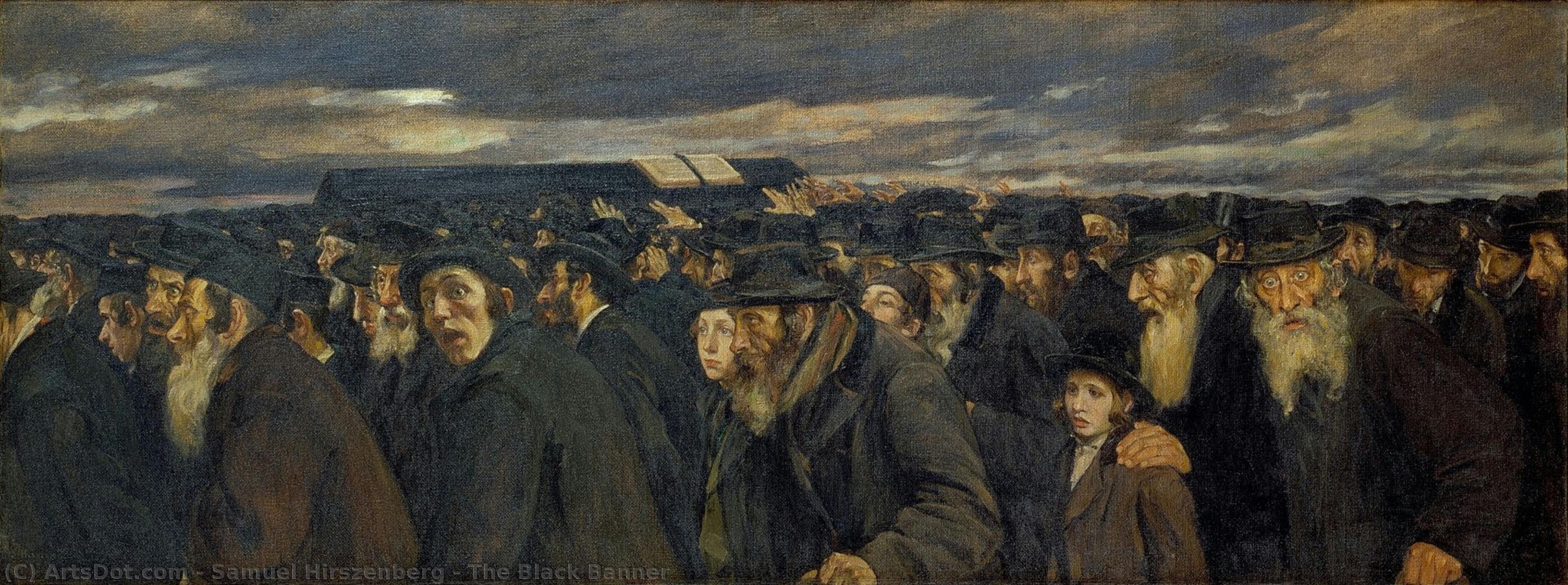
The Black Banner
 Oil On Canvas
- WallArt
- Realism
 1905
1905- Modern
 76.0 x 205.0 cm
 El Museo Judío
 Ver más
Giclée / Impresión de arte
Impresiones giclée o en lienzo de calidad de museo con producción rápida y opciones de acabado flexibles. ( Comprar pintura hecha a mano Cambiar a imagen digital)




P118B $10

P118H $10

P118W $10

P438Z $10

P508JH $12

P508YH $12

P805H $10

P805Z $10

P919BZ $10

P919G $10

P919XJ $10

P959ZH $10

P968JZ $12

W106C $8

W218G $10

W218JH $8

W218Y $10

W307PJ $10

W316G $10

W316PJ $8

W316Y $10

W398PJ $8

W4111J $10

W500HY $15

W500JH $15

W692G $12

W849H $8

W940BG $15

W953PJ $8




Elija entre nuestros tamaños predefinidos que respetan las proporciones originales de la obra.

Puede introducir sus propias dimensiones para adaptarse a un marco o espacio específico. Si el tamaño seleccionado no coincide con las proporciones de la imagen original, recortaremos la obra de arte o extenderemos la imagen con un borde con efecto espejo o de color sólido. Se enviará una maqueta digital para su aprobación antes de que comience la producción.
Tenga en cuenta que la vista previa en pantalla no refleja el recorte o la extensión real. Solo la maqueta mostrará con precisión la composición final.
Aunque existen tamaños personalizados, recomendamos seleccionar una dimensión de la lista predefinida para preservar las proporciones originales.
Envío a todo el mundo () en 2 semanas en lugar de las 4/5 semanas estándar. (11 septiembre)

Envío exprés gratuito a todo el mundo

Lienzo de lino de alta calidad

Seguro de envío total

Garantía de reembolso de impuestos aduaneros

Garantía de fidelidad cromática exacta

Política de devolución de 100 días (solo por defectos)

Garantía de devolución del 100% del dinero

Descuento por cantidad
 La opción de vidrio solo está disponible en tamaños inferiores a 110 cm.

The Black Banner
Giclée / Impresión de arte
Dimensiones de la reproducción
-


Precio total final
$ 62
A Vision of Sorrow and Solidarity
In the hauntingly powerful oil on canvas, The Black Banner, Samuel Hirszenberg captures a moment of profound collective grief that transcends time. Painted in 1905, this monumental work serves as a visceral window into the turbulent landscape of Russian-dominated Poland at the dawn of the twentieth century. The composition presents a dense, somber crowd of figures, all unified by a sea of black clothing and mourning attire. As the eye wanders through the throng, it encounters a tapestry of human emotion; some faces are etched with silent despair, while others gaze outward with a haunting intensity. The sheer scale of the piece, measuring 76 x 205 cm, allows the viewer to feel submerged within the assembly, as if standing amidst the very mourners depicted on the canvas.
The technical mastery of Hirszenberg is evident in his ability to manipulate light and shadow to evoke a sense of heavy, atmospheric tension. The artist utilizes a realistic style, likely influenced by his rigorous training at the academies of Kraków and Munich, to render the textures of fabric, the grimness of the outdoor setting, and the subtle nuances of facial expressions. There is a deliberate, rhythmic quality to the placement of the figures, creating a sense of movement that leads the viewer toward the most poignant elements of the work. The sky above, visible through the gaps in the crowd, offers a stark, cold contrast to the dark, earthbound weight of the people below, emphasizing the isolation and the heavy burden of their shared reality.
The Weight of History and Symbolism
Beyond its formal beauty, The Black Banner is a deeply political and social document. Hirszenberg was a pioneer in using his brush to expose the harrowing plight of Jewish communities during the era of pogroms. The painting functions as more than just a portrait of a crowd; it is a symbolic representation of resilience in the face of devastation. The "black banner" suggested by the title and the somber palette serves as a metaphor for the mourning period of an entire people. One can almost sense the palpable tension in the air, where the terror of the individual—perhaps even reflected in the artist's own gaze—merges with the collective strength of the community.
For the discerning collector or interior designer, this artwork offers a profound emotional anchor for any space. It is a piece that demands contemplation, making it an ideal centerpiece for galleries, libraries, or sophisticated living environments where art is intended to provoke thought and conversation. A high-quality reproduction of this masterpiece allows one to bring this historical gravity into a contemporary setting, providing a sophisticated touch of academic depth and dramatic flair. To possess such a work is to hold a piece of history that speaks of the enduring human spirit, making it an invaluable addition to a curated collection of fine art.
Obras relacionadas

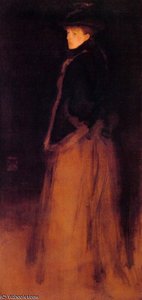

Biografía del artista
Samuel Hirszenberg: Vida y Legado
Primeros Años y Educación
- Samuel (Shmuel) Hirszenberg nació el 22 de febrero de 1865, en Lodz, Polonia, siendo el hijo mayor de un obrero de hilandería.
- A pesar de la desaprobación de su padre, persiguió su pasión por el arte con ayuda financiera de un médico local.
- Comenzó su formación artística en la Academia de Bellas Artes de Cracovia a los 15 años, profundamente influenciado por el estilo realista de Jan Matejko.
- De 1885 a 1889, continuó sus estudios en la Real Academia de Arte de Múnich.
Primeros Años Profesionales y Reconocimiento
- Su obra temprana, “Jeschibah” (1887), atrajo una atención significativa.
- Una exposición en el Kunstverein de Múnich (1889) le valió una medalla de plata en una exposición artística en París.
- Además perfeccionó sus habilidades en la Académie Colarossi de París, completando su educación artística.
Regreso a Polonia y Desarrollo Artístico
- En 1891, Hirszenberg regresó a Polonia y se estableció en Lodz en 1893.
- Sus primeras pinturas – “Estudios Talmúdicos,” “Sábado por la Tarde,” “Uriel Acosta,” y “El Cementerio Judío” – inicialmente se alinearon con la tradición de pintura judía de artistas como Leopold Horowitz, Isidor Kaufmann y Maurycy Gottlieb.
- Sin embargo, su obra gradualmente se inclinó hacia el Simbolismo, explorando temas de historia y exilio judíos.
Obras Principales y Temas
- Sus obras más renombradas de este período incluyen “El Judeo Errante” (1899), “Exiliado” (1904), y “La Bandera Negra” (1905).
- Pasó más de cuatro años creando “El Judeo Eterno”, expuesto en el Salón de París en 1900, pero quedó decepcionado con su recepción.
- Su obra a menudo representaba temas de sufrimiento, desplazamiento y identidad judía.
Vida Tardía y Legado
- Decepcionado por la falta de reconocimiento, Hirszenberg realizó un viaje de un año a Italia en 1901 por razones de salud.
- En 1904, se mudó a Cracovia e inmigró a Palestina en 1907.
- Se convirtió en profesor en la recién fundada Escuela Bezalel en Jerusalén, encabezada por Boris Schatz.
- Lamentablemente, Hirszenberg murió en Jerusalén el 15 de septiembre de 1908, después de un breve pero intenso período creativo.
Significado Histórico
- Samuel Hirszenberg es reconocido como una figura importante en el arte polaco-judío, conectando el Realismo y el Simbolismo.
- Sus representaciones evocadoras de la vida, historia y exilio judíos siguen resonando con el público actual.
- Contribuyó significativamente al desarrollo del arte temprano israelí a través de su trabajo en la Escuela Bezalel.
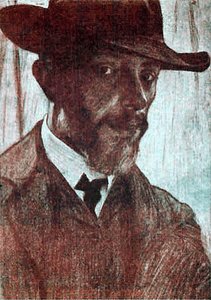
Samuel Hirszenberg
1865 - 1908 , Polonia
Datos clave
- Artistic Movement Or Style:
- Realismo
- Simbolismo
- Artists Or Movements Influenced By This Artist: ['Leopold Horowitz']
- Artists Who Influenced This Artist: ['Jan Matejko']
- Date Of Birth: 22 de febrero de 1865
- Date Of Death: 15 de septiembre de 1908
- Full Name: Samuel Hirszenberg
- Nationality: Polaco-Judío
- Notable Artworks:
- Jeschibah
- El Judeo Errante
- Exiliado
- Czarny Sztandar / Black Banner
- Place Of Birth: Łódź, Polonia
Artículos relacionados

Las 10 Pinturas Más Famosas Dominadas por el Negro | Arte y Decoración
Descubre las 10 pinturas más impactantes dominadas por el negro. Explora obras maestras de Rembrandt, Goya y Rothko, su historia y significado. Encuentra reproducciones de arte exclusivas para transformar tu hogar en .
Las 10 Obras de Arte Más Conmovedoras que Evocan Melancolía |
Descubre las 10 obras de arte más conmovedoras de la historia. Explora el simbolismo, la técnica y la emoción detrás de Munch, Van Gogh, Goya y otros maestros. Encuentra reproducciones de arte online en .
Las 10 Obras Maestras Dominadas por el Negro Marsella: Arte y Decoración
Descubre las 10 pinturas más famosas dominadas por el negro marsella. Explora la historia, técnica y simbolismo de obras maestras del expresionismo alemán, gótico y arte moderno. Reproducciones de museos en .
Los 10 Cuadros Más Famosos Dominados por el Negro Marfil: Arte y Decoración
Descubre los 10 cuadros más impactantes dominados por el negro marfil. Explora la historia de Rembrandt, Van Gogh y otros maestros del arte clásico y moderno. Encuentra reproducciones de alta calidad para tu hogar en
Las 10 Obras Maestras del Negro Carbón: Arte, Historia y Decoración
Descubre 10 obras maestras del arte dominadas por el negro carbón. Explora la historia, técnica y significado de cuadros icónicos de artistas como Rembrandt y Goya. Encuentra reproducciones de museo en .