 Ver en contexto
 Enviar
 Compartir
 Detalles

 Descargar
 Similares
 Radiografía
 Presentación de diapositivas
Salome with the Head of St John the Baptist

 Ver más
Giclée / Impresión de arte
Impresiones giclée o en lienzo de calidad de museo con producción rápida y opciones de acabado flexibles. ( Comprar pintura hecha a mano Comprar imagen)




P118B $10

P118H $10

P118W $10

P438Z $10

P508JH $12

P508YH $12

P805H $10

P805Z $10

P919BZ $10

P919G $10

P919XJ $10

P959ZH $10

P968JZ $12

W106C $8

W218G $10

W218JH $8

W218Y $10

W307PJ $10

W316G $10

W316PJ $8

W316Y $10

W398PJ $8

W4111J $10

W500HY $15

W500JH $15

W692G $12

W849H $8

W940BG $15

W953PJ $8




Elija entre nuestros tamaños predefinidos que respetan las proporciones originales de la obra.

Puede introducir sus propias dimensiones para adaptarse a un marco o espacio específico. Si el tamaño seleccionado no coincide con las proporciones de la imagen original, recortaremos la obra de arte o extenderemos la imagen con un borde con efecto espejo o de color sólido. Se enviará una maqueta digital para su aprobación antes de que comience la producción.
Tenga en cuenta que la vista previa en pantalla no refleja el recorte o la extensión real. Solo la maqueta mostrará con precisión la composición final.
Aunque existen tamaños personalizados, recomendamos seleccionar una dimensión de la lista predefinida para preservar las proporciones originales.
Envío a todo el mundo () en 2 semanas en lugar de las 4/5 semanas estándar. (26 agosto)

Envío exprés gratuito a todo el mundo

Lienzo de lino de alta calidad

Seguro de envío total

Garantía de reembolso de impuestos aduaneros

Garantía de fidelidad cromática exacta

Política de devolución de 60 días (solo por defectos)

Garantía de devolución del 100% del dinero

Descuento por cantidad
 La opción de vidrio solo está disponible en tamaños inferiores a 110 cm.

Salome with the Head of St John the Baptist
Giclée / Impresión de arte
Dimensiones de la reproducción
-


Precio total final
$ 62
Descripción de la pieza
A Haunting Tableau: Botticelli’s “Salome with the Head of St. John the Baptist”
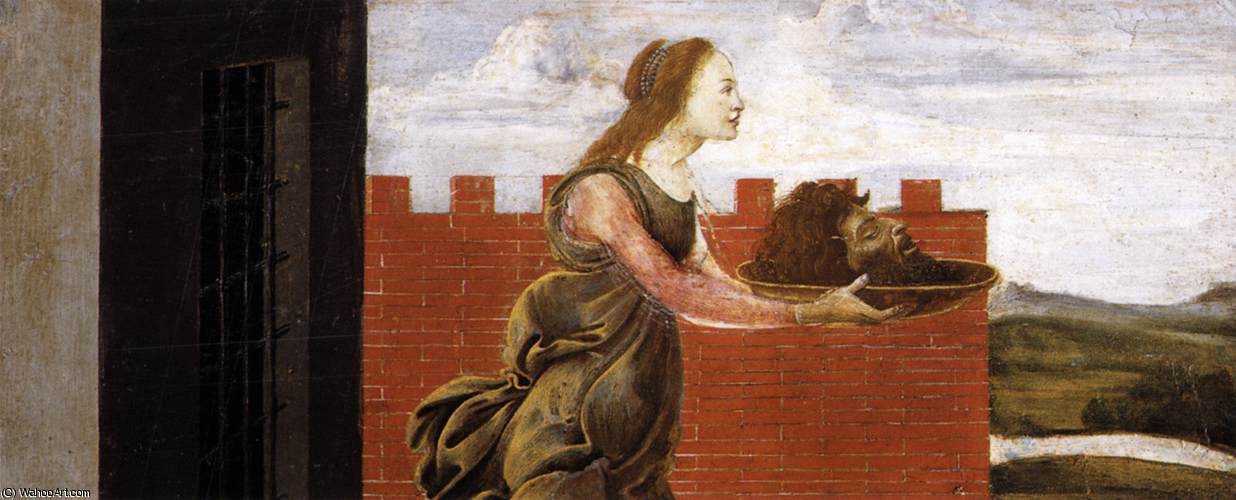
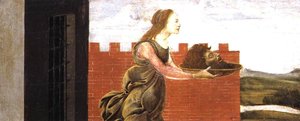
Sandro Botticelli's "Salome with the Head of St. John the Baptist," painted circa 1488, is not merely a depiction of a biblical episode; it’s a profoundly unsettling meditation on power, grief, and the chilling consequences of unchecked desire. Housed within the Uffizi Gallery in Florence, this tempera-on-panel work transcends its historical context to resonate with an enduring sense of drama and psychological depth. Botticelli masterfully captures a moment suspended between triumph and tragedy, inviting viewers into a world steeped in both religious significance and unsettling human emotion.
The painting immediately commands attention through its stark contrast of color and form. A solid, brick wall—a symbol of confinement and perhaps the weight of Herod’s authority—forms the backdrop, punctuated by a barred doorway that suggests an inescapable fate. Against this somber foundation, Botticelli presents Salome, rendered in muted earth tones, holding aloft the decapitated head of St. John. The head itself is remarkably lifelike, exhibiting a chilling stillness that speaks volumes about its violent demise. The artist’s meticulous attention to detail—the delicate folds of Salome's garment, the subtle shading on her face—heightens the painting’s realism and imbues it with an almost unbearable sense of immediacy.
Renaissance Symbolism and a Dark Narrative
Botticelli’s choice of subject matter is deeply rooted in the rich tapestry of Renaissance symbolism. The story of Salome, as recounted in the Gospels, represents a potent allegory of ambition, betrayal, and the corrupting influence of power. Herodias, Salome's mother, motivated by revenge against John for rejecting her advances, orchestrates the execution, demonstrating the destructive potential of female rage and manipulation. Salome herself embodies a complex duality—a dancer who gains favor through her performance yet is ultimately implicated in a gruesome act. The head of St. John, presented on a platter, becomes a potent symbol of mortality, suffering, and the ultimate price of transgression.
Beyond the immediate narrative, the painting’s composition subtly reinforces its themes. The placement of Salome—slightly off-center, her gaze fixed ahead—suggests a detachment from the horror she carries. The muted palette contributes to an atmosphere of melancholy and foreboding, while the stark lighting emphasizes the drama of the scene. Botticelli's use of perspective, though not entirely linear as would become more pronounced in later Renaissance artists, creates a sense of depth and spatial awareness, drawing the viewer into the heart of the narrative.
Technique and Artistic Flourishes
Botticelli’s mastery lies not only in his ability to convey emotion but also in his refined technique. Executed in tempera on panel, the painting showcases a remarkable level of detail and precision. The artist employs delicate brushstrokes to render the textures of fabric, skin, and brickwork, creating a sense of tactile realism. The use of sfumato—a subtle blurring of lines and edges—softens the forms and contributes to the overall atmosphere of mystery and melancholy. Botticelli’s signature style is evident in his graceful figures, flowing drapery, and idealized beauty, elements that distinguish his work from the more rigid conventions of earlier Italian art.
A Timeless Portrait of Grief and Power
"Salome with the Head of St. John the Baptist" remains a profoundly moving artwork, offering a glimpse into the complexities of human nature and the enduring power of myth and legend. It’s a painting that lingers in the mind long after it has been viewed, prompting reflection on themes of ambition, betrayal, and the devastating consequences of unchecked desire. More than just a historical record, Botticelli's masterpiece is a timeless exploration of the darker aspects of human experience—a haunting reminder of the fragility of life and the enduring weight of moral choices.
Obras relacionadas

![Leyenda De San Francisco - [23] - San Francisco Lamentado Por Santa Clara — Giotto Di Bondone, Gótico](/media/artworks/images-thumb/17/1c/171c284c41dc3ef8bca83e51c1e1e531.jpg)

Biografía del artista
vida temprana y formación
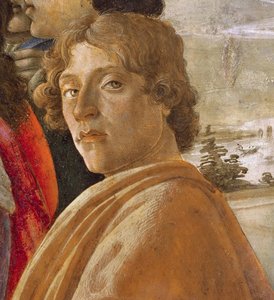
Sandro Botticelli, nacido Alessandro di Mariano di Vanni Filipepi alrededor de 1445, fue una figura clave en el Renacimiento temprano de la pintura italiana. Inicialmente eclipsado post mortem, la obra de Botticelli fue revitalizada a finales del siglo XIX por los pre-rafaelitas, lo que llevó a una reevaluación de sus contribuciones artísticas. Botticelli nació en Florencia, Italia, y vivió toda su vida en el mismo barrio. Su familia, incluyendo a su padre Mariano di Vanni d'Amadeo Filipepi, estuvo involucrada en diversas profesiones, lo que les permitió entrar en contacto con artistas. Giorgio Vasari informó que Botticelli fue inicialmente entrenado como joyero.Estilo artístico y obras notables
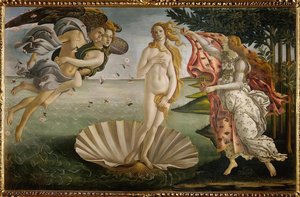
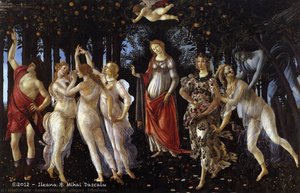
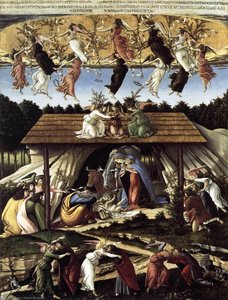
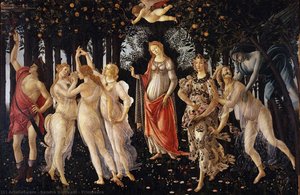
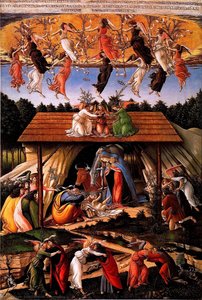
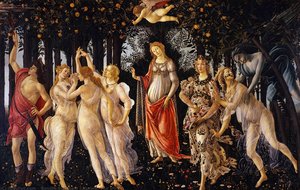
La obra de Botticelli se caracteriza por una elegante linealidad, que conecta el gótico tardío italiano con el Renacimiento temprano. Sus obras más famosas, El nacimiento de Venus y Primavera, se exhiben en la Galería Uffizi en Florencia, que alberga una importante colección de su arte. * El nacimiento de Venus (ver en ArtsDot) * Primavera (explorar el arte de Sandro Botticelli en ArtsDot) * La natividad mística (Galería Nacional, Londres), fechada en 1501, es la única obra de Botticelli con una fecha clara.Legado e influencia
El estilo de Botticelli evolucionó hacia un enfoque más personal en la década de 1490, divergente de sus contemporáneos como Leonardo da Vinci y el estilo del Alto Renacimiento emergente. Su obra ha sido reconocida como una contribución significativa al movimiento artístico del Renacimiento italiano. * El movimiento artístico del Renacimiento italiano * Sandro Botticelli en Wikipedia- Artistas notables del Renacimiento italiano incluyen a Sandro Botticelli, Leonardo da Vinci, Miguel Ángel y Tiziano.
- La Galería Uffizi de Florencia alberga una importante colección de arte de Botticelli.
- La obra de Botticelli ha sido reconocida como una figura clave en el Renacimiento temprano de la pintura italiana.
Sandro Botticelli
1445 - 1510 , Italia
Datos clave
- Artistas Que Influyeron:
- Fra Angelico
- Paolo Uccello
- Estilo Artístico: Renacimiento Temprano
- Fecha De Muerte: 1510
- Fecha De Nacimiento: c. 1445
- Influenciado A Artistas: ['Pre-Rafaelitas']
- Lugar De Nacimiento: Florencia, Italia
- Nacionalidad: Italiana
- Nombre Completo: Sandro Botticelli
- Obras Notables:
- El Nacimiento de Venus
- Primavera
- Natividad Mística
Artículos relacionados
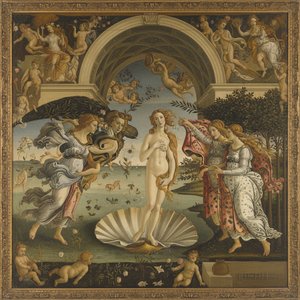
Botticelli: Las 25 Obras Maestras del Renacimiento para Decorar con Arte y Elegancia
Descubre las 25 obras maestras de Sandro Botticelli, el genio del Renacimiento italiano. Explora 'El Nacimiento de Venus', 'Primavera' y más: historia, técnica y belleza clásica. Encuentra reproducciones de arte exclusivas en ArtsDot.com.
John Singer Sargent: Las 25 Obras Maestras del Retrato y la Belle Époque | ArtsDot
Descubre las 25 obras maestras de John Singer Sargent, el maestro del retrato y la Belle Époque. Explora su técnica impresionista, historias fascinantes y encuentra reproducciones de arte exclusivas para decorar tu hogar con elegancia en ArtsDot.com.

John Constable: Las 25 Obras Maestras del Paisaje Inglés | ArtsDot
Descubre las 25 obras maestras de John Constable, el pintor romántico inglés que capturó la belleza del paisaje. Explora su técnica, historia y significado en ArtsDot.com. Reproducciones de arte de alta calidad para tu hogar.
Los 10 Maestros del Renacimiento Temprano: Arte que Transformó el Mundo |
Descubre los 10 maestros del Renacimiento Temprano: Botticelli, Leonardo da Vinci y más. Explora la historia, técnica y belleza de obras icónicas italianas. Reproducciones de arte exclusivas en .
Los 25 Tesoros del Uffizi: Arte Renacentista para tu Hogar | ArtsDot
Descubre los 25 tesoros del Uffizi en Florencia: Botticelli, Leonardo da Vinci y más. Explora la historia, el arte renacentista y encuentra reproducciones de alta calidad para tu hogar. ¡Inspírate con ArtsDot.com!