 Ver en contexto
 Enviar
 Compartir
 Detalles

 Descargar
 Similares
 Radiografía
 Presentación de diapositivas
The Adoration Of The Kings -

 Ver más
Reproducción al óleo hecha a mano
Óleo sobre lienzo pintado a mano en el tamaño y marco de su elección, realizado por encargo por nuestros artistas. ( Comprar impresión Comprar imagen)




P118B $10

P118H $10

P118W $10

P438Z $10

P508JH $12

P508YH $12

P805H $10

P805Z $10

P919BZ $10

P919G $10

P919XJ $10

P959ZH $10

P968JZ $12

W106C $8

W218G $10

W218JH $8

W218Y $10

W307PJ $10

W316G $10

W316PJ $8

W316Y $10

W398PJ $8

W4111J $10

W500HY $15

W500JH $15

W692G $12

W849H $8

W940BG $15

W953PJ $8




Elija entre nuestros tamaños predefinidos que respetan las proporciones originales de la obra.

Puede ingresar sus propias dimensiones para adaptarse a un marco o espacio específico. Si el tamaño seleccionado no coincide con las proporciones de la imagen original, recortaremos la obra o extenderemos la pintura con elementos adicionales pintados a mano. Se le enviará una maqueta digital para su aprobación antes de comenzar la producción.
Tenga en cuenta que la vista previa en pantalla no refleja el recorte o la extensión reales. Solo la maqueta mostrará con precisión la composición final.
Si bien existen tamaños personalizados, recomendamos seleccionar una dimensión de la lista predefinida para preservar las proporciones originales.
Tras realizar el pedido, el equipo de ArtsDot.com enviará un correo electrónico al cliente para solicitar instrucciones y proporcionarle una vista previa del boceto.
Envío a todo el mundo () en 3-4 semanas en lugar de las 5 semanas estándar. (1 septiembre). Sin comprometer la calidad.

Envío exprés gratuito a todo el mundo

Lienzo de lino de alta calidad

Seguro de envío total

Garantía de reembolso de impuestos aduaneros

Garantía de fidelidad cromática exacta

Política de devolución de 60 días (solo por defectos)

Garantía de devolución del 100% del dinero

Descuento por cantidad
 La opción de vidrio solo está disponible en tamaños inferiores a 110 cm.

The Adoration Of The Kings -
Técnica de reproducción
Dimensiones de la reproducción
-


Precio total final
$ 263
The Adoration of the Kings: A Botticelli Masterpiece Reimagined
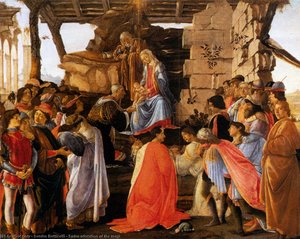
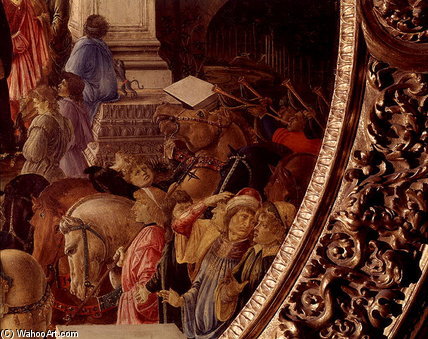
- Subject Matter: Sandro Botticelli’s “The Adoration of the Kings” is a captivating depiction of a pivotal moment in Christian iconography – the arrival of the Magi bearing gifts for the newborn Christ. The scene unfolds with a gathering of distinguished figures, likely kings and dignitaries, reverently observing a young infant, symbolizing Jesus. This wasn't merely a religious tableau; it was a carefully constructed narrative reflecting the burgeoning humanist ideals of the Renaissance, blending biblical storytelling with an appreciation for classical beauty and worldly power.
- Artistic Style & Technique: Executed in Botticelli’s signature style, this work exemplifies the elegance and grace that defined his career. The artist employs a delicate linear style, characterized by flowing lines and precise detailing, particularly evident in the drapery of the figures and the musculature of the horses. Botticelli's use of tempera on panel – a technique favored during his time – contributes to the painting’s luminous quality and subtle color palette. Notice the meticulous attention to detail, a hallmark of Florentine artistic training, reflecting the influence of Fra Filippo Lippi and other masters of the era.
Historical Context & Renaissance Ideals
The painting emerged during a period of immense intellectual and artistic transformation in Florence – the Early Renaissance. Botticelli’s work reflects this shift away from the rigid, symbolic representations of medieval art towards a renewed interest in classical antiquity. The scene itself is imbued with symbolism reflecting the era's fascination with both religious devotion and secular power. The presence of kings and dignitaries underscores the importance of earthly leadership alongside spiritual authority – a concept increasingly explored during the Renaissance. The inclusion of a clock, a relatively novel element for the time, subtly introduces the theme of time and mortality, prompting contemplation on the divine purpose within human existence. This reflects the humanist emphasis on understanding the world through observation and reason.Symbolism & Iconography
- Horses: The numerous horses are not simply decorative elements; they represent the grand procession of the Magi – a visual manifestation of their wealth, power, and devotion. Their positioning, some close to the figures, others further back, creates a dynamic sense of movement and emphasizes the scale of the event.
- The Infant Christ: The central figure, the infant Jesus, embodies innocence, humility, and divine grace – core tenets of Christian faith. His presentation to the world signifies hope and salvation.
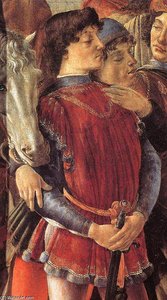
- Royal Attire: The figures’ regal garments signify their status as kings or important dignitaries, highlighting the universality of adoration and reverence for the newborn Messiah.
Emotional Impact & Artistic Legacy
“The Adoration of the Kings” resonates with a profound sense of awe and reverence. Botticelli masterfully captures the emotional intensity of the scene – the solemnity of the Magi, the wonder in the eyes of the onlookers. This painting stands as a testament to Botticelli’s artistic genius and his ability to translate complex religious narratives into visually stunning works of art. Today, this reproduction offers an opportunity to experience the beauty and intellectual depth of one of the Renaissance's most celebrated masterpieces within your own space.Obras relacionadas
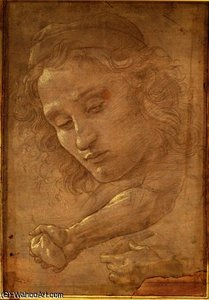
Biografía del artista
vida temprana y formación
Sandro Botticelli, nacido Alessandro di Mariano di Vanni Filipepi alrededor de 1445, fue una figura clave en el Renacimiento temprano de la pintura italiana. Inicialmente eclipsado post mortem, la obra de Botticelli fue revitalizada a finales del siglo XIX por los pre-rafaelitas, lo que llevó a una reevaluación de sus contribuciones artísticas. Botticelli nació en Florencia, Italia, y vivió toda su vida en el mismo barrio. Su familia, incluyendo a su padre Mariano di Vanni d'Amadeo Filipepi, estuvo involucrada en diversas profesiones, lo que les permitió entrar en contacto con artistas. Giorgio Vasari informó que Botticelli fue inicialmente entrenado como joyero.Estilo artístico y obras notables
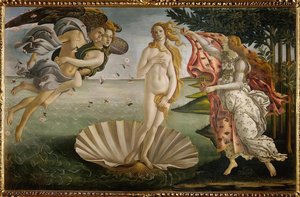
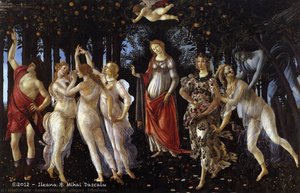
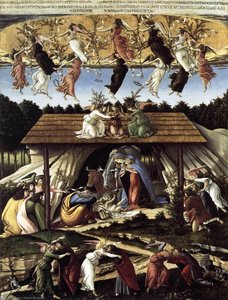
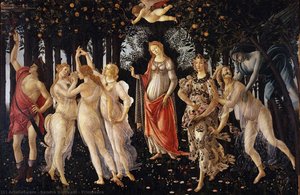
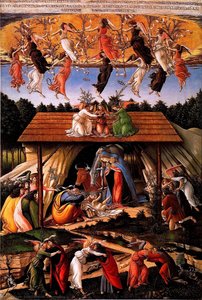
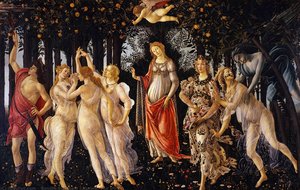
La obra de Botticelli se caracteriza por una elegante linealidad, que conecta el gótico tardío italiano con el Renacimiento temprano. Sus obras más famosas, El nacimiento de Venus y Primavera, se exhiben en la Galería Uffizi en Florencia, que alberga una importante colección de su arte. * El nacimiento de Venus (ver en ArtsDot) * Primavera (explorar el arte de Sandro Botticelli en ArtsDot) * La natividad mística (Galería Nacional, Londres), fechada en 1501, es la única obra de Botticelli con una fecha clara.Legado e influencia
El estilo de Botticelli evolucionó hacia un enfoque más personal en la década de 1490, divergente de sus contemporáneos como Leonardo da Vinci y el estilo del Alto Renacimiento emergente. Su obra ha sido reconocida como una contribución significativa al movimiento artístico del Renacimiento italiano. * El movimiento artístico del Renacimiento italiano * Sandro Botticelli en Wikipedia- Artistas notables del Renacimiento italiano incluyen a Sandro Botticelli, Leonardo da Vinci, Miguel Ángel y Tiziano.
- La Galería Uffizi de Florencia alberga una importante colección de arte de Botticelli.
- La obra de Botticelli ha sido reconocida como una figura clave en el Renacimiento temprano de la pintura italiana.
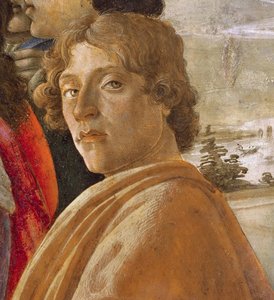
Sandro Botticelli
1445 - 1510 , Italia
Datos clave
- Artistas Que Influyeron:
- Fra Angelico
- Paolo Uccello
- Estilo Artístico: Renacimiento Temprano
- Fecha De Muerte: 1510
- Fecha De Nacimiento: c. 1445
- Influenciado A Artistas: ['Pre-Rafaelitas']
- Lugar De Nacimiento: Florencia, Italia
- Nacionalidad: Italiana
- Nombre Completo: Sandro Botticelli
- Obras Notables:
- El Nacimiento de Venus
- Primavera
- Natividad Mística
Artículos relacionados
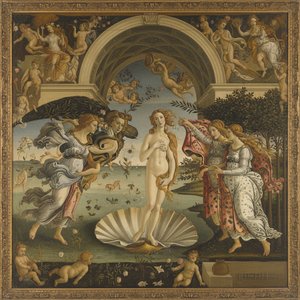
Botticelli: Las 25 Obras Maestras del Renacimiento para Decorar con Arte y Elegancia
Descubre las 25 obras maestras de Sandro Botticelli, el genio del Renacimiento italiano. Explora 'El Nacimiento de Venus', 'Primavera' y más: historia, técnica y belleza clásica. Encuentra reproducciones de arte exclusivas en ArtsDot.com.

Crimson Threads of Narrative: Exploring Symbolism & Representation in Artworks Featuring the Red Dress
Explore the rich symbolism of the red dress in art history! From ancient power displays to iconic portraits like Cézanne’s 'Madame Cezanne', discover the cultural and artistic significance behind this captivating color. Expert analysis & insights.
Golden Glow: How to Use Metallic Gold Artworks to Elevate Your Home Decor with Timeless Luxury
Discover how to elevate your home with the timeless elegance of metallic gold artworks. From sculptural metal pieces to gilded oil paintings, learn expert interior design tips for integrating luxurious gold accents into your space with sophistication and grace.
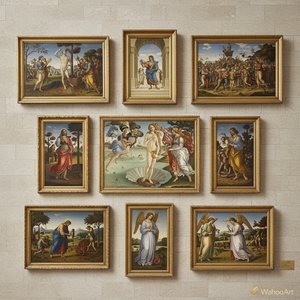
Los 10 Maestros del Renacimiento Temprano: Arte que Transformó el Mundo |
Descubre los 10 maestros del Renacimiento Temprano: Botticelli, Leonardo da Vinci y más. Explora la historia, técnica y belleza de obras icónicas italianas. Reproducciones de arte exclusivas en .
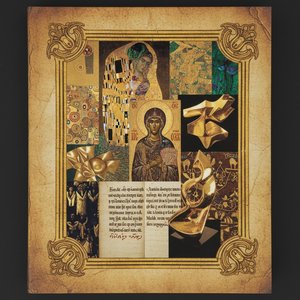
The Allure of Gold in Art History: Symbolism, Technique & Cultural Significance
Explore the rich history of gold in art! Discover symbolism, techniques & cultural significance from ancient civilizations to Klimt's masterpieces. Expert insights for collectors at ArtsDot.