

 Ver en contexto
 Enviar
 Compartir
 Detalles

 Descargar
 Similares
 Radiografía
 Presentación de diapositivas
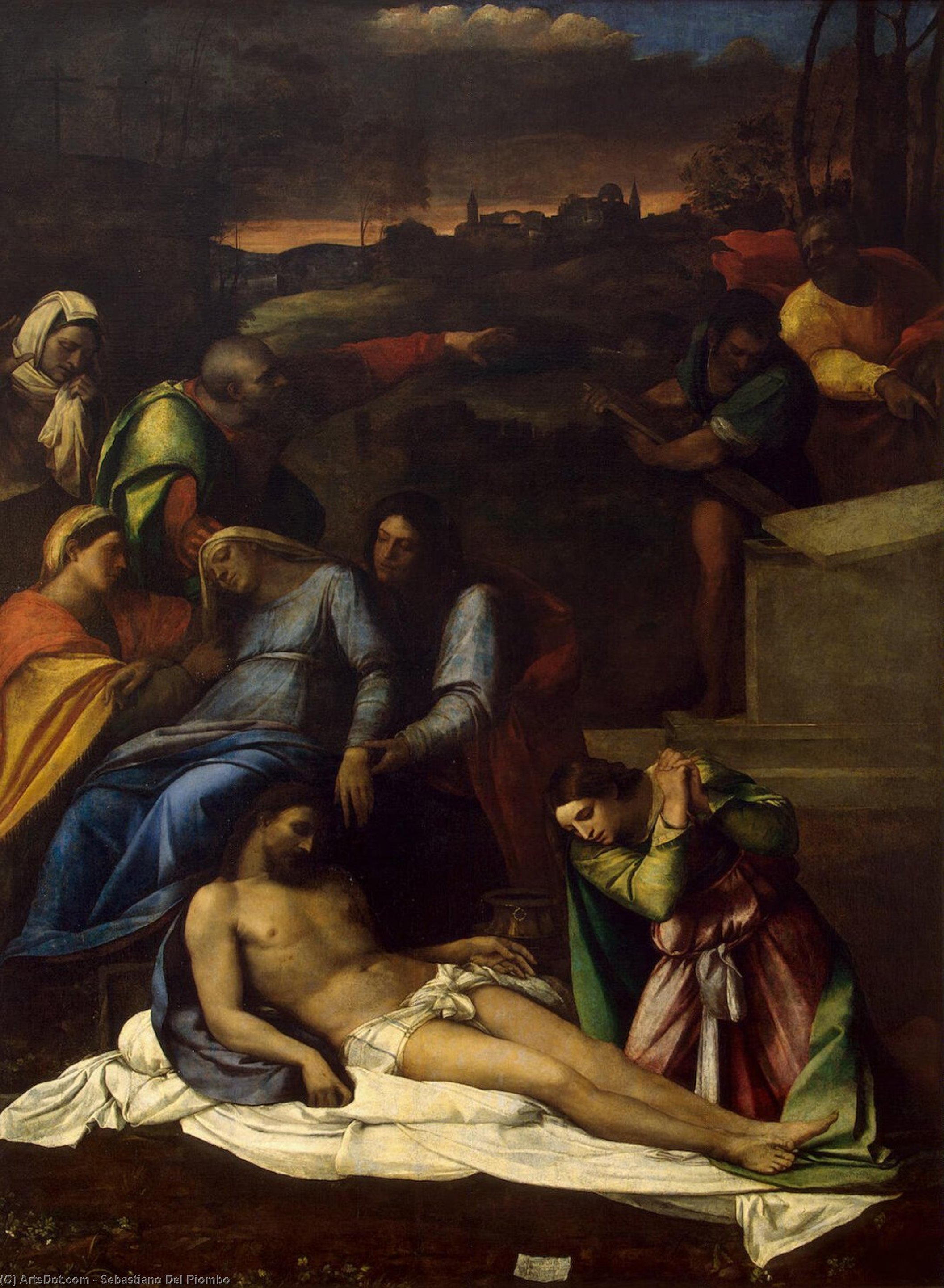
Lamentation of Christ
 Acrylic On Canvas
- WallArt
- High Renaissance
 1516
1516 260.0 x 193.0 cm
 Museo del Hermitage
 Ver más
Adquiera una imagen digital de alta resolución y optimizada, muy superior a la vista previa en línea.
Cada archivo es preparado meticulosamente por nuestros especialistas internos mediante el uso de herramientas avanzadas y un experto retoque manual. Nos aseguramos de que cada imagen posea una claridad excepcional, una precisión cromática impecable y un detalle minucioso.
El archivo final se entrega por correo electrónico en un plazo de 72 horas, optimizado para su uso inmediato en entornos profesionales, editoriales y de impresión. Esta es la misma calidad en la que confían los estudios de diseño, las editoriales y las galerías de primer nivel.
Imagen Digital
Descarga un archivo de alta resolución para exhibición personal, impresión y proyectos creativos. ( Comprar impresión Comprar pintura hecha a mano)
Incluido en cada pedido de imágenes digitales
Entrega digital experta, garantizada.
Al elegir ArtsDot.com, no solo está adquiriendo una imagen; está recibiendo una obra de arte digital mejorada profesionalmente, elaborada con precisión y respaldada por una garantía de satisfacción. Esto es todo lo que incluye su pedido, automáticamente:

Entrega rápida por email
Recibirá su archivo de imagen digital en alta resolución por correo electrónico en un plazo de 72 horas tras realizar su pedido, listo para su uso inmediato.

Archivo digital optimizado por IA
Su obra de arte se optimiza profesionalmente mediante herramientas avanzadas de IA y edición manual, garantizando el máximo detalle, claridad y precisión cromática.

Reenvío gratuito de por vida
¿Has borrado o perdido tu archivo por error? No te preocupes: te lo volveremos a enviar en cualquier momento, sin coste adicional.

Sin gastos de importación, siempre
Disfrute de su obra de arte al instante sin aduanas, aranceles ni gastos de envío; las descargas digitales siempre están libres de impuestos.

Garantía de fidelidad de color
Garantizamos que su imagen digital refleje los colores originales con la mayor fidelidad posible, mediante el uso de herramientas profesionales y gestión del color.

Garantía de satisfacción de 60 días
Si no está satisfecho con su imagen digital, la revisaremos o le reembolsaremos el 100% en un plazo de 60 días, sin preguntas.

100% Garantía de devolución de dinero
¿No está satisfecho? Obtenga un reembolso completo dentro de los 60 días posteriores a la recepción de su archivo digital, sin necesidad de explicaciones.

Descuentos por pedidos grandes
Compra 3 imágenes, ahorra 10% - Compra 5, ahorra 15% - Compra 10+, ahorra 20%. Ideal para proyectos creativos, galerías y agencias.
Descripción del coleccionable
The Weight of Sorrow: Sebastiano del Piombo’s Lamentation of Christ
Sebastiano del Piombo's 1516 “Lamentation of Christ” isn’t merely a depiction of grief; it’s a profound meditation on loss, faith, and the enduring mystery of sacrifice. Painted in the heart of Rome during a period of intense artistic rivalry – notably with Michelangelo himself – this monumental work transcends its religious subject matter to become a powerful exploration of human emotion rendered through a uniquely Venetian lens. The painting immediately commands attention not just for its scale (a commanding 260 x 193 cm) but for the unsettling stillness and dramatic interplay of figures within its dark, evocative space.
Del Piombo, a Venetian expatriate who had spent formative years studying under Giovanni Bellini and Giorgione, brought to Rome a distinctly Venetian sensibility – a vibrant use of color, atmospheric perspective, and a poetic approach to composition. This is evident in the rich, earthy palette dominated by browns, ochres, and deep reds, creating an atmosphere of somber contemplation. Unlike the more idealized depictions common at the time, Del Piombo’s Christ possesses a palpable physicality, his body rendered with a startling realism that emphasizes the brutal reality of his suffering. The stark contrast between the dark background – hinting at a ruined cityscape, perhaps a symbolic representation of fallen Rome – and the luminous flesh of the deceased Christ amplifies the emotional impact.
A Composition of Contrasts: Mary’s Silent Grief
The most striking element of the “Lamentation” is undoubtedly the figure of Mary. She isn't consumed by outward displays of sorrow; instead, she stands in a state of profound, almost detached contemplation. Her gaze is directed upwards, seemingly lost in prayer or perhaps wrestling with an understanding far beyond mere grief. This deliberate restraint – a departure from the more overtly emotional portrayals prevalent at the time – elevates the painting to a level of psychological complexity. Her posture and attire subtly suggest a transition, a shift into something greater than earthly sorrow; she is not simply mourning her son but perhaps witnessing his ascension.
The other figures surrounding Christ—John the Apostle, Mary Magdalene, and Joseph of Arimathea—are rendered with varying degrees of intensity. John’s posture conveys a palpable sense of anguish, while Mary Magdalene’s grief is more immediate and visceral. The positioning of these figures creates a dynamic yet carefully controlled composition, drawing the viewer's eye through the scene and emphasizing the central drama of Christ’s death.
Symbolism and the Venetian Legacy
Del Piombo’s work is deeply rooted in Venetian artistic traditions, particularly the influence of Giorgione. The atmospheric perspective, creating a sense of depth and distance, echoes Giorgione's masterful use of light and shadow. Furthermore, the painting subtly incorporates classical motifs – the reclining figure of Christ reminiscent of Roman sculpture—demonstrating Del Piombo’s commitment to both Venetian colorism and Roman grandeur. The inclusion of architectural elements in the background, hinting at a ruined basilica, adds another layer of symbolic meaning, suggesting the fall of empires and the enduring power of faith.
Interestingly, the painting's composition—with Christ lying prone and Mary elevated above him—reflects a shift in artistic convention. It moves away from the more traditional depictions of the dead Christ as a passive object of mourning towards a portrayal that emphasizes the active role of the Virgin Mary in her grief and contemplation. This subtle yet significant change reflects the evolving religious and philosophical landscape of Renaissance Italy.
A Timeless Meditation on Loss
The “Lamentation of Christ” by Sebastiano del Piombo is more than just a historical artwork; it’s a deeply moving meditation on loss, faith, and the human condition. Its haunting beauty, coupled with its psychological complexity and masterful technique, continues to resonate with viewers centuries after its creation. It serves as a poignant reminder of the enduring power of art to capture the most profound emotions and explore the mysteries of life and death. Reproductions of this powerful image offer a window into the heart of the Renaissance, inviting contemplation and sparking dialogue about faith, grief, and the legacy of Christ.
Obras relacionadas


Biografía del artista
Primeros años y formación
Sebastiano Luciani (Venecia, 1485-Roma, 21 de junio de 1547), más conocido como Sebastiano del Piombo, por haber ocupado a partir de 1531 el cargo de responsable de los sellos de plomo —piombo en italiano— de la Santa Sede, fue un pintor italiano, protegido por Miguel Ángel y uno de los más admirados e influyentes del Renacimiento. Su obra representa una síntesis entre el colorido de la escuela veneciana y las figuras monumentales características de la pintura romana. Se distinguen tres momentos en su evolución: una etapa veneciana, donde el colorido de sus obras recuerda al de sus primeros maestros, los pintores Giovanni Bellini y Giorgione; un primer periodo romano, ciudad a la que llega en 1511 gracias al mecenazgo del banquero Agostino Chigi, en el que asimila el estilo de Rafael y de Miguel Ángel; y un segundo periodo romano, tras el Saco de Roma en 1527, en el que su pintura se vuelve más severa y esencial, en consonancia con el espíritu de la Reforma católica que se plasmará posteriormente en las directrices del Concilio de Trento.Inicios y Primeras Obras
Tal como relata su biógrafo Giorgio Vasari, Sebastiano nació en Venecia en 1485, hijo de Luciano Luciani. Según el propio Vasari, la primera vocación de Sebastiano fue la música (cantaba y tocaba el laúd), pero pronto sintió curiosidad por la pintura y entró en contacto con Giovanni Bellini, y después con Giorgione, quienes fueron sus maestros, especialmente este último. Entre 1508 y 1509 realizó los cuatro paneles del órgano de la iglesia de San Bartolomeo de Rialto (Venecia), encargados por Alvise Ricci, vicario del templo entre 1507 y 1509. En 1510 pintó la tabla Salomé (también conocida como La hija de Herodías).Ascenso a la Prominencia en Roma
Sebastiano's career gained momentum after he moved to rome in 1511, where he worked alongside raphael and eventually became one of the few painters to get on well with michelangelo, who encouraged him to compete for commissions against raphael. This exposure led sebastiano to become rome's leading painter after raphael's death in 1520.Obras Destacadas y Colaboraciones
- La Piedad (Museo del Prado, Madrid): Una obra maestra que muestra la influencia de Miguel Ángel en la escultura y la maestría de Sebastiano en el óleo.
- La Muerte de Adonis (Galería de los Uffizi, Florencia): Una pintura mitológica que combina el colorido veneciano con la influencia de Rafael.
- Salomé con la cabeza del Bautista (National Gallery, Londres): Una obra temprana que revela su estilo distintivo y sus influencias.
Estilo e Influencia
El estilo de Sebastiano del Piombo se caracteriza por una síntesis única entre el colorido vibrante de la escuela veneciana y las figuras monumentales y escultóricas propias de la pintura romana, especialmente bajo la influencia de Miguel Ángel. Su obra influyó en otros artistas manieristas y en la pintura española de su tiempo. Aunque no tuvo muchos alumnos destacados, su legado perdura en la combinación innovadora de técnicas y estilos que definió su carrera. Su habilidad para fusionar el color veneciano con las formas poderosas de Roma lo convierte en una figura clave del Renacimiento.Legado e Importancia Histórica
A pesar de ser un artista importante en su época, la influencia directa de Sebastiano del Piombo sobre otros artistas fue limitada debido a la falta de alumnos prominentes y a la relativamente escasa difusión de sus obras en copias impresas. Sin embargo, su singular combinación de color veneciano y formas monumentales romanas continúa inspirando a artistas y amantes del arte hasta el día de hoy. Su obra representa un puente entre las tradiciones artísticas de Venecia y Roma, contribuyendo al desarrollo del estilo manierista y dejando una huella duradera en la historia del arte italiano.
Sebastiano del Piombo
1485 - 1547 , Italia
Breves datos
- Artistas Influyentes:
- Giorgione
- Rafael
- Miguel Ángel
- Estilo Artístico: Alto Renacimiento
- Fecha De Muerte: 21 de junio de 1547
- Fecha De Nacimiento: c. 1485
- Influencia En Artistas:
- Bronzino
- Pintura española
- Lugar De Nacimiento: Venecia, Italia
- Nacionalidad: Italiana
- Nombre Completo: Sebastiano del Piombo
- Obras Notables:
- Los tres filósofos
- Moisés recibiendo las tablas
- La Piedad (Viterbo)
- Muerte de Adonis
- Salomé con la cabeza

