

 Enviar
 Compartir
 Detalles

 Descargar
 Similares
 Presentación de diapositivas
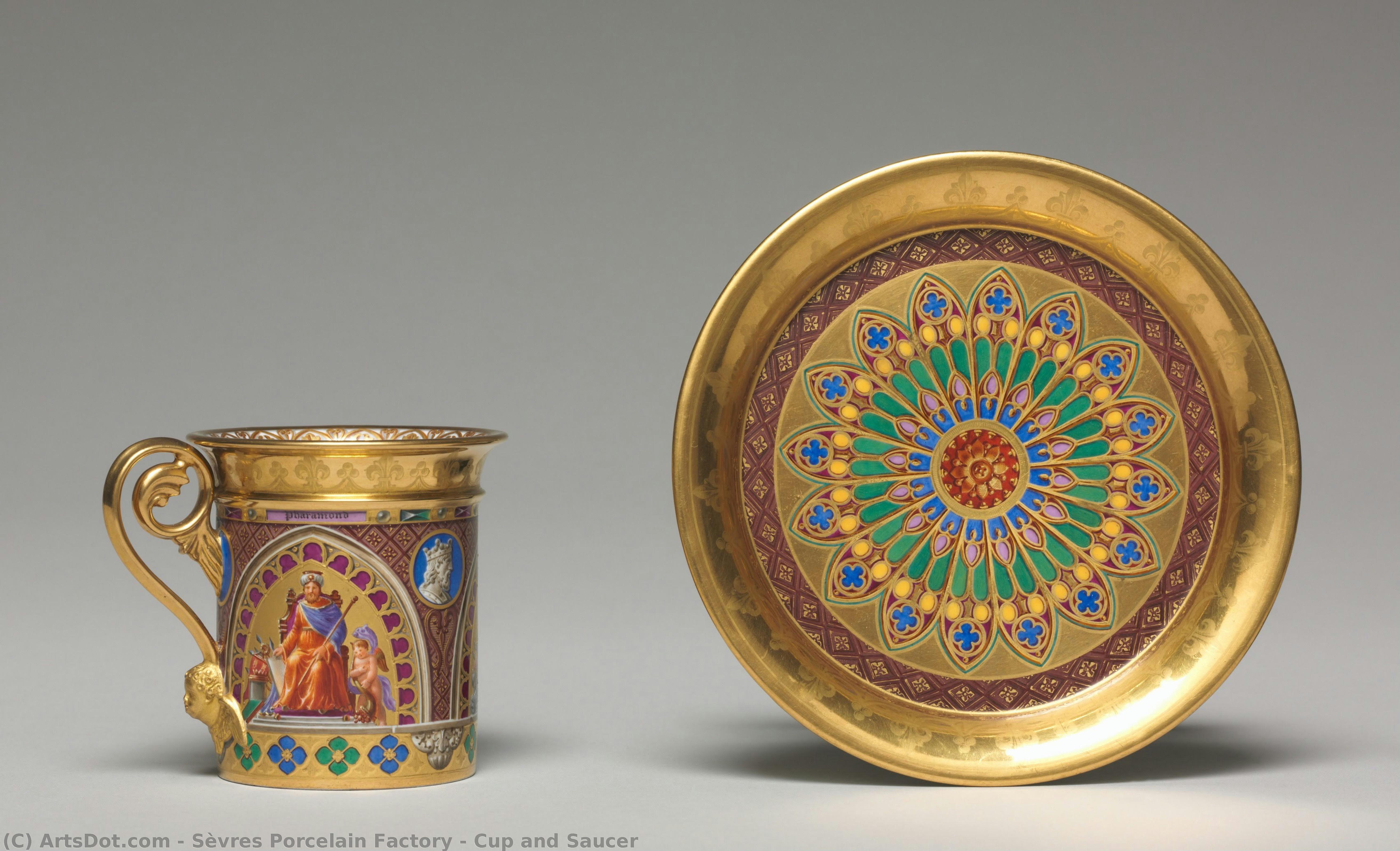
Cup and Saucer
 Ceramics
- Neoclassicism
 1827
1827- 19th Century
 8.0 x 10.0 cm
 Museo de Arte de Cleveland
 Ver más
Giclée / Impresión de arte
Impresiones giclée o en lienzo de calidad de museo con producción rápida y opciones de acabado flexibles. ( Comprar pintura hecha a mano Comprar imagen)




































Elija entre nuestros tamaños predefinidos que respetan las proporciones originales de la obra.

Puede introducir sus propias dimensiones para adaptarse a un marco o espacio específico. Si el tamaño seleccionado no coincide con las proporciones de la imagen original, recortaremos la obra de arte o extenderemos la imagen con un borde con efecto espejo o de color sólido. Se enviará una maqueta digital para su aprobación antes de que comience la producción.
Tenga en cuenta que la vista previa en pantalla no refleja el recorte o la extensión real. Solo la maqueta mostrará con precisión la composición final.
Aunque existen tamaños personalizados, recomendamos seleccionar una dimensión de la lista predefinida para preservar las proporciones originales.
Envío a todo el mundo () en 2 semanas en lugar de las 4/5 semanas estándar. (23 agosto)

Envío exprés gratuito a todo el mundo

Lienzo de lino de alta calidad

Seguro de envío total

Garantía de reembolso de impuestos aduaneros

Garantía de fidelidad cromática exacta

Política de devolución de 60 días (solo por defectos)

Garantía de devolución del 100% del dinero

Descuento por cantidad
 La opción de vidrio solo está disponible en tamaños inferiores a 110 cm.

Cup and Saucer
Giclée / Impresión de arte
Dimensiones de la reproducción
-


Precio total final
$ 62
Descripción de la pieza
A Symphony of Gold and Azure
In the delicate dance between light and shadow, few objects capture the ephemeral beauty of the nineteenth century as intimately as this Cup and Saucer from the legendary Sèvres Porcelain Factory. Created in 1827, this exquisite miniature ensemble serves as a testament to an era where even the most functional objects were elevated to the status of high art. The piece presents a breathtaking interplay of deep cobalt blues and radiant gold, centered around a celestial motif of a sun that seems to glow from within the porcelain itself. To hold such a piece—or to behold its reproduction—is to touch a fragment of French royal history, where every brushstroke was an act of devotion to aesthetic perfection.
The craftsmanship displayed in this set reflects the unparalleled mastery of the Sèvres artisans, who revolutionized the decorative arts through their scientific approach to chemistry and artistry. The technique involves a meticulous application of gold gilding over a rich, saturated blue ground, a hallmark of the factory's prestigious output. This contrast is not merely decorative; it creates a visual rhythm that draws the eye toward the center of the saucer, where the sun motif acts as a focal point of warmth and energy. For the discerning collector or interior designer, this piece offers more than just ornamentation; it provides a sophisticated anchor for a curated space, bringing a sense of Neoclassical grandeur and timelessness to any setting.
The Legacy of Sèvres Excellence
To understand the emotional resonance of this cup and saucer, one must look back to the storied halls of the Manufacture Royale De Porcelain De Sèvres. During the early nineteenth century, the factory was at the height of its influence, producing works that defined the tastes of European royalty and the burgeoning aristocracy. The use of sun imagery carries profound symbolic weight, often evoking themes of enlightenment, power, and the eternal cycle of nature—motifs that were deeply embedded in the cultural consciousness of post-Revolutionary France. This specific piece, with its precise 8 x 10 cm scale, invites a sense of wonder at how much grandeur can be contained within such a small, precious form.
Integrating a high-quality reproduction of this masterpiece into a contemporary interior allows for a dialogue between the past and the present. Whether placed under a glass cloche in a minimalist study or used as a centerpiece in a lavishly decorated dining room, the Cup and Saucer radiates an aura of refined elegance. It is an invitation to slow down, to appreciate the fine details of hand-painted artistry, and to surround oneself with objects that possess a soul. For those seeking to infuse their homes with the prestige of French porcelain history, this work stands as an enduring icon of luxury and light.
Obras relacionadas



Biografía del artista
The Enduring Legacy of Sèvres Porcelain
For centuries, the name Sèvres has been synonymous with exquisite craftsmanship, unparalleled artistry, and the very pinnacle of porcelain production. More than simply a factory, Sèvres represents a cultural institution deeply interwoven with the history of France, its monarchy, and its evolving aesthetic sensibilities. The story begins not in Sèvres itself, but at Saint-Cloud, where in 1671, Adam Vincent established a faience manufactory. However, it was under Louis XIV’s ambitious patronage that the quest for true hard-paste porcelain – a material previously monopolized by China – truly began. Early attempts proved frustrating, and in 1756, Madame Hébert, a skilled chemist, unlocked the secrets of combining kaolin (white clay) with other ingredients to create a porcelain rivaling its Eastern counterpart. This breakthrough led to the relocation of the manufactory to Sèvres in 1756, marking a pivotal moment in French artistic history.Royal Patronage and Artistic Flourishing
The move to Sèvres coincided with an intensification of royal involvement. Louis XV became deeply fascinated by the possibilities of porcelain, envisioning it not merely as tableware but as a medium for sculptural masterpieces and decorative objects that would rival those produced for the court at Versailles. The factory flourished under this patronage, attracting some of the most talented artists of the era. Painters like François Boucher, Jean-Baptiste Oudry, and later, Alexandre-François Desportes, transferred their skills from canvas to porcelain, creating scenes brimming with rococo charm – playful allegories, idyllic landscapes, and delicate floral motifs. Sculptors such as Étienne-Maurice Falconet contributed innovative forms, pushing the boundaries of what was achievable in this demanding material. The *bleu celeste* glaze, a particularly vibrant shade of sky blue, became a signature color of Sèvres, instantly recognizable and highly coveted. During this period, Sèvres porcelain served not only functional purposes but also as diplomatic gifts, showcasing French artistry to foreign courts and solidifying the nation’s cultural prestige.Innovation in Technique and Form
The artisans of Sèvres were relentless innovators. They didn't simply replicate existing forms; they pioneered new techniques that set their work apart. The development of *pâte-sur-pâte*, a method of applying layers of porcelain slip to create relief decoration, demonstrated extraordinary technical skill and artistic control. Ground colors – intensely saturated pigments applied before firing – allowed for unprecedented richness and depth of hue. Furthermore, Sèvres mastered the art of gilding, employing intricate designs that often incorporated *mat gold* (a duller finish) alongside brighter, more reflective varieties. The factory also experimented with different shapes, moving beyond traditional forms to create elaborate vases, pot-pourri jars, and even complex sculptural groups. The influence of Oriental porcelain was evident in some designs, but Sèvres artists quickly adapted these motifs to suit European tastes, incorporating elements of classical mythology and contemporary fashion.From Revolution to Revival
The French Revolution brought upheaval to the Sèvres manufactory, as it did to all aspects of French society. Royal patronage ceased, and the factory was briefly nationalized. While production continued, the focus shifted away from extravagant displays of wealth towards more utilitarian objects. However, the Napoleonic era saw a revival of interest in luxury goods, and Sèvres once again rose to prominence, producing pieces that celebrated imperial grandeur. Throughout the 19th century, the factory adapted to changing tastes, embracing Neoclassical styles, Romantic motifs, and eventually, Art Nouveau designs. Despite periods of financial difficulty and competition from other European porcelain manufacturers, Sèvres maintained its reputation for exceptional quality and artistic innovation.A Continuing Symbol of French Excellence
Today, the Manufacture de Sèvres continues to operate, preserving traditional techniques while also embracing contemporary design. The museum at Sèvres houses an extraordinary collection of porcelain spanning centuries, offering a testament to the factory’s enduring legacy. Pieces from Sèvres are highly sought after by collectors worldwide, representing not only artistic beauty but also a significant piece of French history and cultural heritage. The influence of Sèvres can be seen in porcelain production across Europe and beyond, and its name remains synonymous with luxury, refinement, and the pursuit of perfection. It is a story of royal ambition, artistic genius, and unwavering dedication to craftsmanship – a story that continues to unfold with each exquisitely crafted piece.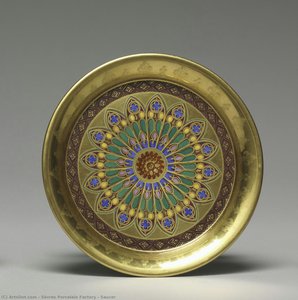
Datos clave
- Artistic Movement Or Style: Porcelain Manufacturing
- Date Of Death: Living
- Full Name: Sèvres Porcelain Factory
Artículos relacionados

Las 10 Obras Maestras del Azul Pizarra: Arte, Historia y Decoración
Descubre las 10 pinturas más famosas dominadas por el azul pizarra. Explora la historia, técnica y belleza de Monet, Van Gogh y otros maestros. Encuentra reproducciones de arte exclusivas para decorar tu hogar en .
The Allure of Azure: Exploring the Symbolic & Aesthetic Depths of Blue in Art History
Explore the rich history of blue in art! Discover its symbolism, from ancient pigments to modern masterpieces by Kandinsky & Seurat. Uncover the psychological impact and cultural meanings behind this captivating hue.
Golden Glow: How to Use Metallic Gold Artworks to Elevate Your Home Decor with Timeless Luxury
Discover how to elevate your home with the timeless elegance of metallic gold artworks. From sculptural metal pieces to gilded oil paintings, learn expert interior design tips for integrating luxurious gold accents into your space with sophistication and grace.

The Allure of Gold in Art History: Symbolism, Technique & Cultural Significance
Explore the rich history of gold in art! Discover symbolism, techniques & cultural significance from ancient civilizations to Klimt's masterpieces. Expert insights for collectors at ArtsDot.

Oro en el Arte: Los 10 Cuadros Más Famosos con Hoja de Oro | ArtsDot
Descubre los 10 cuadros más famosos con hoja de oro, desde Klimt hasta el arte bizantino. Explora la historia, técnica y belleza de estas obras maestras doradas. Reproducciones de arte exclusivas en ArtsDot.com.

