

 Ver en contexto
 Enviar
 Compartir
 Detalles

 Descargar
 Similares
 Radiografía
 Presentación de diapositivas
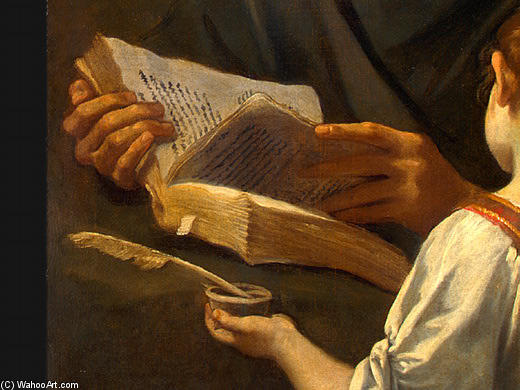
Saint Matthew and the Angel (detail)


 Ver más
Adquiera una imagen digital de alta resolución y optimizada, muy superior a la vista previa en línea.
Cada archivo es preparado meticulosamente por nuestros especialistas internos mediante el uso de herramientas avanzadas y un experto retoque manual. Nos aseguramos de que cada imagen posea una claridad excepcional, una precisión cromática impecable y un detalle minucioso.
El archivo final se entrega por correo electrónico en un plazo de 72 horas, optimizado para su uso inmediato en entornos profesionales, editoriales y de impresión. Esta es la misma calidad en la que confían los estudios de diseño, las editoriales y las galerías de primer nivel.
Imagen Digital
Descarga un archivo de alta resolución para exhibición personal, impresión y proyectos creativos. ( Comprar impresión Comprar pintura hecha a mano)
Incluido en cada pedido de imágenes digitales
Entrega digital experta, garantizada.
Al elegir ArtsDot.com, no solo está adquiriendo una imagen; está recibiendo una obra de arte digital mejorada profesionalmente, elaborada con precisión y respaldada por una garantía de satisfacción. Esto es todo lo que incluye su pedido, automáticamente:

Entrega rápida por email
Recibirá su archivo de imagen digital en alta resolución por correo electrónico en un plazo de 72 horas tras realizar su pedido, listo para su uso inmediato.

Archivo digital optimizado por IA
Su obra de arte se optimiza profesionalmente mediante herramientas avanzadas de IA y edición manual, garantizando el máximo detalle, claridad y precisión cromática.

Reenvío gratuito de por vida
¿Has borrado o perdido tu archivo por error? No te preocupes: te lo volveremos a enviar en cualquier momento, sin coste adicional.

Sin gastos de importación, siempre
Disfrute de su obra de arte al instante sin aduanas, aranceles ni gastos de envío; las descargas digitales siempre están libres de impuestos.

Garantía de fidelidad de color
Garantizamos que su imagen digital refleje los colores originales con la mayor fidelidad posible, mediante el uso de herramientas profesionales y gestión del color.

Garantía de satisfacción de 60 días
Si no está satisfecho con su imagen digital, la revisaremos o le reembolsaremos el 100% en un plazo de 60 días, sin preguntas.

100% Garantía de devolución de dinero
¿No está satisfecho? Obtenga un reembolso completo dentro de los 60 días posteriores a la recepción de su archivo digital, sin necesidad de explicaciones.

Descuentos por pedidos grandes
Compra 3 imágenes, ahorra 10% - Compra 5, ahorra 15% - Compra 10+, ahorra 20%. Ideal para proyectos creativos, galerías y agencias.
Descripción del coleccionable
Simone Cantarini’s “Saint Matthew and the Angel”: A Dialogue of Faith and Humanity
The National Gallery of Art's exquisite rendition of Simone Cantarini’s “Saint Matthew and the Angel” (circa 1645/1648) is more than a mere depiction of a biblical scene; it’s a profound meditation on faith, learning, and the quiet intimacy of spiritual connection. Cantarini, a pivotal figure bridging the Bolognese classicism of his predecessors with the burgeoning naturalism of Venice and the dramatic intensity of Caravaggism, masterfully captures a moment suspended in time – a shared contemplation between the apostle Matthew and an angel, bathed in the soft, diffused light that defines his signature style. The painting isn’t simply illustrating scripture; it's inviting us into a space where divine grace intersects with human understanding.
Cantarini’s genius lies not just in his technical skill – evident in the meticulous rendering of fabrics, the subtle modeling of flesh, and the delicate handling of light – but also in his ability to imbue his subjects with palpable emotion. The figures aren't presented as distant theological icons; they are rendered as individuals engaged in a genuine exchange. Matthew, depicted in the act of studying a book open before him, exudes an aura of focused concentration, while the angel, hovering gently above, seems to offer guidance and perhaps even a shared moment of intellectual curiosity. The composition is remarkably balanced, drawing the eye seamlessly between the two figures and creating a sense of harmonious equilibrium.
A Synthesis of Artistic Influences
Born in Pesaro in 1612 and tragically lost in Mantua just six years later, Simone Cantarini’s life was tragically short but intensely productive. His artistic development is a fascinating testament to his intellectual curiosity and willingness to absorb diverse influences. He began his training under Guido Reni, the leading figure of Bolognese classicism, absorbing the idealized forms and balanced compositions that characterized the style. However, Cantarini quickly ventured beyond these established conventions, seeking inspiration in the vibrant naturalism emerging from Venice – particularly the work of Giorgione and Titian – and the dramatic intensity of Caravaggio’s tenebrist style. This synthesis is brilliantly displayed in “Saint Matthew and the Angel,” where the clarity of form and balanced composition are tempered by a heightened sense of realism and emotional depth.
The painting's setting, reminiscent of a scholarly retreat, further underscores Cantarini’s artistic eclecticism. The table laden with books, the feather resting upon it – symbols of knowledge and contemplation – speak to a world where faith and reason are not necessarily in conflict but rather mutually enriching pursuits. The muted palette, dominated by earthy tones and soft blues and greens, contributes to the painting's serene atmosphere, creating an environment conducive to reflection and spiritual insight.
Symbolism and Spiritual Depth
Beyond its formal qualities, “Saint Matthew and the Angel” is rich in symbolic meaning. The open book held by Matthew represents not just his scholarly pursuits but also his commitment to understanding God’s word. The angel's presence signifies divine guidance and revelation – a reminder that faith is not a solitary endeavor but one guided by grace. The child figure, often interpreted as representing innocence or the future of faith, adds another layer of complexity to the scene, suggesting the enduring legacy of spiritual wisdom.
Notably, the painting’s provenance reveals its journey through European collections, culminating in its current home at the National Gallery of Art. This history underscores the artwork's significance as a cultural treasure and a testament to the enduring power of art to transcend time and connect generations. The inclusion of details like the reference to Hagström, Stockholm, and the subsequent Christie’s sale adds a fascinating layer of historical context, highlighting the painting’s journey through the art market.
A Timeless Masterpiece
“Saint Matthew and the Angel” is more than just a beautiful painting; it's a profound meditation on faith, learning, and the human condition. Simone Cantarini’s masterful synthesis of artistic influences – Bolognese classicism, Venetian naturalism, and Caravaggesque drama – results in a work that is both visually stunning and emotionally resonant. Its quiet intimacy, coupled with its rich symbolic content, ensures that it will continue to captivate viewers for generations to come. Reproductions of this piece offer an exceptional opportunity to bring this timeless masterpiece into any space, fostering contemplation and enriching the visual environment.
Obras relacionadas




Biografía del artista
Vida y Orígenes
- Nombre: Simone Cantarini (también conocido como Simone da Pesaro, il Pesarese)
- Nacimiento: 21 de agosto de 1612, en Pesaro, Italia
- Fallecimiento: 15 de octubre de 1648
- Origen: Pesaro, región de Marche, Estados Pontificios (ahora parte de Italia)
- Antecedentes Familiares: Su padre, Girolamo Cantarini, fue un comerciante prominente.
- Vida Temprana: Se sabe poco sobre su infancia y vida familiar más allá de la profesión de su padre.
Formación y Desarrollo Artístico
- Formación Inicial (c. 1623-1625): Probablemente comenzó con Giovanni Giacomo Pandolfi en Pesaro, aprendiendo técnicas básicas y el estilo artístico local.
- Período Veneciano: Un viaje a Venecia lo expuso al manierismo veneciano tardío bajo Sante Peranda y habilidades de dibujo de Francesco Mingucci.
- Influencia de Claudio Ridolfi (c. 1625-1629): Estudió con Claudio Ridolfi, absorbiendo el estilo veneciano y la apreciación por la obra de Federico Barocci. Este período fue crucial para dar forma a su visión artística temprana.
- Autoestudio e Influencias: Después de la partida de Ridolfi, Cantarini se autoeducó en gran medida, estudiando obras de los Carracci, Federico Barocci, Orazio Gentileschi y Giovanni Francesco Guerrieri.
- Influencia de Guido Reni (c. 1634 en adelante): Un momento decisivo fue encontrar la *Virgen con el Niño y Santos Tomás y Jerónimo* de Guido Reni en la Catedral de Pesaro. Esto llevó a un período de estudio bajo Reni en Bolonia, impactando significativamente su estilo.
- Período Bolognés (c. 1634-1639): Se unió al estudio de Guido Reni en Bolonia, donde perfeccionó sus habilidades para grabar y desarrolló una voz artística distintiva. Sin embargo, surgieron tensiones con Reni debido al espíritu independiente de Cantarini y las críticas a su estilo posterior.
Obras Principales y Estilo Artístico
- Primeras Obras Maestras: *San Pedro Curando al Lame* (Fano) demostró influencias tempranas de Guido Reni.
- Pinturas Notables:
- La Inmaculada Concepción con Santos (Pinacoteca Nazionale di Bologna)
- Santa Rita de Cascia (Pesaro)
- Alegoría de la Pintura (Museo Nacional, Varsovia)
- Grabados: Cantarini fue un grabador altamente habilidoso, conocido por la delicadeza y luminosidad de sus impresiones. Produjo numerosos grabados a partir de obras de Reni y otros.
- Estilo Artístico: Su estilo mezcló el clasicismo boloñés con un naturalismo audaz, incorporando elementos del manierismo veneciano y el caravaggismo. Se caracterizó por colores vibrantes, composiciones dinámicas y figuras expresivas.
Significado Histórico y Legado
- Voz Artística Única: Cantarini desarrolló una voz artística distintiva que lo separó de sus contemporáneos. Su capacidad para sintetizar diversas influencias en un estilo cohesivo lo convirtió en una figura importante en el arte barroco italiano.
- Experiencia en Grabado: Es recordado particularmente por sus excepcionales habilidades para grabar, que contribuyeron significativamente al desarrollo de las técnicas de grabado durante el siglo XVII.
- Personalidad Compleja y Reputación: Su reputación se vio algo empañada por su relación conflictiva con Guido Reni e informes de una muerte escandalosa en Mantua, pero estas historias no disminuyen sus contribuciones artísticas.
- Influencia en Artistas Posteriores: Aunque no fue tan ampliamente celebrado como algunos de sus contemporáneos, la obra de Cantarini influyó en generaciones posteriores de artistas italianos a través de su estilo innovador y dominio técnico.
Últimos Años y Muerte
- Regreso a Pesaro (1639): Después de dejar Bolonia, regresó a su ciudad natal, Pesaro.
- Relaciones Controvertidas: Tuvo relaciones con mujeres locales y engendró hijos fuera del matrimonio, lo que causó problemas sociales en Pesaro.
- Muerte en Mantua (1648): Cantarini murió en Mantua bajo circunstancias misteriosas, posiblemente debido a un envenenamiento tras una disputa sobre la colección Gonzaga.
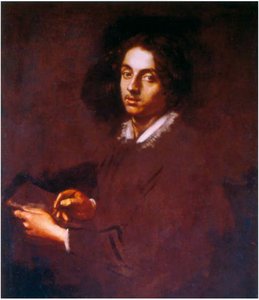
Simone Cantarini
1612 - 1648 , Italia
Breves datos
- Artistas Que Influyeron:
- Federico Barocci
- Orazio Gentileschi
- Guido Reni
- Claudio Ridolfi
- Fecha De Fallecimiento: 15 de octubre de 1648
- Fecha De Nacimiento: 21 de agosto de 1612
- Lugar De Nacimiento: Pesaro, Italia
- Movimiento Artístico: Barroco, Clasicismo
- Nacionalidad: Italiana
- Nombre Completo: Simone Cantarini
- Obras Notables:
- San Pedro curando al cojo
- La Inmaculada Concepción
- Santa Rita de Cascia
- Alegoría de la Pintura

