 Ver en contexto
 Enviar
 Compartir
 Detalles

 Descargar
 Similares
 Radiografía
 Presentación de diapositivas
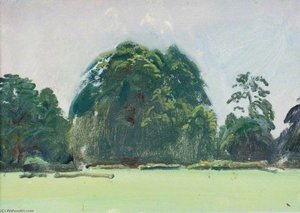
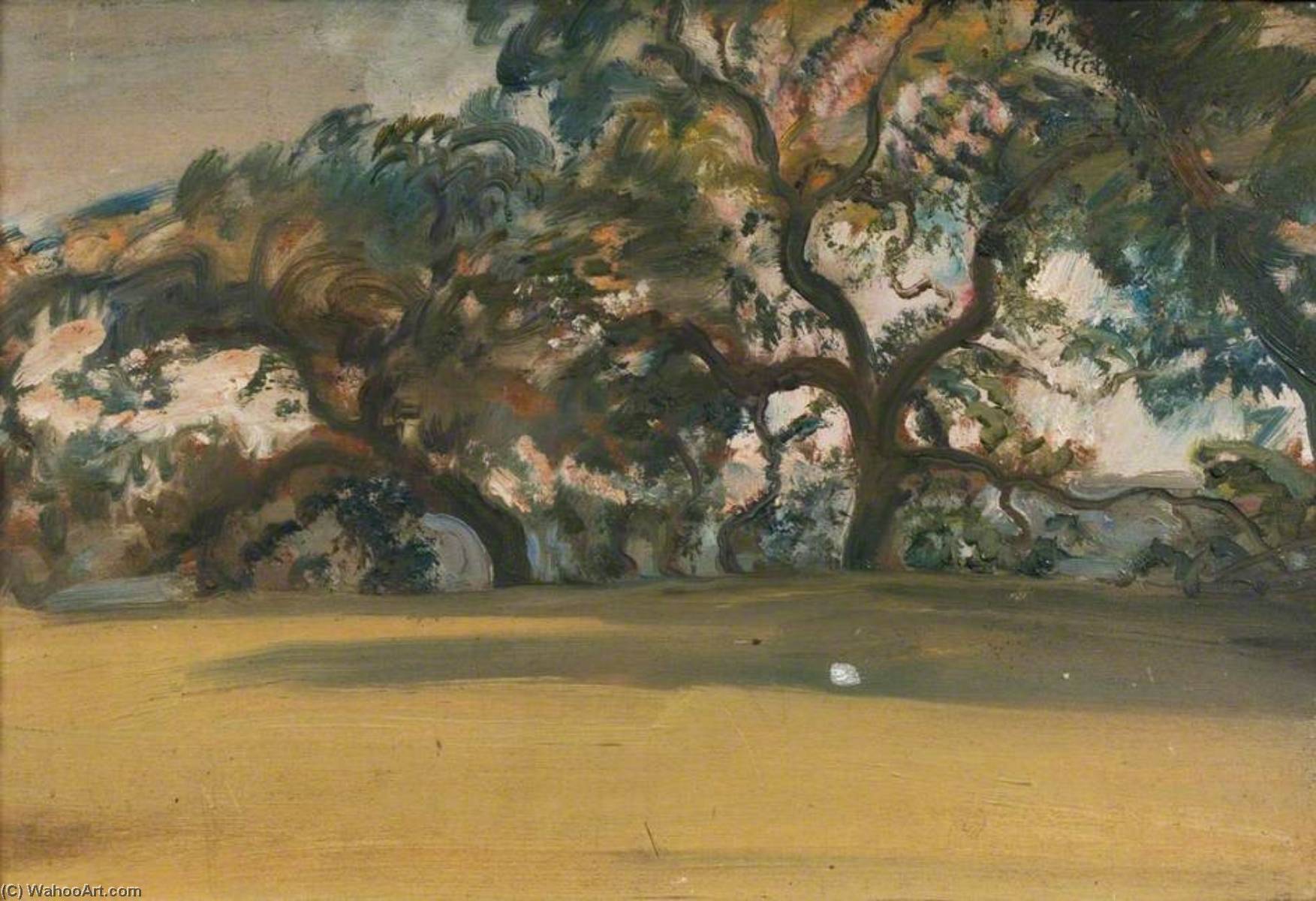
Porlock Studies, Trees by the Edge of a Field (recto)
 Oil
Oil- WallArt
- Impressionism
 Modern
 24.0 x 35.0 cm
 El Museo Munnings
 Ver más
Giclée / Impresión de arte
Impresiones giclée o en lienzo de calidad de museo con producción rápida y opciones de acabado flexibles. ( Comprar pintura hecha a mano Comprar imagen)




P118B $10

P118H $10

P118W $10

P438Z $10

P508JH $12

P508YH $12

P805H $10

P805Z $10

P919BZ $10

P919G $10

P919XJ $10

P959ZH $10

P968JZ $12

W106C $8

W218G $10

W218JH $8

W218Y $10

W307PJ $10

W316G $10

W316PJ $8

W316Y $10

W398PJ $8

W4111J $10

W500HY $15

W500JH $15

W692G $12

W849H $8

W940BG $15

W953PJ $8




Elija entre nuestros tamaños predefinidos que respetan las proporciones originales de la obra.

Puede introducir sus propias dimensiones para adaptarse a un marco o espacio específico. Si el tamaño seleccionado no coincide con las proporciones de la imagen original, recortaremos la obra de arte o extenderemos la imagen con un borde con efecto espejo o de color sólido. Se enviará una maqueta digital para su aprobación antes de que comience la producción.
Tenga en cuenta que la vista previa en pantalla no refleja el recorte o la extensión real. Solo la maqueta mostrará con precisión la composición final.
Aunque existen tamaños personalizados, recomendamos seleccionar una dimensión de la lista predefinida para preservar las proporciones originales.
Envío a todo el mundo () en 2 semanas en lugar de las 4/5 semanas estándar. (2 septiembre)

Envío exprés gratuito a todo el mundo

Lienzo de lino de alta calidad

Seguro de envío total

Garantía de reembolso de impuestos aduaneros

Garantía de fidelidad cromática exacta

Política de devolución de 60 días (solo por defectos)

Garantía de devolución del 100% del dinero

Descuento por cantidad
 La opción de vidrio solo está disponible en tamaños inferiores a 110 cm.

Porlock Studies, Trees by the Edge of a Field (recto)
Giclée / Impresión de arte
Dimensiones de la reproducción
-


Precio total final
$ 62
A Pastoral Symphony in Earth and Sky
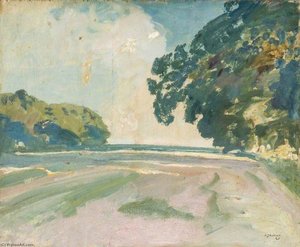
In the delicate, impressionistic study titled Porlock Studies, Trees by the Edge of a Field (recto), Sir Alfred James Munnings invites the viewer into a quiet moment of English pastoral beauty. The painting serves as a profound meditation on the textures of the countryside, where the ruggedness of nature meets the gentle touch of human cultivation. At first glance, the eye is drawn to the foreground, where a freshly turned field stretches across the canvas in warm, loamy tones of sienna and light brown. This area, rendered with a sense of tactile immediacy, suggests the rhythmic cycles of agricultural life—a subtle nod to the enduring connection between the land and those who tend it. The composition is anchored by a cluster of mature trees, their twisted trunks and sprawling branches acting as silent sentinels at the field's edge. Through a masterful use of deep greens and shadowed foliage, Munnings creates a sense of structural depth, allowing the heavy, organic forms of the trees to stand in striking contrast against the ethereal lightness of the background.
The technique employed in this work is a testament to Munnings’s ability to capture atmosphere through movement. Rather than focusing on minute, photographic detail, the artist utilizes broad, confident brushstrokes that imbue the scene with vitality and light. This loose, painterly approach allows the pale blue sky to breathe, suggesting a vast, unclouded expanse that stretches far beyond the frame. The interplay between the rough, textured earth and the smooth, airy heavens creates a dynamic tension, making the landscape feel alive and breathing. For the discerning collector or interior designer, this piece offers a sophisticated balance of weight and lightness; its earthy palette provides a grounding presence in a room, while its luminous sky prevents the composition from feeling heavy, making it an ideal centerpiece for spaces designed to evoke tranquility and natural grace.
The Legacy of a Vanishing World
To understand the emotional resonance of this study, one must consider the historical heartbeat of Sir Alfred James Munnings’s era. As a preeminent figure in 20th-century British art, Munnings was more than a mere observer; he was a chronicler of a way of life that was beginning to slip into the shadows of modernity. While he is most celebrated for his vibrant depictions of equestrian excellence and the high drama of the hunt, his landscape studies like this one reveal the soul of the English countryside. There is a profound sense of nostalgia embedded in these trees and fields—a quiet reverence for the permanence of nature amidst a changing world. The painting does not merely depict a location; it captures a feeling of peace, an invitation to pause and witness the subtle beauty of the seasonal shift.
For those seeking to bring the timeless elegance of the British landscape into their homes, this reproduction offers much more than decoration. It is an evocative piece of history that speaks to themes of continuity, growth, and the quiet dignity of the natural world. The way the light catches the edges of the foliage and the soft shadows settle in the furrows of the field creates a sensory experience that can transform the mood of any interior. Whether placed in a sunlit study or a grand living space, Porlock Studies serves as a window into a serene, pastoral past, offering a perennial sense of calm and an enduring connection to the earth.
Obras relacionadas
Biografía del artista
Sir Alfred James Munnings: Una Vida en la Pintura
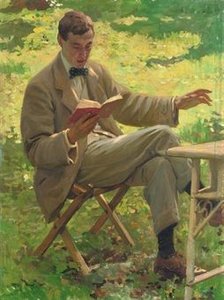
Sir Alfred James Munnings (1878-1959), conocido como AJ Munnings, fue uno de los pintores británicos más destacados de caballos y un firme tradicionalista que se opuso vehementemente al auge del modernismo. Sus vibrantes representaciones de la vida rural, escenas de caza y caballos de carreras consolidaron su lugar como una figura destacada en el arte británico durante la primera mitad del siglo XX.
Primeros Años y Comienzos Artísticos
Nacido el 8 de octubre de 1878 en Mendham Mill, Suffolk, Munnings’ vida temprana estuvo profundamente entrelazada con el campo. Su padre era molinero y creció rodeado de caballos, una influencia que dominaría su carrera artística. Después de dejar Framlingham College a los catorce años, se convirtió en aprendiz de un impresor de Norwich durante seis años, diseñando carteles publicitarios mientras estudiaba simultáneamente en la Escuela de Arte de Norwich.
Desarrollo Artístico e Influencias
La formación formal de Munnings fue limitada, pero perfeccionó sus habilidades a través de la observación y la práctica. Se asoció con la Escuela de Newlyn de pintores en Cornualles, un grupo conocido por su pintura al aire libre y sus representaciones realistas de la vida rural. Mientras allí, conoció a Florence Carter-Wood, a quien se casó en 1912. Su trabajo inicial se centró en escenas rurales, que a menudo presentaban gitanos y caballos. Desarrolló un estilo impresionista, caracterizado por pinceladas sueltas y un enfoque en capturar la luz y la atmósfera.
Años de Guerra y Comisiones
Durante la Primera Guerra Mundial, Munnings se ofreció como voluntario para el servicio, pero fue considerado no apto para luchar. En cambio, sirvió con la Brigada de Caballería Canadiense como artista oficial de guerra, documentando el papel de los caballos en el conflicto. Esta experiencia lo impactó profundamente; presenció de primera mano el sufrimiento y la pérdida tanto de hombres como de animales. Pintó escenas cerca del frente, incluido un retrato del General Jack Seely montado en su caballo Warrior. Después de la guerra, Munnings recibió numerosas comisiones prestigiosas, estableciendo su seguridad financiera.
Logros Principales y Reconocimiento
- Presidente de la Royal Academy: Elegido Presidente de la Royal Academy en 1944, ocupó el cargo hasta 1949.
- Caballero: Fue nombrado Caballero Bachelor en 1944 y Caballero Comandante del Orden Real Victoriano en 1947.
- Comisiones de Artista de Guerra: Su trabajo documentando la Caballería Canadiense durante la Primera Guerra Mundial le valió un reconocimiento significativo.
- Trabajo Escultórico: También creó esculturas, incluida una estatua ecuestre de Edward Horner.
Un Crítico del Modernismo
Munnings es recordado quizás tanto por su enérgica crítica al modernismo como por sus representaciones tradicionales. En una transmisión famosa (y supuestamente ebria) en la BBC Radio en 1949, entregó una dura crítica al arte contemporáneo, afirmando que se uniría gustosamente a Winston Churchill para "patear... algo de Picasso". Este discurso solidificó su imagen como defensor de los valores artísticos tradicionales.
Vida Posterior y Legado
Munnings compró Castle House en Dedham, Essex, en 1919, que se convirtió tanto en su hogar como en su estudio durante el resto de su vida. Después de su muerte el 17 de julio de 1959, su esposa Violet transformó Castle House en el Museo de Arte Munnings, preservando su trabajo y legado. Hoy en día, Munnings es celebrado como un maestro del arte ecuestre y una figura significativa en la historia artística británica.
Significado Histórico
Las pinturas de Munnings ofrecen una valiosa visión de una época pasada: un mundo de caballos, caza y vida rural que desaparecía rápidamente durante su vida. Su trabajo continúa resonando con el público hoy en día, no solo por su habilidad técnica, sino también por su evocadora representación de una forma de vida apreciada. Sigue siendo un símbolo de la tradición artística y un recordatorio del poder perdurable de la pintura representacional.
Sir Alfred James Munnings
1878 - 1959 , Reino Unido
Datos clave
- Artistas Que Influyeron: ['Claude Monet']
- Fecha De Fallecimiento: 17 de julio de 1959
- Fecha De Nacimiento: 8 de octubre de 1878
- Lugar De Nacimiento: Mendham, Reino Unido
- Movimiento Artístico: Impresionismo inglés
- Nacionalidad: Británico
- Nombre Completo: Sir Alfred James Munnings
- Obras Notables:
- Río Congelado
- Start Of A Steeplechase
- Nubes Sobre Exmoor
Artículos relacionados
Los 10 Cuadros Más Famosos en Tonos Arena: Historia y Decoración con Arte
Descubre los 10 cuadros más emblemáticos en tonos arena, desde Monet a Van Gogh. Explora la historia del arte impresionista y encuentra inspiración para decorar con obras maestras atemporales. Reproducciones de museo en .
Los 10 Cuadros Más Famosos en Tonos 'Hongo': Arte, Historia y Decoración
Descubre los 10 cuadros más emblemáticos en tonos tierra y ocres. Explora la historia, artistas como Monet y Van Gogh, e inspírate para decorar con arte atemporal. Reproducciones de museo en .
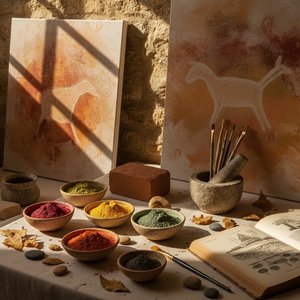
The Resonance of Earthly Tones: Exploring Nuance, History & Emotional Impact in Art
Explore the captivating world of earth tones in art! Discover historical context, emotional resonance & artistic techniques behind these timeless colors. Find inspiration for your home decor and museum-quality reproductions.

Earthen Hues: Exploring the Psychological & Artistic Significance of Earth Tones
Explore the captivating world of earth tones! Discover their historical significance, psychological impact & artistic techniques. Find inspiration for your home decor and museum-quality reproductions at ArtsDot.
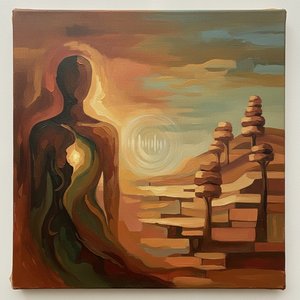
The Resonance of Earth Tones: Exploring Emotional Depth & Artistic Context in Paintings
Explore the captivating world of earth tones in painting! Discover the historical context, emotional resonance, and artistic techniques behind these timeless colors. Learn how to create harmonious spaces with natural palettes.