 Ver en contexto
 Enviar
 Compartir
 Detalles

 Descargar
 Similares
 Radiografía
 Presentación de diapositivas
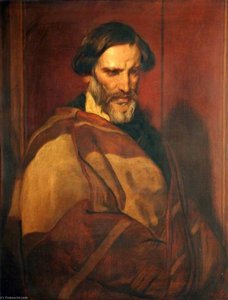
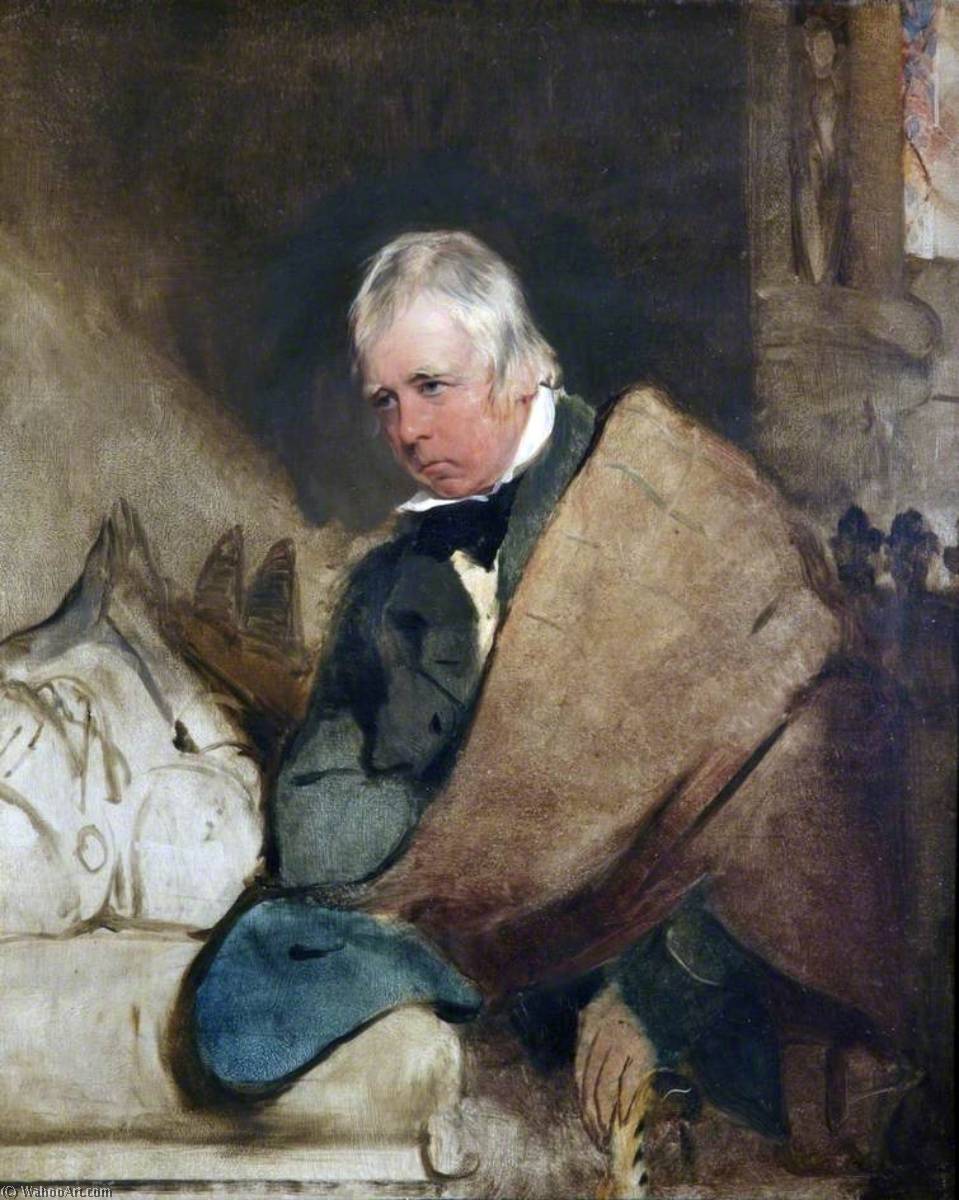
Sir Walter Scott (1771–1832)
 Oil On Canvas
- WallArt
- Romanticism
 1824
1824 61.0 x 51.0 cm
 Galería de Arte Walker
 Ver más
Reproducción al óleo hecha a mano
Óleo sobre lienzo pintado a mano en el tamaño y marco de su elección, realizado por encargo por nuestros artistas. ( Comprar impresión Comprar imagen)




P118B $10

P118H $10

P118W $10

P438Z $10

P508JH $12

P508YH $12

P805H $10

P805Z $10

P919BZ $10

P919G $10

P919XJ $10

P959ZH $10

P968JZ $12

W106C $8

W218G $10

W218JH $8

W218Y $10

W307PJ $10

W316G $10

W316PJ $8

W316Y $10

W398PJ $8

W4111J $10

W500HY $15

W500JH $15

W692G $12

W849H $8

W940BG $15

W953PJ $8




Elija entre nuestros tamaños predefinidos que respetan las proporciones originales de la obra.

Puede ingresar sus propias dimensiones para adaptarse a un marco o espacio específico. Si el tamaño seleccionado no coincide con las proporciones de la imagen original, recortaremos la obra o extenderemos la pintura con elementos adicionales pintados a mano. Se le enviará una maqueta digital para su aprobación antes de comenzar la producción.
Tenga en cuenta que la vista previa en pantalla no refleja el recorte o la extensión reales. Solo la maqueta mostrará con precisión la composición final.
Si bien existen tamaños personalizados, recomendamos seleccionar una dimensión de la lista predefinida para preservar las proporciones originales.
Tras realizar el pedido, el equipo de ArtsDot.com enviará un correo electrónico al cliente para solicitar instrucciones y proporcionarle una vista previa del boceto.
Envío a todo el mundo () en 3-4 semanas en lugar de las 5 semanas estándar. (25 agosto). Sin comprometer la calidad.

Envío exprés gratuito a todo el mundo

Lienzo de lino de alta calidad

Seguro de envío total

Garantía de reembolso de impuestos aduaneros

Garantía de fidelidad cromática exacta

Política de devolución de 60 días (solo por defectos)

Garantía de devolución del 100% del dinero

Descuento por cantidad
 La opción de vidrio solo está disponible en tamaños inferiores a 110 cm.

Sir Walter Scott (1771–1832)
Técnica de reproducción
Dimensiones de la reproducción
-


Precio total final
$ 263
Descripción de la obra
A Solitary Giant: Edwin Landseer’s Portrait of Sir Walter Scott
The year is 1824. The literary world is ablaze with the tales of Sir Walter Scott, whose evocative narratives of Scottish history and folklore have captured the imagination of a nation – and indeed, Europe. It's within this vibrant cultural landscape that Edwin Landseer, one of Britain’s most celebrated artists, embarked on a commission to immortalize the man himself: a portrait of Sir Walter Scott seated amidst the brooding majesty of a mountainous interior. This is more than simply a likeness; it’s a carefully constructed tableau designed to convey both the subject's intellectual stature and the profound emotional resonance of his work.
Landseer, already renowned for his breathtaking depictions of animals – particularly horses – possessed an extraordinary ability to imbue his subjects with life. He wasn’t merely rendering a portrait; he was attempting to capture the very essence of Scott's character, his contemplative nature, and the weight of his literary legacy. The composition itself is masterfully orchestrated. Scott, rendered in a dignified pose, sits within what appears to be a vast cavern or mountainous grotto, bathed in dramatic chiaroscuro – an intense contrast between light and shadow that immediately draws the eye to the central figure. The rough-hewn rock formations of the background, rendered with palpable texture through Landseer’s skillful brushwork, create a sense of enclosure and isolation, mirroring perhaps the solitary nature of the writer's life and his immersion in the worlds he created.
The Romantic Palette and Dramatic Lighting
Technically, the portrait is executed in oil on canvas, a medium that allowed Landseer to achieve the rich textures and nuanced tonal variations crucial to his vision. The color palette is deliberately muted – dominated by browns, grays, and blues – reflecting the somber atmosphere of the setting and subtly hinting at the melancholy often associated with Scott’s later years. However, within this restrained scheme, Landseer employs a dramatic use of light, directing it powerfully onto Scott's face, illuminating his features with an almost ethereal glow. This strategic lighting not only highlights the subject’s intelligence and gravitas but also serves to emphasize the solitude he embodies.
The artist’s attention to detail is remarkable. The folds of Scott’s clothing are rendered with meticulous precision, conveying a sense of both comfort and formality. The texture of the fabric – a heavy wool or tweed – contrasts beautifully with the rough stone of the cavern walls, further emphasizing the juxtaposition between man and nature. Landseer's use of line is equally effective, employing angular lines to define the cave walls and more organic curves to represent Scott’s form, creating a dynamic interplay between structure and fluidity.
Symbolism and the Weight of Legacy
Beyond its technical brilliance, the portrait is laden with symbolism. The mountainous setting itself can be interpreted as representing the vastness of Scott's imagination – the boundless landscapes he brought to life through his writing. The solitary figure within this imposing environment speaks to the intellectual isolation often experienced by artists and writers, those who spend their lives immersed in thought and creation. Scott’s posture—seated, contemplative, holding a quill pen—underscores his role as a chronicler of history and legend, a man dedicated to preserving and sharing stories.
The portrait was completed during a period of immense literary excitement surrounding Scott's work. His novels were hugely popular, shaping the Romantic movement and influencing generations of writers. Landseer’s depiction captures not just Scott’s physical appearance but also the spirit of an era—a time of national pride, artistic innovation, and a renewed interest in Scottish heritage. It is a powerful testament to the enduring legacy of Sir Walter Scott and a remarkable achievement in Victorian portraiture.
A Timeless Masterpiece for Reproduction
Today, Edwin Landseer’s Portrait of Sir Walter Scott remains a captivating work of art, admired for its dramatic composition, masterful technique, and profound emotional resonance. Reproductions offer an accessible way to experience the beauty and power of this iconic image, bringing its evocative atmosphere into any interior space. Whether displayed in a grand hall or a cozy study, this portrait serves as a reminder of the enduring influence of literature and the timeless appeal of artistic vision.
Obras relacionadas
Biografía del artista
Primeros años y formación
Sir Edwin Henry Landseer, un destacado pintor y escultor inglés, nació el 7 de marzo de 1802 en Londres, Reino Unido. Como hijo del grabador John Landseer A.R.A., estuvo expuesto al mundo del arte desde una edad temprana. El talento prodigioso de Landseer fue reconocido, lo que le llevó a estudiar con varios artistas, incluyendo a su padre y al pintor de historia Benjamin Robert Haydon.Carrera artística
La carrera artística de Landseer se caracterizó por su excepcional habilidad para capturar animales, particularmente caballos, perros y ciervos. Sin embargo, sus obras más famosas son las esculturas de leones en la Plaza del Trafalagar, Londres. Sir Edwin Henry Landseer fue miembro de la Royal Academy, exhibiendo obras a los 13 años y luego convirtiéndose en asociado a los 24 y académico a los 31.Obras notables y colaboraciones
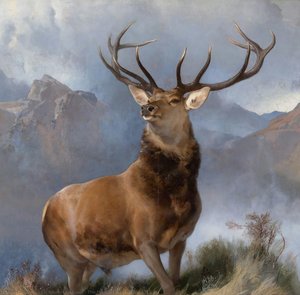
Algunas de las obras notables de Landseer incluyen:- Monarca del Glen (1851), un majestuoso estudio de ciervo, que muestra su habilidad para capturar la belleza de la naturaleza.
- En camino al rescate (1827), una pintura con un perro Terranova, destacando su capacidad para retratar animales nobles.
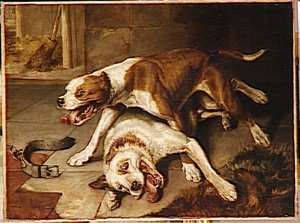
- Imponiendo la ley (1840), una pieza satírica con un grupo de perros, demostrando su sentido del humor y creatividad.
Museos que exhiben las obras de Landseer
Las obras de Landseer se pueden encontrar en varios museos, incluyendo:- Tate Britain, Londres, Reino Unido
- Victoria and Albert Museum, Londres, Reino Unido
- Kenwood House, Londres, Reino Unido
- The Wallace Collection, Londres, Reino Unido
Legado
El legado de Sir Edwin Henry Landseer se extiende más allá de su arte, con la variedad "Landseer" de perro Terranova siendo nombrada en su honor. Sus colaboraciones con el pintor Frederick Richard Lee y sus retratos de la reina Victoria y su familia solidifican aún más su impacto en el arte británico.Recursos en línea
Para obtener más información sobre la vida y las obras de Sir Edwin Henry Landseer, visite:- ArtsDot.com: sir edwin henry landseer
- wikipedia: sir edwin landseer
Conclusión
El talento notable y las contribuciones de Sir Edwin Henry Landseer al arte británico han dejado un impacto duradero. Sus obras, con temas de animales y satíricos, continúan inspirando a artistas y entusiastas del arte por igual.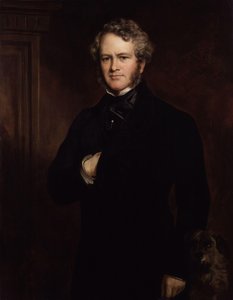
Sir Edwin Henry Landseer
1802 - 1873 , Reino Unido
Datos clave
- Estilo Artístico: Realismo victoriano
- Fecha De Nacimiento: 7 de marzo de 1802
- Lugar De Nacimiento: Londres, Reino Unido
- Nacionalidad: Británico
- Nombre Completo: Sir Edwin Henry Landseer
- Obras Notables:
- Monarch of the Glen
- Off to the Rescue
- Laying Down the Law
Artículos relacionados
Sir Joshua Reynolds: Las 25 Obras Maestras del Retrato Inglés | ArtsDot
Descubre las 25 obras maestras de Sir Joshua Reynolds, el pintor inglés que elevó el retrato a la categoría de arte. Explora su técnica clásica, estilo rococó y significado histórico en ArtsDot.com. ¡Encuentra reproducciones de alta calidad para tu hogar!

Alfred Munnings: Las 25 Obras Maestras del Pintor de Caballos | ArtsDot
Descubre las 25 obras maestras de Alfred Munnings, el pintor británico de caballos por excelencia. Explora su impresionismo inglés, escenas campestres y técnica única. Encuentra reproducciones de arte de alta calidad en ArtsDot.com.
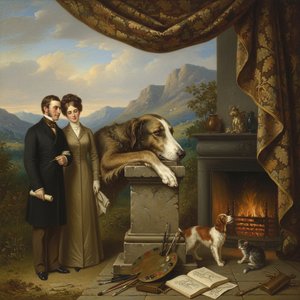
Sir Edwin Landseer: Sentiment, Society & the Victorian Animalier Tradition
Explore the life & art of Sir Edwin Landseer, Victorian Britain's foremost animal painter. Discover his iconic works, societal impact, and collecting guide at ArtsDot.
El Siglo XIX en el Arte: 10 Obras Maestras para Decorar con Historia y Estilo
Descubre 10 obras maestras del siglo XIX: Monet, Goya y más. Explora el impresionismo, realismo y romanticismo que definieron una época. Encuentra reproducciones de arte exclusivas para decorar tu hogar con estilo en ArtsDot.com.
Samuel Walters: Capturing Victorian Maritime Life with Precision & Artistry
Explore the exquisite maritime paintings of Samuel Walters (1811-1882). Discover his mastery of detail, historical scenes & influence on Victorian art. Learn about collecting his works and find high-quality reproductions at ArtsDot.