 Ver en contexto
 Enviar
 Compartir
 Detalles

 Descargar
 Similares
 Radiografía
 Presentación de diapositivas
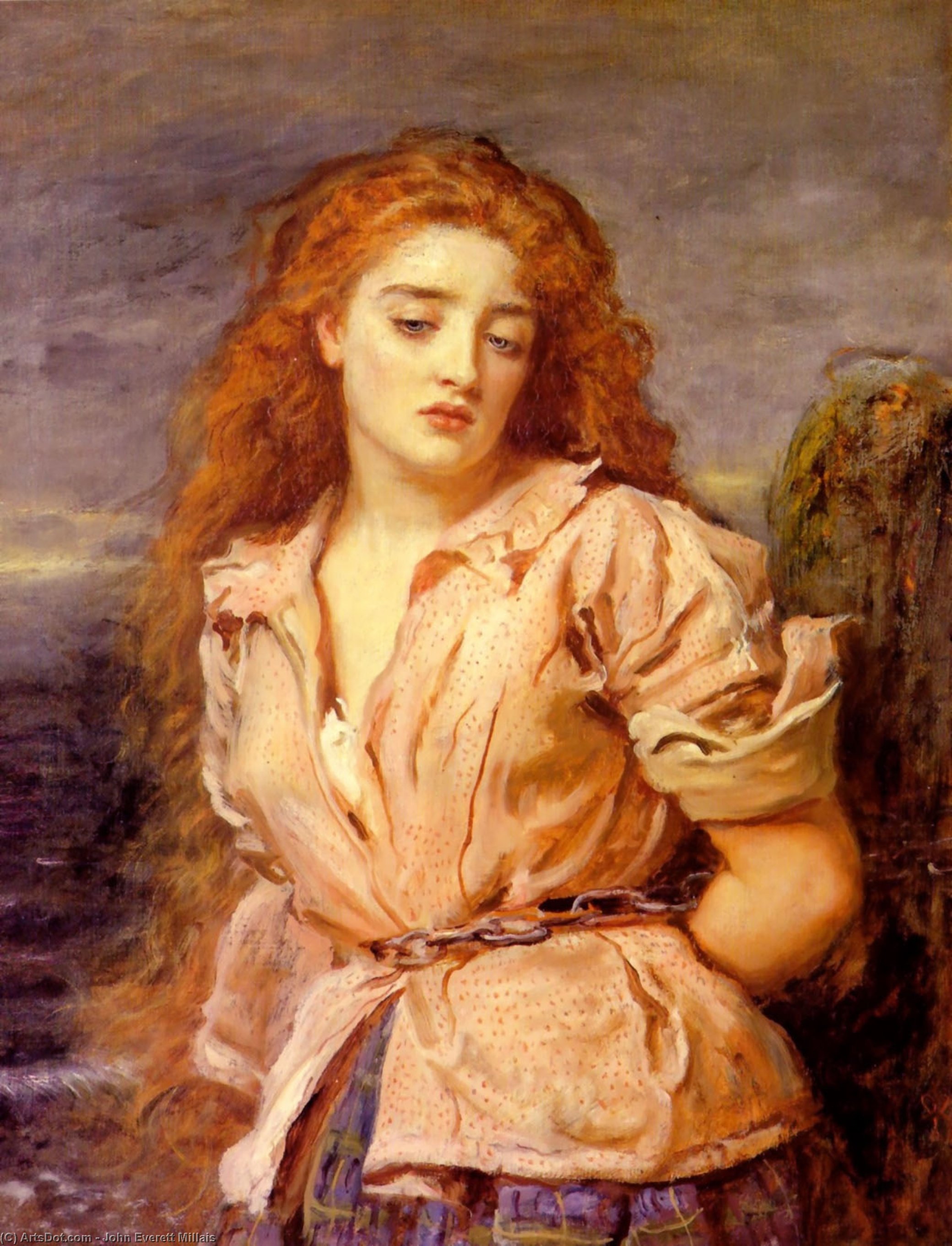
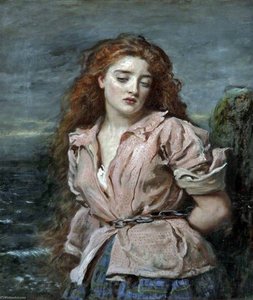
The Matyr of the Solway
 Oil On Canvas
- WallArt
- Romanticism
 1871
1871 56.0 x 60.0 cm
 Ver más
Reproducción al óleo hecha a mano
Óleo sobre lienzo pintado a mano en el tamaño y marco de su elección, realizado por encargo por nuestros artistas. ( Comprar impresión Comprar imagen)




P118B $10

P118H $10

P118W $10

P438Z $10

P508JH $12

P508YH $12

P805H $10

P805Z $10

P919BZ $10

P919G $10

P919XJ $10

P959ZH $10

P968JZ $12

W106C $8

W218G $10

W218JH $8

W218Y $10

W307PJ $10

W316G $10

W316PJ $8

W316Y $10

W398PJ $8

W4111J $10

W500HY $15

W500JH $15

W692G $12

W849H $8

W940BG $15

W953PJ $8




Elija entre nuestros tamaños predefinidos que respetan las proporciones originales de la obra.

Puede ingresar sus propias dimensiones para adaptarse a un marco o espacio específico. Si el tamaño seleccionado no coincide con las proporciones de la imagen original, recortaremos la obra o extenderemos la pintura con elementos adicionales pintados a mano. Se le enviará una maqueta digital para su aprobación antes de comenzar la producción.
Tenga en cuenta que la vista previa en pantalla no refleja el recorte o la extensión reales. Solo la maqueta mostrará con precisión la composición final.
Si bien existen tamaños personalizados, recomendamos seleccionar una dimensión de la lista predefinida para preservar las proporciones originales.
Tras realizar el pedido, el equipo de ArtsDot.com enviará un correo electrónico al cliente para solicitar instrucciones y proporcionarle una vista previa del boceto.
Envío a todo el mundo () en 3-4 semanas en lugar de las 5 semanas estándar. (25 agosto). Sin comprometer la calidad.

Envío exprés gratuito a todo el mundo

Lienzo de lino de alta calidad

Seguro de envío total

Garantía de reembolso de impuestos aduaneros

Garantía de fidelidad cromática exacta

Política de devolución de 60 días (solo por defectos)

Garantía de devolución del 100% del dinero

Descuento por cantidad
 La opción de vidrio solo está disponible en tamaños inferiores a 110 cm.

The Matyr of the Solway
Técnica de reproducción
Dimensiones de la reproducción
-


Precio total final
$ 263
Descripción de la obra
A Portrait Steeped in Emotion: Exploring Millais’s “The Martyr of the Solway”
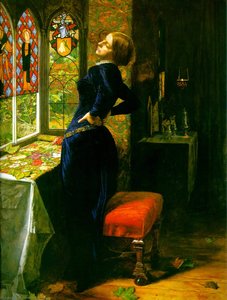
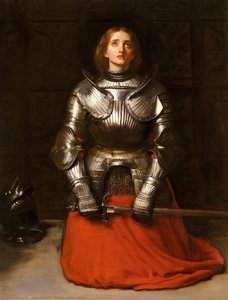
Sir John Everett Millais' "The Martyr of the Solway," completed in 1871, stands as a cornerstone of Pre-Raphaelite art and a testament to Romantic sensibilities. More than just a depiction of a woman gazing off into the distance—though that gaze is undeniably arresting—the painting embodies a profound exploration of grief, vulnerability, and the enduring power of memory. Millais’s meticulous attention to detail elevates it beyond mere visual representation, transforming it into an emotionally resonant experience for the viewer.The Subject Matter: Grief Embodied
The central figure in “The Martyr of the Solway” is a woman whose face remains obscured by shadow, conveying a palpable sense of sorrow and contemplation. Her posture—slightly slumped, her gaze averted—suggests she’s grappling with an overwhelming emotion, perhaps mourning a lost love or confronting profound personal hardship. This deliberate ambiguity invites interpretation and encourages viewers to project their own feelings onto the canvas, fostering a connection that transcends time. The artist skillfully captures not just physical appearance but also psychological state, demonstrating Millais' mastery of portraying human emotion.Romantic Style and Technique: Vivid Color and Precise Observation
Millais’s artistic style firmly anchors itself within Romanticism—a movement characterized by its fervent belief in imagination and emotional expression as paramount to artistic endeavor. Unlike the academic conventions prevalent at the time, he rejected idealized forms and prioritized capturing the immediacy of experience. This is evident in his masterful use of color; vibrant hues dominate the composition, particularly the striking pink of the woman’s gown, which contrasts sharply with the muted tones of the rocky landscape. Furthermore, Millais employed a technique rooted in meticulous observation—a hallmark of Pre-Raphaelitism—resulting in an astonishing level of realism that would have been considered revolutionary for its era. Each brushstroke is carefully placed to recreate textures and nuances of light and shadow, creating a palpable sense of atmosphere.Historical Context: Victorian Sensibility and Literary Inspiration
“The Martyr of the Solway” emerged during the Victorian period—a time marked by social conservatism yet simultaneously fueled by intellectual curiosity and artistic innovation. Millais drew inspiration from Tennyson’s poem “Mariana,” exploring themes of loss, remembrance, and the psychological impact of grief on the human spirit. The painting reflects the Victorian preoccupation with morality and emotion, presenting a woman wrestling with inner turmoil against a backdrop of desolate beauty—a deliberate juxtaposition that underscores the profound sadness at its core. Its exhibition at the Royal Academy solidified Millais’s reputation as a champion of Romantic ideals and cemented his place in art history.Symbolism: Rocks Representing Resilience Amidst Sorrow
The rocky landscape surrounding the woman serves as more than just an aesthetic element; it embodies symbolic significance. These rocks—positioned on either side of the figure—represent resilience, permanence, and the enduring presence of memory amidst the pain of bereavement. They stand in stark contrast to the softness of the woman’s gown, highlighting the dichotomy between vulnerability and fortitude. Millais' careful consideration of symbolism elevates “The Martyr of the Solway” beyond a simple portrait, transforming it into a meditation on human experience and the complexities of grief—a timeless masterpiece that continues to captivate audiences today.Obras relacionadas



Biografía del artista
Primeros años y educación
Sir John Everett Millais, un renombrado pintor e ilustrador inglés, nació el 8 de junio de 1829 en Southampton, Inglaterra. Como niño prodigio, se convirtió en el estudiante más joven en ingresar a las escuelas de la Royal Academy a los once años.Fundación de la Hermandad Prerrafaelita
En septiembre de 1848, Sir John Everett Millais, junto con William Holman Hunt y Dante Gabriel Rossetti, fundó la Hermandad Prerrafaelita en su casa familiar en Gower Street, Londres. Este movimiento buscaba revivir el estilo del primer Renacimiento italiano.Obras destacadas
Algunas de las obras más notables de Sir John Everett Millais incluyen:- Cristo en la casa de sus padres (1849-1850), una obra altamente controvertida que mostraba su retrato realista de una familia santa de clase trabajadora.
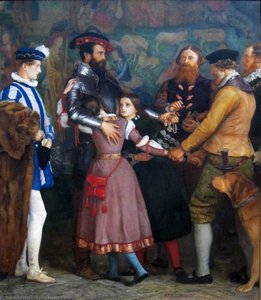
- Un hugonote (1851-1852), que representaba a una joven pareja a punto de ser separada debido a conflictos religiosos.
- Ofelia (1851-1852), una pintura que mostraba sus densas y elaboradas superficies pictóricas, a menudo concentrándose en la belleza y complejidad del mundo natural.
- Mariana (1850-1851), basada en la obra de teatro "Medida por medida" de William Shakespeare y el poema del mismo nombre de Alfred, Lord Tennyson.
Evolución artística e influencias
Las obras posteriores de Sir John Everett Millais fueron influenciadas por su esposa, Effie, que anteriormente había estado casada con el crítico John Ruskin. Su estilo evolucionó hacia una forma más amplia de realismo, que inicialmente fue condenado por Ruskin pero posteriormente reconocido como una contribución significativa al mundo del arte. Millais se destacó por su meticuloso estudio de la naturaleza y su habilidad para representar detalles con gran precisión. Su enfoque en los detalles botánicos en obras como "Ofelia" es un testimonio de su dedicación a la observación directa.Legado e importancia histórica
Sir John Everett Millais' legado se extiende más allá de su arte. Fue un pionero en el movimiento prerrafaelita y una figura significativa en el desarrollo del arte británico. Su influencia se puede ver en generaciones posteriores de artistas que buscaron combinar realismo con simbolismo y una profunda conexión con la naturaleza. Sus obras son apreciadas por su belleza, detalle y exploración de temas morales y sociales.- Aprenda más sobre Sir John Everett Millais en ArtsDot.com.
- Explore la Hermandad Prerrafaelita y su influencia en el arte británico en Wikipedia.

Sir John Everett Millais
1829 - 1896 , Reino Unido
Datos clave
- Artistas Que Influyeron:
- William Holman Hunt
- Dante Gabriel Rossetti
- Fecha De Nacimiento: 8 de junio de 1829
- Influencia En Artistas: Movimiento Estético, Simbolista
- Lugar De Nacimiento: Southampton, Reino Unido
- Movimiento Artístico: Pre-Rafaelita
- Nacionalidad: Británico
- Nombre Completo: Sir John Everett Millais
- Obras Notables:
- Cristo en casa de sus padres
- Un hugonote
- Ofelia
- Mariana
Artículos relacionados
Dante Gabriel Rossetti: Las 25 Obras Maestras del Prerrafaelismo | ArtsDot
Descubre las 25 obras maestras de Dante Gabriel Rossetti, el máximo exponente del Prerrafaelismo. Explora su simbolismo, retratos victorianos y la belleza femenina en lienzos inolvidables. Reproducciones de arte exclusivas en ArtsDot.com.

El Legado Duradero de la Pintura al Óleo Hecha a Mano: Valor Estético, Longevidad y Resonancia Emocional
Descubra el legado de la pintura al óleo hecha a mano. Reproducciones fieles por artistas expertos, asesoramiento profesional y una inversión artística duradera con ArtsDot.com.

Reproducción Artística: Explorando Medios para la Preservación y Diseminación del Patrimonio Visual
Descubre reproducciones de arte excepcionales hechas por artistas expertos. Lienzos personalizados y réplicas fieles con garantía de calidad museo. ¡Preserva el patrimonio visual!

Del Boceto Inicial a la Obra Duradera: Una Exploración Exhaustiva del Proceso de Reproducción de Pintura al Óleo
Descubre el arte de la reproducción al óleo artesanal con ArtsDot. Reproducciones fieles hechas a mano por expertos, personalización y asesoramiento profesional para galerías y hogares. ¡Invierte en belleza duradera!

Convierta su NFT en una obra maestra: Venda reproducciones de óleo artesanal y reciba ingresos inmediatos
Descubre cómo convertir tus NFTs en ingresos reales con reproducciones de óleo artesanal de ArtsDot. Expertos en calidad y autenticidad, garantizamos entrega segura y satisfacción total. Transforma tu colección hoy.