

 Compartir
 Compartir
 Ver detalles

 Descargar
 Ver similares
 Presentación de diapositivas
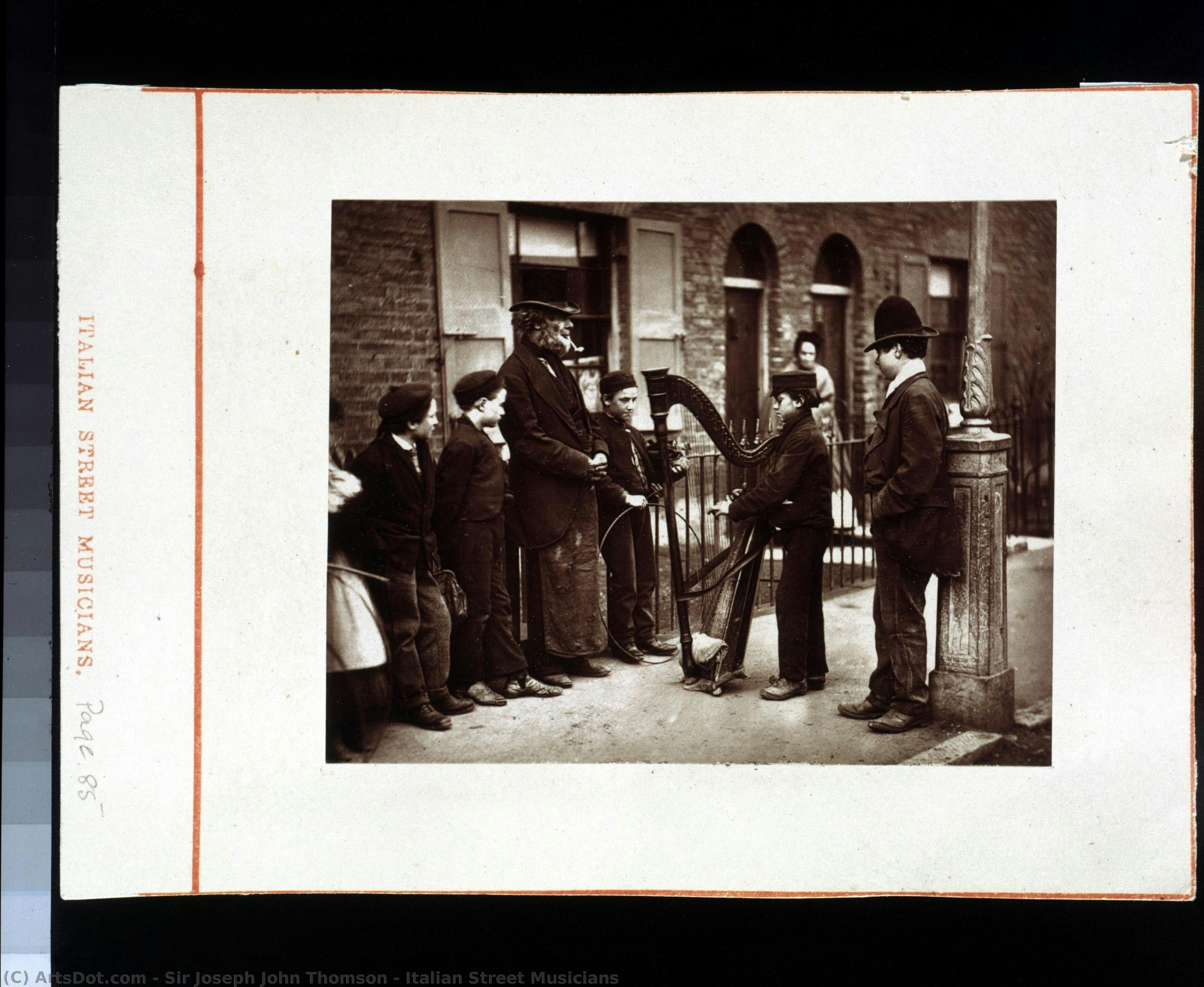
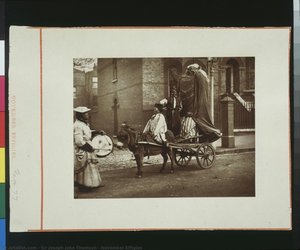
Italian Street Musicians
 Black and White Photography
- Photo
- Documentary Photography
 1878
1878- 19th Century
 Museo Victoria y Alberto
 Leer más
Reproducción al óleo hecha a mano
Óleo sobre lienzo pintado a mano en el tamaño y marco de su elección, realizado por encargo por nuestros artistas. ( Pedir impresión Comprar descarga)




































Elija entre nuestros tamaños predefinidos que respetan las proporciones originales de la obra.

Puede ingresar sus propias dimensiones para adaptarse a un marco o espacio específico. Si el tamaño seleccionado no coincide con las proporciones de la imagen original, recortaremos la obra o extenderemos la pintura con elementos adicionales pintados a mano. Se le enviará una maqueta digital para su aprobación antes de comenzar la producción.
Tenga en cuenta que la vista previa en pantalla no refleja el recorte o la extensión reales. Solo la maqueta mostrará con precisión la composición final.
Si bien existen tamaños personalizados, recomendamos seleccionar una dimensión de la lista predefinida para preservar las proporciones originales.
Tras realizar el pedido, el equipo de ArtsDot.com enviará un correo electrónico al cliente para solicitar instrucciones y proporcionarle una vista previa del boceto.
Envío a todo el mundo () en 3-4 semanas en lugar de las 5 semanas estándar. (21 agosto). Sin comprometer la calidad.

Envío exprés gratuito a todo el mundo

Lienzo de lino de alta calidad

Seguro de envío completo

Garantía de reembolso de aranceles aduaneros

Garantía de fidelidad cromática exacta

Política de devolución de 60 días (solo por defectos)

Garantía de devolución del 100% del dinero

Oferta por volumen
 La opción de vidrio solo está disponible en tamaños inferiores a 110 cm.

Italian Street Musicians
Técnica de reproducción
Tamaño de la reproducción
-


Precio total
$ 438
Descripción de la obra
A Window into Victorian Europe
In the delicate, sepia-toned grain of "Italian Street Musicians," we are transported back to the year 1878, stepping through a temporal portal into the bustling, sun-dappled streets of nineteenth-century Italy. This evocative work, captured by the multifaceted Sir Joseph John Thomson, serves as much more than a mere photographic record; it is a profound piece of social documentary that breathes life into a vanished era. The composition centers on a semi-circle of musicians, their forms arranged with an organic grace that contrasts against the rigid, geometric architecture of the background. As the viewer’s eye wanders through the frame, one notices the subtle presence of a policeman standing nearby—a poignant detail that introduces a layer of social observation, suggesting the delicate balance between public celebration and official oversight in the urban landscape of the time.
The atmosphere of the piece is thick with nostalgia, achieved through the masterful use of early photographic techniques. Likely an albumen print, the image possesses a soft, tactile texture that lends a dreamlike quality to the scene. The lighting is masterfully subdued, casting gentle shadows that provide a sense of three-dimensional depth, making the brick buildings and arched doorways feel as though they could be reached out and touched. For the collector or interior designer, this work offers a sophisticated interplay of light and shadow, providing a muted yet emotionally resonant focal point that complements both classical and contemporary decor.
The Intersection of Science and Soul
To truly appreciate this masterpiece, one must consider the unique hand behind the lens. Sir Joseph John Thomson was a man of dual legacies; while history remembers him as the pioneering physicist who discovered the electron, his photographic eye revealed a deeply compassionate observer of the human condition. In "Italian Street Musicians," we see the scientist’s precision meeting the artist’s empathy. There is a rhythmic quality to the arrangement of the figures, a visual melody that mirrors the music being played by the subjects themselves. The straight, angular lines of the European architecture provide a structural anchor for the more fluid, human shapes of the performers, creating a balanced composition that is both stable and dynamic.
For those seeking to adorn a space with art that tells a story, this reproduction offers an unparalleled opportunity. It is not merely an image of musicians; it is a captured moment of cultural tradition and historical continuity. The piece evokes a sense of longing for the simplicity of the past while celebrating the enduring spirit of street performance and community. Whether placed in a quiet study or as a conversation starter in a grand living hall, this work invites contemplation on the layers of history, the beauty of the mundane, and the profound ability of photography to freeze the heartbeat of an era.
Obras relacionadas
Biografía del artista
Sir Joseph John Thomson (1856-1940): Pioneering physicist & photographer of Victorian England
Thomson’s life was marked by a remarkable duality – an unwavering dedication to scientific exploration intertwined with a profound empathy for the human condition. Born December 18, 1856, in Cheetham Hill, Manchester, England, he descended from a family steeped in intellectual tradition; his father, Joseph Gilbert, served as a clergyman and writer, fostering within him a love of learning and observation. This formative influence would prove crucial to shaping Thomson’s future path. From an early age, he displayed exceptional aptitude for mathematics, securing a scholarship at Cambridge University where he pursued his studies with fervor. It was here that he honed his analytical skills and established himself as a brilliant scholar, ultimately earning fellowship within the Royal Society – a testament to his intellectual prowess. However, Thomson’s scientific pursuits weren't solely driven by abstract thought; they were fueled by a deep desire to understand the world around him. Recognizing the limitations of purely theoretical approaches, he turned his gaze towards empirical observation—a conviction that would profoundly shape his artistic endeavors as well. This fascination with photography emerged organically from his intellectual curiosity, representing not merely a pastime but a method for engaging directly with the complexities of Victorian society. Unlike many of his contemporaries who focused on idealized landscapes or portraits of nobility, Thomson sought to capture the everyday realities of ordinary people—laborers, street performers, and marginalized communities—transforming himself into one of the foremost social documentarians of his era.The Electron Discovery: A Revolution in Physics
Thomson’s scientific breakthrough arrived in 1897 through painstaking experimentation with cathode rays – beams emitted from heated filaments within vacuum tubes. Challenging prevailing theories that posited atoms as indivisible spheres, Thomson meticulously investigated the nature of these rays, demonstrating that they consisted of minuscule particles carrying negative electric charge—electrons. This discovery fundamentally reshaped our understanding of atomic structure, dismantling the longstanding belief in atomicity and opening up entirely new avenues for scientific inquiry. His calculations revealed an astonishingly low charge-to-mass ratio for electrons – a revelation that defied conventional wisdom and established Thomson as a visionary scientist. The implications extended far beyond theoretical physics; they spurred advancements in fields ranging from chemistry to materials science, fundamentally altering the trajectory of scientific progress. He was awarded the Nobel Prize in Physics in 1906 recognizing his monumental contribution to this transformative field.A Photographer's Eye: Capturing Victorian Life
Thomson’s artistic vision complemented his scientific pursuits with remarkable precision and sensitivity. Recognizing that visual representation could illuminate social realities inaccessible to purely analytical methods, he embraced photography as a tool for documenting the lives of ordinary Victorians. He eschewed grand narratives and idealized depictions, opting instead for candid portraits and scenes capturing moments of daily life—the bustling streets of London, the faces of working-class families, and the expressions of performers entertaining audiences. His photographic style was characterized by realism and meticulous attention to detail, reflecting his scientific commitment to observing phenomena with unwavering accuracy. He skillfully utilized albumen prints – a technique that produced images with rich tonal gradations and a distinctive grainy texture—enhancing their visual impact and conveying an authentic sense of immediacy. Notable works include Italian Street Musicians (1878), which portrays a vibrant tableau of performers captivating onlookers, demonstrating Thomson’s ability to capture fleeting moments of artistic expression amidst urban life. Similarly, images like Sufferers from the Floods powerfully convey the devastating consequences of natural disasters on vulnerable communities—a testament to his compassion for human suffering and his dedication to documenting social injustices. Furthermore, Thomson's meticulous approach extended to portraiture, producing striking portraits that captured the essence of his subjects’ personalities and conveying a profound understanding of their inner lives. His legacy as both scientist and photographer endures today, inspiring artists and scholars alike to pursue knowledge and beauty with equal fervor.Influences and Legacy
Thomson's scientific breakthroughs reverberated throughout the intellectual landscape of his time, influencing thinkers like Henryk Siemiradzki and Max Klinger who explored themes of modernity and human existence within their artistic practices. His unwavering commitment to empirical evidence served as a model for researchers across disciplines—a testament to his profound impact on the pursuit of scientific understanding. Beyond his contributions to physics, Thomson’s photographic work stands as an enduring symbol of Victorian social consciousness—a reminder that observation and empathy can illuminate hidden truths and foster a deeper appreciation for human experience. His images continue to be exhibited in museums worldwide, offering invaluable insights into the era's culture and society—and inspiring generations of artists and photographers to strive for authenticity and compassion in their own creative endeavors. Thomson’s legacy transcends time, cementing his place as one of the most influential figures of the Victorian age – a scientist who dared to look beyond abstract theories and capture the beauty and complexity of human life through the lens of photography.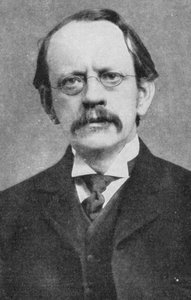
Sir Joseph John Thomson
1856 - 1940 , Reino Unido
Datos clave
- Artistic Movement Or Style: Social documentary photography
- Artists Or Movements Influenced By This Artist:
- Henryk Siemiradzki
- Max Klinger
- Date Of Birth: December 18, 1856
- Date Of Death: August 30, 1940
- Full Name: Sir Joseph John Thomson
- Nationality: British
- Notable Artworks:
- Italian Street Musicians
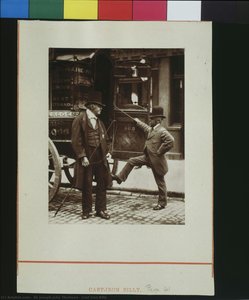
- Cast Iron Billy
- November Effigies
- Place Of Birth: Cheetham Hill, UK
Artículos relacionados

Los 10 Maestros de la Fotografía Documental: Obras que Cambiaron el Arte y la Decoración
Descubre los 10 iconos de la fotografía documental que cambiaron el arte. Explora las historias detrás de obras maestras de Dorothea Lange, Robert Capa y más. Reproducciones de alta calidad para decorar tu hogar con arte atemporal en .

Beyond the Lens: Photography's Enduring Influence on Modern & Contemporary Art
Explore photography's pivotal role in shaping modern & contemporary art. Discover key movements, influential artists like Stieglitz, and expert collecting advice from ArtsDot.

Monochrome Visions: Exploring the Aesthetic & Historical Significance of Black & White Photography
Explore the rich history & artistic power of black and white photography. From early techniques to iconic masters like Ansel Adams, discover why monochrome continues to captivate art lovers today. Expert insights for collectors.

Witnessing History Through Lens & Light: Documentary Photography's Enduring Legacy
Explore the powerful history of documentary photography – from its origins to contemporary masters like Gordon Parks & W. Eugene Smith. Discover how this art form shapes our understanding of society and witness pivotal moments in time.

Pictorialismo: La Búsqueda del Alma de la Fotografía Artística – Estética, Técnicas y Legado
Descubre el Pictorialismo, un movimiento clave en la historia de la fotografía artística. Explora sus técnicas, figuras emblemáticas y su legado perdurable. Guía experta para coleccionistas y amantes del arte.

