

 Enviar
 Compartir
 Detalles

 Descargar
 Similares
 Presentación de diapositivas
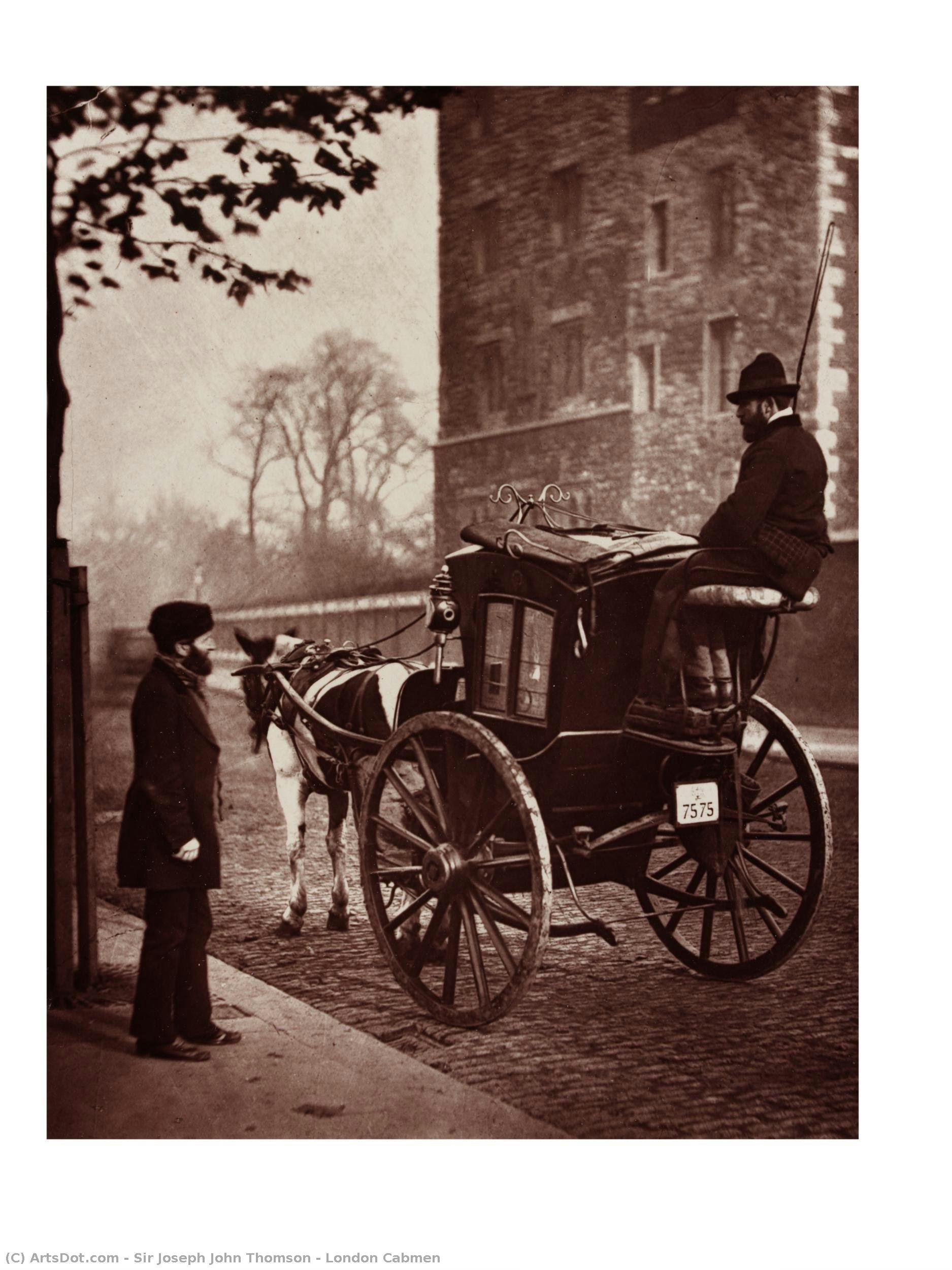
London Cabmen


 Ver más
Adquiera una imagen digital de alta resolución y optimizada, muy superior a la vista previa en línea.
Cada archivo es preparado meticulosamente por nuestros especialistas internos mediante el uso de herramientas avanzadas y un experto retoque manual. Nos aseguramos de que cada imagen posea una claridad excepcional, una precisión cromática impecable y un detalle minucioso.
El archivo final se entrega por correo electrónico en un plazo de 72 horas, optimizado para su uso inmediato en entornos profesionales, editoriales y de impresión. Esta es la misma calidad en la que confían los estudios de diseño, las editoriales y las galerías de primer nivel.
Imagen Digital
Descarga un archivo de alta resolución para exhibición personal, impresión y proyectos creativos. ( Comprar impresión Comprar pintura hecha a mano)
Incluido en cada pedido de imágenes digitales
Entrega digital experta, garantizada.
Al elegir ArtsDot.com, no solo está adquiriendo una imagen; está recibiendo una obra de arte digital mejorada profesionalmente, elaborada con precisión y respaldada por una garantía de satisfacción. Esto es todo lo que incluye su pedido, automáticamente:

Entrega rápida por email
Recibirá su archivo de imagen digital en alta resolución por correo electrónico en un plazo de 72 horas tras realizar su pedido, listo para su uso inmediato.

Archivo digital optimizado por IA
Su obra de arte se optimiza profesionalmente mediante herramientas avanzadas de IA y edición manual, garantizando el máximo detalle, claridad y precisión cromática.

Reenvío gratuito de por vida
¿Has borrado o perdido tu archivo por error? No te preocupes: te lo volveremos a enviar en cualquier momento, sin coste adicional.

Sin gastos de importación, siempre
Disfrute de su obra de arte al instante sin aduanas, aranceles ni gastos de envío; las descargas digitales siempre están libres de impuestos.

Garantía de fidelidad de color
Garantizamos que su imagen digital refleje los colores originales con la mayor fidelidad posible, mediante el uso de herramientas profesionales y gestión del color.

Garantía de satisfacción de 100 días
Si no está satisfecho con su imagen digital, la revisaremos o le reembolsaremos el 100% en un plazo de 100 días, sin preguntas.

100% Garantía de devolución de dinero
¿No está satisfecho? Obtenga un reembolso completo dentro de los 100 días posteriores a la recepción de su archivo digital, sin necesidad de explicaciones.

Descuentos por pedidos grandes
Compra 3 imágenes, ahorra 10% - Compra 5, ahorra 15% - Compra 10+, ahorra 20%. Ideal para proyectos creativos, galerías y agencias.
London Cabmen: A Snapshot of Victorian Grit
John Thomson’s “London Cabmen” is more than just a photograph; it's a window into the bustling, often grim realities of Victorian London life. Executed in 1877-1878 using the Woodburytype process—a pioneering technique that produced remarkably stable and richly colored images—the print captures a moment frozen in time: a cabman seated in his carriage alongside two horses. Thomson’s meticulous attention to detail elevates this seemingly simple scene into a powerful statement about social observation and artistic innovation.- The Technique: The Woodburytype process involved coating paper with gelatin emulsion, applying pigment dispersions onto the surface, and then exposing it to ultraviolet light. This method yielded images of exceptional clarity and tonal range—a significant advancement over earlier photographic methods like calotypes—resulting in a distinctive purple-brown hue that remains characteristic of this era’s prints.
- Composition & Context: Thomson skillfully positioned his subjects within the carriage, creating an asymmetrical composition that draws the eye to the cabman's face and posture. The photograph was part of “Street Life in London,” a monumental project undertaken by Thomson and journalist Adolphe Smith Headingly aimed at documenting poverty and social conditions in East London during the Industrial Revolution.
- Symbolism & Emotion: Beyond its technical prowess, "London Cabmen" speaks to themes of urban life, labor, and societal stratification. The cabman’s dignified gaze conveys resilience amidst hardship—a visual embodiment of Victorian fortitude.
About John Thomson
Sir Joseph John Thomson (1837-1940) was a Scottish physicist and photographer who revolutionized the field of scientific imaging. Born in Edinburgh, he pursued his passion for science with unwavering dedication, earning degrees from St Andrews University and Trinity College Cambridge. His groundbreaking work on cathode rays—demonstrating that cathode rays were composed of previously unknown particles—earned him international acclaim and cemented his legacy as one of the fathers of modern physics. However, Thomson’s artistic vision extended beyond the laboratory; he recognized the transformative potential of photography to illuminate social issues and capture the beauty of the natural world.Further Exploration
This remarkable print resides within Yale Center for British Art's collection, specifically housed in the Study Room (BAC: British Art Center copy bound in publisher’s original gilt- and blind-stamped pictorial green cloth, with gilt edges). Its provenance traces back to Mrs. D. Crisp, highlighting its significance as a treasured exemplar of Victorian photographic art. For more information about Thomson's life and work, consult scholarly resources such as Gernsheim, H. History of photography (1978) and Johnson, W. Nineteenth-century photography (1986). Examining these texts provides invaluable insight into the broader context of Thomson’s artistic endeavors and their enduring impact on photographic history.Obras relacionadas



Biografía del artista
Sir Joseph John Thomson (1856-1940): Pioneering physicist & photographer of Victorian England
Thomson’s life was marked by a remarkable duality – an unwavering dedication to scientific exploration intertwined with a profound empathy for the human condition. Born December 18, 1856, in Cheetham Hill, Manchester, England, he descended from a family steeped in intellectual tradition; his father, Joseph Gilbert, served as a clergyman and writer, fostering within him a love of learning and observation. This formative influence would prove crucial to shaping Thomson’s future path. From an early age, he displayed exceptional aptitude for mathematics, securing a scholarship at Cambridge University where he pursued his studies with fervor. It was here that he honed his analytical skills and established himself as a brilliant scholar, ultimately earning fellowship within the Royal Society – a testament to his intellectual prowess. However, Thomson’s scientific pursuits weren't solely driven by abstract thought; they were fueled by a deep desire to understand the world around him. Recognizing the limitations of purely theoretical approaches, he turned his gaze towards empirical observation—a conviction that would profoundly shape his artistic endeavors as well. This fascination with photography emerged organically from his intellectual curiosity, representing not merely a pastime but a method for engaging directly with the complexities of Victorian society. Unlike many of his contemporaries who focused on idealized landscapes or portraits of nobility, Thomson sought to capture the everyday realities of ordinary people—laborers, street performers, and marginalized communities—transforming himself into one of the foremost social documentarians of his era.The Electron Discovery: A Revolution in Physics
Thomson’s scientific breakthrough arrived in 1897 through painstaking experimentation with cathode rays – beams emitted from heated filaments within vacuum tubes. Challenging prevailing theories that posited atoms as indivisible spheres, Thomson meticulously investigated the nature of these rays, demonstrating that they consisted of minuscule particles carrying negative electric charge—electrons. This discovery fundamentally reshaped our understanding of atomic structure, dismantling the longstanding belief in atomicity and opening up entirely new avenues for scientific inquiry. His calculations revealed an astonishingly low charge-to-mass ratio for electrons – a revelation that defied conventional wisdom and established Thomson as a visionary scientist. The implications extended far beyond theoretical physics; they spurred advancements in fields ranging from chemistry to materials science, fundamentally altering the trajectory of scientific progress. He was awarded the Nobel Prize in Physics in 1906 recognizing his monumental contribution to this transformative field.A Photographer's Eye: Capturing Victorian Life
Thomson’s artistic vision complemented his scientific pursuits with remarkable precision and sensitivity. Recognizing that visual representation could illuminate social realities inaccessible to purely analytical methods, he embraced photography as a tool for documenting the lives of ordinary Victorians. He eschewed grand narratives and idealized depictions, opting instead for candid portraits and scenes capturing moments of daily life—the bustling streets of London, the faces of working-class families, and the expressions of performers entertaining audiences. His photographic style was characterized by realism and meticulous attention to detail, reflecting his scientific commitment to observing phenomena with unwavering accuracy. He skillfully utilized albumen prints – a technique that produced images with rich tonal gradations and a distinctive grainy texture—enhancing their visual impact and conveying an authentic sense of immediacy. Notable works include Italian Street Musicians (1878), which portrays a vibrant tableau of performers captivating onlookers, demonstrating Thomson’s ability to capture fleeting moments of artistic expression amidst urban life. Similarly, images like Sufferers from the Floods powerfully convey the devastating consequences of natural disasters on vulnerable communities—a testament to his compassion for human suffering and his dedication to documenting social injustices. Furthermore, Thomson's meticulous approach extended to portraiture, producing striking portraits that captured the essence of his subjects’ personalities and conveying a profound understanding of their inner lives. His legacy as both scientist and photographer endures today, inspiring artists and scholars alike to pursue knowledge and beauty with equal fervor.Influences and Legacy
Thomson's scientific breakthroughs reverberated throughout the intellectual landscape of his time, influencing thinkers like Henryk Siemiradzki and Max Klinger who explored themes of modernity and human existence within their artistic practices. His unwavering commitment to empirical evidence served as a model for researchers across disciplines—a testament to his profound impact on the pursuit of scientific understanding. Beyond his contributions to physics, Thomson’s photographic work stands as an enduring symbol of Victorian social consciousness—a reminder that observation and empathy can illuminate hidden truths and foster a deeper appreciation for human experience. His images continue to be exhibited in museums worldwide, offering invaluable insights into the era's culture and society—and inspiring generations of artists and photographers to strive for authenticity and compassion in their own creative endeavors. Thomson’s legacy transcends time, cementing his place as one of the most influential figures of the Victorian age – a scientist who dared to look beyond abstract theories and capture the beauty and complexity of human life through the lens of photography.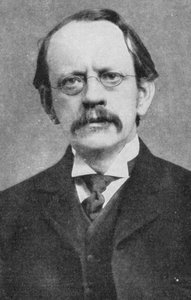
Sir Joseph John Thomson
1856 - 1940 , Reino Unido
Breves datos
- Artistic Movement Or Style: Social documentary photography
- Artists Or Movements Influenced By This Artist:
- Henryk Siemiradzki
- Max Klinger
- Date Of Birth: December 18, 1856
- Date Of Death: August 30, 1940
- Full Name: Sir Joseph John Thomson
- Nationality: British
- Notable Artworks:
- Italian Street Musicians
- Cast Iron Billy
- November Effigies
- Place Of Birth: Cheetham Hill, UK