 Ver en contexto
 Enviar
 Compartir
 Detalles

 Descargar
 Similares
 Radiografía
 Presentación de diapositivas
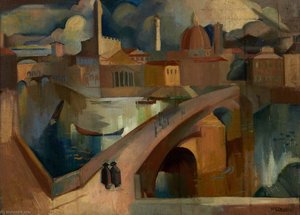
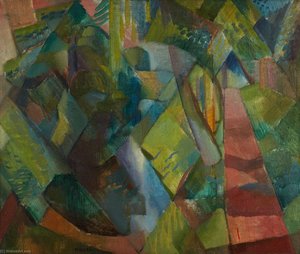
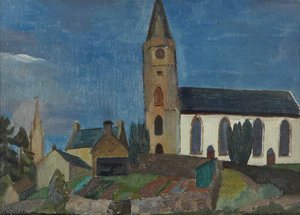
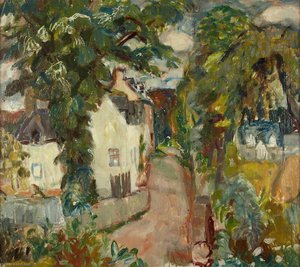
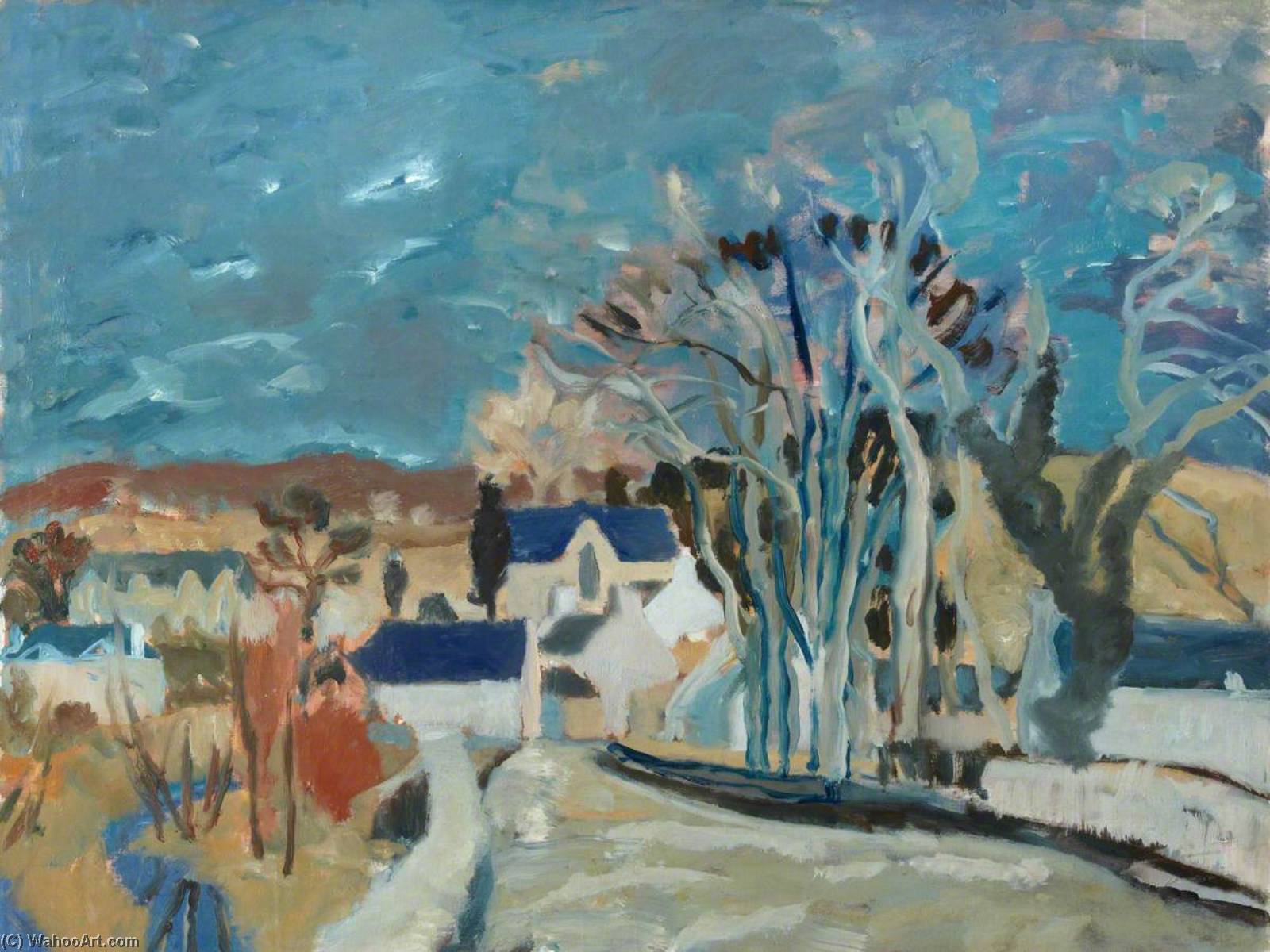
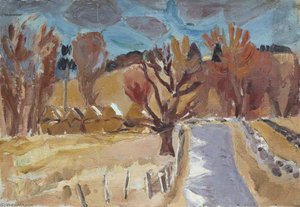
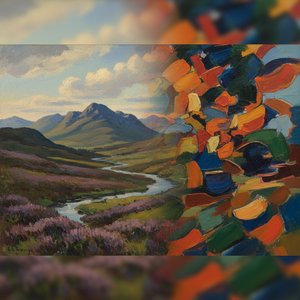
Looking along the Road into the Village
 Acrylic On Canvas
- WallArt
- Cubism
 19th Century
 77.0 x 102.0 cm
 Real Academia Escocesa de Arte - Arquitectura
 Ver más
Giclée / Impresión de arte
Impresiones giclée o en lienzo de calidad de museo con producción rápida y opciones de acabado flexibles. ( Comprar pintura hecha a mano Comprar imagen)




P118B $10

P118H $10

P118W $10

P438Z $10

P508JH $12

P508YH $12

P805H $10

P805Z $10

P919BZ $10

P919G $10

P919XJ $10

P959ZH $10

P968JZ $12

W106C $8

W218G $10

W218JH $8

W218Y $10

W307PJ $10

W316G $10

W316PJ $8

W316Y $10

W398PJ $8

W4111J $10

W500HY $15

W500JH $15

W692G $12

W849H $8

W940BG $15

W953PJ $8




Elija entre nuestros tamaños predefinidos que respetan las proporciones originales de la obra.

Puede introducir sus propias dimensiones para adaptarse a un marco o espacio específico. Si el tamaño seleccionado no coincide con las proporciones de la imagen original, recortaremos la obra de arte o extenderemos la imagen con un borde con efecto espejo o de color sólido. Se enviará una maqueta digital para su aprobación antes de que comience la producción.
Tenga en cuenta que la vista previa en pantalla no refleja el recorte o la extensión real. Solo la maqueta mostrará con precisión la composición final.
Aunque existen tamaños personalizados, recomendamos seleccionar una dimensión de la lista predefinida para preservar las proporciones originales.
Envío a todo el mundo () en 2 semanas en lugar de las 4/5 semanas estándar. (25 agosto)

Envío exprés gratuito a todo el mundo

Lienzo de lino de alta calidad

Seguro de envío total

Garantía de reembolso de impuestos aduaneros

Garantía de fidelidad cromática exacta

Política de devolución de 60 días (solo por defectos)

Garantía de devolución del 100% del dinero

Descuento por cantidad
 La opción de vidrio solo está disponible en tamaños inferiores a 110 cm.

Looking along the Road into the Village
Giclée / Impresión de arte
Dimensiones de la reproducción
-


Precio total final
$ 62
Descripción de la pieza
Looking Along The Road Into The Village – An Impressionist Vision of Tranquility
Sir William George Gillies’ “Looking Along The Road Into The Village” stands as a quintessential example of Scottish Impressionism, capturing not merely a picturesque landscape but also the very spirit of rural Scotland in the mid-1930s. Painted during a period marked by significant artistic experimentation – influenced by Cubism and responding to the visionary explorations of Paul Klee – this artwork embodies Gillies’ distinctive approach to colour and form, cementing his place as one of Edinburgh College of Art's most celebrated instructors and artists.Style & Technique: Embracing Fluid Brushstrokes
Gillies eschewed the rigid geometric precision favored by Cubism, opting instead for a loose, expressive style characterized by visible brushstrokes that dance across the canvas. This technique wasn’t simply about recording what he saw; it was about conveying feeling – the dappled sunlight filtering through the trees, the gentle breeze rustling amongst the foliage, and the quiet stillness of the village nestled below. The artist meticulously blended pigments to achieve subtle tonal variations, prioritizing atmospheric perspective over photographic accuracy. He skillfully utilized glazing techniques—applying thin layers of translucent colour over underlying washes—to build up depth and luminosity, mirroring the way light interacts with surfaces in nature.Historical Context & Influences: Echoes of Cézanne and Picasso
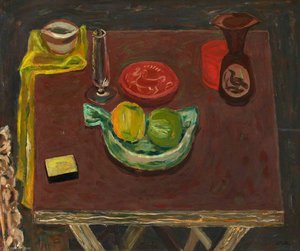
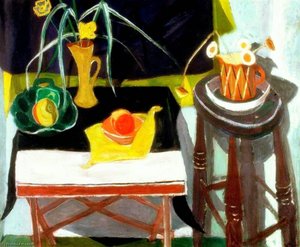
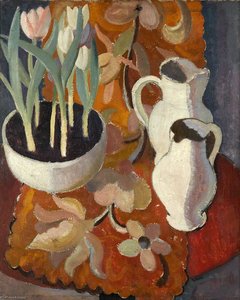
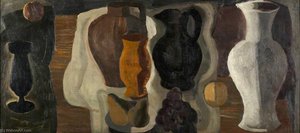
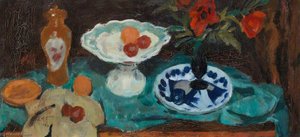
Gillies’ artistic sensibilities were profoundly shaped by his exposure to the works of Cézanne and Picasso during his formative years in Paris. Like Cézanne, he championed simplification of form, reducing complex shapes into basic geometric planes while retaining their essential character. However, unlike Picasso's fragmented Cubist style, Gillies maintained a harmonious balance between observation and imagination. The influence of Picasso’s muted palette – particularly evident in “Two Pots, Saucer And Fruit” – subtly informed his own colour choices, prioritizing understated hues that complemented the dominant blues and greens of the landscape.Symbolism & Emotional Impact: A Celebration Of Rural Beauty
Beyond its technical brilliance, "Looking Along The Road Into The Village" resonates with a deeper symbolic significance. The winding road symbolizes journey and exploration, inviting the viewer to contemplate the passage of time and the beauty inherent in everyday life. The trees represent resilience and permanence, anchoring the scene amidst the ephemeral qualities of sunlight and weather. More broadly, the painting speaks to a yearning for simplicity and connection with nature – themes that were particularly pertinent during Gillies’ lifetime as Scotland grappled with industrialization and urbanization. It evokes a profound sense of peace and contemplation, transporting the viewer back to a tranquil moment in time.Legacy & Rediscovery
Gillies' dedication to teaching at Edinburgh College of Art ensured his influence extended far beyond his own artistic output. He instilled in generations of students a passion for landscape painting and encouraged them to embrace experimentation with colour and technique—a legacy that continues to inspire artists today. Recent reproductions of “Looking Along The Road Into The Village” have garnered considerable acclaim, demonstrating the enduring appeal of Gillies’ masterful depiction of Scottish rural life and reaffirming his status as an icon of Impressionist art.Obras relacionadas
Biografía del artista
Sir William George Gillies: Una Vida en el Arte Escocés
Infancia y Educación Temprana
- Nacido: Haddington, East Lothian, Reino Unido, 1898.
- Gillies se matriculó inicialmente en la Escuela de Arte de Edimburgo, pero sus estudios fueron interrumpidos por el servicio en la Primera Guerra Mundial con los Ingenieros Reales.
- Tras la guerra, regresó para completar su educación en la Escuela de Arte de Edimburgo, donde se graduó y posteriormente se convirtió en un dedicado profesor allí durante más de 40 años.
Desarrollo Artístico e Influencias
- El viaje artístico de Gillies comenzó con una exploración del Cubismo después de estudiar bajo André Lhote en París (1923) y viajar a Italia (1924).
- Las obras tempranas, como “Dos Olla, Vaso y Fruta” (1933), demuestran esta influencia, mostrando una disposición inspirada en Cézanne con paletas de colores sobrias de Braque y Picasso.
- Un momento decisivo llegó en 1934 cuando se encontró con el trabajo de Paul Klee, lo que le inspiró a adoptar un uso más imaginativo del color y cualidades infantiles en sus composiciones.
- Gradualmente se alejó del Cubismo estricto, desarrollando un estilo distintivo arraigado en las tradiciones escocesas de paisajes y bodegones.
El Grupo 1922 y Espíritu Colaborativo
- En 1922, Gillies cofundó el “Grupo 1922” junto con otros artistas como William Crozier, William Geissler y William MacTaggart.
- Esta sociedad de exposiciones proporcionó una plataforma para que los artistas escoceses emergentes mostraran su trabajo en la New Gallery de Edimburgo durante diez años.
- El grupo fomentó un sentido de comunidad e innovación dentro del panorama artístico escocés.
Temas y Materia Prima
- Paisajes: Gillies es conocido por sus representaciones de las regiones de Lothian, Fife y Border de Escocia. Capturó la esencia de estos paisajes con un ojo sensible.
- Bodegones: Los bodegones fueron otro enfoque significativo, a menudo presentando cerámicas creadas por su hermana menor, Emma Smith Gillies, cuya muerte prematura en 1936 lo afectó profundamente.
- Retratos: Si bien experimentó con retratos al principio de su carrera, los paisajes y bodegones se convirtieron en sus temas principales.
Logros y Reconocimientos Importantes
- Gillies sirvió como Principal de la Escuela de Arte de Edimburgo desde 1959 hasta su jubilación en 1966.
- Su prolífica producción y dedicación a la enseñanza tuvieron una profunda influencia en las generaciones de pintores escoceses.
- Fue elegido Académico Real (RA), lo que significaba un reconocimiento significativo dentro del mundo del arte.
Significado Histórico e Legado
- Sir William George Gillies se considera uno de los pintores más importantes del siglo XX en Escocia.
- Su obra cierra la brecha entre el modernismo temprano y una identidad artística escocesa distintiva.
- Legado: Su influencia se extiende más allá de sus pinturas, dando forma a la dirección del arte escocés a través de su enseñanza y mentoría.
- Murió en 1973, dejando atrás un rico cuerpo de trabajo que sigue siendo celebrado por su belleza, sensibilidad y relevancia perdurable.
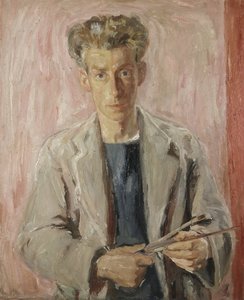
sir william george gillies
1898 - 1973 , United Kingdom
Datos clave
- Artistic Movement Or Style: Cubism, Scottish Colourists
- Artists Who Influenced This Artist:
- André Lhote
- Cézanne
- Braque
- Picasso
- Paul Klee
- Country: United Kingdom
- Date Of Birth: 1898
- Full Name: Sir William George Gillies
- Nationality: Scottish
- Notable Artworks:
- Young Boy with a Teapot
- Mediterranean Landscape with Overcast Sky
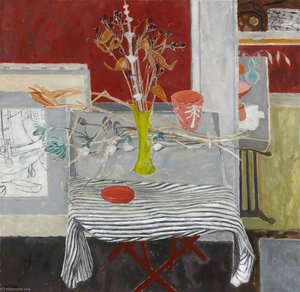
- Still Life – Yellow Jug and Striped Cloth
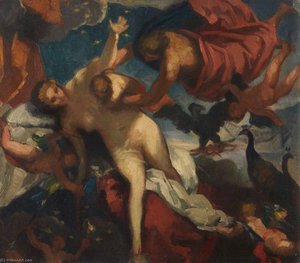
- The Origin of the Milky Way (after Jacopo Tintoretto)
- Place Of Birth: Haddington
Artículos relacionados

Katsushika Hokusai: Las 25 Obras Maestras del Ukiyo-e que Transformaron el Arte Japonés | ArtsDot
Descubre las 25 obras maestras de Katsushika Hokusai, el genio del ukiyo-e. Explora 'La Gran Ola', paisajes japoneses y su impacto en el arte moderno. Reproducciones de alta calidad para tu hogar en ArtsDot.com.

Los 10 Maestros del Paisaje Impresionista: Obras que Cambiaron la Historia del Arte
Descubre los 10 lienzos impresionistas que revolucionaron el arte. Monet, Renoir y más… Explora la historia, técnica y belleza de cada obra maestra. Encuentra reproducciones de alta calidad para tu hogar en ArtsDot.com.
Sir William George Gillies: A Scottish Colourist's Journey Through Landscape & Abstraction
Explore the captivating world of Sir William George Gillies, a leading Scottish Colourist. Discover his journey from Cubism to iconic landscapes & still lifes. Expert insights for collectors and art enthusiasts.

Paul Cézanne: Las 25 Obras Maestras que Definieron el Arte Moderno | ArtsDot
Descubre las 25 obras maestras de Paul Cézanne que revolucionaron el arte moderno. Explora su técnica, inspiración y significado en paisajes, bodegones y retratos. Reproducciones de alta calidad para decorar tu hogar con arte inolvidable. ¡Explora la colección completa en ArtsDot.com!

Paisajes Románticos: 10 Obras Maestras que Definieron un Movimiento Artístico
Descubre los 10 paisajes románticos más influyentes de artistas como Caspar David Friedrich y Turner. Explora la belleza, el simbolismo y las técnicas del movimiento romántico. Reproducciones de arte exclusivas en ArtsDot.com.