 Ver en contexto
 Enviar
 Compartir
 Detalles

 Descargar
 Similares
 Radiografía
 Presentación de diapositivas
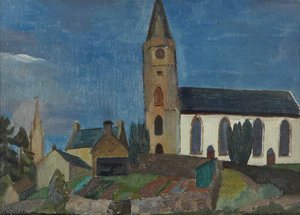
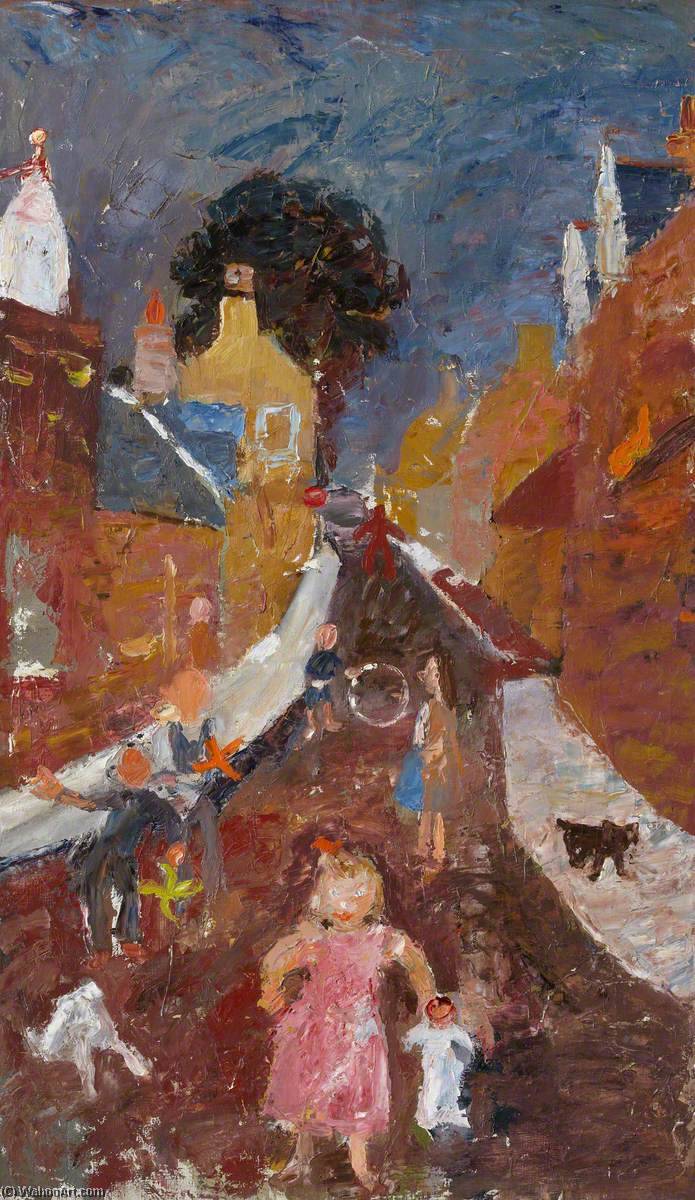
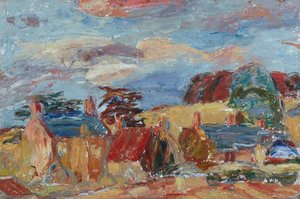
Temple Village, Children Playing
 Oil On Canvas
- WallArt
- Scottish Colourist
 1945
1945 113.0 x 67.0 cm
 Real Academia Escocesa de Arte - Arquitectura
 Ver más
Reproducción al óleo hecha a mano
Óleo sobre lienzo pintado a mano en el tamaño y marco de su elección, realizado por encargo por nuestros artistas. ( Comprar impresión Comprar imagen)




P118B $10

P118H $10

P118W $10

P438Z $10

P508JH $12

P508YH $12

P805H $10

P805Z $10

P919BZ $10

P919G $10

P919XJ $10

P959ZH $10

P968JZ $12

W106C $8

W218G $10

W218JH $8

W218Y $10

W307PJ $10

W316G $10

W316PJ $8

W316Y $10

W398PJ $8

W4111J $10

W500HY $15

W500JH $15

W692G $12

W849H $8

W940BG $15

W953PJ $8




Elija entre nuestros tamaños predefinidos que respetan las proporciones originales de la obra.

Puede ingresar sus propias dimensiones para adaptarse a un marco o espacio específico. Si el tamaño seleccionado no coincide con las proporciones de la imagen original, recortaremos la obra o extenderemos la pintura con elementos adicionales pintados a mano. Se le enviará una maqueta digital para su aprobación antes de comenzar la producción.
Tenga en cuenta que la vista previa en pantalla no refleja el recorte o la extensión reales. Solo la maqueta mostrará con precisión la composición final.
Si bien existen tamaños personalizados, recomendamos seleccionar una dimensión de la lista predefinida para preservar las proporciones originales.
Tras realizar el pedido, el equipo de ArtsDot.com enviará un correo electrónico al cliente para solicitar instrucciones y proporcionarle una vista previa del boceto.
Envío a todo el mundo () en 3-4 semanas en lugar de las 5 semanas estándar. (24 agosto). Sin comprometer la calidad.

Envío exprés gratuito a todo el mundo

Lienzo de lino de alta calidad

Seguro de envío total

Garantía de reembolso de impuestos aduaneros

Garantía de fidelidad cromática exacta

Política de devolución de 60 días (solo por defectos)

Garantía de devolución del 100% del dinero

Descuento por cantidad
 La opción de vidrio solo está disponible en tamaños inferiores a 110 cm.

Temple Village, Children Playing
Técnica de reproducción
Dimensiones de la reproducción
-


Precio total final
$ 263
Descripción de la obra
A Moment of Village Life: Gillies’ “Temple Village, Children Playing”
Sir William George Gillies' "Temple Village, Children Playing," painted in 1945, is more than just a depiction of a bustling street scene; it’s a vibrant snapshot of community and joy captured with the artist’s signature blend of observation and evocative color. The painting transports us to a small Japanese village, brimming with life as children engage in games amidst adults going about their daily routines. Gillies, deeply rooted in Scottish landscape painting yet profoundly influenced by European modernism, masterfully balances realism with an underlying sense of dreamlike quality – a hallmark of his distinctive style.
The scene unfolds on a narrow street lined with traditional buildings, their details rendered with careful attention to light and shadow. Gillies’ technique is immediately recognizable: he employs loose, expressive brushstrokes that create a palpable sense of movement and energy. The figures aren't sharply defined; instead, they are suggested through color and form, contributing to the painting’s overall feeling of immediacy. Notice how the warm hues of the children’s clothing contrast with the cooler tones of the buildings, drawing our eye to their playful interactions.
Echoes of Cubism and Klee: Gillies' Artistic Journey
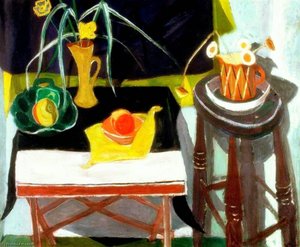
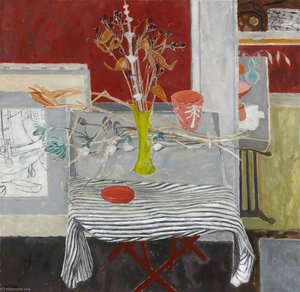
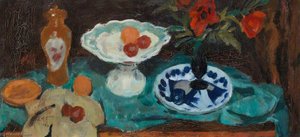
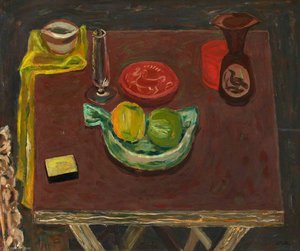
Gillies’ artistic development reveals a fascinating journey through various movements. Initially influenced by the geometric precision of Cubism – particularly evident in works like “Two Pots, Saucer and Fruit” – he later embraced the more emotionally charged approach of Paul Klee. This shift is powerfully reflected in "Temple Village, Children Playing." Klee’s emphasis on color as a primary expressive tool is brilliantly translated here; Gillies uses vibrant reds, yellows, and blues not just to depict reality but to evoke feelings of warmth, happiness, and the simple pleasures of childhood.
His time in Paris during 1923, studying under André Lhote, provided a crucial foundation. However, it was his encounter with Klee’s work in 1934 that truly unlocked Gillies' creative potential. Klee’s use of childlike imagery and simplified forms encouraged Gillies to infuse his paintings with a sense of wonder and spontaneity – qualities that are abundantly present in this captivating scene.
Symbolism and the Essence of Community
Beyond its visual appeal, “Temple Village, Children Playing” is rich in symbolic meaning. The children themselves represent innocence, vitality, and the future; their games suggest a carefree existence untainted by adult concerns. The presence of adults engaged in various activities – selling goods, chatting with neighbors – underscores the importance of community and social connection within this village setting. The inclusion of a dog playfully interacting with one of the children further reinforces this theme of shared joy and companionship.
Furthermore, the temple itself, subtly integrated into the background, hints at the spiritual heart of the village. It serves as a focal point, grounding the scene in tradition and offering a sense of stability amidst the lively activity below. Gillies’ ability to seamlessly blend these elements – everyday life and sacred space – creates a painting that is both deeply personal and universally resonant.
A Timeless Masterpiece: Gillies' Legacy
"Temple Village, Children Playing" stands as a testament to Sir William George Gillies’ artistic genius. It’s a work that captures not just a specific moment in time but also the enduring values of community, joy, and connection. Reproductions of this painting offer a beautiful way to bring a touch of warmth and nostalgia into any space – a reminder of the simple pleasures of life and the importance of cherishing those moments shared with loved ones. The painting’s vibrant colors and dynamic composition continue to captivate viewers today, solidifying Gillies' place as one of Scotland’s most beloved artists.
Obras relacionadas
Biografía del artista
Sir William George Gillies: Una Vida en el Arte Escocés
Infancia y Educación Temprana
- Nacido: Haddington, East Lothian, Reino Unido, 1898.
- Gillies se matriculó inicialmente en la Escuela de Arte de Edimburgo, pero sus estudios fueron interrumpidos por el servicio en la Primera Guerra Mundial con los Ingenieros Reales.
- Tras la guerra, regresó para completar su educación en la Escuela de Arte de Edimburgo, donde se graduó y posteriormente se convirtió en un dedicado profesor allí durante más de 40 años.
Desarrollo Artístico e Influencias
- El viaje artístico de Gillies comenzó con una exploración del Cubismo después de estudiar bajo André Lhote en París (1923) y viajar a Italia (1924).
- Las obras tempranas, como “Dos Olla, Vaso y Fruta” (1933), demuestran esta influencia, mostrando una disposición inspirada en Cézanne con paletas de colores sobrias de Braque y Picasso.
- Un momento decisivo llegó en 1934 cuando se encontró con el trabajo de Paul Klee, lo que le inspiró a adoptar un uso más imaginativo del color y cualidades infantiles en sus composiciones.
- Gradualmente se alejó del Cubismo estricto, desarrollando un estilo distintivo arraigado en las tradiciones escocesas de paisajes y bodegones.
El Grupo 1922 y Espíritu Colaborativo
- En 1922, Gillies cofundó el “Grupo 1922” junto con otros artistas como William Crozier, William Geissler y William MacTaggart.
- Esta sociedad de exposiciones proporcionó una plataforma para que los artistas escoceses emergentes mostraran su trabajo en la New Gallery de Edimburgo durante diez años.
- El grupo fomentó un sentido de comunidad e innovación dentro del panorama artístico escocés.
Temas y Materia Prima
- Paisajes: Gillies es conocido por sus representaciones de las regiones de Lothian, Fife y Border de Escocia. Capturó la esencia de estos paisajes con un ojo sensible.
- Bodegones: Los bodegones fueron otro enfoque significativo, a menudo presentando cerámicas creadas por su hermana menor, Emma Smith Gillies, cuya muerte prematura en 1936 lo afectó profundamente.
- Retratos: Si bien experimentó con retratos al principio de su carrera, los paisajes y bodegones se convirtieron en sus temas principales.
Logros y Reconocimientos Importantes
- Gillies sirvió como Principal de la Escuela de Arte de Edimburgo desde 1959 hasta su jubilación en 1966.
- Su prolífica producción y dedicación a la enseñanza tuvieron una profunda influencia en las generaciones de pintores escoceses.
- Fue elegido Académico Real (RA), lo que significaba un reconocimiento significativo dentro del mundo del arte.
Significado Histórico e Legado
- Sir William George Gillies se considera uno de los pintores más importantes del siglo XX en Escocia.
- Su obra cierra la brecha entre el modernismo temprano y una identidad artística escocesa distintiva.
- Legado: Su influencia se extiende más allá de sus pinturas, dando forma a la dirección del arte escocés a través de su enseñanza y mentoría.
- Murió en 1973, dejando atrás un rico cuerpo de trabajo que sigue siendo celebrado por su belleza, sensibilidad y relevancia perdurable.
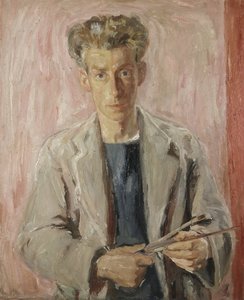
sir william george gillies
1898 - 1973 , United Kingdom
Datos clave
- Artistic Movement Or Style: Cubism, Scottish Colourists
- Artists Who Influenced This Artist:
- André Lhote
- Cézanne
- Braque
- Picasso
- Paul Klee
- Country: United Kingdom
- Date Of Birth: 1898
- Full Name: Sir William George Gillies
- Nationality: Scottish
- Notable Artworks:
- Young Boy with a Teapot
- Mediterranean Landscape with Overcast Sky
- Still Life – Yellow Jug and Striped Cloth
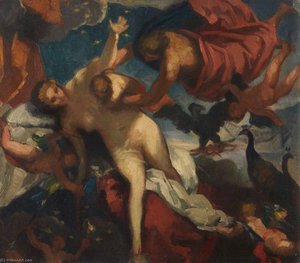
- The Origin of the Milky Way (after Jacopo Tintoretto)
- Place Of Birth: Haddington
Artículos relacionados

Georges Braque: Las 25 Obras Maestras del Cubismo y su Legado en el Arte Moderno
Descubre las 25 obras maestras de Georges Braque, pionero del cubismo. Explora su innovadora técnica, colores y el legado del arte moderno francés. Reproducciones de alta calidad en ArtsDot.com. ¡Encuentra tu inspiración!

Georges Seurat: Las 25 Obras Maestras del Pionero Puntillista | ArtsDot
Descubre las 25 obras maestras de Georges Seurat, el innovador del puntillismo. Explora su técnica única, colores vibrantes y legado artístico en ArtsDot.com. Reproducciones de arte de museo para tu hogar.
Sir William George Gillies: A Scottish Colourist's Journey Through Landscape & Abstraction
Explore the captivating world of Sir William George Gillies, a leading Scottish Colourist. Discover his journey from Cubism to iconic landscapes & still lifes. Expert insights for collectors and art enthusiasts.
Más Allá del Graffiti: Evolución e Impacto Cultural del Arte Callejero para Coleccionistas
Descubre la evolución del arte urbano y su impacto en el coleccionismo. Análisis de artistas clave, técnicas innovadoras e inversión en obras de street art. Guía experta para coleccionistas.
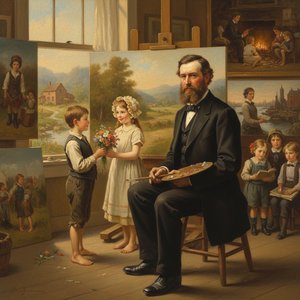
John George Brown: Capturing American Life & Sentiment in 19th-Century Genre Painting
Explore the captivating genre paintings of John George Brown, celebrated for his realistic depictions of 19th-century American life. Discover his legacy & find museum-quality reproductions at ArtsDot.