

 Vista previa
 Compartir
 Compartir
 Ver detalles

 Descargar
 Ver similares
 Radiografía
 Presentación de diapositivas
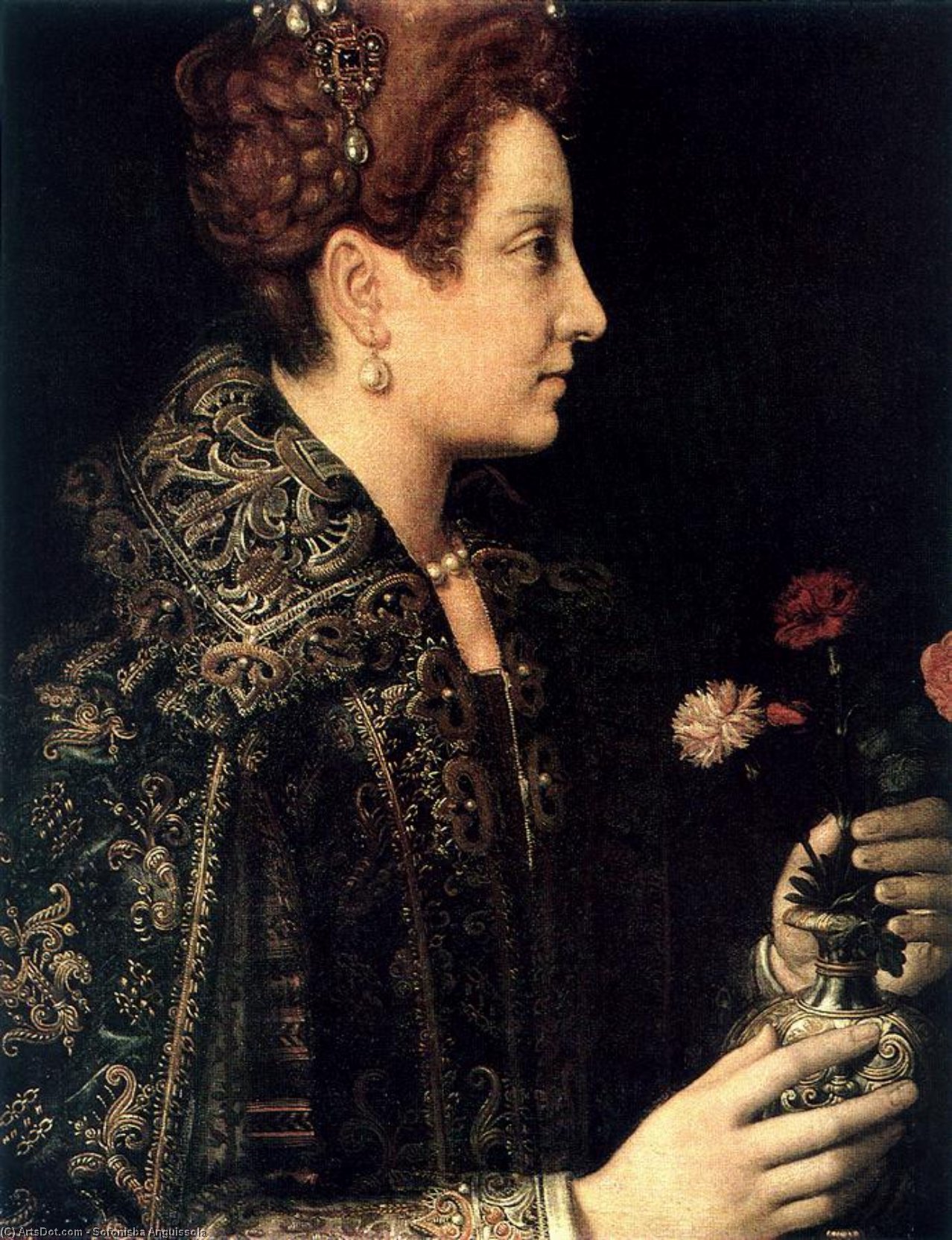
Profile Portrait of a Young Woman
 Oil On Canvas
- WallArt
- Renaissance
 68.0 x 52.0 cm
 Museo del Hermitage
 Leer más
Reproducción al óleo hecha a mano
Óleo sobre lienzo pintado a mano en el tamaño y marco de su elección, realizado por encargo por nuestros artistas. ( Pedir impresión Comprar descarga)




P118B $10

P118H $10

P118W $10

P438Z $10

P508JH $12

P508YH $12

P805H $10

P805Z $10

P919BZ $10

P919G $10

P919XJ $10

P959ZH $10

P968JZ $12

W106C $8

W218G $10

W218JH $8

W218Y $10

W307PJ $10

W316G $10

W316PJ $8

W316Y $10

W398PJ $8

W4111J $10

W500HY $15

W500JH $15

W692G $12

W849H $8

W940BG $15

W953PJ $8




Elija entre nuestros tamaños predefinidos que respetan las proporciones originales de la obra.

Puede ingresar sus propias dimensiones para adaptarse a un marco o espacio específico. Si el tamaño seleccionado no coincide con las proporciones de la imagen original, recortaremos la obra o extenderemos la pintura con elementos adicionales pintados a mano. Se le enviará una maqueta digital para su aprobación antes de comenzar la producción.
Tenga en cuenta que la vista previa en pantalla no refleja el recorte o la extensión reales. Solo la maqueta mostrará con precisión la composición final.
Si bien existen tamaños personalizados, recomendamos seleccionar una dimensión de la lista predefinida para preservar las proporciones originales.
Tras realizar el pedido, el equipo de ArtsDot.com enviará un correo electrónico al cliente para solicitar instrucciones y proporcionarle una vista previa del boceto.
Envío a todo el mundo () en 3-4 semanas en lugar de las 5 semanas estándar. (22 agosto). Sin comprometer la calidad.

Envío exprés gratuito a todo el mundo

Lienzo de lino de alta calidad

Seguro de envío completo

Garantía de reembolso de aranceles aduaneros

Garantía de fidelidad cromática exacta

Política de devolución de 60 días (solo por defectos)

Garantía de devolución del 100% del dinero

Oferta por volumen
 La opción de vidrio solo está disponible en tamaños inferiores a 110 cm.

Profile Portrait of a Young Woman
Técnica de reproducción
Tamaño de la reproducción
-


Precio total
$ 263
Descripción de la obra
Profile Portrait of a Young Woman – A Renaissance Revelation
Sofonisba Anguissola’s “Profile Portrait of a Young Woman,” painted circa 1556, is more than just a likeness; it's a pivotal moment in art history—a defiant assertion of female agency within the rigidly defined world of Renaissance portraiture. Measuring a modest 68 x 52 cm and currently residing at the Hermitage Museum in St. Petersburg, this oil-on-canvas work transcends its diminutive size to deliver an arresting image of youthful beauty and quiet confidence. The painting immediately draws the eye with the subject’s striking red hair, cascading down her shoulders in a vibrant contrast against the rich, dark fabric of her dress. Her gaze is direct, intelligent, and subtly alluring—a quality rarely afforded to female subjects in art of this era.
Anguissola's genius lies not merely in capturing physical appearance but in imbuing the portrait with a palpable sense of personality. The delicate handling of the fabric, the subtle modeling of her face, and the precise rendering of her hands holding the flowers—a gesture both graceful and intimate—speak volumes about her artistic skill and observational acuity. The painting’s composition is deceptively simple: a profile view emphasizing the subject's features, yet it’s within this restraint that Anguissola achieves remarkable depth. The background remains deliberately muted, allowing the viewer to focus entirely on the young woman herself, reinforcing the portrait’s intimate and personal nature.
Breaking Barriers: Sofonisba Anguissola’s Pioneering Role
To fully appreciate “Profile Portrait of a Young Woman,” it's crucial to understand the extraordinary circumstances surrounding its creation. Sofonisba Anguissola was a true pioneer, a woman who shattered societal expectations and carved out a successful career as an artist in a period when such opportunities were almost exclusively reserved for men. Born into a relatively modest noble family in Cremona—her father, Amilcare Anguissola, recognized her exceptional talent and provided her with an unusually comprehensive education encompassing Latin, music, and crucially, drawing – she defied convention by insisting on being painted *from life*. This radical decision, documented in the inscription on the painting itself (“Sofonisba Angussola Virgin daughter of Amilcare painted from life her three sisters and a maid 1555”), was unprecedented and established a powerful precedent for future female artists.
Her journey to prominence involved travel to Rome and Milan, where she gained recognition for her artistic abilities. She later served as a court painter to Queen Elizabeth of Valois in Spain, adapting her style to meet the formal demands of official portraiture while retaining her distinctive approach. This position afforded her unparalleled access and influence, allowing her to challenge established norms and demonstrate her talent on a grand scale. Anguissola’s success wasn't merely about technical skill; it was about asserting her presence as an artist—a woman capable of creating works of beauty and sophistication.
Symbolism and Artistic Technique
The painting’s symbolism is subtle yet layered. The flowers held in the young woman’s hand are not simply decorative elements; they represent fertility, beauty, and innocence – qualities highly valued during the Renaissance. Her profile view itself—a common technique at the time—was often used to emphasize dignity and composure, particularly in portraits of nobility. Anguissola masterfully employs *sfumato*, a subtle blurring of lines and edges that creates an atmospheric effect and softens the contours of her face, lending it a sense of ethereal beauty.
The painting’s technical execution is characterized by a remarkable attention to detail—from the delicate texture of her hair to the intricate folds of her dress. Anguissola's use of color is restrained yet effective, creating a harmonious and balanced composition. The muted palette—dominated by browns, greens, and golds—enhances the portrait’s sense of intimacy and timelessness. The painting demonstrates a keen understanding of light and shadow, which adds depth and volume to her features.
A Legacy of Innovation
“Profile Portrait of a Young Woman” stands as a testament to Sofonisba Anguissola's artistic genius and her unwavering determination to break down barriers. It’s a poignant reminder of a woman who defied societal expectations, embraced her talent, and left an indelible mark on the history of art. Reproductions of this captivating portrait offer a unique opportunity to experience the beauty and sophistication of Renaissance painting while celebrating the legacy of a truly remarkable artist. ArtsDot offers meticulously crafted hand-painted reproductions that faithfully capture the essence of Anguissola’s masterpiece, allowing you to bring this iconic image into your home or office with confidence and pride.
Obras relacionadas
Biografía del artista
Sofonisba Anguissola: Una Pionera del Renacimiento
Primeros Años y Educación
- Nacida en Cremona, Italia, alrededor de 1532, Sofonisba Anguissola provenía de una familia noble pero no rica. Su padre, Amilcare Anguissola, reconoció el talento artístico de sus hijas – Sofonisba, Elena, Lucía y Europa – y les proporcionó una educación inusual para las mujeres de aquella época.
- Una crianza progresista: Las hermanas recibieron una educación humanista completa que incluía latín, música y dibujo. Esto se debió en gran medida a la creencia del padre en brindarles a sus hijas oportunidades típicamente reservadas para los hombres.
- En 1546, Sofonisba y Elena comenzaron su formación artística formal bajo Bernardino Campi, un respetado pintor local. Cuando Campi se mudó, continuaron sus estudios con Bernardino Gatti (Il Sajarolo) alrededor de 1550. Esta aprendizaje fue innovador, estableciendo un precedente para que las mujeres fueran aceptadas como estudiantes de arte.
Desarrollo Artístico y Estilo
- El trabajo temprano de Anguissola se centró en retratos de su familia, caracterizado por intimidad, realismo e insight psicológico. Estos cuadros no eran meras representaciones sino que capturaban las personalidades y las relaciones dentro de su familia.
- Su estilo evolucionó bajo la influencia del manierismo lombardo a un enfoque más refinado durante su tiempo en España. Se adaptó a los requisitos formales del retrato cortesano mientras conservaba su sensibilidad hacia el carácter.
- Características clave: Sus pinturas son conocidas por su representación naturalista de las características, su sutil uso del color y su capacidad para transmitir emociones.
Carrera en la Corte Española
- En 1559, Anguissola fue invitada a España por la Reina Isabel de Valois, esposa del Rey Felipe II, para servir como dama de compañía y tutora en pintura. Esto marcó un punto de inflexión significativo en su carrera.
- Se convirtió en pintora oficial de la corte, creando retratos de la familia real y miembros de la nobleza española. Su posición era altamente inusual para una mujer de aquella época.
- Después de la muerte de la Reina Isabel, Felipe II facilitó el matrimonio de Anguissola con Fabrizio Moncada en 1573, permitiéndole continuar pintando mientras mantenía un estatus nobiliario. Más tarde se casó nuevamente después de la muerte de Moncada.
Logros y Obras Notables
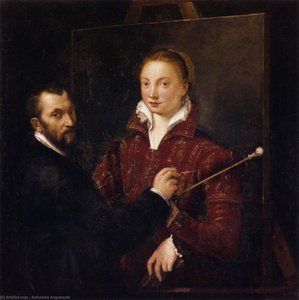
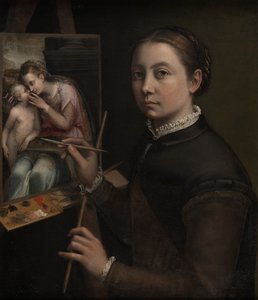
- Autorretratos: Anguissola creó numerosos autorretratos, mostrando su habilidad y afirmando su identidad como artista mujer. “Autorretrato al lado del caballete” (1556) es particularmente famoso.
- “Retrato de las hermanas artistas jugando al ajedrez” (c. 1555) demuestra su capacidad para capturar interacciones naturales e individualidades dentro de un entorno familiar.
- “Retrato de Bianca Ponzoni Anguissola” (su madre) ejemplifica su representación sensible de los sujetos femeninos.
- Su obra desafió las normas artísticas convencionales y abrió puertas a otras artistas mujeres.
Influencias y Legado
- Anguissola fue influenciada por la escuela de pintura lombarda, particularmente por las obras de Bernardino Campi y Bernardino Gatti.
- Ella, a su vez, influyó en generaciones posteriores de artistas mujeres, demostrando que las mujeres podían lograr el éxito y el reconocimiento en un campo tradicionalmente dominado por hombres.
- Significado histórico: La carrera de Sofonisba Anguissola fue notable para su época. Rompió barreras, obtuvo aplausos internacionales y dejó un legado como una de las artistas mujeres más importantes del Renacimiento. Su obra continúa siendo celebrada por su mérito artístico e importancia histórica.
Sofonisba Anguissola
1532 - 1625 , Italia
Datos clave
- Artistic Movement Or Style: Manierismo lombardo
- Artists Or Movements Influenced By This Artist: ['Miguel Ángel']
- Artists Who Influenced This Artist:
- Bernardino Campi
- Bernardino Gatti
- Date Of Birth: c. 1532
- Date Of Death: 16 noviembre 1625
- Full Name: Sofonisba Anguissola
- Nationality: Italiana
- Notable Artworks:
- Autorretrato al lado del caballete
- Retrato de las hermanas artistas jugando al ajedrez
- Place Of Birth: Cremona, Italia
Artículos relacionados

The Enduring Legacy of Oil on Canvas: Technique, History & Aesthetic Impact
Explore the rich history & techniques of oil painting – from Renaissance masters to Impressionism. Discover pigments, layering methods, and why this timeless medium endures. Expert insights for artists & art enthusiasts.

El Óleo sobre Lienzo: Historia, Técnica y la Persistencia de un Medio Artístico Atemporal
Descubre la historia y técnica del óleo sobre lienzo. Explora reproducciones fieles hechas a mano, personalización artística y consejos de expertos con ArtsDot. ¡Colecciona arte con confianza!

El Legado Duradero del Óleo sobre Lienzo: Técnica, Historia y Práctica Contemporánea
Descubre la historia y técnica del óleo sobre lienzo. Explora reproducciones fieles hechas a mano, personalización artística y consejos de expertos con .
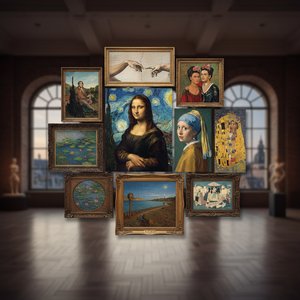
Las 10 Obras Maestras al Óleo que Revolucionaron la Historia del Arte |
Descubre las 10 obras maestras al óleo que transformaron la historia del arte. Explora Van Gogh, Monet, Da Vinci y más. Reproducciones de alta calidad para decorar tu hogar con elegancia. ¡Encuentra tu obra favorita en !

The Enduring Power of Painting: A Historical & Contemporary Exploration of Form and Emotion
Explore the rich history & enduring techniques of oil painting with ArtsDot. Discover masterpieces, learn about art collecting, and find authentic handmade reproductions crafted by skilled artists.

