

 Ver en contexto
 Enviar
 Compartir
 Detalles

 Descargar
 Similares
 Radiografía
 Presentación de diapositivas
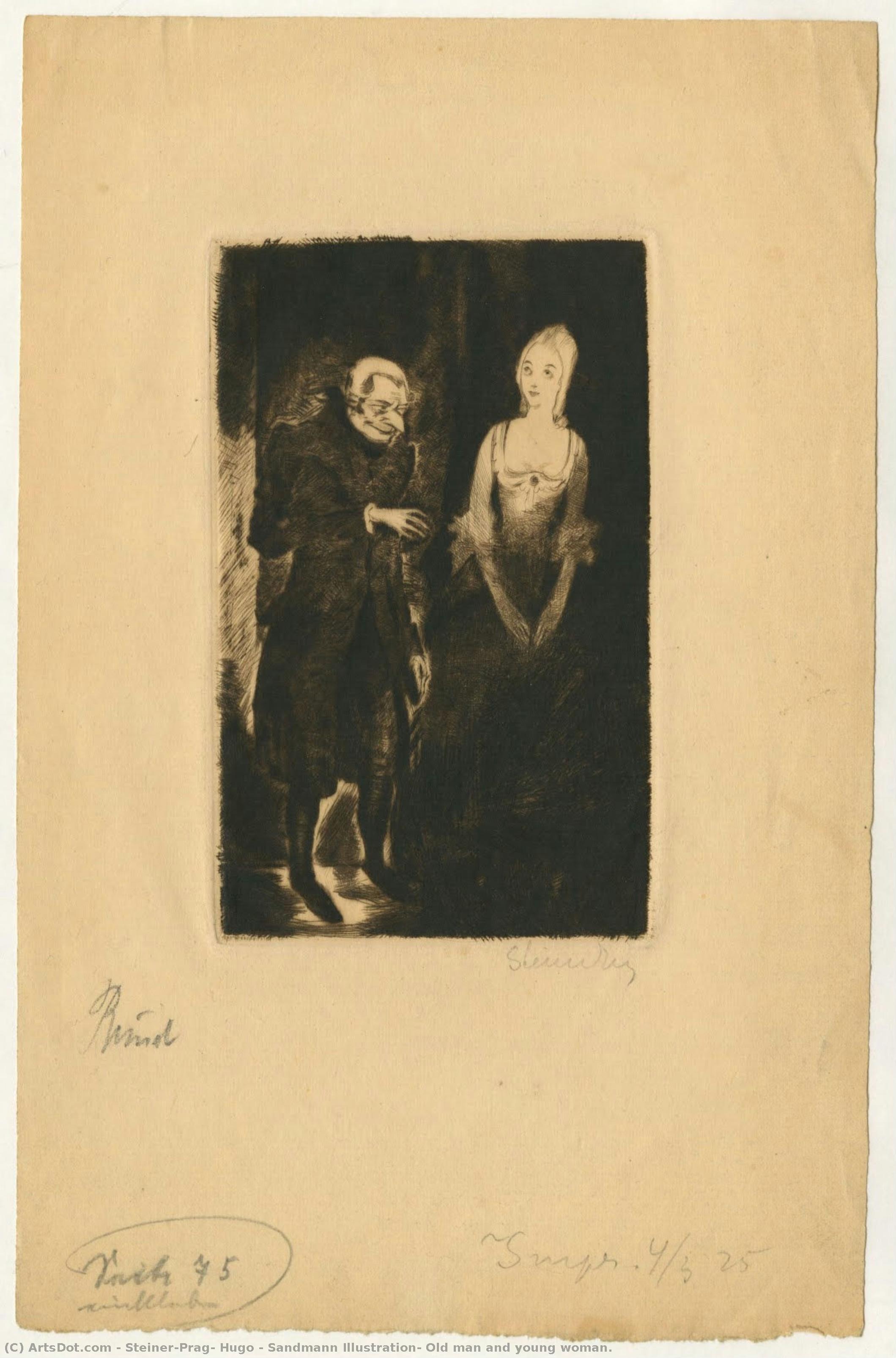
Sandmann Illustration: Old man and young woman.
 Etching
- Expressionism
 1925
1925- Modern
 14.0 x 22.0 cm
 Instituto Leo Baeck
 Ver más
Giclée / Impresión de arte
Impresiones giclée o en lienzo de calidad de museo con producción rápida y opciones de acabado flexibles. ( Comprar pintura hecha a mano Comprar imagen)




P118B $10

P118H $10

P118W $10

P438Z $10

P508JH $12

P508YH $12

P805H $10

P805Z $10

P919BZ $10

P919G $10

P919XJ $10

P959ZH $10

P968JZ $12

W106C $8

W218G $10

W218JH $8

W218Y $10

W307PJ $10

W316G $10

W316PJ $8

W316Y $10

W398PJ $8

W4111J $10

W500HY $15

W500JH $15

W692G $12

W849H $8

W940BG $15

W953PJ $8




Elija entre nuestros tamaños predefinidos que respetan las proporciones originales de la obra.

Puede introducir sus propias dimensiones para adaptarse a un marco o espacio específico. Si el tamaño seleccionado no coincide con las proporciones de la imagen original, recortaremos la obra de arte o extenderemos la imagen con un borde con efecto espejo o de color sólido. Se enviará una maqueta digital para su aprobación antes de que comience la producción.
Tenga en cuenta que la vista previa en pantalla no refleja el recorte o la extensión real. Solo la maqueta mostrará con precisión la composición final.
Aunque existen tamaños personalizados, recomendamos seleccionar una dimensión de la lista predefinida para preservar las proporciones originales.
Envío a todo el mundo () en 2 semanas en lugar de las 4/5 semanas estándar. (26 agosto)

Envío exprés gratuito a todo el mundo

Lienzo de lino de alta calidad

Seguro de envío total

Garantía de reembolso de impuestos aduaneros

Garantía de fidelidad cromática exacta

Política de devolución de 60 días (solo por defectos)

Garantía de devolución del 100% del dinero

Descuento por cantidad
 La opción de vidrio solo está disponible en tamaños inferiores a 110 cm.

Sandmann Illustration: Old man and young woman.
Giclée / Impresión de arte
Dimensiones de la reproducción
-


Precio total final
$ 62
Descripción de la pieza
A Glimpse into the Ethereal: The Sandmann Illustration
In the delicate, monochromatic world of Hugo Steiner-Prag’s 1925 etching, Sandmann Illustration: Old man and young woman, we are invited to witness a quiet, suspended moment of human connection. This exquisite piece of graphic art captures a profound sense of intimacy between two figures, rendered with the masterful precision characteristic of early 20th-century German-Bohemian illustration. The etching presents an elderly gentleman and a youthful woman standing side by side, their gazes fixed upon something unseen by the viewer. There is a palpable tension in their shared observation, a silent dialogue that suggests they are either lost in a deep conversation or united by a singular, captivating event unfolding before them.
The technique employed here is nothing short of mesmerizing. Through the fine, rhythmic lines of the etching process, Steiner-Prag breathes life into the textures of the era—the crispness of a suit and tie, the soft flow of long hair, and the subtle interplay of light and shadow that defines their forms. The black and white medium strips away the distraction of color, forcing the eye to focus on the emotional weight of the composition and the masterful use of contrast. This starkness lends the work an archival, timeless quality, making it feel like a rediscovered fragment of a lost dream or a cherished memory pulled from the pages of a forgotten literary masterpiece.
The Legacy of Hugo Steiner-Prag
To understand the soul of this illustration, one must look to the illustrious career of its creator. Hugo Steiner-Prag was a polymath of the visual arts, a man whose influence stretched from the prestigious academies of Prague and Munich to the avant-garde stages of theatrical scenography. As a professor and a member of the Deutscher Werkbund, he stood at the intersection of fine art and graphic design, shaping the aesthetic landscape of an era defined by Expressionism and the search for new visual languages. His work often danced on the edge of the mystical, blending the boundaries between book illustration and high art.
This specific piece serves as a testament to his ability to capture the human condition within the confines of a small, intimate scale. The presence of handwritten text visible beneath the etching adds a layer of historical depth, reminding us that this work was once part of a larger narrative—perhaps a collection or an exhibition that sought to explore the psychological depths of folklore and literature. For the collector, owning a reproduction of such a piece is not merely about acquiring an image; it is about preserving a fragment of the profound artistic movement that bridged the gap between classical tradition and modern psychological exploration.
A Timeless Addition to the Modern Interior
For interior designers and connoisseurs of fine art, this illustration offers a unique opportunity to introduce a sense of intellectual depth and vintage elegance into a contemporary space. The monochromatic palette makes it an incredibly versatile element for sophisticated decor, whether placed within a minimalist gallery wall or used as a focal point in a classic study. Its subject matter—the interplay between youth and age, the shared gaze, and the quietude of the moment—provides a contemplative anchor that can transform the atmosphere of a room.
Integrating a high-quality reproduction of this etching allows for a sophisticated layering of history within a modern home. It evokes a sense of nostalgia and storytelling, inviting guests to linger and wonder about the narrative hidden within the lines. As an investment in aesthetic beauty, the Sandmann Illustration stands as a powerful symbol of the enduring allure of graphic mastery, offering a window into a period where every stroke of the needle was an act of poetic expression.
Obras relacionadas
Biografía del artista
early life and education
Hugo Steiner-Prag, also known as Hugo Steiner, was born Hugo Steiner in Prague on December 12, 1880. Upon leaving secondary school, Hugo Steiner joined Jung-Prag, a group of young artists who tended strongly toward mysticism and the occult. He took private art lessons and finally entered the Prager Kunstakademie (Prague Academy of the Arts) in 1897. In 1900, Steiner moved to Munich to enroll at the Königliche Akademie der Bildenden Künste (Royal Academy of Fine Arts). He added the name of his native city Prag to his last name in order to distinguish himself from other artists bearing the same name. In 1916, Steiner-Prag created twenty-five lithographs for Gustav Meyrink's novel, Der Golem, which would become his masterpiece. During his time in Germany, Steiner-Prag not only illustrated and taught, he was also an active member in the international illustration and theater communities. In Leipzig from 1927 to 1928, he was the president of 'Spolek nemeckých knizních umelcu' and associated with R.M. nRilke, F. Werfel, F. Kafka, M. Brod, E. E. Kisch. Steiner-Prag organised international exhibitions of book art (Cologne 1928, Barcelona 1929, New York, Pittsburg 1930, Paris 1931, Leipzig 1932). He returmed to Prague in 1933 and in 1934 founded a workshop 'Officina Pragensis' for printmaking, book and poster design; where he also taught courses and collaborated with the Prague Museum of Applied Arts in establishing an international collection of modern book art. By 1938 he had emigrated to Sweden, and then to the USA in 1941, where he taught at the University of New York. Steiner-Prag’s life, marked by his tireless pursuit of artistic excellence and his profound impact on the art world, serves as a compelling reminder of the transformative power of art.career highlights and notable works
Hugo Steiner-Prag's multifaceted career spanned across various disciplines, including illustration, scenography, and education. As a professor at several institutions, including the Debschitz School, Skolan för bok- och reklamkonst, and Hochschule für Grafik und Buchkunst Leipzig, he played a pivotal role in shaping the artistic landscape of his time. His association with the American Institute of Graphic Arts and membership in the Deutscher Werkbund further solidify his influence on the art world. Steiner-Prag's works are now part of the archives at the German Literary Archives in Marbach, a testament to his enduring legacy. Among his most celebrated achievements were:- Illustrations for E.T.A Hoffmann’s *Die Elixiere des Teufels*, capturing the psychological drama with striking imagery.
- Lithographs for Gustav Meyrink's *Der Golem*, portraying the golem character as a symbol of Jewish identity and societal anxieties.
- Stage designs for operas and dramas in Leipzig and Prague, contributing to the vibrant theatrical culture of his era.
artistic legacy and enduring impact
Steiner-Prag’s artistic contributions continue to inspire new generations, with his works being showcased in various museums and collections, including the Museum Collection Hugo Fischer (Bühl, Germany). His influence on German Expressionism is undeniable, cementing his place as a pivotal figure in shaping the aesthetic sensibilities of the 20th century. Steiner-Prag’s legacy extends beyond individual artworks; he fostered artistic dialogue and nurtured talent within educational institutions, leaving an indelible mark on the development of visual arts education.references:
Hugo Steiner-Prag
1880 - 1945 , República Checa
Datos clave
- Artistic Movement Or Style: Expressionism
- Artists Who Influenced This Artist:
- Peter Halm
- Franz von Stuck
- Date Of Birth: 1880 Prague, Czech Republic
- Date Of Death: 1945
- Full Name: Hugo Steiner-Prag
- Nationality: German Bohemian
- Notable Artworks:
- Ghostly Ballads: Palatine Countess Jutta
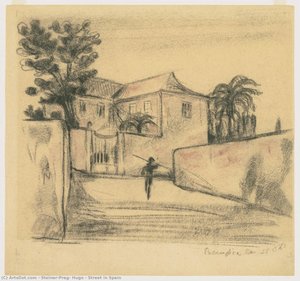
- Street in Spain
- Town by a River
- Place Of Birth: Prague, Czech Republic
Artículos relacionados

Blanco Sublime: Los 10 Cuadros Más Famosos Dominados por la Luz y el Color
Descubre los 10 cuadros blancos más emblemáticos de la historia del arte. Explora Monet, Van Gogh y Klimt, y su magistral uso de la luz y el color. Encuentra reproducciones de alta calidad e inspírate para tu decoración en .
Las 10 Grabados Legendarios que Revolucionaron el Arte | ArtsDot
Descubre los 10 grabados legendarios que transformaron la historia del arte. Explora las obras maestras de Rembrandt, Goya y Dürer. Encuentra reproducciones de alta calidad e inspírate para decorar tu hogar con arte clásico en ArtsDot.com.

Las 10 Pinturas Más Famosas Dominadas por el Negro | Arte y Decoración
Descubre las 10 pinturas más impactantes dominadas por el negro. Explora obras maestras de Rembrandt, Goya y Rothko, su historia y significado. Encuentra reproducciones de arte exclusivas para transformar tu hogar en .
El Aguafuerte: Un Recorrido Histórico por su Técnica, Cualidades Estéticas y Significado Duradero
Descubre la fascinante historia y técnica del aguafuerte. Explora su evolución artística, los maestros que lo dominaron y sus cualidades estéticas únicas. Guía experta para amantes del arte.
The Intricate World of Etching: A Historical Survey of Technique, Aesthetic Evolution, and Enduring Artistic Impact
Explore the rich history of etching, from its origins to modern practice. Discover techniques, key artists like Rembrandt, and insights for collectors. A comprehensive guide by ArtsDot.

