 Ver en contexto
 Enviar
 Compartir
 Detalles

 Descargar
 Similares
 Radiografía
 Presentación de diapositivas
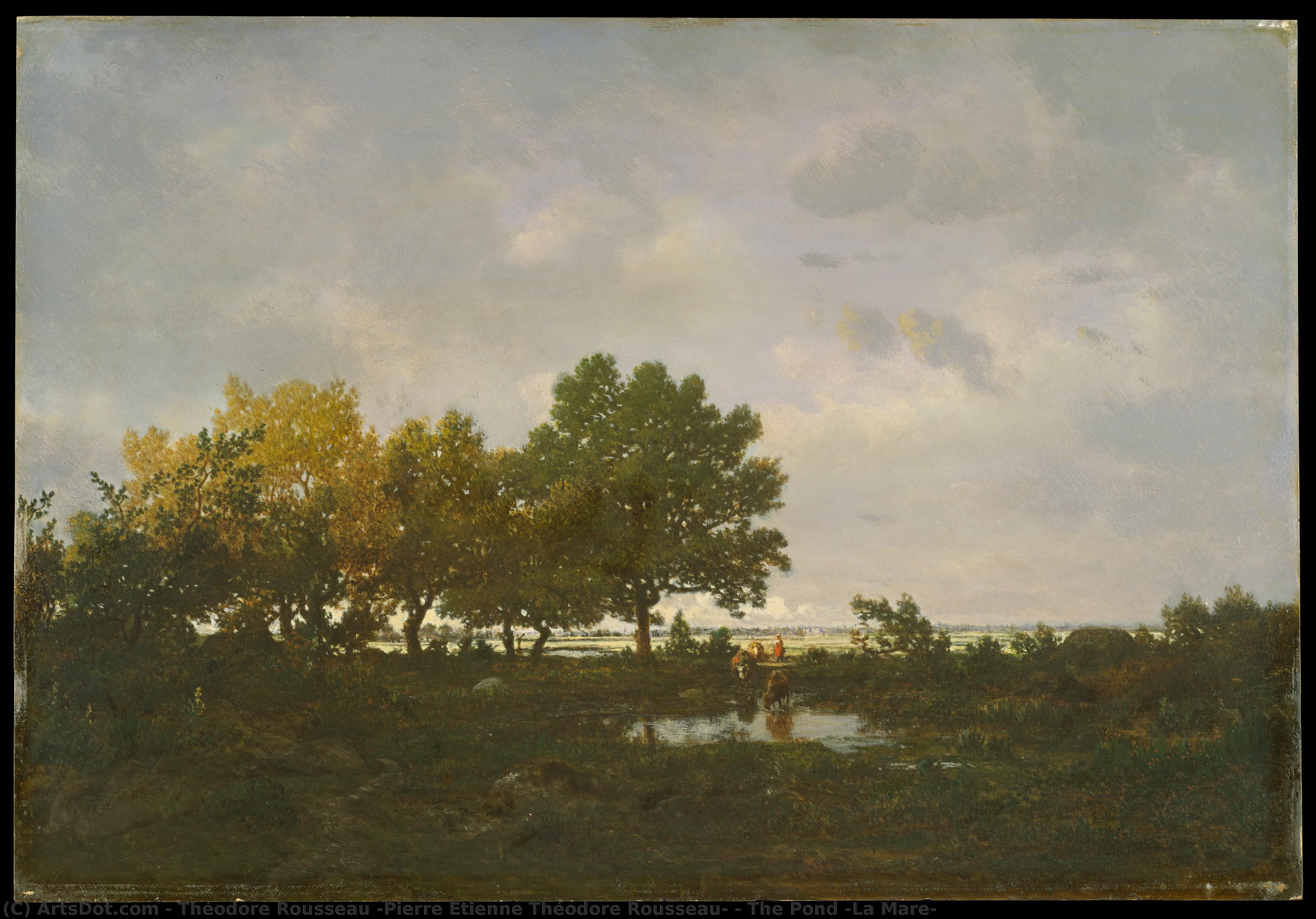
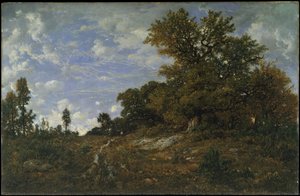
The Pond (La Mare)
 Oil On Canvas
- WallArt
- Barbizon School
 1855
1855- 19th Century
 34.0 x 52.0 cm
 Museo Metropolitano de Arte
 Ver más
Reproducción al óleo hecha a mano
Óleo sobre lienzo pintado a mano en el tamaño y marco de su elección, realizado por encargo por nuestros artistas. ( Comprar impresión Comprar imagen)




P118B $10

P118H $10

P118W $10

P438Z $10

P508JH $12

P508YH $12

P805H $10

P805Z $10

P919BZ $10

P919G $10

P919XJ $10

P959ZH $10

P968JZ $12

W106C $8

W218G $10

W218JH $8

W218Y $10

W307PJ $10

W316G $10

W316PJ $8

W316Y $10

W398PJ $8

W4111J $10

W500HY $15

W500JH $15

W692G $12

W849H $8

W940BG $15

W953PJ $8




Elija entre nuestros tamaños predefinidos que respetan las proporciones originales de la obra.

Puede ingresar sus propias dimensiones para adaptarse a un marco o espacio específico. Si el tamaño seleccionado no coincide con las proporciones de la imagen original, recortaremos la obra o extenderemos la pintura con elementos adicionales pintados a mano. Se le enviará una maqueta digital para su aprobación antes de comenzar la producción.
Tenga en cuenta que la vista previa en pantalla no refleja el recorte o la extensión reales. Solo la maqueta mostrará con precisión la composición final.
Si bien existen tamaños personalizados, recomendamos seleccionar una dimensión de la lista predefinida para preservar las proporciones originales.
Tras realizar el pedido, el equipo de ArtsDot.com enviará un correo electrónico al cliente para solicitar instrucciones y proporcionarle una vista previa del boceto.
Envío a todo el mundo () en 3-4 semanas en lugar de las 5 semanas estándar. (25 agosto). Sin comprometer la calidad.

Envío exprés gratuito a todo el mundo

Lienzo de lino de alta calidad

Seguro de envío total

Garantía de reembolso de impuestos aduaneros

Garantía de fidelidad cromática exacta

Política de devolución de 60 días (solo por defectos)

Garantía de devolución del 100% del dinero

Descuento por cantidad
 La opción de vidrio solo está disponible en tamaños inferiores a 110 cm.

The Pond (La Mare)
Técnica de reproducción
Dimensiones de la reproducción
-


Precio total final
$ 263
Descripción de la obra
The Pond (La Mare) – A Symphony of Light and Reflection by Théodore Rousseau
Théodore Rousseau’s “The Pond,” painted in 1855, isn't merely a landscape; it’s an immersion into the heart of Romanticism. This evocative work, now housed within the Metropolitan Museum of Art, captures a fleeting moment of serene beauty nestled within the Forest of Fontainebleau – a region that held profound significance for Rousseau and his Barbizon School contemporaries. The scene unfolds with remarkable detail: a small pond reflecting the dense, verdant trees lining its banks, punctuated by the subtle presence of cattle grazing peacefully nearby and a solitary figure observing the tranquil waters. It’s a tableau designed to evoke not just visual pleasure but also a deep sense of connection with nature's rhythms.
Rousseau’s artistic approach distinguishes “The Pond” as a pivotal work within his oeuvre. Departing from the idealized landscapes favored by earlier generations, he embraced a realism rooted in direct observation and an acute sensitivity to light and atmosphere. He meticulously rendered the textures of the grass, the shimmering surface of the water, and the dappled sunlight filtering through the trees – all achieved with a masterful command of oil paint. The brushstrokes are visible yet controlled, creating a sense of movement and depth that draws the viewer into the scene. Notably, Rousseau’s technique echoes the Dutch Masters, particularly their ability to capture atmospheric perspective and the subtle nuances of light on water—a deliberate homage to artists he deeply admired.
A Barbizon Masterpiece – Context and Influences
To understand “The Pond,” one must appreciate the context of the Barbizon School. Emerging in the mid-19th century, this movement represented a reaction against the rigid academic traditions of the French Salon. Artists like Rousseau sought to paint *en plein air* (outdoors), directly from nature, and to depict rural life with honesty and immediacy. The Forest of Fontainebleau, with its ancient trees and varied landscapes, became their primary studio – a place where they could escape the constraints of Parisian society and forge a new artistic identity. Rousseau’s early training under his cousin, Alexandre Pau de Saint-Martin, and later with Joseph Rémond, provided him with a solid foundation in traditional techniques, but it was his independent spirit and dedication to capturing the essence of nature that truly defined his style.
The influence of Dutch landscape painting is undeniable. Rousseau’s meticulous attention to detail, his use of atmospheric perspective, and his focus on capturing the effects of light are all hallmarks of the Dutch masters—artists like Jacob van Ruisdael and Jan van Goyen. He even owned a collection of their prints, studying their techniques with great care. This deliberate engagement with the past demonstrates Rousseau’s commitment to elevating landscape painting to a higher level of artistic expression.
Symbolism and Emotional Resonance
Beyond its technical brilliance, “The Pond” is rich in symbolic meaning. The tranquil scene evokes a sense of peace and solitude—a retreat from the pressures of urban life. The solitary figure observing the pond suggests contemplation and an appreciation for the beauty of the natural world. The presence of cattle symbolizes abundance and the cyclical rhythms of rural existence. The light itself, shimmering on the water’s surface, represents hope and renewal. Rousseau wasn't simply painting a landscape; he was conveying a profound emotional experience—a feeling of connection to something larger than oneself.
Furthermore, the composition subtly references classical ideals of harmony and balance. The arrangement of elements within the frame creates a sense of visual equilibrium, inviting the viewer to linger and lose themselves in the scene’s serene beauty. The painting's overall effect is one of quiet contemplation—a reminder of the restorative power of nature and the enduring appeal of Romanticism.
A Timeless Legacy – Reproduction and Display
“The Pond” continues to captivate audiences today, not only for its artistic merit but also for its ability to transport us to a simpler time. High-quality reproductions offer a remarkable opportunity to experience Rousseau’s vision firsthand, bringing the tranquility of the Forest of Fontainebleau into our homes and offices. When selecting a reproduction, consider framing options that complement the painting's delicate palette and atmospheric depth—a sawtooth hanger or a heavy-duty angle are excellent choices. Whether displayed in a gallery, a study, or a living room, “The Pond” remains a testament to Rousseau’s genius and a timeless celebration of nature’s beauty.
Obras relacionadas

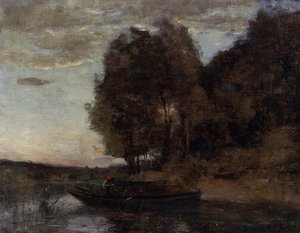
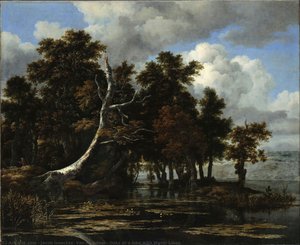
Biografía del artista
Théodore Rousseau: The Soul of the Forest
Étienne Pierre Théodore Rousseau (1812-1867) stands as a cornerstone of French Barbizon School painting, an artistic movement that championed realism and celebrated the grandeur of rural landscapes. Born in Paris to a bourgeois family, Rousseau’s early life was marked by a father who initially resisted his son's passion for art – a sentiment that ultimately softened as he witnessed Rousseau’s unwavering dedication to his craft. This familial support proved crucial as Rousseau navigated the turbulent waters of Parisian artistic circles and faced repeated rebuffs from the Salon authorities, institutions notoriously resistant to avant-garde ideas.Early Training & Influences
Rousseau's initial artistic education was modest, yet he quickly demonstrated exceptional talent. Recognizing his aptitude, his father encouraged him to pursue painting seriously, prioritizing it over business ventures. He absorbed influences from artists like Jean-François Millet and Eugène Delacroix, whose depictions of peasant life and dramatic landscapes respectively instilled in him a profound appreciation for capturing the essence of nature. Millet’s meticulous attention to detail—particularly in portraying human figures within rural settings—served as an inspiration for Rousseau's own approach to composition and characterization. Similarly, Delacroix’s expressive brushwork and masterful use of color encouraged Rousseau to experiment with bolder techniques while maintaining a steadfast commitment to conveying emotional depth.The Barbizon School & Artistic Philosophy
Rousseau’s artistic vision centered on portraying the natural world with uncompromising accuracy. Rejecting idealized representations favored by Romanticism, he embraced the Barbizon aesthetic – characterized by muted colors, sketchy brushwork, and a focus on atmospheric perspective—to convey the emotional impact of landscapes. He believed that art should serve as a conduit for observing and understanding nature, mirroring its sublime beauty. This conviction drove him to spend countless hours outdoors, meticulously studying the subtleties of light and shadow, texture and color, striving to capture not merely what he saw but also what he felt—a profound reverence for the untamed wilderness and its inherent spirituality.Rousseau’s Artistic Output
Rousseau's artistic output is distinguished by an extraordinary range of subjects, predominantly focused on forests and rural scenes. However, he wasn't merely documenting the visual appearance of these environments; he sought to convey their spiritual significance—the feeling of awe and reverence inspired by encountering untamed wilderness. Works like “Les Chênes d’Apremont” exemplify his masterful technique, demonstrating a remarkable ability to render textures and tonal variations with astonishing subtlety. The painting captures the dappled sunlight filtering through dense foliage, creating an immersive experience for the viewer. Rousseau achieved considerable fame during his lifetime, securing commissions from prominent patrons and exhibiting regularly at the Salon. Among his most celebrated paintings are “The Great Oaks of the Vieux Bas-Breau,” a monumental depiction of ancient trees bathed in golden light; "View of the Puy de Dome and Royat," showcasing a breathtaking sunset over the volcanic peaks of France; and “La Grenouillère” – a poignant portrayal of a picnic scene on the Loire River, imbued with melancholic beauty. Despite facing considerable hardship and criticism throughout his career, Rousseau persevered in his artistic pursuits until his untimely death in 1867. His legacy extends far beyond the canvases he created; he established a tradition of landscape painting that continues to inspire artists today. Théodore Rousseau remains revered as one of France’s greatest painters—a champion of natural beauty and an enduring symbol of Romantic idealism transformed into unwavering artistic conviction.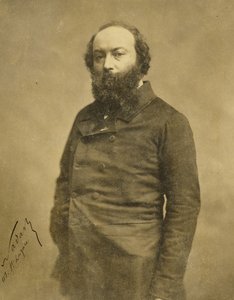
Théodore Rousseau
1812 - 1867 , Francia
Datos clave
- Artistic Movement Or Style: Escuela de Barbizon
- Artists Who Influenced This Artist:
- Jean-François Millet
- Eugène Delacroix
- Date Of Birth: 15 abril de 1812
- Date Of Death: 22 diciembre de 1867
- Full Name: Étienne Pierre Théodore Rousseau
- Nationality: Francés
- Notable Artworks:
- Les Chênes d’Apremont
- La descente des vaches
- Place Of Birth: París, Francia
Artículos relacionados
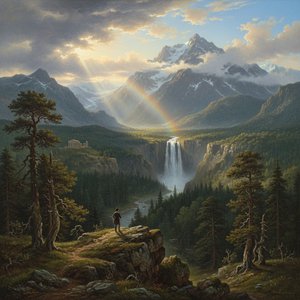
Evoking Nature's Sublime: A Comprehensive Exploration of 19th-Century Landscape Painting
Explore the captivating world of 19th-century landscape painting! Discover renowned artists like Friedrich & Monet, key movements, and find the perfect artwork to bring nature's serenity into your home. Expert insights at ArtsDot.

John Constable: Las 25 Obras Maestras del Paisaje Inglés | ArtsDot
Descubre las 25 obras maestras de John Constable, el pintor romántico inglés que capturó la belleza del paisaje. Explora su técnica, historia y significado en ArtsDot.com. Reproducciones de arte de alta calidad para tu hogar.
Serene Visions: Exploring Themes of Tranquility in Art History & Contemporary Practice
Explore the history of serene landscape art & discover artists who evoke tranquility. Find the perfect calming artwork for your home with expert guidance from ArtsDot.

Evocations of Place: A Historical Journey Through Landscape Art
Explore the rich history of landscape art with ArtsDot. Discover renowned artists, movements like Impressionism & Romanticism, and expert guidance for collecting timeless pieces. Find your perfect serene escape today!

Paisajes Románticos: 10 Obras Maestras que Definieron un Movimiento Artístico
Descubre los 10 paisajes románticos más influyentes de artistas como Caspar David Friedrich y Turner. Explora la belleza, el simbolismo y las técnicas del movimiento romántico. Reproducciones de arte exclusivas en ArtsDot.com.