 Ver en contexto
 Enviar
 Compartir
 Detalles

 Descargar
 Similares
 Radiografía
 Presentación de diapositivas
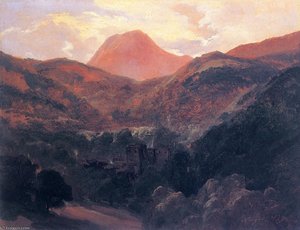
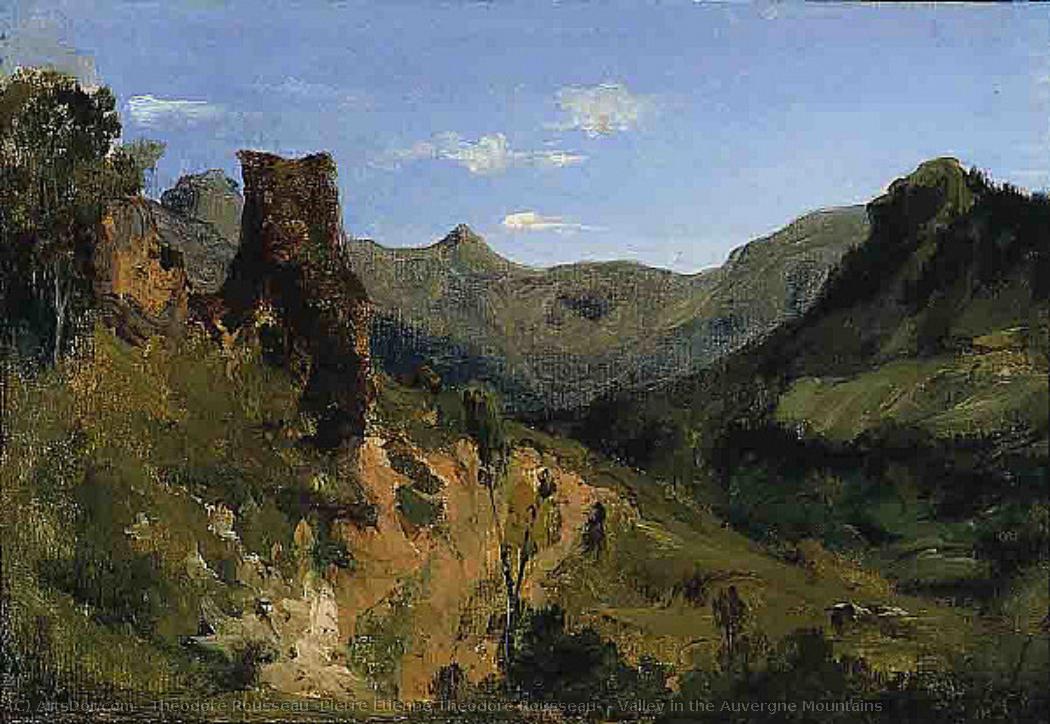
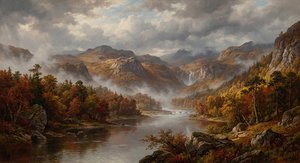
Valley in the Auvergne Mountains


 Ver más
Reproducción al óleo hecha a mano
Óleo sobre lienzo pintado a mano en el tamaño y marco de su elección, realizado por encargo por nuestros artistas. ( Comprar impresión Comprar imagen)




P118B $10

P118H $10

P118W $10

P438Z $10

P508JH $12

P508YH $12

P805H $10

P805Z $10

P919BZ $10

P919G $10

P919XJ $10

P959ZH $10

P968JZ $12

W106C $8

W218G $10

W218JH $8

W218Y $10

W307PJ $10

W316G $10

W316PJ $8

W316Y $10

W398PJ $8

W4111J $10

W500HY $15

W500JH $15

W692G $12

W849H $8

W940BG $15

W953PJ $8




Elija entre nuestros tamaños predefinidos que respetan las proporciones originales de la obra.

Puede ingresar sus propias dimensiones para adaptarse a un marco o espacio específico. Si el tamaño seleccionado no coincide con las proporciones de la imagen original, recortaremos la obra o extenderemos la pintura con elementos adicionales pintados a mano. Se le enviará una maqueta digital para su aprobación antes de comenzar la producción.
Tenga en cuenta que la vista previa en pantalla no refleja el recorte o la extensión reales. Solo la maqueta mostrará con precisión la composición final.
Si bien existen tamaños personalizados, recomendamos seleccionar una dimensión de la lista predefinida para preservar las proporciones originales.
Tras realizar el pedido, el equipo de ArtsDot.com enviará un correo electrónico al cliente para solicitar instrucciones y proporcionarle una vista previa del boceto.
Envío a todo el mundo () en 3-4 semanas en lugar de las 5 semanas estándar. (30 agosto). Sin comprometer la calidad.

Envío exprés gratuito a todo el mundo

Lienzo de lino de alta calidad

Seguro de envío total

Garantía de reembolso de impuestos aduaneros

Garantía de fidelidad cromática exacta

Política de devolución de 60 días (solo por defectos)

Garantía de devolución del 100% del dinero

Descuento por cantidad
 La opción de vidrio solo está disponible en tamaños inferiores a 110 cm.

Valley in the Auvergne Mountains
Técnica de reproducción
Dimensiones de la reproducción
-


Precio total final
$ 263
The Sublime Majesty of the Auvergne
To gaze upon Théodore Rousseau’s depiction of the Valley in the Auvergne Mountains is to be transported to a realm where nature reigns supreme and human endeavor feels wonderfully small. This painting, born from the heart of Romanticism around 1830, is not merely a record of a French landscape; it is an emotional encounter with the sublime. Rousseau masterfully captures the raw, untamed power of the Auvergne peaks. The composition unfolds horizontally, inviting the viewer’s eye to wander deep into the receding valley floor, where towering rock formations and steep slopes create an overwhelming sense of grandeur and profound solitude.
A Masterclass in Earth Tones and Atmosphere
Rousseau's palette is a deeply resonant conversation between earth and sky. Expect a rich tapestry woven from ochres, deep browns, muted greens, and cool grays—the very pigments of ancient stone and resilient mountain life. Yet, these grounded tones are lifted by the ethereal touches of blue in the distant sky and the lighter greens clinging to the lower slopes. Technically, the painting is a revelation in texture. Rousseau employed visible, energetic brushstrokes, particularly noticeable in the impasto applied to the cliffs, giving the rock faces a palpable, almost tactile reality. This technique allows the light—which feels diffused, as if under an immense, contemplative sky—to model every ridge and crevice, enhancing the illusion of depth.
Romantic Echoes: The Spirit of Place
This work stands firmly within the tradition of Romantic landscape painting, a movement that elevated feeling over mere depiction. For Rousseau, the landscape was a mirror for the soul. He sought not just to paint what he saw, but what he felt while standing amidst those rugged mountains. The atmospheric perspective is key here; as the valley recedes into the background, details soften and colors pale, creating an almost dreamlike sense of vastness. It speaks to that quintessential Romantic yearning—a deep, emotional connection to the wild, untamed natural world.
Bringing the Wilderness Home
For the collector or designer seeking a piece that anchors a room with history and drama, this reproduction offers more than just decoration; it offers an experience. The sheer weight of Rousseau’s vision—the awe, the quiet solitude, the overwhelming power of geology—can transform any space. Whether placed in a library evoking scholarly contemplation or a grand hall demanding dramatic presence, the Valley in the Auvergne Mountains serves as a timeless portal. Owning this piece is to curate a moment of profound connection with the enduring, magnificent spirit of nature itself.
Obras relacionadas

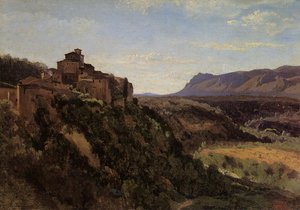
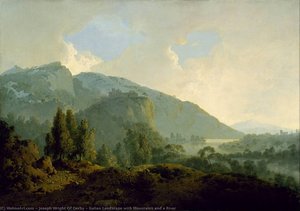
Biografía del artista
Théodore Rousseau: The Soul of the Forest
Étienne Pierre Théodore Rousseau (1812-1867) stands as a cornerstone of French Barbizon School painting, an artistic movement that championed realism and celebrated the grandeur of rural landscapes. Born in Paris to a bourgeois family, Rousseau’s early life was marked by a father who initially resisted his son's passion for art – a sentiment that ultimately softened as he witnessed Rousseau’s unwavering dedication to his craft. This familial support proved crucial as Rousseau navigated the turbulent waters of Parisian artistic circles and faced repeated rebuffs from the Salon authorities, institutions notoriously resistant to avant-garde ideas.Early Training & Influences
Rousseau's initial artistic education was modest, yet he quickly demonstrated exceptional talent. Recognizing his aptitude, his father encouraged him to pursue painting seriously, prioritizing it over business ventures. He absorbed influences from artists like Jean-François Millet and Eugène Delacroix, whose depictions of peasant life and dramatic landscapes respectively instilled in him a profound appreciation for capturing the essence of nature. Millet’s meticulous attention to detail—particularly in portraying human figures within rural settings—served as an inspiration for Rousseau's own approach to composition and characterization. Similarly, Delacroix’s expressive brushwork and masterful use of color encouraged Rousseau to experiment with bolder techniques while maintaining a steadfast commitment to conveying emotional depth.The Barbizon School & Artistic Philosophy
Rousseau’s artistic vision centered on portraying the natural world with uncompromising accuracy. Rejecting idealized representations favored by Romanticism, he embraced the Barbizon aesthetic – characterized by muted colors, sketchy brushwork, and a focus on atmospheric perspective—to convey the emotional impact of landscapes. He believed that art should serve as a conduit for observing and understanding nature, mirroring its sublime beauty. This conviction drove him to spend countless hours outdoors, meticulously studying the subtleties of light and shadow, texture and color, striving to capture not merely what he saw but also what he felt—a profound reverence for the untamed wilderness and its inherent spirituality.Rousseau’s Artistic Output
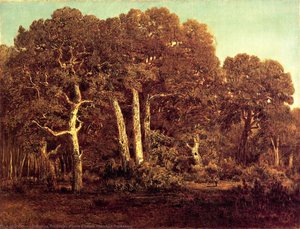
Rousseau's artistic output is distinguished by an extraordinary range of subjects, predominantly focused on forests and rural scenes. However, he wasn't merely documenting the visual appearance of these environments; he sought to convey their spiritual significance—the feeling of awe and reverence inspired by encountering untamed wilderness. Works like “Les Chênes d’Apremont” exemplify his masterful technique, demonstrating a remarkable ability to render textures and tonal variations with astonishing subtlety. The painting captures the dappled sunlight filtering through dense foliage, creating an immersive experience for the viewer. Rousseau achieved considerable fame during his lifetime, securing commissions from prominent patrons and exhibiting regularly at the Salon. Among his most celebrated paintings are “The Great Oaks of the Vieux Bas-Breau,” a monumental depiction of ancient trees bathed in golden light; "View of the Puy de Dome and Royat," showcasing a breathtaking sunset over the volcanic peaks of France; and “La Grenouillère” – a poignant portrayal of a picnic scene on the Loire River, imbued with melancholic beauty. Despite facing considerable hardship and criticism throughout his career, Rousseau persevered in his artistic pursuits until his untimely death in 1867. His legacy extends far beyond the canvases he created; he established a tradition of landscape painting that continues to inspire artists today. Théodore Rousseau remains revered as one of France’s greatest painters—a champion of natural beauty and an enduring symbol of Romantic idealism transformed into unwavering artistic conviction.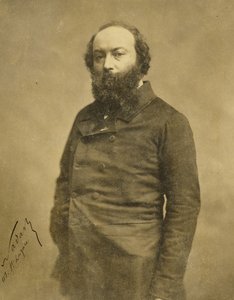
Théodore Rousseau
1812 - 1867 , Francia
Datos clave
- Artistic Movement Or Style: Escuela de Barbizon
- Artists Who Influenced This Artist:
- Jean-François Millet
- Eugène Delacroix
- Date Of Birth: 15 abril de 1812
- Date Of Death: 22 diciembre de 1867
- Full Name: Étienne Pierre Théodore Rousseau
- Nationality: Francés
- Notable Artworks:
- Les Chênes d’Apremont
- La descente des vaches
- Place Of Birth: París, Francia
Artículos relacionados

Paisajes Románticos: 10 Obras Maestras que Definieron un Movimiento Artístico
Descubre los 10 paisajes románticos más influyentes de artistas como Caspar David Friedrich y Turner. Explora la belleza, el simbolismo y las técnicas del movimiento romántico. Reproducciones de arte exclusivas en ArtsDot.com.
Evoking Nature's Sublime: A Comprehensive Exploration of 19th-Century Landscape Painting
Explore the captivating world of 19th-century landscape painting! Discover renowned artists like Friedrich & Monet, key movements, and find the perfect artwork to bring nature's serenity into your home. Expert insights at ArtsDot.
Los 10 Maestros del Río Hudson: Obras que Definieron un Movimiento Artístico
Descubre los 10 lienzos más emblemáticos de la Escuela del Río Hudson. Explora las obras maestras de Thomas Cole, Church y Bierstadt que capturan la belleza del paisaje americano. Encuentra reproducciones de arte exclusivas en ArtsDot.com.

John Constable: Las 25 Obras Maestras del Paisaje Inglés | ArtsDot
Descubre las 25 obras maestras de John Constable, el pintor romántico inglés que capturó la belleza del paisaje. Explora su técnica, historia y significado en ArtsDot.com. Reproducciones de arte de alta calidad para tu hogar.
El Sublime y lo Pintoresco: Explorando la Emoción y la Naturaleza en la Pintura Romántica de Paisaje
Explora la profunda conexión entre el arte romántico y la naturaleza. Descubre a Caspar David Friedrich, John Constable y otros maestros del sublime y lo pintoresco. Análisis experto e historia del movimiento.