 Ver en contexto
 Enviar
 Compartir
 Detalles

 Descargar
 Similares
 Radiografía
 Presentación de diapositivas
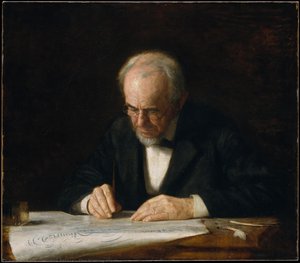
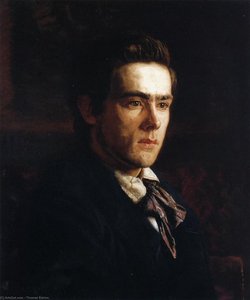
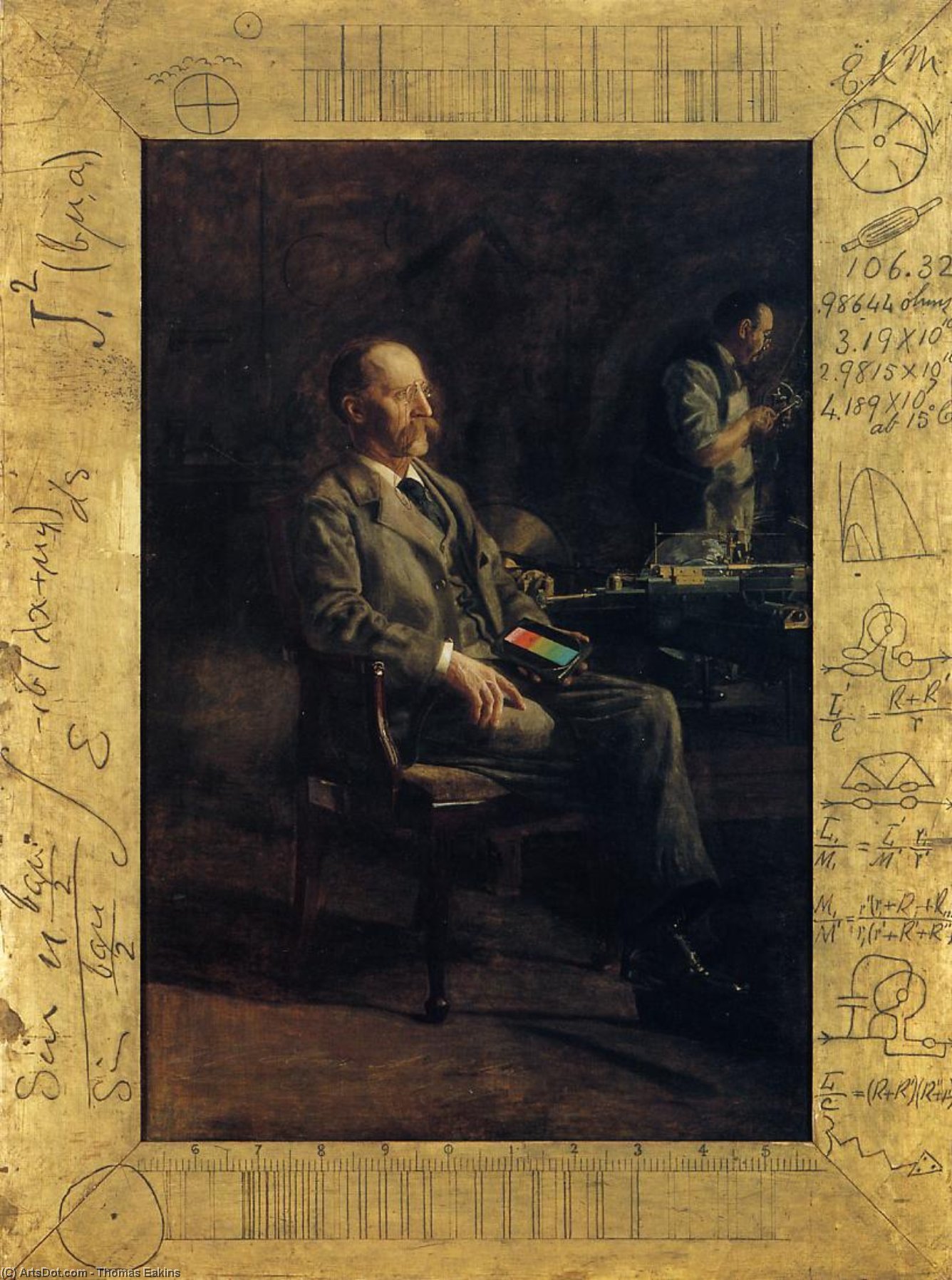
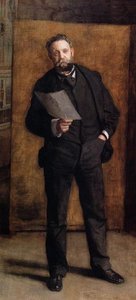
Portrait of Professor Henry A. Rowland


 Ver más
Reproducción al óleo hecha a mano
Óleo sobre lienzo pintado a mano en el tamaño y marco de su elección, realizado por encargo por nuestros artistas. ( Comprar impresión Comprar imagen)




P118B $10

P118H $10

P118W $10

P438Z $10

P508JH $12

P508YH $12

P805H $10

P805Z $10

P919BZ $10

P919G $10

P919XJ $10

P959ZH $10

P968JZ $12

W106C $8

W218G $10

W218JH $8

W218Y $10

W307PJ $10

W316G $10

W316PJ $8

W316Y $10

W398PJ $8

W4111J $10

W500HY $15

W500JH $15

W692G $12

W849H $8

W940BG $15

W953PJ $8




Elija entre nuestros tamaños predefinidos que respetan las proporciones originales de la obra.

Puede ingresar sus propias dimensiones para adaptarse a un marco o espacio específico. Si el tamaño seleccionado no coincide con las proporciones de la imagen original, recortaremos la obra o extenderemos la pintura con elementos adicionales pintados a mano. Se le enviará una maqueta digital para su aprobación antes de comenzar la producción.
Tenga en cuenta que la vista previa en pantalla no refleja el recorte o la extensión reales. Solo la maqueta mostrará con precisión la composición final.
Si bien existen tamaños personalizados, recomendamos seleccionar una dimensión de la lista predefinida para preservar las proporciones originales.
Tras realizar el pedido, el equipo de ArtsDot.com enviará un correo electrónico al cliente para solicitar instrucciones y proporcionarle una vista previa del boceto.
Envío a todo el mundo () en 3-4 semanas en lugar de las 5 semanas estándar. (24 agosto). Sin comprometer la calidad.

Envío exprés gratuito a todo el mundo

Lienzo de lino de alta calidad

Seguro de envío total

Garantía de reembolso de impuestos aduaneros

Garantía de fidelidad cromática exacta

Política de devolución de 60 días (solo por defectos)

Garantía de devolución del 100% del dinero

Descuento por cantidad
 La opción de vidrio solo está disponible en tamaños inferiores a 110 cm.

Portrait of Professor Henry A. Rowland
Técnica de reproducción
Dimensiones de la reproducción
-


Precio total final
$ 263
Descripción de la obra
A Study in Observation: Thomas Eakins’s Portrait of Professor Henry A. Rowland
Thomas Cowperthwait Eakins (1844–1916) stands as an unparalleled figure in American art—a painter whose unwavering commitment to realism propelled him to the forefront of his era, leaving behind a legacy marked by unflinching portraits, dynamic rowing scenes and anatomical precision. He wasn’t merely attempting to depict reality; he sought to dissect it, understand its intricate workings, both physical and psychological, before reconstructing it on canvas with an honesty that often provoked debate and challenged conventional artistic norms. Eakins's Philadelphia—a city far removed from the idealized landscapes of Romanticism—became his crucible, shaping his artistic vision through encounters with surgeons, rowers, and ordinary citizens – subjects he rendered with a meticulous attention to detail that distinguished him from many of his contemporaries. Early Influences and Artistic Formation Eakins’s formative years instilled in him not only intellectual curiosity but also a profound respect for scientific inquiry. His exposure to the anatomical studies conducted by Dr. Samuel Drennan, a surgeon at Pennsylvania Hospital where he apprenticed, profoundly impacted his artistic approach. This dedication to observation—to painstakingly documenting the human form with unparalleled accuracy—became the cornerstone of Eakins’s distinctive style. Unlike Impressionists preoccupied with capturing fleeting moments of light and color, Eakins prioritized anatomical correctness and psychological nuance, striving to convey not just what he *saw*, but also what he *felt*. He meticulously studied cadavers alongside his fellow artists, absorbing knowledge of musculature and skeletal structure—a practice considered unorthodox by many of his peers. The Portrait’s Composition and Technique: A Masterclass in Realism “Portrait of Professor Henry A. Rowland,” completed in 1897, exemplifies Eakins's mastery of realism. The painting depicts Rowland, a prominent physicist and professor at Drexel Institute of Art and Science, seated at a desk cluttered with papers—a deliberate choice that speaks volumes about the intellectual climate of the time. Eakins employed a pyramidal composition, anchoring Rowland’s figure centrally while subtly directing the viewer's gaze upwards towards his face. The artist utilized oil paints on canvas with remarkable layering and blending techniques, achieving an astonishing level of tonal gradation that captures the subtle nuances of light and shadow—a hallmark of Eakins’s meticulous craftsmanship. Note the careful rendering of Rowland’s skin texture, conveying a palpable sense of presence and intellect. Symbolism Beyond Appearance: Exploring Inner Landscape Beyond its formal elements, “Portrait of Professor Henry A. Rowland” resonates with symbolic significance. The desk laden with scientific instruments—a telescope and charts—represents Rowland's dedication to intellectual pursuits and his unwavering belief in empirical observation. These objects serve as visual metaphors for the pursuit of knowledge and understanding—themes central to Eakins’s artistic worldview. Furthermore, Rowland’s posture exudes confidence and composure, reflecting a man who commands respect through intellect and conviction. The artist subtly conveys this inner strength through careful positioning and facial expression, inviting contemplation on the complexities of human character. Emotional Impact: Capturing Essence Through Detail Ultimately, Eakins succeeds in conveying an emotional resonance that transcends mere visual representation. “Portrait of Professor Henry A. Rowland” isn’t simply a likeness; it's an embodiment of intellect, dignity, and quiet contemplation—qualities that Eakins skillfully captures through painstaking detail. The painting compels viewers to consider not just what they see on the surface but also what lies beneath—the inner landscape shaped by experience and driven by curiosity. Like many of Eakins’s portraits, it lingers in the memory long after viewing, prompting reflection on the enduring power of observation and artistic truthfulness. It remains a testament to Eakins's ability to transform a simple depiction into an emotionally evocative masterpiece—a cornerstone of American realist painting.Obras relacionadas


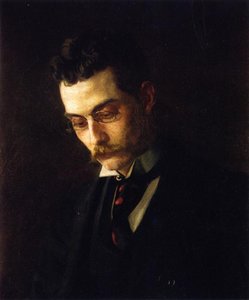
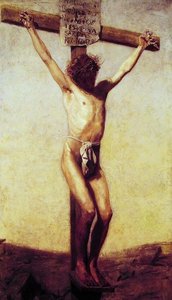
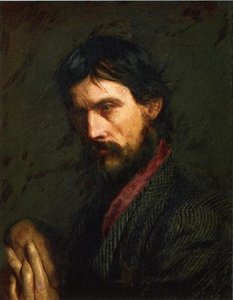
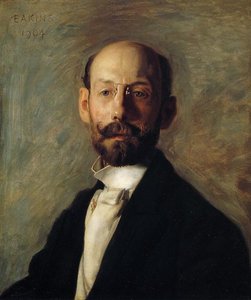
Biografía del artista
Una vida dedicada a capturar la realidad
Thomas Cowperthwait Eakins, pintor realista estadounidense, fotógrafo, escultor y educador en bellas artes, dejó una huella imborrable en el lienzo de la historia del arte americano. Nacido el 25 de julio de 1844 en Filadelfia, Pensilvania, su vida fue un testimonio de su inquebrantable dedicación a capturar la esencia de la realidad.Primeros años y educación
Los primeros años de Eakins estuvieron marcados por su agudo interés en el dibujo y las ciencias. Asistió a la escuela secundaria central y luego estudió en la Academia de Bellas Artes de Pensilvania, donde perfeccionó sus habilidades en dibujo y anatomía. Su tiempo en Europa, particularmente bajo la tutela de Jean-Léon Gérôme en París, influyó significativamente en su enfoque artístico.Una carrera definida por el realismo
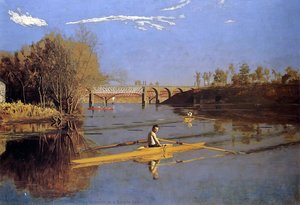
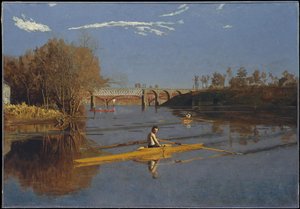
La obra de Eakins se caracteriza por su implacable realismo, una característica que lo distinguía de sus contemporáneos. Sus retratos, que suman varios cientos, ofrecen una visión conmovedora del tejido intelectual y social de finales del siglo XIX y principios del XX en Filadelfia. Obras notables incluyen Max Schmitt en una Cesta de Remo Individual, que no solo muestra la maestría de Eakins para capturar el movimiento, sino también su profundo interés en la forma humana.Enseñanza y controversia
El período de Eakins como instructor en la Academia de Bellas Artes de Pensilvania se caracterizó tanto por la influencia como por la controversia. Su enfoque docente, que enfatizaba la importancia de estudiar la forma humana desde la vida, a menudo provocaba fricciones con sus colegas. Esto, junto con escándalos personales, truncó su éxito y dañó su reputación durante su vida.Legado
A pesar de los desafíos que enfrentó, Eakins es ahora celebrado como "el realista más fuerte y profundo en el arte estadounidense del siglo XIX y principios del XX". Su obra se puede encontrar en varios museos, incluido el Museo Metropolitano de Arte, que alberga varias de sus obras notables.- El campeón en una cesta de remo individual (Max Schmitt en una cesta de remo individual) - Una obra fundamental que muestra la temprana maestría de Eakins para capturar el movimiento.
- Thomas Eakins - Explore la extensa colección de obras de Eakins en ArtsDot, ofreciendo una inmersión profunda en su evolución artística y estilo.
- Wikipedia: Thomas Eakins - Profundice en la completa entrada de Wikipedia sobre Eakins, que detalla su vida, influencias y el impacto de su obra en la historia del arte americano.
Thomas Eakins
1844 - 1916 , Estados Unidos de América
Datos clave
- Artistas Que Influyeron: ['Jean-Léon Gérôme']
- Fecha De Fallecimiento: 25 de junio de 1916
- Fecha De Nacimiento: 25 de julio de 1844
- Lugar De Nacimiento: Filadelfia, Estados Unidos
- Movimiento Artístico: Realismo estadounidense
- Nacionalidad: Estadounidense
- Nombre Completo: Thomas Cowperthwait Eakins
- Obras Notables:
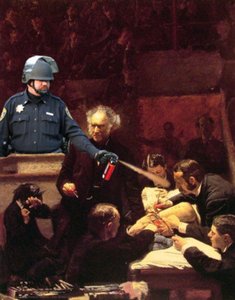
- La Clínica Gross
- Max Schmitt en una cesta individual
- El Agnew Clinic
Artículos relacionados
Henri Matisse: Las 25 Obras Maestras que Definieron un Genio del Color | ArtsDot
Descubre las 25 obras maestras de Henri Matisse, el rey del color y padre del fauvismo. Explora su arte moderno, lienzos vibrantes y la historia detrás de cada pintura icónica. Encuentra reproducciones de alta calidad en ArtsDot.com.
Thomas Eakins: Realism, Anatomy & the American Spirit – A Comprehensive Exploration of Life and Legacy
Explore the life & legacy of Thomas Eakins, a pivotal American Realist painter. Discover his groundbreaking techniques, anatomical precision, and iconic works like 'The Gross Clinic.' A comprehensive guide for art enthusiasts.
Los 10 Maestros del Realismo Académico: Obras que Marcaron la Historia del Arte
Descubre los 10 lienzos más emblemáticos del Realismo Académico. Explora la historia, técnica y belleza de obras maestras de Bouguereau, Gérôme y Cabanel. Encuentra reproducciones de arte clásico en ArtsDot.com.

El Realismo Académico: Técnica, Historia e Influencia Duradera en el Arte
Descubre el Realismo Académico: su historia, técnicas innovadoras y los artistas clave como Courbet y Manet. Guía experta para coleccionistas y amantes del arte del siglo XIX.

Romantic Realism's Finest: 10 Masterpieces for Your Home | ArtsDot
Explore 10 defining masterpieces of Romantic Realism! Discover Courbet, Millet & Daumier's powerful paintings—capturing emotion and social realities. Find museum-quality reproductions for your home at ArtsDot.com.