 Ver en contexto
 Enviar
 Compartir
 Detalles

 Descargar
 Similares
 Radiografía
 Presentación de diapositivas
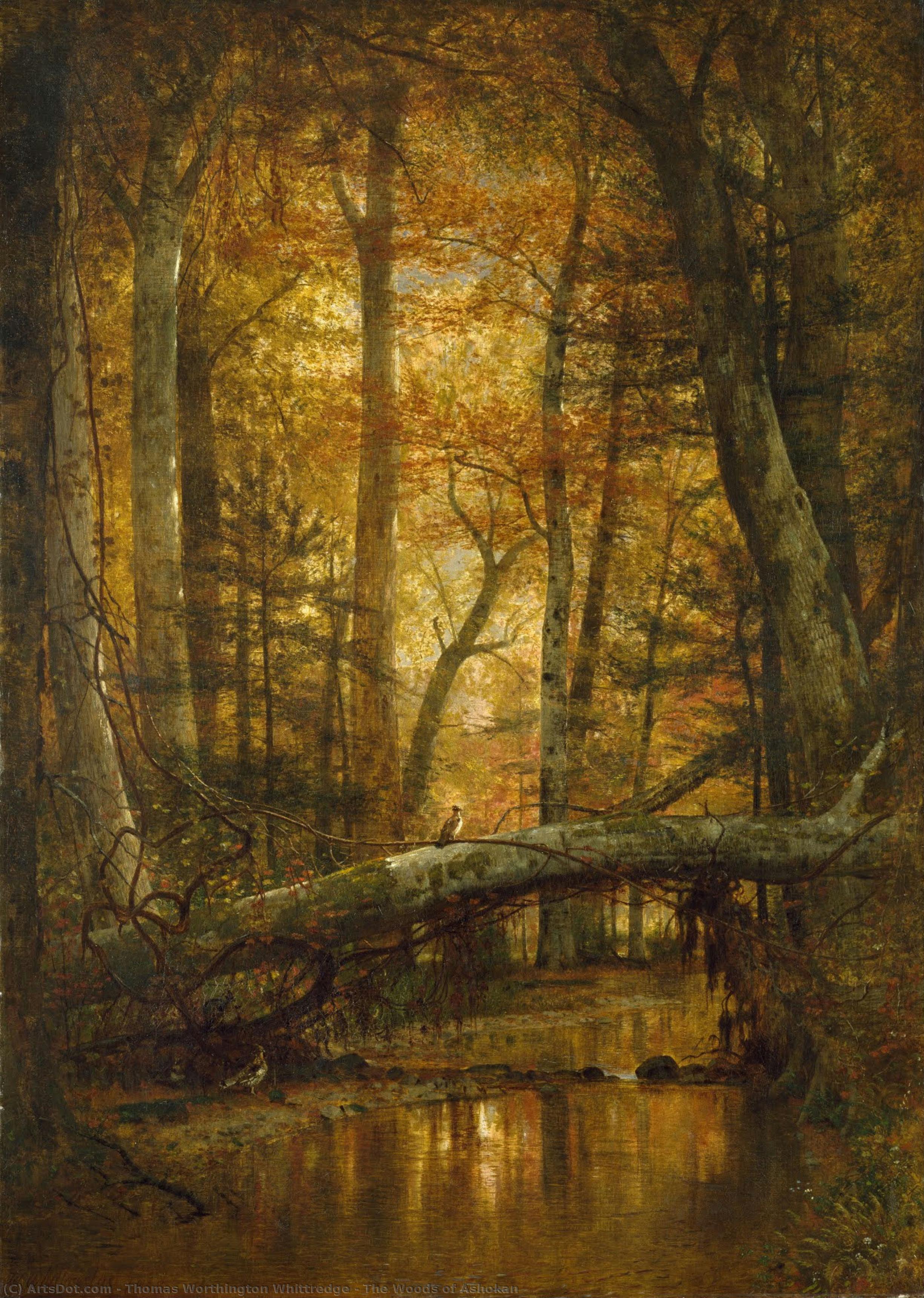
The Woods of Ashokan
 Óleo sobre lienzo
- Arte de pared
- Hudson River School
 144.0 x 102.0 cm
 Museo de Arte Chrysler
 Ver más
Reproducción al óleo hecha a mano
Óleo sobre lienzo pintado a mano en el tamaño y marco de su elección, realizado por encargo por nuestros artistas. ( Comprar impresión Comprar imagen)




P118B $10

P118H $10

P118W $10

P438Z $10

P508JH $12

P508YH $12

P805H $10

P805Z $10

P919BZ $10

P919G $10

P919XJ $10

P959ZH $10

P968JZ $12

W106C $8

W218G $10

W218JH $8

W218Y $10

W307PJ $10

W316G $10

W316PJ $8

W316Y $10

W398PJ $8

W4111J $10

W500HY $15

W500JH $15

W692G $12

W849H $8

W940BG $15

W953PJ $8




Elija entre nuestros tamaños predefinidos que respetan las proporciones originales de la obra.

Puede ingresar sus propias dimensiones para adaptarse a un marco o espacio específico. Si el tamaño seleccionado no coincide con las proporciones de la imagen original, recortaremos la obra o extenderemos la pintura con elementos adicionales pintados a mano. Se le enviará una maqueta digital para su aprobación antes de comenzar la producción.
Tenga en cuenta que la vista previa en pantalla no refleja el recorte o la extensión reales. Solo la maqueta mostrará con precisión la composición final.
Si bien existen tamaños personalizados, recomendamos seleccionar una dimensión de la lista predefinida para preservar las proporciones originales.
Tras realizar el pedido, el equipo de ArtsDot.com enviará un correo electrónico al cliente para solicitar instrucciones y proporcionarle una vista previa del boceto.
Envío a todo el mundo () en 3-4 semanas en lugar de las 5 semanas estándar. (25 agosto). Sin comprometer la calidad.

Envío exprés gratuito a todo el mundo

Lienzo de lino de alta calidad

Seguro de envío total

Garantía de reembolso de impuestos aduaneros

Garantía de fidelidad cromática exacta

Política de devolución de 60 días (solo por defectos)

Garantía de devolución del 100% del dinero

Descuento por cantidad
 La opción de vidrio solo está disponible en tamaños inferiores a 110 cm.

The Woods of Ashokan
Técnica de reproducción
Dimensiones de la reproducción
-


Precio total final
$ 263
Descripción de la obra
The Serene Majesty of “Woods of Ashokan” by Thomas Worthington Whittredge
Thomas Worthington Whittredge’s “Woods of Ashokan,” painted in 1868, isn't merely a landscape; it’s an immersion into the restorative power of nature. This evocative scene, nestled within the upstate New York forests surrounding Ashokan Creek, transcends simple representation to become a profound meditation on light, atmosphere, and the quiet solace found amidst the wilderness. Whittredge, a key figure in the Hudson River School, masterfully captures a moment of golden twilight, where the sun’s rays filter through the dense foliage, bathing the forest floor in an ethereal glow. The painting speaks to a broader yearning—a desire for escape from the anxieties and political turmoil of mid-19th century America, mirroring a sentiment that resonated deeply with artists and audiences alike.
Whittredge’s artistic approach is characterized by his meticulous attention to detail and his ability to translate light onto canvas. He eschewed dramatic contrasts in favor of subtle gradations, employing a technique often described as “luminism.” This style emphasizes the play of light and shadow, creating an almost palpable sense of depth and atmosphere. Notice how he renders the dappled sunlight piercing through the trees – not with harsh highlights, but with delicate washes that suggest both warmth and mystery. The composition itself is carefully balanced, drawing the eye into the heart of the forest while simultaneously conveying a feeling of expansive space. Whittredge’s background as a trapper in his youth undoubtedly informed his deep understanding of the natural world, translating this knowledge into a remarkably accurate and emotionally resonant depiction.
A Window into the Hudson River School
“Woods of Ashokan” firmly places itself within the context of the Hudson River School, an artistic movement that flourished during the mid-19th century. This group of artists sought to capture the beauty and grandeur of America’s landscapes, often drawing inspiration from European Romanticism. Unlike their predecessors who frequently depicted grand historical scenes or mythological subjects, the Hudson River School focused primarily on portraying the natural world with unprecedented realism and sensitivity. Whittredge's work exemplifies this shift, prioritizing observation and emotional response over idealized representation. The painting reflects a broader cultural trend—a growing appreciation for the wilderness as a source of spiritual renewal and artistic inspiration.
The choice of Ashokan Creek itself is significant. Located near Woodstock, New York, the area was already gaining recognition for its natural beauty during this period. Whittredge’s depiction likely reflects a desire to celebrate this burgeoning appreciation for the region's landscapes. The inclusion of a subtle human element – a lone figure glimpsed in the distance – adds another layer of interpretation, suggesting a connection between humanity and nature, inviting the viewer to contemplate their place within the vastness of the wilderness.
Symbolism and Emotional Resonance
Beyond its technical brilliance, “Woods of Ashokan” is rich in symbolic meaning. The dappled sunlight filtering through the trees can be interpreted as a metaphor for hope and renewal—a reminder that even amidst darkness and uncertainty, beauty and tranquility persist. The dense forest itself represents both mystery and protection, offering a refuge from the pressures of modern life. The muted color palette – dominated by greens, browns, and golds – evokes a sense of peace and serenity, inviting the viewer to slow down and appreciate the simple pleasures of nature.
The painting’s emotional impact is profound. It doesn't simply depict a forest; it invites us to *feel* its stillness, its warmth, and its inherent beauty. Whittredge masterfully captures the essence of a moment in time—a fleeting glimpse of serenity within the heart of nature. It’s a piece that speaks to our innate desire for connection with the natural world, offering a timeless reminder of the restorative power of wilderness.
A Legacy Preserved – and Recreated
Today, “Woods of Ashokan” resides in the collection of the Chrysler Museum of Art in Norfolk, Virginia, ensuring its legacy continues to inspire. ArtsDot offers high-quality reproductions that allow art lovers worldwide to experience the beauty and tranquility of this iconic painting firsthand. Whether you’re seeking a stunning addition to your home or office décor, or simply wishing to connect with the timeless appeal of the Hudson River School, a reproduction of “Woods of Ashokan” is an exquisite choice.
Obras relacionadas


Biografía del artista
Primeros años y carrera
Thomas Worthington Whittredge, un artista estadounidense de la Escuela del Río Hudson, nació el 22 de mayo de 1820 en una cabaña de troncos cerca de Springfield, Ohio. Comenzó su viaje artístico cuando era joven en Cincinnati, pintando paisajes y retratos antes de viajar a Europa en 1849 para continuar su formación. Whittredge estudió en la Academia de Düsseldorf, una importante escuela de arte de la época, bajo la tutela de Emanuel Leutze.Estilo artístico e influencias
El trabajo de Whittredge se caracteriza por su énfasis en la luz y los suaves efectos atmosféricos, lo que le valió una reputación como miembro destacado de la segunda generación de artistas de la Escuela del Río Hudson. Sus viajes con otros artistas, incluyendo Albert Bierstadt y Sanford Robinson Gifford, influyeron en su estilo, que se caracterizaba por meticulosas representaciones fácticas de paisajes escénicos.Obras notables y exposiciones
* En el río Cache la Poudre, Colorado (1876), una pintura que representa el río y las llanuras en primer plano con las Rocosas al fondo, es una de las obras más importantes de Whittredge. * Las pinturas de Whittredge forman ahora parte de numerosas colecciones de museos, incluyendo el Museo Metropolitano de Arte en Nueva York, el Museo de Bellas Artes de Utah en Salt Lake City y el Museo Smithsonian de Arte Americano en Washington, D.C.Legado e impacto
Whittredge sirvió como presidente de la Academia Nacional de Diseño desde 1874 hasta 1875 y fue miembro de los comités de selección para la Exposición del Centenario de Filadelfia de 1876 y la Exposición Universal de París de 1878. Su trabajo tuvo un profundo impacto en el arte estadounidense, inspirando a una generación de artistas a explorar y representar la belleza natural de su país.- Movimiento artístico clave: Escuela del Río Hudson
- Influencias notables: Albert Bierstadt, Sanford Robinson Gifford
- Principales museos que exhiben obras de Whittredge: Museo Metropolitano de Arte, Museo de Bellas Artes de Utah, Museo Smithsonian de Arte Americano
Más información y recursos
* Thomas Worthington Whittredge en ArtsDot.com: [https://ArtsDot.com/@/thomas_worthington_whittredge](https://ArtsDot.com/@/thomas_worthington_whittredge) * Escuela del Río Hudson en Wikipedia: [https://en.wikipedia.org/wiki/hudson_river_school](https://en.wikipedia.org/wiki/hudson_river_school)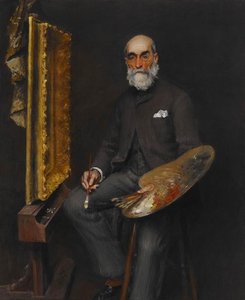
Thomas Worthington Whittredge
1820 - 1910 , Estados Unidos de América
Datos clave
- Artistas Que Influyeron:
- Albert Bierstadt
- Sanford Robinson Gifford
- Fecha De Fallecimiento: 25 de febrero de 1910
- Fecha De Nacimiento: 22 de mayo de 1820
- Lugar De Nacimiento: Springfield, EE. UU.
- Movimiento Artístico: Escuela del Río Hudson
- Nacionalidad: Estadounidense
- Nombre Completo: Thomas Worthington Whittredge
- Obras Notables: ['On the Cache la Poudre River']
Artículos relacionados
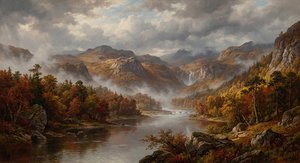
Los 10 Maestros del Río Hudson: Obras que Definieron un Movimiento Artístico
Descubre los 10 lienzos más emblemáticos de la Escuela del Río Hudson. Explora las obras maestras de Thomas Cole, Church y Bierstadt que capturan la belleza del paisaje americano. Encuentra reproducciones de arte exclusivas en ArtsDot.com.
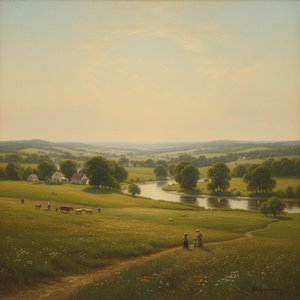
Thomas Worthington Whittredge: Capturing the American Pastoral Ideal with Luminist Light
Explore the luminous landscapes of Thomas Worthington Whittredge, a key figure in the Hudson River School and master of Luminism. Discover his captivating paintings & legacy with ArtsDot.
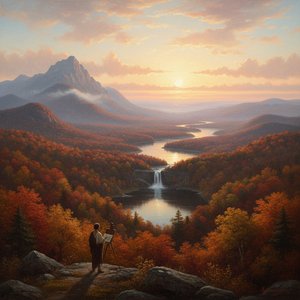
El Sublime Paisaje Americano: Explorando el Movimiento de la Escuela del Río Hudson
Descubre la Escuela del Río Hudson: un movimiento artístico clave en la historia de la pintura estadounidense. Explora su estética romántica, sus artistas más destacados y el concepto del sublime paisaje americano.
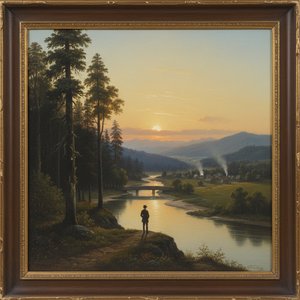
Robert Spencer: Luminism, Narrative & the American Landscape Tradition
Explore the captivating world of Luminism & the Hudson River School with our expert analysis. Discover the history, artists, and enduring beauty of 19th-century American landscape painting. Find museum-quality reproductions at ArtsDot.
Sanford Robinson Gifford: Luminism & the American Landscape Tradition
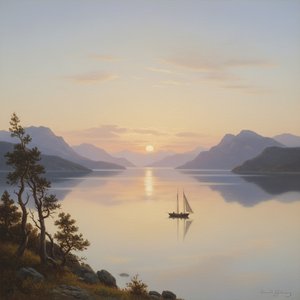
Explore the serene landscapes of Sanford Robinson Gifford, a leading Luminist painter of the Hudson River School. Discover his mastery of light, atmospheric effects & lasting influence on American art. Hand-painted reproductions available.