

 Ver en contexto
 Enviar
 Compartir
 Detalles

 Descargar
 Similares
 Radiografía
 Presentación de diapositivas
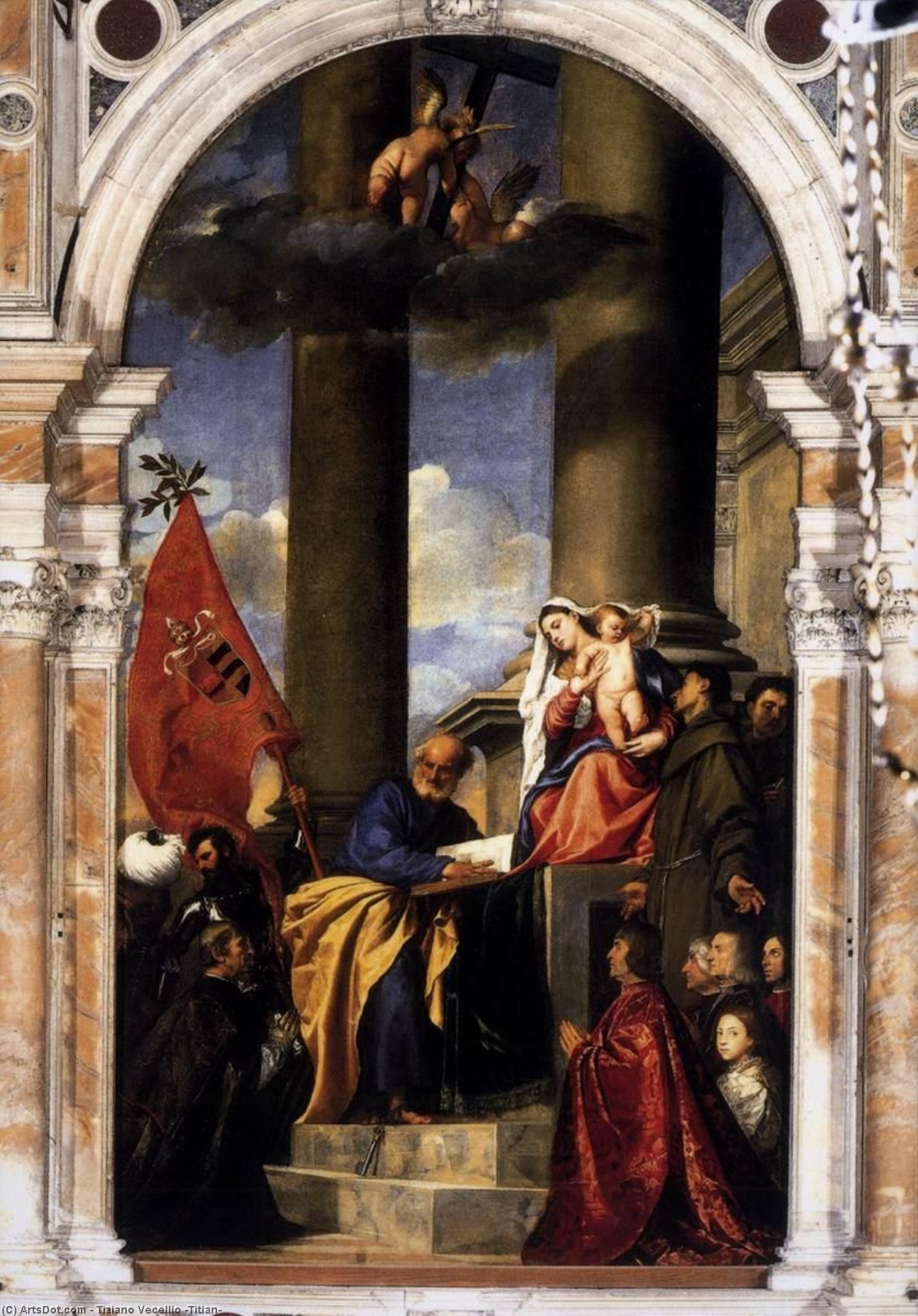
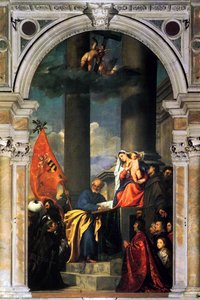
Madonna with Saints and Members of the Pesaro Family
 Óleo sobre lienzo
- Arte de pared
- Italian Renaissance
 1519
1519 478.0 x 266.0 cm
 Basílica de Santa María dei Frari
 Ver más
Adquiera una imagen digital de alta resolución y optimizada, muy superior a la vista previa en línea.
Cada archivo es preparado meticulosamente por nuestros especialistas internos mediante el uso de herramientas avanzadas y un experto retoque manual. Nos aseguramos de que cada imagen posea una claridad excepcional, una precisión cromática impecable y un detalle minucioso.
El archivo final se entrega por correo electrónico en un plazo de 72 horas, optimizado para su uso inmediato en entornos profesionales, editoriales y de impresión. Esta es la misma calidad en la que confían los estudios de diseño, las editoriales y las galerías de primer nivel.
Imagen Digital
Descarga un archivo de alta resolución para exhibición personal, impresión y proyectos creativos. ( Comprar impresión Comprar pintura hecha a mano)
Incluido en cada pedido de imágenes digitales
Entrega digital experta, garantizada.
Al elegir ArtsDot.com, no solo está adquiriendo una imagen; está recibiendo una obra de arte digital mejorada profesionalmente, elaborada con precisión y respaldada por una garantía de satisfacción. Esto es todo lo que incluye su pedido, automáticamente:

Entrega rápida por email
Recibirá su archivo de imagen digital en alta resolución por correo electrónico en un plazo de 72 horas tras realizar su pedido, listo para su uso inmediato.

Archivo digital optimizado por IA
Su obra de arte se optimiza profesionalmente mediante herramientas avanzadas de IA y edición manual, garantizando el máximo detalle, claridad y precisión cromática.

Reenvío gratuito de por vida
¿Has borrado o perdido tu archivo por error? No te preocupes: te lo volveremos a enviar en cualquier momento, sin coste adicional.

Sin gastos de importación, siempre
Disfrute de su obra de arte al instante sin aduanas, aranceles ni gastos de envío; las descargas digitales siempre están libres de impuestos.

Garantía de fidelidad de color
Garantizamos que su imagen digital refleje los colores originales con la mayor fidelidad posible, mediante el uso de herramientas profesionales y gestión del color.

Garantía de satisfacción de 60 días
Si no está satisfecho con su imagen digital, la revisaremos o le reembolsaremos el 100% en un plazo de 60 días, sin preguntas.

100% Garantía de devolución de dinero
¿No está satisfecho? Obtenga un reembolso completo dentro de los 60 días posteriores a la recepción de su archivo digital, sin necesidad de explicaciones.

Descuentos por pedidos grandes
Compra 3 imágenes, ahorra 10% - Compra 5, ahorra 15% - Compra 10+, ahorra 20%. Ideal para proyectos creativos, galerías y agencias.
A Symphony in Color – The Madonna with Saints and Members of the Pesaro Family
Titian’s Madonna with Saints and Members of the Pesaro Family, painted in 1519, isn't merely a religious depiction; it’s an immersive experience. Within the cool, echoing grandeur of the Santa Maria Gloriosa dei Frari church in Venice, this monumental canvas unfolds as a vibrant testament to the Venetian Renaissance’s mastery of color and composition. The painting immediately draws the eye with its audacious palette – deep reds, rich blues, and shimmering golds dominate, creating an atmosphere both opulent and profoundly moving. It's a scene brimming with life, not just in terms of the figures depicted but also in the sheer energy radiating from Titian’s brushstrokes.
The central focus is undoubtedly Mary, presented with a serene dignity that belies the complex narrative surrounding her. Her pose, reminiscent of classical depictions of the Virgin, is subtly infused with Venetian sensuality – a characteristic hallmark of Titian's style. Around her cluster a multitude of figures: saints radiating an aura of solemnity, members of the Pesaro family, and attendants, all rendered with remarkable attention to detail. The inclusion of the Pesaro family, specifically Jacopo Pesaro who commissioned the work, elevates this painting beyond a simple devotional image; it becomes a statement of power, piety, and familial legacy.
The Language of Color: Titian’s Revolutionary Technique
Titian was renowned for his innovative approach to color, and this painting is a prime example. He employed what's known as “imprimatura,” applying thin layers of diluted paint – often a warm earth tone – to the canvas before beginning the main composition. This created a luminous underpainting that allowed him to build up vibrant colors with astonishing speed and depth. Notice how he uses broken color, layering hues rather than blending them seamlessly, creating a shimmering effect that seems to move and breathe. The application of paint is loose and expressive, particularly in the drapery and the faces, contributing to the painting’s dynamic quality. He wasn't simply replicating reality; he was translating it into an emotional experience through color.
Furthermore, Titian’s mastery of oil paints allowed him to achieve a level of detail previously unattainable with tempera or fresco techniques. The intricate folds of the clothing, the delicate textures of the fabrics, and the subtle nuances of expression on each figure are all rendered with breathtaking precision. The use of glazing – applying thin layers of translucent paint over dried layers – further enhanced the luminosity and depth of color, creating a sense of atmospheric perspective that pulls the viewer into the scene.
A Window to Venice: Historical Context and Symbolism
Commissioned by Jacopo Pesaro, a prominent Venetian noble, this painting reflects the wealth and influence of the city’s elite. The Pesaro family were significant patrons of the arts, and their chapel in the Frari Basilica served as a showcase for Titian's talents. The inclusion of saints like Sebastian and Roch – traditionally associated with healing – speaks to the Pesaro family’s piety and desire for divine protection. The archway visible in the background is a typical Venetian architectural feature, grounding the scene within its urban context.
Interestingly, this painting shares stylistic similarities with Titian's earlier work, *Jacopo Pesaro being presented by Pope Alexander VI to Saint Peter* (1510-11). This connection suggests that Titian was refining his techniques and exploring new approaches to composition and color. The Madonna with Saints and Members of the Pesaro Family represents a pivotal moment in his artistic development, solidifying his position as one of the most influential painters of the High Renaissance.
An Enduring Legacy: Beauty and Emotion
More than five centuries after its creation, the Madonna with Saints and Members of the Pesaro Family continues to captivate viewers. It’s a painting that transcends its religious subject matter, offering a profound meditation on motherhood, faith, and family. The sheer beauty of Titian's color palette, combined with his masterful technique, creates an emotional resonance that is both timeless and deeply moving. Reproductions capture only a fraction of the original’s vibrancy and depth, but they offer a valuable opportunity to appreciate this extraordinary masterpiece for generations to come.
Obras relacionadas



Biografía del artista
Tiziano Vecellio: The Venetian Titan
Tiziano Vecellio, universally known as Titian, stands as a monumental figure of the Italian Renaissance—perhaps its most celebrated colorist and a master who redefined the possibilities of oil painting. Born around 1490 in Pieve di Cadore, nestled amidst the dramatic landscapes of the Venetian Alps, his journey from humble beginnings to international acclaim is a testament to prodigious talent and an unwavering dedication to artistic innovation. The exact date of Titian’s birth remains elusive, debated by scholars, but contemporary sources and his early stylistic development converge on estimates between 1488 and 1490.
His father, Gregorio Vecellio, was a military man—a profession that instilled in young Tiziano a disciplined spirit and an appreciation for observation. Lucia, his mother, nurtured him with affection and fostered his artistic inclinations. Recognizing their sons’ potential, the family arranged for Tiziano and Francesco to apprentice with Sebastiano Zuccato, a mosaicist—a decision that would irrevocably alter the course of art history. This formative experience exposed them to the meticulous craftsmanship required for creating intricate decorative panels, shaping their aesthetic sensibilities from an early age.
Titian’s artistic training continued under Giovanni Bellini, who was then Venice’s most prominent painter and a revered teacher. Bellini’s workshop fostered a tradition of Venetian painting characterized by lyrical beauty and subtle tonal harmonies—influences that would permeate Titian’s oeuvre throughout his life. Notably, he collaborated closely with Giorgione—a fellow Venetian artist whose groundbreaking style championed atmospheric perspective and psychological depth.
A Master's Early Style: Giorgione's Influence
The partnership between Titian and Giorgione proved pivotal in shaping Titian’s artistic vision. Their collaboration on the exterior frescoes for the Fondaco dei Tedeschi—a bustling trading post frequented by German merchants—established a stylistic precedent that would endure for decades. The paintings showcased a remarkable sensitivity to light and color, reflecting Giorgione’s pioneering exploration of atmospheric perspective—a technique that aimed to convey the illusion of depth and realism.
Titian’s early works embody this Giorgionesque aesthetic—characterized by hazy landscapes, muted palettes, and an emphasis on capturing mood rather than precise detail. Paintings like *A Man with a Quilted Sleeve* exemplify his burgeoning talent for portraiture, skillfully portraying not only the physical likeness of his subjects but also their inner character—a hallmark of Venetian Renaissance painting.
Expanding Horizons: Bellini's Legacy and Artistic Maturity
Following Giorgione’s untimely death in 1510, Titian continued his artistic development under Giovanni Bellini’s guidance—though Bellini himself was gradually withdrawing from active painting. This period witnessed a gradual shift toward bolder compositions and more assertive color palettes—reflecting Titian’s growing confidence as an independent artist.
His monumental altarpiece for Santa Maria Gloriosa dei Frari—commissioned in 1518—marked a watershed moment in Venetian painting history. The ambitious undertaking demanded mastery of technique, compositional innovation, and chromatic brilliance—qualities that Titian possessed in abundance. This masterpiece cemented his reputation as Venice’s foremost painter and established him as a pioneer of monumental fresco painting.
The Venetian School's Dominance
Titian’s influence extended far beyond his own lifetime, shaping the artistic landscape of Europe for centuries to come. He became a cornerstone of the Venetian school—a movement that championed coloristic realism and psychological depth—inspiring artists across generations. From Rubens and Rembrandt to Delacroix and Monet, Titian’s techniques—particularly his innovative layering of pigments and his masterful manipulation of light—became models for aspiring painters.
His legacy endures not only in the masterpieces he created but also in the enduring fascination with color and emotion that characterizes Venetian art. Tiziano Vecellio—Titian—remains an unparalleled figure in the history of painting, a testament to artistic genius and an embodiment of the Renaissance spirit.
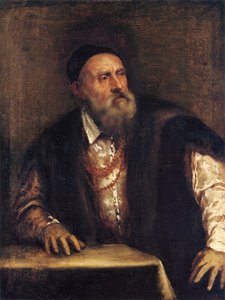
Tiziano
1490 - 1576 , Italia
Breves datos
- Artistic Movement Or Style: Renacimiento Veneciano
- Artists Or Movements Influenced By This Artist:
- Rubens
- Delacroix
- Artists Who Influenced This Artist:
- Giovanni Bellini
- Giorgione
- Date Of Birth: c. 1490
- Date Of Death: 1576
- Full Name: Tiziano Vecellio
- Nationality: Italiano
- Notable Artworks:
- La Schiavona
- Venus de Urbino
- Place Of Birth: Pieve di Cadore, Italia

